
NEW
Font size
 Worksheets
Exam #2 Review: Transport & Enzymes
Total questions: 50
Worksheet time: 34mins
How do enzymes speed up a chemical reaction?
Increasing activation energy
Lowering activation energy
Increasing deactivation energy
Decreasing deactivation energy
Each enzyme only has one substrate that will fit its active site. What is this called?
reusablility
denaturation
specificity
fragility
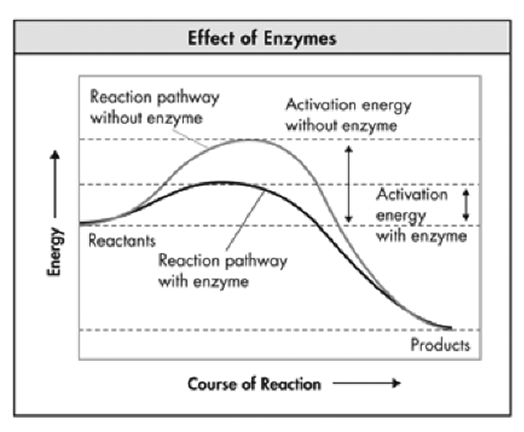
The graph shows how enzymes affect reactions in cells. Which statement best summarizes the information shown in the graph?
Enzymes increase the energy of the reactants.
Enzymes decrease the energy level of the products.
Enzymes decrease the activation energy of the reaction.
Enzymes reverse the direction of the reaction.
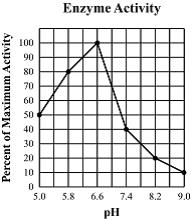
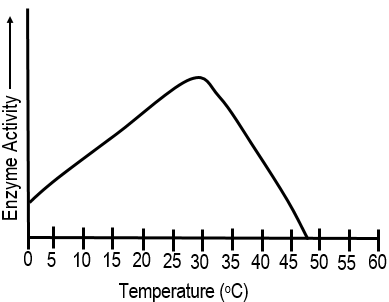
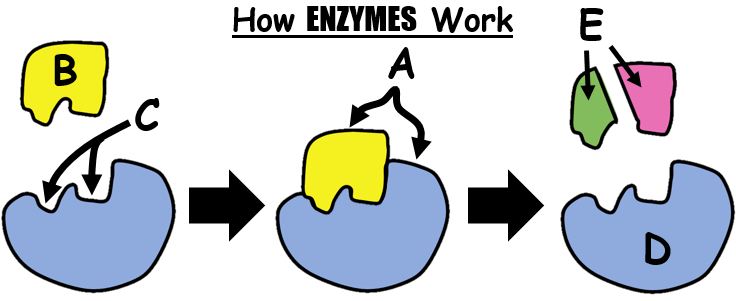
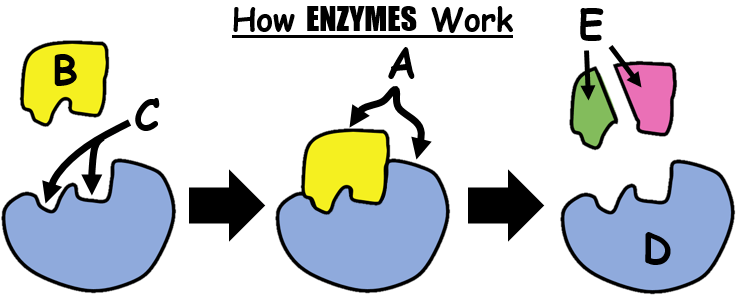
What is represented by letter D?
active site
enzyme
substrate
products
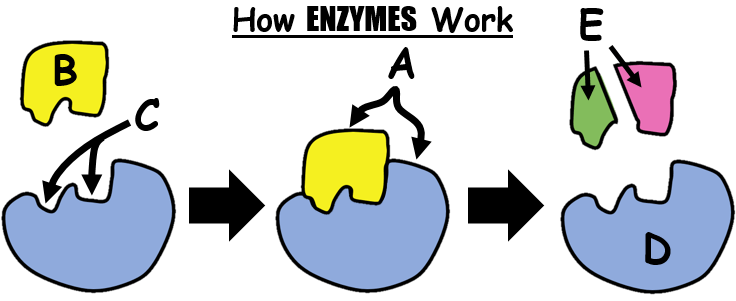
What is represented by letter B?
active site
enzyme
substrate
products
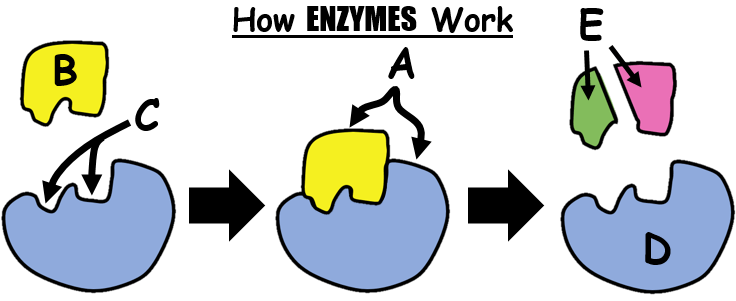
What is represented by letter C?
active site
enzymes
substrate
products
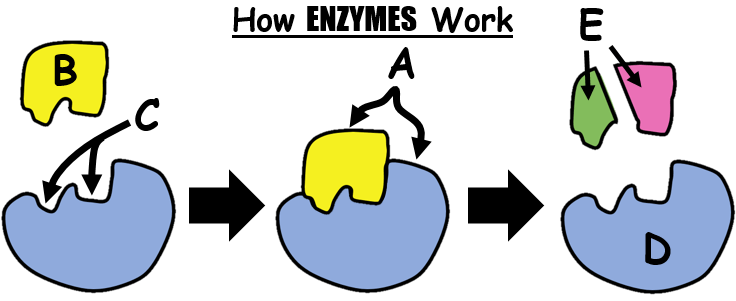
What is represented by letter E?
active site
enzyme
substrate
products
The difference between pinocytosis and receptor-mediated endocytosis is that
pinocytosis requires cellular energy, but receptor-mediated endocytosis does not.
pinocytosis brings only water molecules into the cell, but receptor-mediated endocytosis brings in other molecules as well.
pinocytosis is nonselective in the molecules it brings into the cell, whereas receptor-mediated endocytosis offers more selectivity.
pinocytosis increases the surface area of the plasma membrane whereas receptor-mediated endocytosis decreases the plasma membrane surface area.


What can block a substrate from entering the active site of an enzyme?
activators
competitive inhibitors
competitive activators
products
________, such as vitamin C, work with enzymes to help enhance the function of the enzyme they attach to.
Coenzymes
Cofactors
Substrates
Allosteric sites
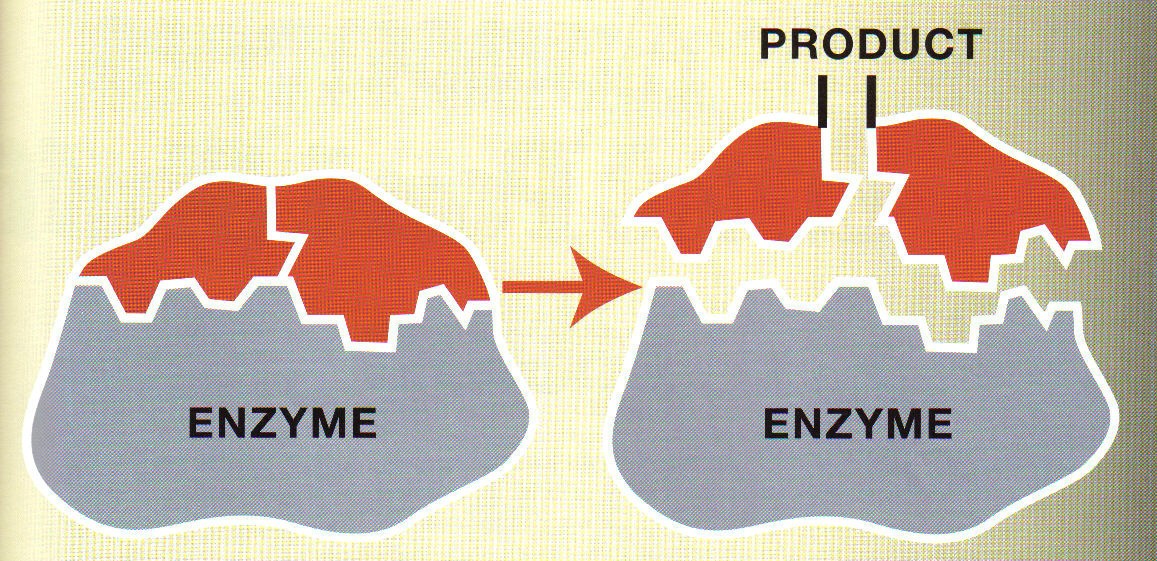
Metal ions that bind to enzymes and enhance an enzyme's ability by attracting substrates are called:
Cofactors
Coenzymes
Allosteric Inhibitors
Allosteric Activators
A molecule binds to an enzyme in a location away from the active site and decreases the ability of the active site to bind to the substrate. This is called:
Allosteric Activation
Allosteric Inhibition
Competitive Activation
Competitive Inhibition



