wayground logo

Free Printable Worksheets

Font size

S
M
L
XL
Worksheets

Overall Astronomy

Total questions: 184

Worksheet time: 3hrs 0mins

Name
Class
Date
1.

Which statement is true?

a)

A.  Earth rotates around the sun and revolves on its axis.

b)

A.  The sun revolves around Earth over a 24-hour time period.

c)

A.  Earth rotates on its axis, and revolves around the sun.

d)

A.  Earth revolves around the sun and the moon.

2.

What season is letter A?

a)

Winter

b)

Summer

c)

Spring

d)

Fall

3.

When the Northern Hemisphere is pointing towards the sun, what season is the Southern Hemisphere?

a)

Winter

b)

Spring

c)

Fall

d)

Summer

4.

What are the reasons for the seasons?

a)

Earth's tilt and rotation.

b)

Earth's rotation and revolution.

c)

Earth's tilt and revolution.

d)

Earth's tilt and resolution

5.

What causes day and night?

a)

revolution of Earth

b)

rotation of Earth

c)

orbit of Earth

d)

The moon blocks the Sun

6.

What is earth's revolution?

a)

When earth orbits around the sun

b)

When earth bounces

c)

When the sun spins around the earth

d)

When the earth spins on it's axis

7.

During an ________, the length of nighttime and daytime are about the same because neither hemisphere is tilted toward the sun.

a)

equinox

b)

solstice

c)

earthquake

d)

solar eclipse

8.

About how long does it take Earth to make one complete rotation on its axis at the equator?

a)

12 hours

b)

24 hours

c)

29.5 days

d)

365 days

9.

Why would Florida be warmer on average than other northern locations in the United States?

a)

Florida is closer to sea level than inland areas

b)

Sunlight shines more directly on Florida fir more hours each day

c)

Heat energy is transferred to land because of ocean currents

d)

Seasonal changes take place later in the year because Florida is close to the equator

10.

Which term describes when the Earth spins on its axis.

a)

Rotation

b)

Revolution

c)

Kepler's Laws

d)

Precession

11.

Which term describes the time it takes for Earth to complete one circle around the sun.

a)

Rotation

b)

Revolution

c)

Kepler's 1st Law

d)

Barycenter

12.

Lasts 365 days

a)

Rotation

b)

Revolution

c)

Nutation

d)

Precession

13.

Lasts 24 hours

a)

Rotation

b)

Revolution

c)

Precession 

d)

Barycenter

14.

The time required for the earth to orbit around the sun...

a)

Year

b)

Month

c)

Day

d)

6 Months

15.

Earth is tilted at an angle of 23.5 degrees on its axis

a)

true

b)

false

16.

Earth is tilted on its

a)

axis

b)

side

c)

oval

d)

pole

17.

What are the reasons for the seasons?

a)

Earth's tilt and rotation.

b)

Earth's rotation and revolution.

c)

Earth's tilt and revolution.

d)

Earth's tilt and resolution

18.

Which definition explains what a solstice is?

a)

When the days and nights are equal?

b)

When the Sun is at its lowest or highest.

c)

When the Sun moves.

d)

When we don't see any light for 6 months.

19.

At position C, which hemisphere would have winter?

a)

Northern hemisphere

b)

Southern hemisphere

c)

East hemisphere

d)

West hemisphere

20.

At position D in the Northern hemisphere it would be _____?

a)

Summer

b)

Winter

c)

Spring

d)

Fall

21.

The reason we have seasons is because we get closer to and farther from the sun.

a)

True

b)

False

22.

What takes a year?

a)

rotation

b)

revolution

23.

How long does it take the moon to revolve around the Earth?

a)

24 hours

b)

365 days

c)

28 days

d)

12 hours

24.

Which statement is NOT true?

a)

The moon has craters.

b)

The moon has gravity.

c)

The moon reflects the Sun's light.

d)

The moon produces its own light.

25.

The time required for the Moon to orbit around the Earth...

a)

Year

b)

Month

c)

Day

d)

6 Months

26.

The time required for the earth to rotate once on it axis...

a)

Year

b)

Month

c)

Day

d)

6 Months

27.

When the hours of daylight and darkness are equal everywhere on Earth, the following occurs

a)

solstice

b)

summer

c)

eclipse

d)

equinox

28.

Earth is tilted at an angle of 23.5 degrees on its axis

a)

true

b)

false

29.

The shortest  day of the year in North America is the

a)

New Year

b)

summer solstice

c)

winter solstice

d)

equinox

30.

At position C, which hemisphere would have winter?

a)

Northern hemisphere

b)

Southern hemisphere

c)

East hemisphere

d)

West hemisphere

31.

At position D in the Northern hemisphere it would be _____?

a)

Summer

b)

Winter

c)

Spring

d)

Fall

32.

The Earth completes one of these every 365.25 days

a)

rotation

b)

revolution

33.

This is the reason we experience day and night

a)

rotation

b)

revolution

34.

What happens when the area in which you live tilts away from the sun?

a)

It is summer.

b)

It is spring.

c)

It is winter.

d)

It is fall.

35.

Which season is taking place in the Northern Hemisphere in Position 3?

a)

Winter

b)

Spring

c)

Summer

d)

Fall

36.

Which season is taking place in the Northern Hemisphere in Position 4?

a)

Winter

b)

Spring

c)

Summer

d)

Fall

37.

Because the earth revolves around the sun on a tilted axis...

a)

we have seasons

b)

we see different constellations in the sky different times of year

c)

the vertical ray of the sun travels from 23.5N to 23.5S

d)

All of the above

38.

Sunlight hits Earth’s surface most directly at the _______. Because of this, this particular area doesn't experience seasons.

a)

north pole

b)

south pole

c)

equator

39.

Which season is taking place in the Northern Hemisphere in Position 4?

a)

Winter

b)

Spring

c)

Summer

d)

Fall

40.

Which season is taking place in the Northern Hemisphere in Position 3?

a)

Winter

b)

Spring

c)

Summer

d)

Fall

41.

What happens when the area in which you live tilts away from the sun?

a)

It is summer.

b)

It is spring.

c)

It is winter.

d)

It is fall.

42.

What is the longest day of the year?

a)

winter solstice

b)

summer solstice

c)

fall equinox

d)

spring equinox

43.

Why do globes lean sideways?

a)

To allow them to spin easier.

b)

To demonstrate the tilt of Earth's axis.

c)

To demonstrate the effects of gravity.

d)

To demonstrate day and night.

44.

What phase of the moon would be visible when the moon is at position 3? 

a)

new moon

b)

first quarter

c)

full moon

d)

third quarter

45.

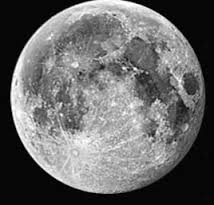
What is the name of this phase? 

a)

Waning Gibbous

b)

Full Moon

c)

Waning Crescent

46.

What is illuminating the Moon?

a)

Nuclear Fusion

b)

Sunlight

c)

Mirrors

d)

Flood Lights

47.

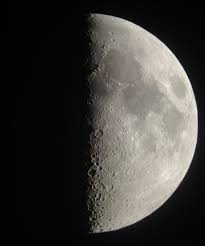
Name this moon phase.

a)

1st quarter

b)

3rd/last quarter

c)

new moon

d)

waxing crescent

48.

The moon cycle (lunar cycle) takes approximately _______________ to complete.

a)

14 days

b)

28 days/approximately one month

c)

58 days

d)

1 week

49.

A solar eclipse only occurs during which moon phase?

a)

1st Quarter

b)

New Moon

c)

Full Moon

d)

3rd Quarter

50.
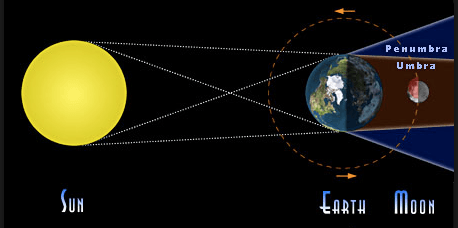
Why does a lunar eclipse have to occur in this moon phase?
a)
This phase shows how the Earth can block the sunlight to the moon.
b)
This phase allows Earth to block the moon from the sun.
c)
This phase allows for the moon to block the sun’s light to the Earth.
d)
This phase shows how the sun can block the moon from Earth.
51.
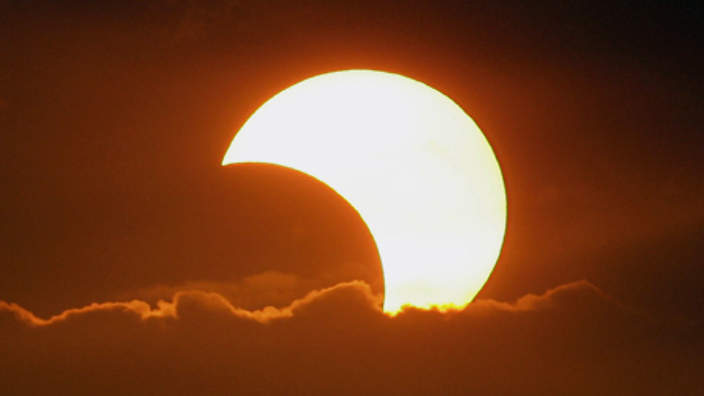
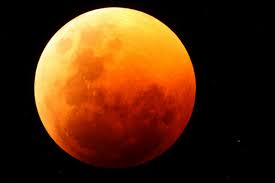
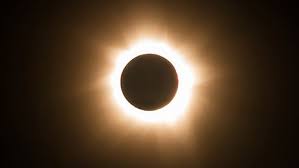
This image is an example of
a)
Lunar Eclipse
b)
Full Moon
c)
New Moon
d)
Solar Eclipse
52.
This image is an example of 
a)
Lunar Eclipse
b)
New Moon
c)
Solar Eclipse
d)
Full Moon
53.

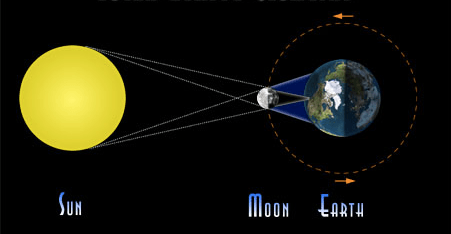
What happens during a solar eclipse?

a)

The sun blocks the moon from Earth.

b)

The moon blocks the light from the sun from Earth.

c)

The Earth blocks the moon from the sun.

d)

The Earth blocks the light from the sun on the moon.

54.
Why isn't there an eclipse every month?
a)
Because the moon orbits the sun differently than Earth does.
b)
Because the Earth's orbit and the moon's orbit are at the same angle, flat plane.
c)
Because the moon's orbit is offset from Earth's orbit by 1.5°, not in a flat plane.
d)
Because the lunar cycle is longer than a month.
55.
What is the darkest inner part of the shadow cone called, where a total eclipse can be viewed.
a)
Total
b)
Umbra
c)
Penumbra
56.
True or False: You must wear your eclipse goggles at all times except during totality due to safety reasons.
a)
True
b)
False
57.
During a solar eclipse...
a)
The sun is blocked by the moon
b)
The Earth is blocked moon
c)
The moon is blocked by the sun
d)
You are blocked
58.
Which type of eclipse occurs when the Moon comes directly between Earth and the Sun?
a)
Lunar eclipse
b)
Solar eclipse
59.
A solar eclipse only occurs during which moon phase?
a)
1st Quarter
b)
New Moon
c)
Full Moon
d)
3rd Quarter
60.
In order to have an eclipse, the Moon, Sun and Earth have to be?
a)
Below each other
b)
Above each other
c)
In alignment
61.
During what phase of the moon can a lunar eclipse occur?
a)
3rd Quarter
b)
1st Quarter
c)
New Moon
d)
Full Moon
62.
For a solar eclipse to occur, what has to happen?
a)
The sun must be directly between Earth and the moon.
b)
The moon must be directly between Earth and the Sun.
63.
A lunar eclipse occurs when the Moon casts a shadow on Earth.
a)
True
b)
False
64.
Which type of eclipse is shown in this picture?
a)
Solar Eclipse
b)
Orbit
c)
Lunar Eclipse
d)
Total Eclipse
65.
Which type of eclipse is shown in the diagram?
a)
Solar Eclipse
b)
Lunar Eclipse
c)
Total Eclipse
d)
Partial Eclipse
66.
We do NOT have a solar or lunar eclipse each month because...
a)
The tilt of the moon's orbit is at 5 degrees
b)
The moon is too small
c)
The moon's orbital distance changes
d)
All choices
67.
An example of a gravitational interaction is that the Earth. . . 
a)
orbits the Sun.
b)
orbits the moon.
68.
Gravity is the force objects put on each other because of their ______.
a)
Mass
b)
Friendliness
c)
Acceleration
d)
Speed
69.
If an object has MORe _______, it will have more gravitational force. 
a)
mass
b)
distance
70.
A person weighs _____ on the moon than they do on Earth. 
a)
less
b)
more
c)
the same
71.
A person weighs _____ on the Earth than they do on the Moon. 
a)
less
b)
more
c)
the same
72.
A person would weigh more on Jupiter than on the Earth because . . .
a)
Jupiter has more mass, and therefore more gravity
b)
Jupiter has less mass, and therefore more gravity
c)
Jupiter has more mass, and therefore less gravity
d)
Jupiter has less mass and therefore less gravity
73.
If a person weighs 100 pounds on Earth, calculate how much that person would weight on Jupiter. (Jupiter has 3 times the amount of gravity that Earth does.)
a)
33.3 pounds
b)
100 pounds
c)
300 pounds
d)
Not enough information given
74.
Mercury has ______ gravity than Earth.
a)
less
b)
more
c)
the same
75.
________ hold all of the planets in orbit around the sun.
a)
gravity
b)
string
c)
Bill Nye
d)
duct tape
76.
Gravity on Mars’ surface is much lower than it is here on Earth. This is because the mass of mars is ______ than Earth.
a)
less
b)
more
c)
the same
77.
A force of attraction between 2 object that is directly related to mass and indirectly related to distance.
a)
mass
b)
weight
c)
gravity
d)
kilogram
78.
As mass increases, what happens to gravitational force?
a)
increases
b)
decreases
c)
stays the same
d)
i don't know
79.
As the distance between 2 objects increases, what happens to gravitational force?
a)
increases
b)
decreases
c)
stays the same
d)
i don't know
80.
What would happen to your weight if Earth's mass was cut in half?
a)
increase because gravitational force increases
b)
decrease because gravitational force decreases
c)
decrease because gravitational force increases
d)
increase because gravitational force decreases
81.
What do we call the path of an object when it goes around another object?
a)
Orbit
b)
Free Fall
c)
Projectile Motion
d)
Terminal Velocity
82.
What is the force that pulls the earth towards the sun?
a)
Gravity
b)
inertia
c)
A force
d)
distance
83.
True or false: When mass increases, gravity increases?
a)
False
b)
True
84.
How does distance affect gravity?
a)
Gravity decreases as distance increases.
b)
Distance decreases as gravity decreases
c)
Distance increases as gravity increases
d)
None of the above
85.
Complete the sentence: The force of gravity depends on...
a)
Gravity
b)
Inertia
c)
Distance
d)
a force
86.
What causes more heat,  indirect sunlight or direct sunlight?
a)
indirect
b)
direct
87.
How does the sun's gravity compare to earth's gravity? 
a)
The sun's gravity is stronger
b)
The earth's gravity is stronger
c)
Their gravitational pull is the same
d)
Scientists aren't able to measure the sun's gravity
88.
Why is the earth's gravity stronger than the moon's gravity? 
a)
The earth is more massive than the moon
b)
The moon is far away from earth
c)
The moon has no mass
d)
The earth has a larger volume than the moon 
89.
This states that all objects attract each other through gravitational force.
a)
The law of conservation of mass
b)
Newton's second law of motion
c)
The law of universal gravitation
d)
The law of free falling objects
90.
A person would weigh less on on the Moon than on the Earth because . . .
a)
Moon has more mass, and therefore more gravity
b)
Moon has less mass, and therefore more gravity
c)
Moon has more mass, and therefore less gravity
d)
Moon has less mass and therefore less gravity
91.
What are the factors which combine to to keep celestial bodies in orbit? 
a)
Air Resistance and Gravity 
b)
Gravity and Inertia 
c)
Inertia and orbital speed
d)
Orbital speed and gravity 
92.
The tendency of a moving object to continue moving in a straight line or a stationary object to remain in place is called:
a)
Orbital Speed 
b)
Gravity 
c)
Terminal Velocity 
d)
Inertia 
93.
All objects are attracted to each other by the force of:
a)
Gravity 
b)
Inertia 
c)
Orbital Speed 
d)
Terminal Velocity 
94.
The strength of the force of gravity depends on:
a)
the masses of the objects and their speeds.
b)
the masses of the objects and the distance between them.
c)
the weight of the objects and their speeds.
d)
the masses of the objects and their weights.
95.
Which planet in our solar system will have the fastest orbital  speed?
a)
Venus 
b)
Earth 
c)
Saturn 
d)
Mercury 
96.
What did Kepler discover about planets and their orbital speed?
a)
Planets closest to the Sun will orbit with the fastest orbital speed.
b)
Planets with the greatest mass will orbit the Sun with the fastest orbital speed.
c)
Planets furthest from the Sun will orbit with the fastest orbital speed.
d)
Planets with the least mass will orbit the Sun with the fastest orbital speed.
97.
Which law states that every object in the universe attracts every  other object in the universe?
a)
Newton’s first law of motion
b)
Newton’s second law of motion
c)
The law of universal gravitation
d)
The law of inertia
98.
According to Kepler’s discoveries, planets orbit around the Sun:
a)
in an oval shape.
b)
in perfect circles.
c)
in an ellipse.
d)
in a rectangular shape.
99.
As mass increases, gravity ________________.
a)
Increases 
b)
Decreases 
c)
Stays the same 
100.
As mass decreases, gravity ______________________.
a)
Increases 
b)
Decreases 
c)
Stays the same 
101.
As distance increases, gravity __________________.
a)
Increases 
b)
Decreases 
c)
Stays the same 
102.
What would happen to your weight if you traveled to a planet that was more massive than Earth? 
a)
Your weight would stay the same 
b)
Your weight would increase 
c)
Your weight would decrease 
103.
Name the moon phase
a)
waning crescent
b)
waxing crescent
c)
waning gibbous
d)
waxing gibbous
104.
Name the moon phase
a)
waning crescent
b)
waxing crescent
c)
waning gibbous
d)
waxing gibbous
105.
Name the moon phase
a)
waning crescent
b)
waxing crescent
c)
waning gibbous
d)
waxing gibbous
106.
Name the moon phase
a)
First Quarter
b)
Last Quarter
c)
New Moon
d)
Full Moon
107.
Name the moon phase
a)
First Quarter
b)
Last Quarter
c)
New Moon
d)
Full Moon
108.
Name the moon phase
a)
First Quarter
b)
Last Quarter
c)
New Moon
d)
Full Moon
109.
Name the moon phase that would come AFTER this moon.
a)
waning crescent
b)
waxing crescent
c)
waning gibbous
d)
waxing gibbous
110.
Which moon phase is shown in this diagram?
a)
new moon
b)
first quarter
c)
full moon
d)
last quarter/3rd quarter
111.
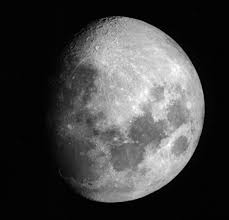
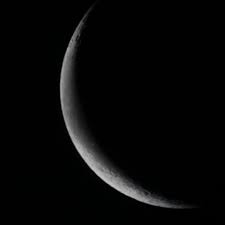
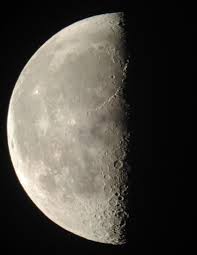
What phase is this?
a)
Full Moon
b)
First Quarter Moon
c)
Last Quarter Moon
d)
New Moon
112.
What phase is this?
a)
First Quarter Moon
b)
Last Quarter Moon
c)
Waxing Gibbous Moon
d)
Waning Gibbous Moon
113.
What phase is this?
a)
Waning Gibbous Moon
b)
Waxing Gibbous Moon
c)
Waning Crescent Moon
d)
Waxing Crescent Moon
114.
Waxing means...
a)
Growing
b)
Dying
c)
Losing light
d)
Moving
115.
What would be the result if the Earth's axis was not tilted but straight up and down?
a)
Nothing would change
b)
There would be no seasons
c)
Days would get longer
d)
The Equator would burn up and the poles would freeze
116.
Name the phase of the moon for letter a
a)
First Quarter
b)
Last Quarter
c)
Waxing Gibbous
d)
Waning Gibbous
117.
Name the phase of the moon for letter f
a)
Waning Gibbous
b)
Waxing Gibbous
c)
Waning Crescent
d)
Waxing Crescent
118.
What is illuminating the Moon?
a)
Nuclear Fusion
b)
Sunlight
c)
Mirrors
d)
Flood Lights
119.
What moon phase is at position 1? 
a)
new moon
b)
waxing gibbous
c)
waning gibbous 
d)
waning crescent 
120.
What moon phase is at position 6? 
a)
waxing crescent 
b)
waxing gibbous
c)
waning gibbous 
d)
waning crescent 
121.
What moon phase is at position 3? 
a)
waxing crescent 
b)
1st quarter
c)
3rd quarter 
d)
waning crescent 
122.
What moon phase is at position 4? 
a)
waxing crescent 
b)
waxing gibbous
c)
waning gibbous 
d)
waning crescent 
123.
What moon phase is at position 4? 
a)
waxing crescent 
b)
waxing gibbous
c)
waning gibbous 
d)
waning crescent 
124.
When we cannot see the moon from Earth, what kind of moon is it?
a)
Waning Crescent
b)
Last Quarter
c)
New Moon
d)
Old Moon
125.
When the lighted part of the moon is getting smaller what kind of moon is it?
a)
Waxing
b)
Waning
126.
What kind of moon is this...
The moon is increasing in
light between a first quarter moon and a full moon. 
a)
Waxing Gibbous
b)
Full Moon
c)
Waning Gibbous
d)
Waxing Crescent
127.
Which type of eclipse is being modeled:  Lunar or Solar
a)
Lunar Eclipse
b)
Solar Eclipse
128.
Eclipse that occurs during a New Moon.
a)
Lunar
b)
Solar
129.
The theory that explains the formation of the solar system is called ____.
a)
Nebulis Theory
b)
Nebular Theory
c)
Big Bang Theory
d)
Big Nebulan Theory
130.
What is the shape of a planet's orbit?
a)
circular
b)
elliptical
c)
spherical
d)
round
131.
The average distance between the Earth and the sun is a(n) ____.
a)
light year
b)
light minute
c)
astronomical year
d)
astronomical unit
132.
The __________ has planets, moons, comets, and asteroids.
a)
solar system
b)
earth
c)
rotation
d)
United States
133.
How long ago was our sun formed?
a)
10 million years ago
b)
5 million years ago
c)
4.5 billion years ago
d)
2 billion years ago
134.
What force acted on the massive nebula to collapse it and eventually form our sun?
a)
electrostatic force
b)
strong force
c)
 weak force
d)
gravity
135.
Planets that are closer to the sun
a)
take more time to orbit
b)
take less time to orbit
136.
The order of the planets is:
a)
Mars,Venus,Earth,
Mercury,Saturn
Jupiter, Uranus, Neptune
b)
Earth,Venus,Mars
Jupiter, Neptune,
Mercury,Saturn,
Uranus
c)
Mercury,Venus,Earth
Mars,Jupiter,
Saturn,Uranus
Neptune
137.
Which planet is fifth from the sun?
a)
Saturn
b)
Jupiter
c)
Mars
d)
Earth
138.
Which planet is seventh from the sun?
a)
Saturn
b)
Earth
c)
Venus
d)
Uranus
139.
which planet is the third from the sun?
a)
Mercury 
b)
Neptune 
c)
Pluto 
d)
Earth 
140.
Which is the fourth planet from the sun?
a)
Mars
b)
Saturn
c)
Earth
d)
Jupiter
141.
Which is the second closest planet to the sun?
a)
Earth
b)
Saturn
c)
Venus
d)
Mercury
142.
The earth orbits around...
a)
the sun.
b)
the moon
c)
other planets
d)
the Milky Way
143.
True or False
The Earth is the center of the solar system.
a)
True
b)
False
144.
What is a common characteristic of the inner planets?
a)
Large
b)
Gaseous
c)
Rings
d)
Rocky Surface
145.
What is NOT a common characteristic of the outer planets?
a)
Gaseous
b)
Giant
c)
Rings
d)
Smaller than Earth
146.
Which planet is the smallest?
a)
Mercury
b)
Venus
c)
Earth
d)
Mars
147.
What force keeps the planets orbiting the sun?
a)
Gravity
b)
Magnetism
c)
Electricity
d)
Friction
148.

Which statement is true?

a)

Earth revolves around the sun and the moon.

b)

The sun revolves around Earth over a 24-hour time period.

c)

Earth rotates on its axis, and revolves around the sun.

d)

Earth rotates around the sun and revolves on its axis.

149.

How long does it take the moon to revolve around the Earth and go through its eight phases?

a)

12 hours

b)

28 days

c)

365 days

d)

24 hours

150.

Which type of eclipse is shown in this picture?

a)

Total Eclipse

b)

Lunar Eclipse

c)

Orbit

d)

Solar Eclipse

151.

If the moon is at position 3 in the diagram, what would it look like?

a)

b)

c)

d)

152.

Which type of eclipse is shown in the diagram?

a)

Partial Solar Eclipse

b)

Partial Lunar Eclipse

c)

Total Lunar Eclipse

d)

Total Solar Eclipse

153.

Based on the diagram showing the phases of the Moon, which position (numbered 1 to 8) represents the Full Moon phase?

a)

Position 1

b)

Position 3

c)

Position 5

d)

Position 7

154.

If the moon is at position 8, what would it look like?

a)

b)

c)

d)

155.

If the moon is at position 5 in the diagram, what would it look like?

a)

The moon would appear as a waning gibbous (top image).

b)

The moon would appear as a waxing crescent.

c)

The moon would appear as a full moon.

d)

The moon would appear as a new moon.

156.

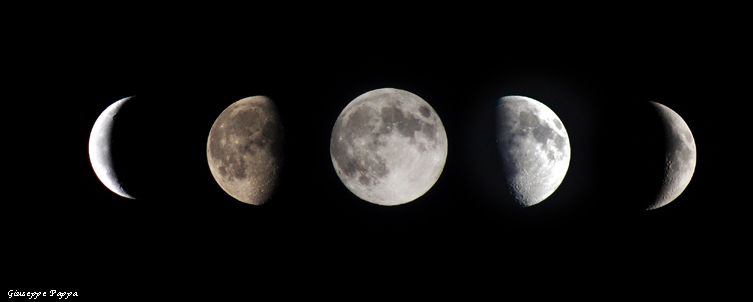
Which of the following images shows a full moon?

a)

The first image

b)

The second image

c)

Both images

d)

Neither image

157.

What is a common characteristic of the inner planets?

a)

Rocky Surface

b)

Rings

c)

Gaseous

d)

Larger than outer planets

158.

As mass increases, what happens to gravitational force?

a)

Not enough information is known

b)

decreases

c)

Stays the same

d)

Increases

159.

Only one side of the moon is visible from Earth because

a)

the moon revolves once and rotates once in the same period of time.

b)

the moon rotates faster than it revolves.

c)

the moon does not revolve around the Earth.

d)

the moon does not rotate on its axis.

160.

Which planet is the smallest?

a)

Mars

b)

Venus

c)

Earth

d)

Mercury

161.

What happens when the area in which you live tilts away from the sun?

a)

Fall

b)

Spring

c)

Winter

d)

Summer

162.

The time required for the earth to rotate once on its axis...

a)

6 months

b)

Month

c)

Year

d)

Day

163.

Colorado and Montana are nearly identical in elevation. However, on average Colorado is 7 degrees warmer than Montana. Why is it warmer in Colorado?

a)

Colorado has more water and heat energy is transferred to water much faster.

b)

Colorado is further south than Montana. The sun light is more direct so it receives more solar energy.

c)

Montana is further north than Colorado. The sun light is less direct so it receives more solar energy.

d)

Colorado has more snow that reflects solar energy and increases the temperature

164.

What do we call the path of an object when it goes around another object?

a)

Terminal Velocity

b)

Free Fall

c)

Projectile Motion

d)

Orbit

165.

From the Sun, place the INNER PLANETS in order (closest to farthest)

(a)   (b)   (c)   (d)  

Choose from the below words
Earth
Mars
Mercury
Venus
Jupiter
Saturn
Uranus
Neptune
166.

Starting with the OUTTER PLANET closest to the Sun, place the OUTTER PLANETS in order (closest to farthest)

​ (a)   , ​ (b)   , ​ (c)   , ​ (d)  

Choose from the below words
Jupiter
Saturn
Uranus
Neptune
Earth
Venus
Mars
Mercury
167.

What phase is the Moon in on February 19?

a)

Third Quarter

b)

Waxing Half Moon

c)

First Quarter

d)

Waning Half Moon

168.

You observe a thin crescent moon in the western sky during the early evening. About two weeks later, a full moon is visible in the eastern sky during the early evening. Which conclusion is best supported by these observations?

a)

Earth's axis is tilted relative to the moon.

b)

Earth revolves around the sun.

c)

The moon rotates on its axis.

d)

The moon revolves around the Earth.

169.

Sunlight hits Earth’s surface most directly at the _______. Because of this, this particular area doesn't experience seasons.

a)

equator

b)

North Pole

c)

South Pole

d)

Tropic of Cancer

170.

Planets closer to the Sun will orbit __________.

a)

at the same speed as outer planets

b)

at random speeds

c)

Slower

d)

Faster

171.

What phase was the Moon on February 14 of 2017?

a)

Third Quarter Moon

b)

Three Quarter Moon

c)

Waxing Gibbous

d)

Waning Gibbous

172.

What is a common characteristic of the outer planets?

a)

Smaller than Earth

b)

Volcanic activity evident

c)

Rocky surface

d)

Gaseous

173.

The shortest day of the year in North America is the _______.

a)

Equinox

b)

December Solstice (Winter Solstice)

c)

June Solstice (Summer Solstice)

d)

New year

174.

Which term describes the time it takes for Earth to complete one circle around the sun.

a)

Barycenter

b)

Orbit

c)

Revolution

d)

Rotation

175.

As the moon's shape appears to get smaller, we say that the moon is _.

a)

disappearing

b)

waning

c)

waxing

d)

swelling

176.

What are the reasons for the seasons?

a)

Earth's tilt and revolution.

b)

The distance from the moon.

c)

The speed of Earth's rotation.

d)

The amount of rainfall.

177.

What is the force that pulls the earth towards the sun?

a)

Gravity

b)

Magnetism

c)

Friction

d)

Electricity

178.

Match the season in the northern hemisphere with correct position

179.

What causes day and night?

a)

The Moon blocks the Sun

b)

Revolution of the Earth

c)

Orbit of the Earth

d)

Rotation of the Earth

180.

Look at the moon pictures. Click on the two moons that are almost full (gibbous moons).

181.

In what position must the sun be in order to create a new moon?

182.

Click on third or last quarter moon

183.

Click on the two crescent moons

184.

Click on the two quarter moons