
 Worksheets
W Geo CBA Review Part 2: Units 1-2
Total questions: 61
Worksheet time: 34mins
Geography is...
The study of Earth and how we, the people who live there, interact with it.
The study of Earth and its atmosphere.
The study of rocks, minerals, and all physical attributes of Earth
Primary and a few secondary activities are the most commonly found industries in
developing countries
newly industrialized countries
developed countries
An engineer or research scientist is an example of a _________ activity
Primary
Secondary
Tertiary
Quarternary
Where does North Korea fall on the economic spectrum between free enterprise and command economy?
Free enterprise
Socialist
communist
Mixed economy

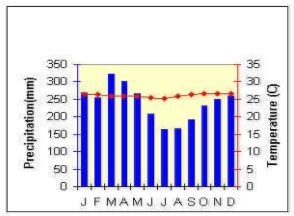
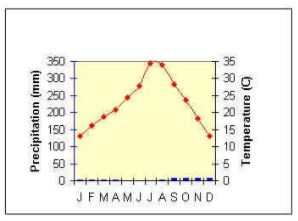


Which of the following statements explains how elevation influences climate?
The Earth's atmosphere thins as elevation increases, producing a colder climate.
Thinner air occurs at lower elevations, lowering temperatures.
As elevation increases, temperatures rise.
.Mountains at higher elevations receive direct sunlight.
The economic continuum shows us –
The command economy’s level of power in industries such as oil and technology.
The amount of oil each country in Southwest Asia produces in a year.
How much government or individual control is given in a country’s economic system.
The total dollar amount of goods and services produced by a country in a single year.
When people change something about the environment they...
modify the environment
adapt to the environment
depend on it
destroy it
When people change something about themselves to survive or be more comfortable in their environment they....
modify the environment
adapt to the environment
settlement pattern
region

The Equator is ...
An imaginary line going across the center of Earth that separates the eastern and western hemisphere.
A region created when the Earth is divided in half.
An imaginary line going across the center of Earth that separates the north and south hemisphere.
Which best describes a line of latitude?
divides the earth into the northern and southern hemispheres
measures distances north and south of the equator
runs in an east/west direction
all of the above
Weathering breaks down rock and erosion moves weathered material. Which of these processes would be responsible for creating a plateau or mesa?
erosion
weathering
tectonic activity
none of the above

Landforms and the tectonic activity that created them are part of which sphere of the Earth?
atmosphere
biosphere
lithosphere
hydrosphere

Based on the above chart what happens to temperature as elevation increases?
It remains the same
it goes down
it increases
An area with shared physical or human traits can best be classified as a
region
place
location
country
Which of the following statements would show how people modify their environment?
Building a Dam
Wearing a Winter Coat
Drinking Water from the Great Lakes
Buying shoes
Culture means
art museums and theaters are part of a culture
developing countries have more complex language
a government organizes and directs the economy
a distinct way of living and behaving learned by members of a society and passed down from generation to generation

Based on the data in the table, which countries would be considered more developed?
Mexico and Singapore
Haiti and Singapore
Haiti and Nigeria
Mexico and Nigeria
Which level of economic development is typical of nations with high infant mortality rates, low literacy rates, and low life expectancy rates?
tertiary
more developed
newly industrialized
less developed

Based on the economic indicators in the table above, which nation appears to have the highest level of economic development in comparison to the others?
Peru
Mexico
Brazil
Argentina

Based on the economic indicators in the table above, which nation would be described as less developed?
Peru
Mexico
Haiti
Brazil

Which type of region is described in the above excerpt?
Functional
Political
Climate
Formal
Why would geographers consider the Rust Belt Region, a perceptual region?
The region is bound by the borders of Michigan, Ohio, Pennsylvania, and Indiana.
The region is characterized by a common climate and vegetation zones.
The region is defined by beliefs about economic conditions in the area.
The region is inhabited by a large majority from one religious group.

Based on the photo, which factor highly influences the character of this place?
Mountainous physical geography
Sub-tropical climate conditions
Mining economic activities
Urban population density

________________________ makes a pattern where different sections of the Earth receives distinct quantities of sunshine.
Earth-Sun relationship
Solar Eclipse
Lunar Eclipse
Earth-Moon relationship

______________ is the process of eroding or being eroded by wind, water, or other natural agents.
Erosion
Transform
Weathering

The Amazon Rain forest is a ___________ due to its similar climate and vegetation.
Formal region
Perceptual region
Functional region
Cultural region

Using the pyramids above, which of these pyramids is expansive (young and growing)?
New Zealand
Japan
India
None of the Above
Which of the following would be correct in a country with a true free enterprise economic system?
Complete Government Ownership
Government Owns Many of the Businesses
Some Limited Government Interference
Little to No Government Interference
Which of the following are an ELEMENT of an individual's culture? ( click all that apply )
Language
Religion
Government
Music
Clothing
Which type of government is being described
"rule of the people" refers to a political system in which the people or their elected representatives govern their own country.
Totalitarian
Theocracy
Democracy
Republic
Which type of government is being described
A government where priest rule in the name of God or by officials who are regarded as divinely guided, or consistent with the principles of religion.
Democracy
Theocracy
Totalitarian
Republic
The following attributes would describe which type of country :
Government controls all domestic broadcast media
Television stations are controlled by the armed forces
TV stations are a joint state-private venture
Access to satellite TV is limited
radio stations are joint state-private ventures
Republic
Theocracy
Democracy
Monarchy
Dictatorship
Father has a full time job that earns an average income.
Mother is a stay at home wife and the 2 kids attend school.
The family lives in an average size home in a neighborhood.
Access to all kinds of technology such as televisions, computers, and ipads. Their home has the normal amenities, such as microwave, cable TV, electricity and running water.
This family setting appears to come from
A newly industrialized country
Less developed country
More developed country
A developing country
No evidence to support any answer

