
 Worksheets
PGG
Total questions: 85
Worksheet time: 2hrs 35mins
Name
Class
Date
1.
What is a benefit of using a parallel circuit?
a)
It gets confusing.
b)
There are no problems.
c)
If one light goes out, it does not affect the others.
d)
If one light goes out, they all go out.
2.
What is one problem with using a series circuit?
a)
It has a lot of series.
b)
If one light goes down, they all go down!
c)
It doesn't work properly.
d)
There are no problems.
3.
A flow of electrons through a conductor is called:
a)
A river
b)
A spark
c)
An electron flow
d)
A current
4.
What are the two poles of a magnet called?
a)
North and South
b)
East and West
c)
Up and Down
d)
Red and Blue
5.

What kind of circuit is this?
a)
Series
b)
Consecutive
c)
Parallel
d)
Training
6.

What kind of circuit is this?
a)
Series
b)
Consecutive
c)
Parallel
d)
Training
7.
wood is a _____?
a)
conductor
b)
insulator
8.

In a parallel circuit if one of the light bulbs burns out the rest _________.
a)
stop the flow of electricity
b)
can still light up
c)
will go out
d)
of the light bulbs burn out also
9.
Which best describes a series circuit?
a)
It has two light bulbs.
b)
The same current flows through both light bulbs.
c)
It uses a single battery.
d)
The current is divided between the light bulbs.
10.
____________ allows electricity to flow.
a)
A conductor
b)
An insulator
c)
A magnet
11.
Two types of circuits are
a)
parallel and magnetic
b)
electromagnetic and series
c)
series and parallel
12.

Would would best complete this circuit?
a)
A wire
b)
A switch
c)
A battery
d)
A light bulb
13.
Metals such as copper, iron, gold, and silver are ...
a)
conductors
b)
brittle
c)
insulators
d)
resistors
14.

What types of charges attract?
a)
Positive and Positive
b)
Positive and Neutral
c)
Negative and Neutral
d)
Positive and Negative
15.
What subject is attracted to a magnet?
a)
Silver
b)
Water
c)
Metal
d)
Iron
16.
What happens when two north poles of a magnet are placed together?
a)
they repel
b)
they attract
c)
they cancel each other out
d)
the strength of the magnet is doubled
17.
How is Earth's magnetic field similar to that of a magnet?
a)
It is hundreds of miles long
b)
It has north and south poles
c)
It is made in Earth's core
d)
It is shaped like a horseshoe
18.
What is our best evidence that Earth has a magnetic field?
a)
All things fall toward Earth's center
b)
A compass needle lines up with it
c)
Winds blow from east to west
d)
Earth's oceans all have currents
19.
When two magnets attract, they ______________
a)
push apart
b)
change color
c)
get colder
d)
pull together
20.
When two magnets repel, they ________________
a)
change color
b)
pull together
c)
push apart
d)
get colder
21.
How can the strength of an electromagnet be increased?
a)
by rubbing it with a stronger magnet
b)
by increasing the coils of wire around the iron
c)
by increasing the length of the wire from the battery
d)
by loosening the coil of wire around the iron
22.
True or False: A magnetic field is invisible.
a)
True
b)
False
23.
The planet earth is a giant magnet?
a)
True
b)
False
24.

What do the lines around this magnet represent?
a)
North Pole
b)
South Pole
c)
Magnetic Declination
d)
Magnetic Field
25.
If you cut a magnet in half, what happens to the poles?
a)
One half gets the North Pole, the other half gets the South Pole
b)
Both halves get only a North Pole
c)
Both halves get only a South Pole
d)
Both halves get a North pole and a South Pole
26.
What is responsible for the Magnetic Field around Earth?
a)
The Earth's crust
b)
The Earth's molton iron core
c)
The Earth's mantel
d)
The Sun
27.
An example of a renewable energy resource is:
a)
coal.
b)
petroleum.
c)
hydroelectric power.
d)
nuclear power.
28.
Renewable energy that comes from the sun is:
a)
solar power.
b)
hydroelectric power.
c)
wind power.
d)
electromagnetic power.
29.
What is a force that opposes motion between two surfaces?
a)
friction
b)
acceleration
c)
velocity
d)
motion
30.
What is the difference between mass and weight?
a)
mass is how much matter is in an object, and weight is the gravitational pull on that object
b)
mass and weight are the same
c)
weight affects how much mass is in an object
d)
weight is determined by how many atoms make up an object
31.
What are two examples of forces?
a)
Art and Music
b)
A push or pull
c)
A stand or ground
d)
The dark side and the light side
32.
What pulls a ball back to earth?
a)
Gas
b)
Gravity
c)
Friction
d)
Molecules
33.
Why does a rolling ball stop?
a)
Gravity
b)
Friction
c)
Waterfalls
d)
Sand
34.

If these boys are pulling with the same amount of force. What will happen?
a)
The boy in blue will win.
b)
They will not move at all.
c)
The boy in red will win.
d)
Both will fall down.
35.

What type of force?
a)
Magnetic
b)
Gravitational
c)
Applied
d)
Normal
36.

What force holds the planets in motion around the sun?
a)
Magnetic
b)
Electrical
c)
Gravitational
d)
Air Resistance
37.

What force brings the pencil down?
a)
Applied
b)
Magnetic
c)
Normal
d)
Gravitational
38.
What is defined as a push or pull?
a)
force
b)
motion
c)
vector
d)
speed
39.

What is the net force?
a)
30 N left
b)
25 N right
c)
5 N left
d)
55 N right
40.
Which of these animals would probably cause the greatest pressure on the ground?
a)
A fat cow with big feet
b)
A fat cow with small feet
c)
A calf with big feet
d)
A calf with small feet
41.
Where would you find the largest pressure?
a)
At the bottom of the ocean
b)
At the top of Mt Everest
c)
Close to ground on the Scotch oval
d)
In a rockpool on the Great Barrier Reef
42.

Where is pressure the greatest on the dam?
a)
D
b)
C
c)
B
d)
A
43.

What is the buoyant force?
a)
7 N
b)
9 N
c)
5 N
d)
2 N
44.

What is the apparent weight?
a)
7 N
b)
2 N
c)
5 N
d)
9 N
45.
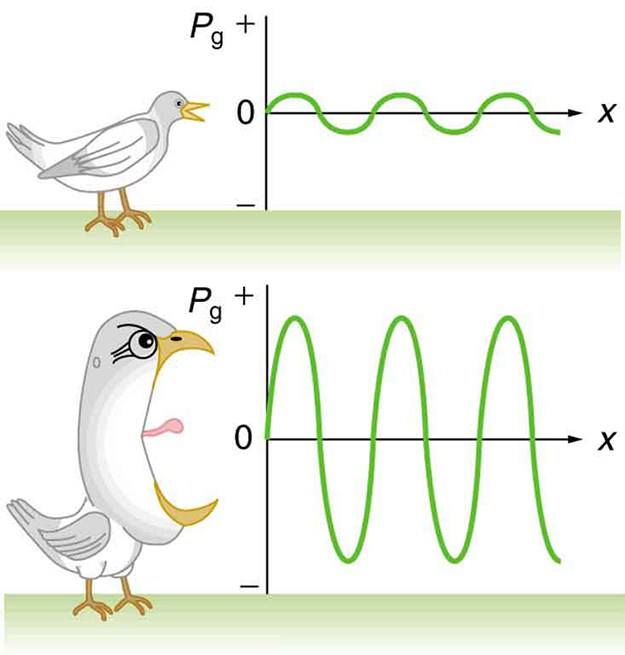
When a sound is louder what measurement gets bigger?
a)
Frequency
b)
Amplitude
c)
Wavelength
d)
Crest
46.
What does pitch depend on?
a)
amplitude
b)
frequency
c)
intensity
d)
volume of sound
47.
Which of the following does sound depend on?
a)
type of medium
b)
distance to the medium
c)
height of the medium
d)
vibration of the medium
48.

If the distance represented by the letter A were increased, how would it change the way the sound was heard?
a)
The sound would be higher.
b)
The sound would be lower.
c)
The sound would be softer.
d)
The sound would be louder.
49.
True or False: Sound travels better through solids than through liquids
a)
True
b)
False
50.
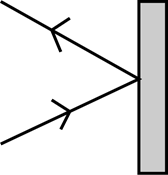
The illustration shows a light ray striking an object.
In the illustration, the light ray striking the object is-
In the illustration, the light ray striking the object is-
a)
absorbed
b)
stopped
c)
reflected
d)
refracted
51.
Which surface is the best reflector of sound?
a)
bumpy and soft
b)
smooth and soft
c)
smooth and hard
d)
bumpy and hard
52.
What does the motion of the source of a sound cause?
a)
resonance
b)
shock waves
c)
the Doppler effect
d)
echolocation
53.
Which feature of sound is determined by amplitude?
a)
Pitch
b)
Smoothness
c)
Loudness
54.

What class of lever is this?
a)
1st class
b)
2nd class
c)
3rd class
d)
None of the above
55.
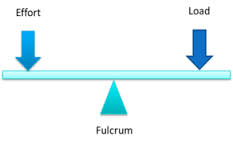
Which type of lever is this?
a)
First Class Lever
b)
Second Class Lever
c)
Third Class Lever
d)
Coach Class Lever
56.
How many types of levers are there?
a)
1
b)
2
c)
3
d)
4
57.

A see saw is an example of a:
a)
1st class lever
b)
2nd class lever
c)
3rd class lever
58.

A wheelbarrow is an example of a:
a)
1st class lever
b)
2nd class lever
c)
3rd class lever
59.
WHAT ARE THE 3 MAIN PARTS OF A LEVER?
a)
FOOT, EFFORT, REPORT
b)
FULCRUM, STRUCTURE, EFFORT
c)
FULCRUM, EFFORT, LOAD
60.
For a lever to be a first class lever the fulcrum needs to be ..
a)
between the load and the effort
b)
on one side and the load and effort on the other side
c)
on the same side as the load arm.
61.
Levers make work ________.
a)
Harder
b)
Easier
c)
Alright
d)
OK
62.

a)
1st Class
b)
2nd Class
c)
3rd Class
d)
It is not a lever
63.

a)
1st Class
b)
2nd Class
c)
3rd Class
d)
It is not a lever
64.
Load is the ___________ lifted or the resistance
a)
effort
b)
weight
c)
fulcrum
65.
The force applied to move an object
a)
effort
b)
load
c)
fulcrum
d)
resistance
66.
In second class lever, the load is between the fulcrum and _______.
a)
Load
b)
Effort
c)
Stone
67.

A push or pull is a
a)
load
b)
fulcrum
c)
force
d)
None of the above
68.
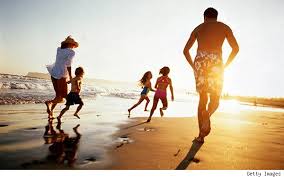
The sun shines down on this family as the play on the beach.
a)
conduction
b)
convection
c)
radiation
69.

Blow drying your wet hair.
a)
conduction
b)
convection
c)
radiation
70.
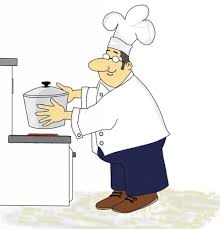
The man goes to take the hot pot off the stove with his bare hands.
a)
conduction
b)
convection
c)
radiation
71.
Heat moves by ______ when it travels from one solid to another solid.
a)
radiation
b)
convection
c)
thermal energy
d)
conduction
72.
The way heat moves in liquids and gases is called _______.
a)
convection
b)
radiation
c)
conduction
d)
temperature
73.
Plastic foam, wood, and rubber are good examples of ______.
a)
conductors
b)
insulators
c)
solar energy
d)
convection
74.

The heat from a hot burner to a pot is transferred by ______.
a)
convection
b)
insulation
c)
radiation
d)
conduction
75.
On a hot summer day, which shirt would you put on to make sure you stay cool while you are outside playing?
a)
A black shirt because it reflects the sun's energy.
b)
A white shirt because it reflects the sun's energy.
c)
A black shirt because it absorbs the sun's energy.
d)
A white shirt because it absorbs the sun's energy.
76.
How are heat from the sun and heat from a campfire alike?
a)
They move by radiation.
b)
They move by convection.
c)
They move by conduction.
d)
They are solar energy.
77.
Do sea breezes typically happen during the day or night?
a)
Day
b)
Night
78.
Do land breezes typically happen during the day or night?
a)
Day
b)
Night
79.
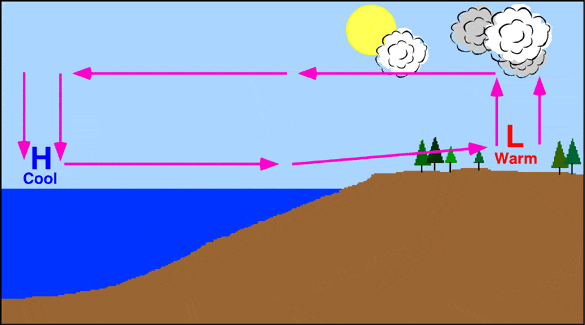
Is this a land or a sea breeze?
a)
land breeze
b)
sea breeze
80.
In a sea breeze, the air is warmer above the _____.
a)
land
b)
ocean
c)
sky
d)
beach
81.
Where does the initial source of energy come from that creates winds?
a)
the moon
b)
the sun
c)
the Earth's surface
d)
the rotation of the Earth
82.
Why do land breezes occur at night?
a)
Land cools off slower than water, so the air above water is cooler.
b)
Water cools off faster than land, so the air above land is warmer.
c)
Land heats up slower than water, so the air stays cooler during the day.
d)
Water cools off slower than land, so the air above water is warmer.
83.

Which warms up faster during the day?
a)
Sea/Water
b)
Land
84.
The air warms up how?
a)
The sun heats the air directly
b)
The sun heats the Earth's surface. The surface then heats the air above it
85.
Miss Nurul is a kind , cute and clever teacher.
a)
True
b)
False
100 %

