wayground logo

Free Printable Worksheets

Font size

S
M
L
XL
Worksheets

Semester 1 Physics Final Review

Total questions: 90

Worksheet time: 2hrs 45mins

Name
Class
Date
1.
Wheels on a skateboard most likely experiences-
a)
Rolling Friction
b)
Sliding Friction
c)
Fluid Friction
d)
Static Friction
2.
Sally experiences-
a)
Rolling Friction
b)
Sliding Friction
c)
Fluid Friction
d)
Static Friction
3.
Wheels of a shopping cart experience-
a)
Rolling Friction
b)
Sliding Friction
c)
Fluid Friction
d)
Static Friction
4.
Swimming fish experience-
a)
Rolling Friction
b)
Sliding Friction
c)
Fluid Friction
d)
Static Friction
5.
Friction is a force that acts in an ___________ direction of movement.
a)
similar
b)
opposite
c)
parallel
d)
west
6.
Which type of friction occurs when an object moves through a liquid or gas?
a)
sliding
b)
fluid
c)
static
d)
rolling
7.
Objects balanced on Timmy's head experiences-
a)
Rolling Friction
b)
Sliding Friction
c)
Fluid Friction
d)
Static Friction
8.
How does friction affect speed?
a)
more friction decreases speed
b)
more friction increases speed
c)
less friction decreases speed
d)
less friction doesn't affect speed
9.
Mr. S normally uses praise as a reward to train his dog. He wants to know the best way to train his dog, so he sets up an experiment to find out if there is a better way to get his dog to respond to commands. What is his independent variable?
a)
Type of reward
b)
Praise
c)
Type of dog
d)
Amount of time the dog follows commands
10.
Mr. S normally uses praise as a reward to train his dog. He wants to know the best way to train his dog, so he sets up an experiment to find out if there is a better way to get his dog to respond to commands. What is his independent variable?
a)
Type of reward
b)
Praise
c)
Type of dog
d)
Amount of time the dog follows commands
11.
Mr. S normally uses praise as a reward to train his dog. He wants to know the best way to train his dog, so he sets up an experiment to find out if there is a better way to get his dog to respond to commands. What is his dependent variable?
a)
Type of reward
b)
Praise
c)
Type of dog
d)
Amount of time the dog follows commands
12.
The independent variable is the ONE thing you _____.
a)
change
b)
keep the same
c)
experiment with
d)
investigate
13.
A student wants to test the effects of type of exercise on heart rate.  What is the dependent variable?
a)
heart rate
b)
type of exercise
c)
amount of exercise
d)
time of day exercise occurs
14.
What is a hypothesis?
a)
A hypothesis is the right answer to an experiment.
b)
A hypothesis is the wrong answer to an experiment.
c)
A hypothesis is an educated guess.
15.
Why do we want to test one variable at a time?
a)
Because it is hard to setup a data table with more
b)
To know what is causing the changes
c)
It is what has always been done
d)
No one really knows
16.
An experiment is performed on plants to see how different liquids affect plant growth. Each plant in the experiment is given a different liquid; water, apple juice, or milk. Each plant has the same amount of soil, sunlight, and listens to the same music. In this investigation, what is the dependent variable?
a)
Type of plant
b)
Water, apple juice, milk
c)
Plant growth
17.
Jessie is concerned about how tired his classmates seem. He created a drink that he thinks will boost their energy. He recruits 100 classmates with a history of tiredness. He has 50 of them drink his new special energy drink. The other 50 drink a beverage that looks like the special energy drink, but is just water and food coloring. Both groups were told that they were getting the special drink that would boost energy. After 2 hours, 30 classmates in the first group reported having more energy and 8 classmates in the second group reported having more energy.
What is the independent variable?
a)
Amount of energy
b)
Special energy drink
c)
The food coloring
18.
This part of the experiment serves as a basis of comparison; the one variable being tested has been omitted. 
a)
experimental group
b)
control group
c)
data
d)
variables
19.
The summary at the end of an experiment that explains the results. 
a)
conclusion
b)
procedures
c)
materials
d)
responding variable
20.
Students are growing plants in the dark or in the light to see which grows better.  They put 3 seeds in the dark and 5 seeds in the light because they know seeds are more likely to dry out in the light. 
How could this experiment be improved?
a)
Put all plants in the light.
b)
Put all plants in the dark (where they sprout better)
c)
Put the same number of seeds in each container.
d)
put all the plants in the light so they grow better
21.
Students experiment on wilting.  They take 2 plants of the same size.  They put one in full sunlight and leave one in the classroom.  After 2 hours, the plant in the sun has drooped.
Students conclude that sunlight causes wilting.  How could this experiment be improved?
a)
Do more trials.  Only 1 plant in each spot isn't much repetition.
b)
They should put both plants in the same location.
c)
They should leave the plants in the location for less time so the plant isn't hurt by the sun.
d)
They should make sure to water both plants first.
22.
Mr. S. uses a new spray cleaner to remove the green slime left by students on the tables.  Identify the control trial
a)
type of cleaner
b)
 test with a new cleaner
c)
test with the old cleaner
d)
the green slime
23.
How many variables can be tested in a controlled experiment?
a)
one
b)
two
c)
three
d)
as many as possible
24.
The control group is the...
a)
group you are testing
b)
"normal" group
25.
The base unit of metric length.
a)
Meter
b)
Liter 
c)
Kilogram
d)
milligram
26.
The correct abbreviation for milliliter is..
a)
ML
b)
Ml
c)
mL
d)
ml
27.
The basic unit of metric volume is called a_____.
a)
Kilogram
b)
milligram
c)
Liter
d)
milliliter
28.
How many cm's is in a meter?
a)
1000
b)
10
c)
100
d)
1
29.
The appropriate abbreviation of centimeter is..
a)
cm
b)
Cm
c)
cM
d)
CM
30.
The abbreviation for gram is...
a)
G
b)
gg
c)
g
31.
m stands for....
a)
millimeter
b)
meter
c)
centimeter
d)
Liter
32.
What is the length of the eraser?
a)
3 cm 
b)
2 cm 
c)
5 cm
d)
7 cm
33.
The metric unit of measurement for length is the: 
a)
gram
b)
liter 
c)
meter
d)
cm
34.

speed of an object in a particular direction

a)

motion

b)

velocity

c)

speed

d)

acceleration

35.

when an object changes its position compared to a reference point.

a)

acceleration

b)

speed

c)

motion

d)

reference point

36.

total distance traveled divided by total time taken to travel that distance

a)

velocity

b)

motion

c)

acceleration

d)

average speed

37.

the rate at which speed or velocity changes

a)

acceleration

b)

average speed

c)

motion

d)

reference point

38.

an object that appears to stay in place and that helps you detect motion in another object

a)

acceleration

b)

average speed

c)

motion

d)

reference point

39.

What is happening at segment E?

a)

acceleration

b)

deceleration

c)

constant speed

d)

no motion/object at rest

40.

What is happening at segment B?

a)

acceleration

b)

deceleration

c)

constant speed

d)

no motion/object at rest

41.

A runner crossed the 1 mile marker of a race running at a speed of 9 miles per hour. She crossed the finish line running at a speed of 9.8 miles per hour. Did the runner change her velocity?

a)

Yes

b)

No

42.

A runner crossed the 1 mile marker of a race running at a speed of 9 miles per hour. She crossed the finish line running at a speed of 9.8 miles per hour. This is an example of...

a)

positive acceleration

b)

negative acceleration

c)

no acceleration

43.

The formula for calculating speed is...(x means multiply; / means divide)

a)

time x distance

b)

distance x speed

c)

distance / time

d)

time / distance

44.

Speed = _______________

a)

Distance + time

b)

Distance – time

c)

Distance x time

d)

Distance / time

45.

Velocity = _______________

a)

Speed – direction

b)

Speed + direction

c)

Speed x direction

d)

Speed / direction

46.

At what speed would a car have to move in order to travel 20 kilometers in 2 hours.

a)

5 km/hr

b)

10 km/hr

c)

20 km/hr

d)

40 km/hr

47.
What is the definition of velocity?
a)
A force that opposes motion
b)
Uniform circular motion
c)
The speed of an object in a particular direction
48.

What is this?

"This airplane is traveling at 500 mph, West"

a)

Speed

b)

Velocity

c)

Acceleration

49.

A helicopter flies south 200 miles in 2 hours. What is its velocity?

a)

99 mph

b)

100 mph south

c)

400 mph south

d)

297 mph south

50.

What two things must you know to determine speed?

a)

distance and direction

b)

direction and time

c)

speed and direction

d)

time and distance

51.
If I choose to walk to school at a speed of 3mph, it will take me 4 hours to arrive. How far away do I live?
a)
7 miles
b)
12 miles
c)
1 mile
d)
.75 miles
52.

A runner races in the 100 meter dash. It takes her 10 seconds to finish. What is her average speed?

a)

10 m/s

b)

1000 m/s

c)

100 seconds

d)

10 seconds

53.
Sarah backstrokes at an average speed of 8 meters per second. How long will it take her to complete a 200-meter race?
a)
0.04 s
b)
1600 s
c)
50 s
d)
25 s
54.
What is the speed of a car that traveled 56 m in 4 seconds?
a)
64 m/s
b)
34 m/s
c)
14 m/s
d)
0.0625 m/s
55.
Which of the following is a unit for acceleration?
a)
km/s
b)
m/s2
c)
mi/hr
d)
ft
56.
65mi/hr South is an example of...
a)
Speed
b)
Velocity
c)
Acceleration
d)
Direction
57.
Find the velocity of a plane that traveled 3000 miles west in 5 hours.
a)
65 mph west
b)
6 mph west
c)
600 mph west
d)
6000 mph west 
58.
What is the velocity of an object that travels 20 meters in 4 seconds North?
a)
80 m/s North
b)
5 m/s
c)
5 m/s North
d)
24 m/s
59.

Colin skateboards down the sidewalk in front of the school, traveling at 24 km/h. How much time would it take him to travel 6.0 km?

a)

0.25 h

b)

0.4 h

c)

5.4 h

d)

12 h

60.
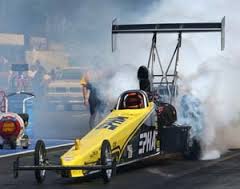
A drag racer accelerated from 0 m/s to 200 m/s in 5 s.  What was the acceleration?
a)
0 m/s
b)
40 m/s2
c)
-40 m/s2
d)
40 m/s
61.
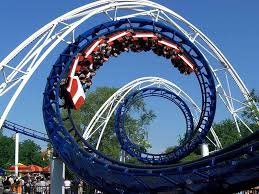
A roller coasters accelerates from an initial velocity of of 6.0 m/s to a final velocity of 70 m/s over 4 seconds.  What's the acceleration?
a)
24 m/s2
b)
18 m/s2
c)
16 m/s2
d)
16 m/s
62.
A school bus drives 35 mph down the street and slows as it approaches the stop sign.  This is an example of..

a)
acceleration
b)
speed
c)
velocity
d)
force
63.
How fast is the car traveling at 30 seconds?
a)
5m/s
b)
10m/s
c)
20m/s
d)
30m/s
64.

Which of the formulas is incorrect for speed

a)

s=d/t

b)

speed= distance/ time

c)

speed= t/d

65.

What is the speed formula?

a)

d = s*t

b)

s= time/distance

c)

d= speed/time

d)

s = distance/time

66.

What is force?

a)

a push or a pull

b)

motion

c)

acceleration

d)

interaction

67.

An object at rest stay at rest and an object in motion stays in motion until acted upon by an unbalanced force.

a)

Newton's 3rd Law

b)

Force

c)

Newton's 2nd Law

d)

Newton's 1st Law

68.

The acceleration of an object as produced by net force. F = m*a

a)

Newton's 1st Law

b)

Motion

c)

Newton's 2nd Law

d)

Newton's 3rd Law

69.

For every action there is an equal and opposite reaction.

a)

Newton's 2nd Law

b)

Newton's 1st Law

c)

Newton's 3rd Law

d)

None of the above

70.

What units is Force measured in?

a)

Grams

b)

Miles

c)

Hours

d)

Newtons

71.

Equal forces that do not cause a change in an objects motion

a)

Unbalance force

b)

Push or a pull

c)

Balanced force

d)

Average speed

72.

Are unequal forces that cause a change in the motion of an object

a)

Balanced forces

b)

Unbalanced forces

c)

Inertia

d)

Gravity

73.

The overall force exerted on an object; measured in Newtons.

a)

Balanced forces

b)

Unbalanced forces

c)

Net forces

d)

Newtons

74.

The force that attracts objects to the center of the Earth

a)

Friction

b)

Air resistance

c)

Motion

d)

Gravity

75.
What does friction produce?
a)
light
b)
sound
c)
heat
d)
gravity
76.
The force that acts in the opposite direction of motion when two surfaces come in contact. 
a)
Force
b)
Friction
c)
Static
d)
Kinetic 
77.

True or False: objects that are smooth have LESS friction than objects that are rough

a)

TRUE

b)

FALSE

78.

When you jump out of a plane to go skydiving 🪂 you thankfully have a parachute so you can safely land 🛫. Which answer choice explains why the parachute helps you land safely

a)

While gravity pulls you down very quickly, Air Resistance (fluid friction) pushes back against gravity and your parachute, slowing you down

b)

While gravity pushes you down very slowly, Air Resistance (fluid friction) pulls back against gravity and your parachute, which means you can land safely

c)

When you have a parachute gravity is not able to pull you down as fast as it normally can

d)

The parachute will get caught on something on your way down which will save your life

79.
A type of friction that occurs when air pushes against a moving object causing it to decelerate.
a)
surface area
b)
air resistance
c)
velocity
d)
gravity 
80.

without friction, an object in motion would never stop

a)

true

b)

false

81.

Fluid friction happens with objects moving through ______________ or ___________________.

a)

gases or liquids

b)

solids or liquids

c)

gases or solids

82.
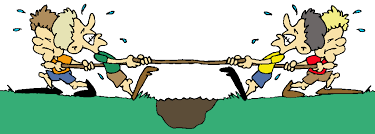
If these teams are pulling with the same amount of force what will happen?
a)
The boy in blue will win.
b)
They will not move at all.
c)
The boy in red will win.
d)
Both will fall down.
83.

Which of the following can be inferred from the graph?

a)

The object is experiencing acceleration.

b)

The object is moving along a curved path.

c)

The object has a negative acceleration.

d)

The object moves at a constant speed.

84.

Object is...

a)

constant speed

b)

speeding up

c)

slowing down

d)

stopped

85.
This graph demonstrates an object that is -
a)
Increasing speed 
b)
At a constant speed
c)
Decreasing speed 
d)
Stationary
86.

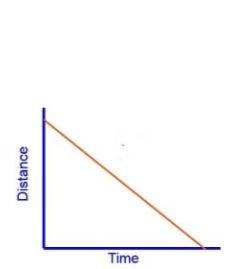
What is this line of this graph showing?

a)

moving away from starting point at a constant speed

b)

moving back towards the starting point

c)

acceleration (getting faster)

d)

deceleration (getting slower)

87.
Acceleration is
a)
increasing speed
b)
decreasing speed
c)
changing direction
d)
all of the above
88.
What is happening at E?
a)
Stationary
b)
Accelerating
c)
Fast steady speed; moving away from the starting position
d)
Steady speed; returning to start position
89.
Which runner won the race?
a)
A
b)
B
c)
C
90.
Which graph is showing acceleration (getting faster)
a)
D
b)
E
c)
both D and E
d)
neither D or E