
 Worksheets
Work, Power, and Energy Review
Total questions: 90
Worksheet time: 1hrs 8mins
Energy is
how fast you do something.
the ability to do work.
confusing.
how fast you lift something.
If you use 30 J of energy to move an object, you have done ____ J of work.
3
10
30
0
Jane carries a 5 kg box and Lorie carries a 10 kg box up a set of stairs, who did more work?
Jane because his box was lighter.
Lorie because her box weighed more.
Can't tell.
If you lift a box that is twice as heavy as your friend you are doing
the same amount of work.
two times more work than your friend.
half as much work as your friend.
Cannot be determined.
You push a crate with a force of 100 N for 5 meters. How much work did you do?
500 J
100 J
50 J
5 J

How much power is generated by Ashley (50 kg) running up a 6 m flight of stairs in 5 seconds?
60 W
62 W
600 W
1500 W

Work is done only if
a force is applied.
the force applied causes the object's motion.
an object is in motion.
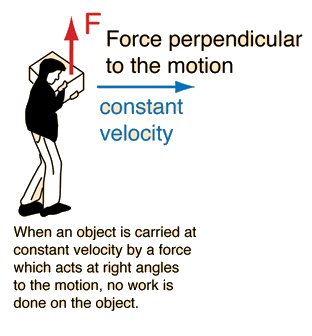
If you carry a 5 kg box across the room at a constant velocity
you do no work.
you do some work.
you do negative work.
Cannot be determined.

If you run up the stairs slower you will
do more work.
do less work.
generate more power.
generate less power.
What is the kinetic energy of a 10 kg ball moving at 3 m/s?
15 J
30 J
45 J
90 J
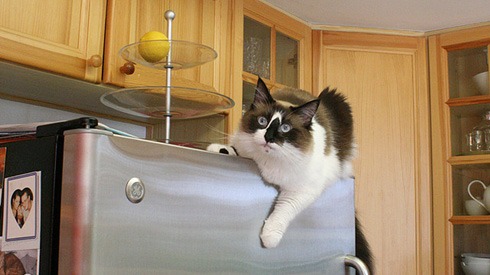
A 5 kg cat falls off a 3 m tall fridge. What is the cat's PE as it starts to fall?
15 J
30 J
150 J
1470 J

A 5 kg cat falls off a 3 m tall fridge. What is the cat's KE just before it lands on the floor?
15 J
30 J
150 J
1470 J
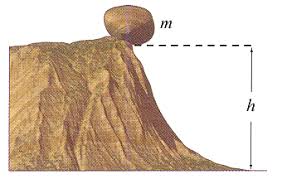
What is the mass of an object with 1200 J of PE when it is 5 meters above the ground?
10 kg
24 kg
100 kg
240 kg

What kind of energy(ies) does the car have at position A? The ground is h=0.
KE
KE + PE
PE
KE - PE
The equation for work is
work = power x mass
work = power / time
work = force x distance
work = distance x time
The equation for POWER is
power = mass x time
power = work / time
power = time / work
power = work x time
The equation for POTENTIAL ENERGY is
PE = mass x gravity x height
PE = gravity x weight
PE = height / work
PE = work / time
The equation for KINETIC ENERGY is
KE = mass x gravity
KE = 1/2 height x speed
KE = mass2
KE = 1/2 mass x speed2
The product of the net force on an object and the distance through which the object is moved
joule
power
work
energy
_______________ is done when a force acts on an object and the object moves in the direction of the force.
Work
Kinetic energy
Watt
Joule
The unit for work (aka Newton-meter)
Watt
Power
Work
Joule
________________ is the rate at which work is done.
Power
Work
Time
Energy
The unit of power (aka Joule per second)
Joule
Minute
Watt
Pound
The property of an object or system that allows it to do work is ________________.
Work
Energy
Power
Distance
______________ energy is due to the position of something or the movement of something.
Kinetic
Potential
Mechanical
Work
Energy that is stored and held in readiness
Kinetic
Mechanical
Work
Potential
Kinetic energy is the energy of ___________.
Distance
Motion
Work
Roman
This theorem states, "Whenever work is done, energy changes.
Work-Energy Theorem
Paul-Newman Theorem
Action-Reaction Theorem
Study-Now Theorem
Energy cannot be ________ or ___________.
big/small
left/right
created/destroyed
made/transferred
Energy can be transformed from one form into another, but the total amount of energy never changes.
Work-energy theorem
Law of conservation of energy
Newton's second law of motion
King's theorem of energy
Which does not illustrate kinetic energy?
It is expressed in Joule.
It depends upon the objects’ mass and speed.
It is the energy an object possesses due to its motion.
It depends upon the objects’ mass and objects’ height.
A roller coaster whose average speed is 32 m/s is at the top of a 72m hill and weighs 966N. At the top of the hill the coaster car has ___________________ energy.
only kinetic energy
only potential energy
mostly kinetic energy
both kinetic and potential energy
What is the potential energy of a 3kg ball that is on the ground?
0 J
3 J
9.8 J
29.4 J
Which statement does not illustrate power?
A farmer plowing the rice field all day.
A Siberian husky pulling a sled all day.
A principal sitting on a chair while observing several classes all day.
A teacher encoding his power point presentation in his laptop all day.
Who has the most power?
Ms Criza who encodes her observation tools using 12000J of work in 20 minutes.
Sir Pau who studies his 5 lessons for the next classes in 15 minutes.
Mrs Punzalan who used 50N force to inoculate mushrooms at a speed of 2m/s.
Mrs Masalunga who watches her learners while taking their quiz in 30 minutes.
A 100 N force is applied to move an object a horizontal distance of 5 meters at constant speed in 10 seconds. How much power is done?
50J
50W
500J
500W
Which statement illustrates work done?
A weightlifter holds a barbell above her head.
A teacher applies a force to a wall and becomes exhausted.
A rolling marble hits a note card and moves it across a table.
A waiter carries a tray full of meals across a dining room at a constant speed.
A weightlifter holds a 100 kg barbell above her head. Is work done?
Yes because there is a force applied to the barbell and the force causes a displacement of the barbell.
Yes because there is an upward force applied to the barbell and the barbell moves vertically.
No because no displacement occurred.
No because there is no force applied.

What is the energy possessed by the cart?
potential energy
kinetic energy
mostly potential
mostly kinetic

If the mass of the cart is 15kg, how much is the potential energy of the cart?
0J
1.2J
6J
58.8J

If the mass of the cart is 8.12kg, what is the kinetic energy of the cart?
0J
1.2J
6J
58.8J

How will you describe the energy at Point A?
mostly potential energy
mostly kinetic energy
losing PE, gaining KE
losing KE, gaining PE

What is the total mechanical energy of the object?
100J
75J
50J
25J
A 735kg empty roller coaster is at its starting point whose distance from the ground is 150m. After a while, it moves at point B whose distance from the ground is 120m. What is the kinetic energy of the coaster at point B?
1,080,450J
864,360J
216,090J
0J

Peter does 3,000 joules (J) of work by moving an object 40 meters (m). What is the force that Peter applies to the object?
75 N
2,960 N
3,040 N
120,000 N
Jamaican sprinter Usain Bolt, also known as “Lightning Bolt,” is considered to be the fastest person to date. The 94.0-kg Bolt set an Olympic record by running the 100-meter dash in 9.63 seconds. What was the average power output by Bolt during this sprint?
50.7 W
526 W
993 W
5064 W
A Tyrannosaurus rex did 107 kJ of work to lift its dinner, a 2721-kg hadrosaur, from the ground. To what height did the Tyrannosaurus rex raise the hadrosaur?
2.5 m
2.7 m
3.0 m
4.0 m
A force of 12 N is used to lift a box 0.5 meters above a floor. What amount of work was done to lift the box?
6.0 N•m
11.5 N
12.5 N
24.0 N•m

The chart shows the force applied on four different objects and the distance each object moves. On which object was the least amount of work done?
W
X
Y
Z
Jon had a flat tire on his car. He used a hydraulic jack to lift the car up so that he could change the tire. If Jon knows the amount of force used to lift the car 0.25 meter off of the ground, what is he able to calculate?
5 joules
20 joules
30 joules
60 joules
A robotic arm lifts a stack of cafeteria trays weighing 62 newtons (N). It moves the trays 2 meters (m). How much work has the robotic arm performed?
31 joules
64 joules
124 joules
186 joules
Susan and Joe push a table 18 meters down a hall by exerting a force of 200 newtons (N). What is the total amount of work done on the table?
1600 joules
1800 joules
2000 joules
3600 joules
When is work done on an object?
when a force is applied to an object and the object remains stationary
when a force is applied to an object and the object moves in the same direction as the force
when the frictional force on an object is greater than a force applied to the object
when two forces of equal magnitude are applied to the object in opposite directions
A forklift lifts 5 boxes from the ground to a height of 2 meters (m). The boxes push down with a force of 1000 newtons (N). How much work was done by the forklift to lift the boxes?
200 J
500 J
2000 J
10,000 J
You push against the back of your friends car that is stuck. You push and be become very tired, but the car does not move. Did you do work?
Yes, work was done
No, work wasn't done
If you increase your work and decrease your time, you will have
more power
less power
same amount of power
power rating can not be determined
Person A and Person B are both using the same amount of work to lift something. Person A takes half as much time to do it. Who has greater power.
Person A
Person B

A box is pushed across the floor a distance of 8 m with a force of 55 N in 7 s. What is the work done?
440 J
440 W
62.9 J
62.9 W

A force of 4.6 N moves a 2.7 kg box a distance of 3.3 m in 6.8 s. How much power is exerted?
2.23 W
6.03 W
17.4 W
278.7 W

What is the power of a kitchen blender if it can perform 3,750 Joules of work in 15 seconds?
250 W
0.004 W
56,250 W
25 W

What is the Total Mechanical Energy at point A?
500,000 J
400,000 J
200,000 J
50,000 J
What is the Kinetic Energy at point B?
500,000 J
400,000 J
300,000 J
50,000 J
What is the Kinetic Energy at point C?
500,000 J
400,000 J
300,000 J
50,000 J
What is the Kinetic Energy at point D?
500,000 J
250,000 J
300,000 J
50,000 J
What is the GPE at point E?
500,000 J
250,000 J
300,000 J
100,000 J
What is the GPE at point F?
500,000 J
250,000 J
300,000 J
0 J
What is the KE at point F?
500,000 J
250,000 J
300,000 J
0 J

What is the Total Energy at the top?
15,000 J
3,750 J
7,500 J
11,250 J
What is the KE 1/4th of the way down?
15,000 J
3,750 J
7,500 J
11,250 J
What is the KE 1/2 of the way down?
15,000 J
3,750 J
7,500 J
11,250 J
What is the KE 3/4th of the way down?
15,000 J
3,750 J
7,500 J
11,250 J
What is the KE at the bottom?
15,000 J
3,750 J
7,500 J
11,250 J

What is the Total Energy at the bottom?
50 J
25 J
0 J
100 J
What is the KE half way down?
50 J
25 J
0 J
100 J
What is the GPE at the top?
50 J
25 J
0 J
100 J
Which of the following is not correct?
An example of negative work is work due to friction
An example of positive work is work due to increasing energy.
Work due gravity is zero when an obect is moving horizontally.
Work can only be positive because it is a scalar quantity.

