
NEW
Font size
 Worksheets
Sponges and Cnidarians
Total questions: 50
Worksheet time: 39mins
Animal cells do not have
Cell walls
Cell membranes
Organelles
Nuclei
Organisms with membrane bound cells
Prokaryotic
Eukaryotic
Heterotrophic
Many small organisms move oxygen through their bodies by
Muscular contraction
Diffusion
Cellular respiration
An organism with distinct left and right sides
Asymmetrical
Radially symmetrical
Bilaterally symmetrical
A sponge can reproduce
Sexually
Asexually
Both sexually and asexually
Sponges don't reproduce
The function of flagella in sponges
Move water through the sponge
Help propel the sponge around the ocean
Produce toxins
Younger, stationary version of a jellyfish
Nematocyst
Medusa
Polyp
The medusa stage of a jellyfish reproduces how
Asexually
Sexually
Jellyfish cannot reproduce at this stage of their life
Reproduction in jellyfish
Internal
External
Coral reefs occur in areas with
High levels of fish
High levels of salt
High levels of sunlight
An organism with no backbone
Vertebrate
Invertebrate
Are jellyfish hermaphrodites?
Yes
No
Can the toxin in a jellyfish sting harm humans?
Yes
No
Transform nutrients throughout the sponge
Cnidocytes
Nematocysts
Amoebocytes
Simplest organisms to have symmetry
Sponges
Cniadrians
Worms
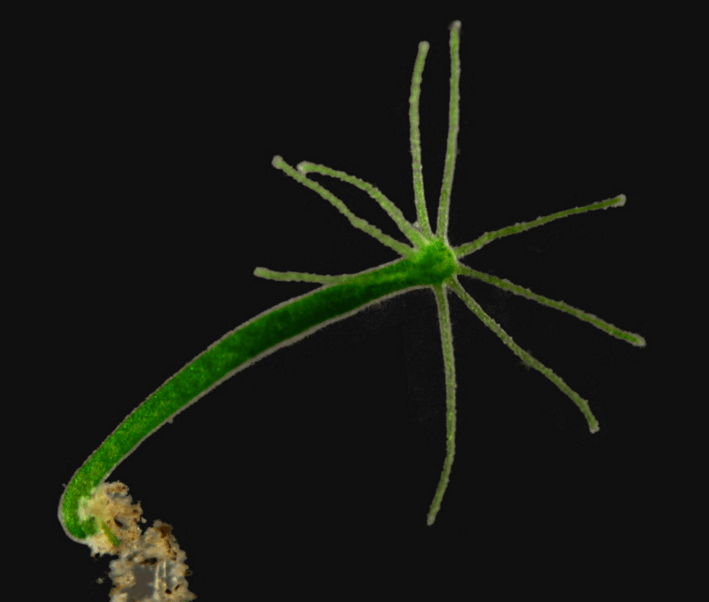
Take food into their bodies for energy.
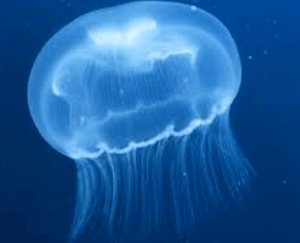
Jellyfish
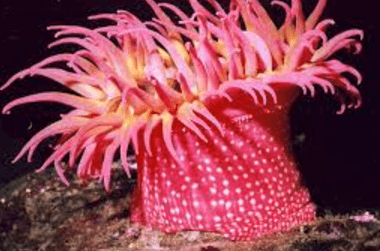
Sea anemone

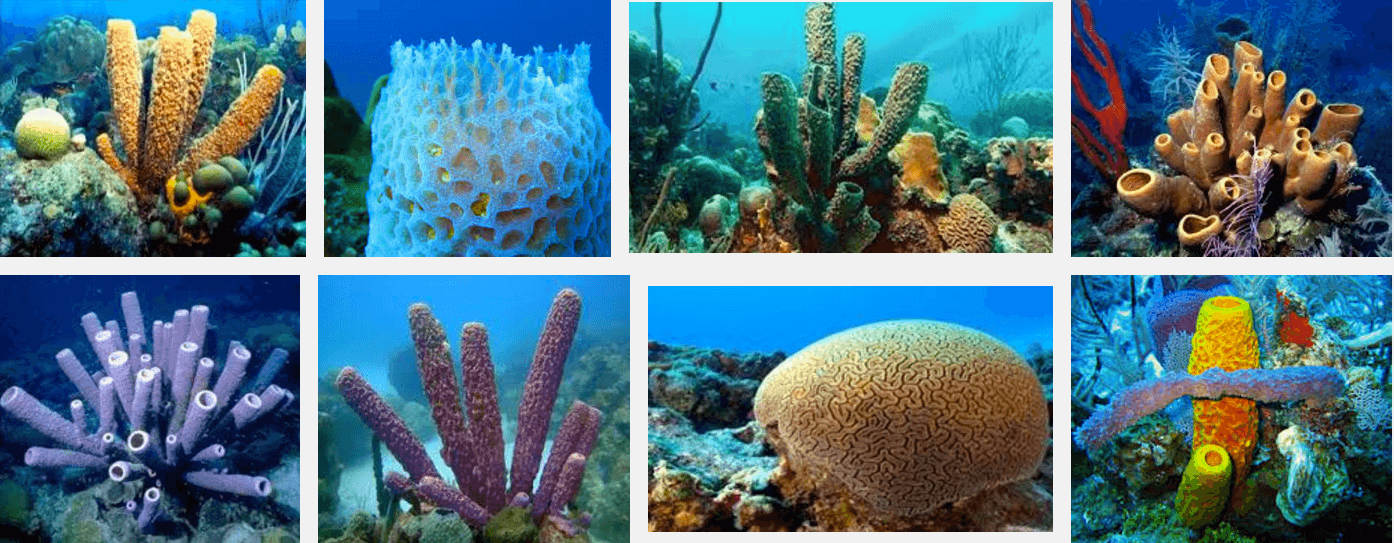
What type of habitat does a sponge live in
ocean
soil
trees
ground
Spicules
function to transport nutrients within a sponge.
are composed of Si and CaCO3.
aid in the reproduction of a sponge.
are made of soft, flexible proteins.
Algae
live symbiotically with sponges.
feed on sponges.
live symbiotically with cnidarians.
feed on cnidarians.
Cnidarians are more complex than
Platyhelminthes
Nematoda
Porifera
None of these
Cnidarians have which of the following?
Simple nervous systems
Cells that contract like muscles
Nematocysts
All of the above
Hermaphroditism is advantageous to sessile animals
because they cannot move to find a mate.
because they cannot move to find prey.
because they cannot produce gametes.
only during droughts.
Sponge cells illustrate the concept of division of labor
because amoebocytes transport nutrients and form spicules.
because epithelial cells protect the sponge's body.
because pore cells bring water into the sponge.
All of the above.
How is radial symmetry different than bilateral symmetry?
Radial symmetry can be divided into three equal halves.
Bilateral symmetry has a central point.
Bilateral symmetry can be divided into two equal halves.
None of the above.
Heterotrophic means
cells contain a nucleus.
an organism produces both eggs and sperm cells.
an organism feeds on other organisms.
an organism uses sunlight to create chemical energy.
Coral moves only during its larval stage?
True
False
Which of the following is NOT a characteristic if animals
Animals are multicellular.
Animal cells have cell walls.
Animals are consumers.
Animals break down food.
Animals that can move from one location to another only in early stages of their lives.
Blastulas
Protosomes
Deuterosomes
Sponges
Animals that have a body cavity between the endoderm and mesoderm are ____________________ animals.
sessile
acoelomate
pseudocoelomate
coelomate
What is the earliest developmental stage of an embryo?
Gastrula
Endoderm
Zygote
Blastula
An animal with a mouth that develops from the opening in the gastrula is called a ________________.
Deuterosome
Zygote
Blastula
Protosome
Eggs and sperm cells in sponges are formed from
Spongin
Flagella
Spicules
Amoebocytes
Which of these is NOT a type of reproduction found in sponges?
Budding
Sexual reproduction
Asexual reproduction
Regeneration
The two basic forms of Cnidarians include
polyps and medusae
nematocysts and polyps
nematocysts and medusae
internal and external fertilization

