
 Worksheets
Bio & Bio H Final Exam Review - Part 1
Total questions: 50
Worksheet time: 26mins

Why is photosynthesis important for plants?
It collects sunlight which is used to make food for plants
It gets rid of plant waste products
It changes plant sugar into stronger chemicals
It helps attract insects to flowers
Which of the following solutions is most basic?
a solution with a pH of 1
a solution with a pH of 5
a solution with a pH of 7
a solution with a pH of 11
Which organelle stores the cells DNA or genetic information?
chloroplast
mitochondria
lysosome
nucleus
What is the function of the cell membrane?
makes ATP
control center of the cell
controls what enters and leaves the cell
gets rid of wastes
What is the difference between the rough and smooth ER?
the rough ER has ribosomes on it
the rough ER is outside of the cell
the rough ER is protected by vesicles
the rough ER makes energy
The movement of water through a semipermeable membrane is called:
active transport
osmosis
endocytosis
exocytosis
Which of the following is NOT found in an animal cell?
chloroplast
cell membrane
mitochondria
lysosome
Which process provides the most energy for cell functions?
glycolysis
fermentation
aerobic respiration
electron transport
What is the end product of mitosis?
two genetically identical cells
four genetically identical cells
two genetically different cells
four genetically different cells
Interphase includes which three stages of the cell cycle?
gap 1, gap 2, and mitosis
gap 1, synthesis, and gap 2
synthesis, mitosis and gap 1
gap 2, synthesis, and mitosis
Which is the longest part of the cell cycle?
prophase
metaphase
interphase
mitosis
Organisms that have two DIFFERENT alleles for a trait are called:
heterozygous
homozygous recessive
homozygous dominant
heterozygous dominant
Green plants are
producers
consumers
herbivores
omnivores
pH less than 7.
Acids
Bases
All
pH greater than 7.
Acids
Bases
All
Which macromolecule is made of simple and complex sugars?
lipids
proteins
carbohydrates
nucleic acids
Which macromolecule stores energy, insulates us, and makes up the cell membrane?
lipids
proteins
carbohydrates
nucleic acids
DNA and RNA are examples of...
proteins
nucleic acids
carbohydrates
lipids
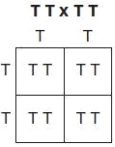
What ratio of the offspring from the cross shown will be homozygous recessive for the trait of tallness?
0 in 4
1 in 4
2 in 4
4 in 4
What gender has an X and a Y chromosome?
male
female
transgender
all of the above
Which diagram is used to observe how a trait is passed on through generations in a family?
Punnett Square
Cladogram
Pedigree
Phylogenetic tree
The allele for a gene that is expressed as a trait.
Recessive
Obsessive
Latent
Dominant
Genetic material from your parents that determine your traits . . .
ATP
DNA
RNA
mRNA
A piece of DNA that makes a protein to express a trait.
sequence
fragment
gene
cell
In DNA, cytosine always pairs with
guanine
uracil
thymine
adenine
A red flower bred to a white flower produces red and white spotted flowers. This is an example of
incomplete dominance
recessive genes
epistasis
co-dominance

Identify the cellular organelle that the process of photosynthesis occurs in:
mitochondria
chloroplast
nucleus
vacuole

The diagram shows homologous chromosomes during prophase I of meiosis. Which of the following correctly describes the process being illustrated?
Segregation of sister chromatids
Mutation in which the DNA content of the gene is altered
Crossing over in which alleles are exchanged
Condensation and segregation of alleles
What happens to the chromosome number during meiosis?
doubles
halves
stays the same
becomes diploid
Guanine bonds with ______________.
Adenine
Guanine
Cytosine
Thymine
Which type of reaction is the breakdown of starch into sugars?
Denaturation
Reduction
Catabolic
Condensation

Atoms of the same element that have different numbers of neutrons.
Isotope
Covalent Bond
Enzymes
Ionic Bonds

Pure substance formed when 2 or more different elements combine.
Compound
Isotope
Covalent Bond
Ionic Bond

A covalent bond is formed as a result of
transferring electrons
sharing electrons
transferring protons
sharing protons

Which organelle is only in PLANT cells?
Cell Membrane
Mitochondrion
Nucleus
Chloroplast

The basic structural and functional unit of all living organisms.
Cells
Organelles
Skeleton
Eukaryotes

This scientist is known for discovering the nucleus in plant cells.
Robert Brown
Robert Frost
Charlie Brown
Charles Dickens

He discovered that all plants are made of cells:
Anton van Leeuwenhoek
Theordor Schwann
Robert Hooke
Mattias Schleiden

Who was the first person to see cells under the microscope and give them their name?
Mattias Schleiden
Robert Hooke
Theordor Schwann
Anton van Leeuwenhoek

Which of the following scientists was the first to observe bacteria under a microscope?
Anton van Leuwenhoek
Matthais Schleiden
Robert Hooke
Theodor Schwann
Has membrane bound organelles
Prokaryote
Eukaryote
both
What is diffusion
active transport
passive transport
cell division
cell mutation
Active transport requires
energy
the nucleus
chloroplasts
lysosomes
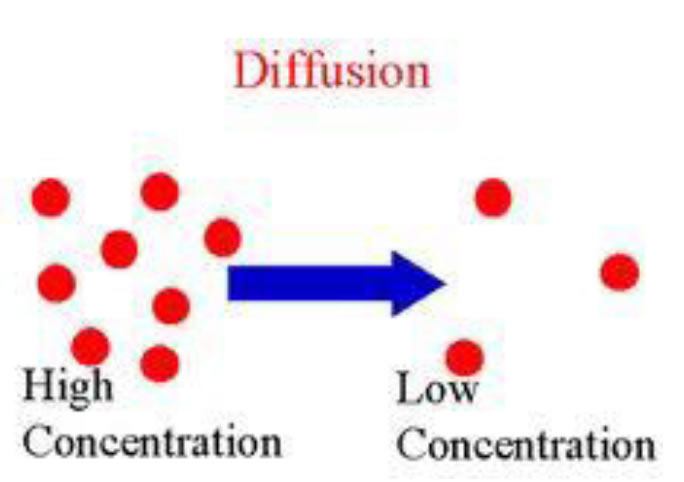
Movement of particles from high to low concentration.
Passive Transport
Active Transport
Solutes move against the concentration gradient, therefore energy is needed.
Passive Transport
Active Transport

I am a protein packaging and shipping machine! Who am I?
vacuole
ribosome
endoplasmic reticulum
golgi apparatus

What is this?
mitochondria
lysosomes
chloroplast
endoplasmic reticulum

What are the reactants (what's needed) for photosynthesis?
glucose and oxygen
light, water, and carbon dioxide

What gas is released by plants during photosynthesis?
sulfur
carbon dioxide
oxygen
hydrogen

In which organelle (part of the cell) does photosynthesis take place?
mitochondria
chloroplast
nucleus
cell membrane

