Worksheets
FNW-04 Assessment
Total questions: 51
Worksheet time: 51mins
A gram of which of the following has the most calories: (FNW-04.1)
fat
sugar
protein
carbohydrate
Which nutrient provides most of the energy we get for our body? (FNW-04.1)
protein
lipid
carbohydrate
vitamins and minerals
Nutrients help the body . . . (FNW-04.1)
prevent disease
provide energy
grow and repair cells
all of these answers
What is the difference between fat soluble and water soluble vitamins? (FNW-04.1)
Water soluble vitamins are needed in higher amounts and stay in the body in fat cells
Fat soluble vitamins are needed in high amounts and are stored in water
Fat soluble vitamins provide energy and water soluble vitamins do not
Water soluble vitamins are required in higher amounts, are stored in water; extra amount is washed out with urine
Why are complex carbohydrates better to consume than simple carbohydrates? (FNW-04.1)
They provide more energy per gram
They are processed in the body more quickly as a short-term energy source
They provide more fiber so your small intestine can work to absorb nutrients properly.
They are processed in the body more slowly to provide energy over a longer time and they provide more fiber that helps your digestive system work properly.
How many calories per gram for Carbohydrates? (FNW-04.1)
2
4
8
9
At least half of the foods you eat that are in the grains group should be ___________________. (FNW-04.1)
rice
oatmeal
whole grain
corn meal
How many servings of dairy are recommended each day? (FNW-04.2)
1
2
3
6
What is the difference between saturated and unsaturated fat? (FNW-04.1)
Saturated fat is more healthful than unsaturated fat
Saturated fat comes from vegetable oils
Unsaturated fat is more healthful than saturated fat
Unsaturated fat comes from animal fat
What vitamins require fat to be absorbed and used by the body? (FNW-04.1)
Vitamins A, D, E, and K
Vitamins C and the B vitamins
What is not a function of vitamins? (FNW-04.1)
promotes growth and maintenance
regulates metabolism, blood flow (circulation)
aids in absorption
provide calories or energy from food
What are examples of fat soluble vitamins? (FNW-04.1)
C, B1, B2, B6, Folic Acid, B12
C, B1, B2, B6, B12
A, D, E, K
C, A, D, E, K
Which is not a function of water? (FNW-04.1)
lubricates joints and mucous membranes
helps to swallow and digest foods
provides energy
maintains body temperature
What percentage of the body is made of water? (FNW-04.1)
30-50%
55%
65-80%
75-90%
This food/nutrient group includes pasta, rice, oats, breads, barley, and rye (FNW-04.2)
Protein
Milk and Dairy Products
Fruits and Vegetables
Carbohydrates
Which part of your hand is best to estimate a portion size that is about a cup (8 oz.) of food? (FNW-04.4)
your pointer finger
the palm of your hand
the entire hand, flattened
a fist
What part of the food label is most critical in order to avoid consuming too many calories? (FNW-04.3)
Total calories per serving
Serving info (how much equates to one serving)
% Daily Value
Total calories per serving and serving information (how much equates to one serving)
When eating a sandwich, how many servings of bread are you actually eating? (FNW-04.3)
two
one
It depends on the kind of bread
four
What is the recommendation for the amount of trans fat to include in a healthy diet? (FNW-04.5)
At least 60 grams daily
As little artificial trans fat as possible
Any amount is fine, as long as it's natural trans fat
25-30 grams
By cutting back on the amount of fat and sodium in your diet, you're reducing your chances of developing: (FNW-04.2)
heart disease and high blood pressure
strokes and diabetes
Diabetes and kidney disease
high blood pressure and anemia
CHOOSE ALL OF THE REASONS food additives are important (FNW-04.6)
can make more food available away from where it's produced
ensure food contains the nutrients we need
make foods more appealing
Make sure that pests in the food will die before humans eat the food
According to the model, MyPlate, how much of the servings on your plate should come from plants? (FNW-04.2)
1/4
1/8
1/2
3/4
True or false: nutrition supplements can be helpful to human health. (FNW-04.7)
True
False
Which of the following nutrients provides energy to the body? (FNW-04.1)
carbohydrates
vitamins
water
minerals
Which of these is the best way to know if nutrition information is credible (believable) (FNW-04.8)
The information will benefit the user more than the provider
The information or product is for sale, so it must be valuable
A celebrity says the information is important or the product is helpful
The company says that if you don't believe the information, you'll regret it later
A cupped hand (without filling the finger area) is about how much of a snack food (like Chex mix or nuts)? (FNW-04.4)
An ounce
A cup
Two cups
8 ounces
What is the main reason for eating a wide variety of foods? (FNW-04.2)
to learn the food label
to provide all the nutrients you need
to keep from getting bored with your diet
to help improve physical fitness
An athlete is preparing to run a marathon (26.2 miles), decide which of the following meals she should eat the night before to provide the most energy for the race? (FNW-04.1)
eat a steak and drink a coffee
load up on candy bars and chips
eat pasta and drink water
eat a bowl of cereal and drink an energy drink
Why would a person want to limit their intake of sodium (salt)? (FNW-04.2)
sodium weakens bones and teeth
sodium can lead to high blood pressure
sodium is linked to cancer
sodium causes a person to be diabetic
If a student is looking at the ingredient list on a food label and water is listed first, she would know that________________________ (FNW-04.3)
water weighs the most in the product
water weighs the least in the product
the list is in no particular order
What food group is NOT located on the “MyPlate” guide? (FNW-04.2)
meat, fruit, grains
fruit, meat, protein
grains, vegetables, protein
fats, oils, and sweets

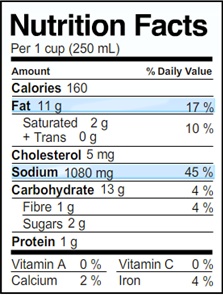
How many calories would you eat if you ate the entire container of this product? (FNW-04.3)
50
200
990
110

What percentage of your daily value of sodium does this product provide? (FNW-04.3)
12%
3%
11%
15%
Proteins are provided by (FNW-04.1)
dried beans, peas, and nuts
milk and eggs
meat, fish, and poultry
All choices are correct
What are the six classes of nutrients? (FNW-04.1)
Carbohydrates, Meats, Fibers, Water, Protein, and Dairy
Fruits, Milk, Fibers, Water, Carbohydrates, Meat, and Vitamins
Carbohydrates, Fats, Minerals, Water, Protein, and Vitamins
Carbohydrates, Fats, Minerals, Fibers, Protein, and Vegetables
What color vegetable should you eat the most? (FNW-04.2)
Orange
Green
Purple
A variety
Which step does a manufacturer of a nutritional supplement get to skip? (FNW-4.7)
FDA approval
manufacturing
advertising
processing
Which of these should a smart nutrition customer avoid? (FNW-4.8)
Products that act like illegal substances, but that are legal
Nutrition products that have FDA approval
Products made by well-known companies
Foods that contain additives
True or false: Trans fats are only found in highly processed food products (FNW-4.5)
True
False
True or false: Food additives are dangerous and you should not eat them. (FNW-4.6)
True
False

What is the main reason for eating a wide variety of foods?
to learn food label
to provide all nutrients you need
to keep from getting bored with your diet
to help improve physical fitness

A diet high in ______ is linked to high blood pressure
iron
calcium
sodium
protein

Which of the following is true about most fast foods?
they are high in fat
they are low in vitamins and minerals
they are low in nutrient density
all of the above
What should a person consider when determining how many calories they need to consume each day?
Gender
Age
Weight
Physical activity
Hair color
If you eat MORE calories than you USE you will...
gain weight
lose weight
stay the same weight
Choose the foods that would be considered 'empty calories.'
Cupcake
Soda
Candy
Sandwich
Broccoli
Which type of fat should you try to avoid entirely?
Trans
Saturated
Unsaturated
We are eating _______ calories today than we did for much of the 20th century.
the same amount of
fewer
more
denser