wayground logo

Free Printable Worksheets

Font size

S
M
L
XL
Worksheets

Clover's 4th Grade Earth's Surface Quiz

Total questions: 89

Worksheet time: 1hrs 27mins
Name
Class
Date
1.
Which of the following is NOT one of the three types of soil?
a)
clay
b)
sand
c)
silt
d)
mud
2.
_______ is the type of soil used most often with plants and on farms. It is a mixture of clay, sand, and silt.
a)
loam
b)
humus
c)
soil
d)
dirt
3.
Are there minerals in soil?
a)
Yes
b)
No
4.
Ellen grabs a topsoil sample in her hand. She rolls it into a ball. The soil feels gritty and the ball falls apart. What part of the topsoil most likely made the topsoil feel gritty?
a)
clay
b)
sand
c)
silt
d)
humus
5.
When plants, animals, and other organisms die, they break down and become part of the soil. What is this part of the soil called?
a)
sand
b)
silt
c)
clay
d)
humus
6.
Which of the following is the largest particle in soil?
a)
sand
b)
silt
c)
humus
d)
clay
7.
You dig a small hole in the soil and the next day it rains. The hole fills with water, but does not empty even after several days of dry weather. What is the soil mostly made of?
a)
clay
b)
sand
c)
humus
d)
silt
8.
Which of the following best describes soil erosion?
a)
A.  the breakdown of soil 
b)
A.  the improvement of soil
c)
A.  the addition of soil
d)
A.  the movement of soil by wind or water
9.
Which type of soil can hold the greatest amount of water?
a)
sand
b)
silt
c)
clay
d)
loam
10.
Many plants cannot grow in sandy soil. Why is this true?
a)
Sandy soil does not hold enough water.
b)
Air cannot pass through sandy soil.
c)
Roots cannot easily push through sandy soil.
d)
Sandy soil has too many nutrients.
11.
Wind blowing dirt and sand through the air is an example of...
a)
weathering 
b)
erosion
12.
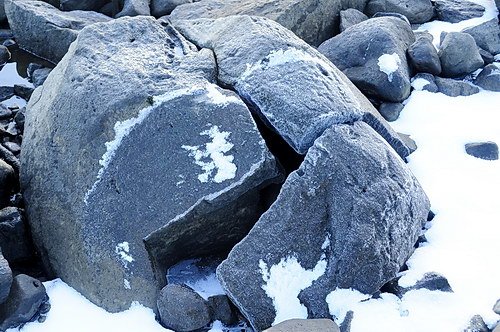
Water gets into the cracks of rock and freezes, causing the rock to break.  What is this an example of?
a)
erosion
b)
weathering
13.
Soil is made of
a)
weathered rocks and minerals
b)
dead plants and animals
c)
air and water
d)
all of the above
14.
Humus is.....
a)
the dead parts of plants and animals in soil.
b)
A food we eat with pretzels.
c)
The tiny particles inside of soil
d)
The roots that come off of a plant and live in soil.
15.
Many plants cannot grow in clay soil. Why is this true?
a)
Clay soil does not have many nutrients.
b)
Roots cannot easily push through clay soil.
c)
Water doesn't drain well through clay.
d)
All of these choices.
16.
How would you describe the texture of "sandy" soil?
a)
sticky
b)
gritty
c)
smooth
d)
slimy
17.
Decayed organic material turns into dark colored material called __.
a)
litter
b)
clay
c)
humus
d)
soil
18.
What are some things that you can add to a compost pile?
a)
leaves, apple core, and tin foil
b)
grass clippings, banana peel, and newspaper
c)
egg shells, plastic spoon, and ziploc bags
d)
metal fork, rubber spatula, and shoelaces
19.
What can you add to a compost pile to help the organic material decompose?
a)
Food Scraps
b)
Water
c)
Sticks
d)
Earthworms
20.
Which of these is NOT a type of soil?
a)
Sandy
b)
Clay-Rich
c)
Humus
d)
Loamy
21.
Which word means to rot or decompose?
a)
Decay
b)
Fertile
c)
Growth
d)
Nutrients
22.
Humus is bad for soil.
a)
True
b)
False
23.
What is HUMUS made from?
a)
Chick-Peas
b)
The remains of decayed plants and animals
c)
Beans
d)
Cheese
24.
All soils begin with what process?
a)
Nutrients
b)
Subsoil
c)
Weathering
d)
Fertile
25.
Fertile soil is rich in _________.
a)
Conservation
b)
Bedrock
c)
Water
d)
Nutrients
26.

Substances that plants and animals need to live

a)

Ingredients

b)

Nutrients

c)

Bacteria

d)

Diagram

27.

Slippery and smooth, very tiny particles

a)

Clay

b)

Sand

c)

Gravel

d)

Loam

28.
This type of soil is sticky when wet and hard when dry. 
a)
clay
b)
silt
c)
sand
d)
gravel
29.
This type of soil is sticky when wet and hard when dry. 
a)
clay
b)
silt
c)
sand
d)
gravel
30.
This type of soil is best for plant growth. 
a)
rock
b)
sand
c)
loam
d)
clay
31.
What physical property of soil determines if it retains water?
a)
color
b)
particle size
c)
texture
d)
weight
32.
No water stays in this when poured through. 
a)
loam
b)
clay
c)
gravel
d)
topsoil
33.
It is important for soil to retain water to 
a)
withstand weathering
b)
erode more slowly
c)
help plants to grow
d)
keep it from being dry
34.
If soil particles are large, then 
a)
more water is retained
b)
less water is retained
35.
How do you determine the texture of soil?
a)
use a spring scale
b)
observe color of particles
c)
rub particles between fingers
d)
taste particles
36.

Which particle of soil is the smallest?

a)

sand

b)

silt

c)

clay

d)

Humus

37.
Which of the following best describes soil erosion?
a)
A.  the breakdown of soil by chemicals
b)
A.  the improvement of soil quality by fertilizers
c)
A.  the breakdown of soil by drought
d)
A.  the movement of soil by wind or water
38.

Which of the following is NOT considered to be soil?

a)

Gravel

b)

Sand

c)

Loam

d)

Clay

39.
What is humus?
a)
Mineral matter
b)
Decomposed organic matter
c)
A Mediterranean snack
d)
A horizon in the soil profile
40.
In which soil type would water drain easily?
a)
Sand
b)
Silt
c)
Clay
41.
In which soil type would water have difficulty draining?
a)
Sand
b)
Silt
c)
Clay
42.
How is humus formed?
a)
Weathering and erosion
b)
Decomposition of organsims
c)
Chickpeas, seasoning, and water. Serve with pita or crackers.
43.

If you want to improve your soil for gardening, what should you add?

a)

Air

b)

Jello

c)

Organic matter or humus

d)

Mineral matter

44.
An avalanche is an example of which process?
a)
Weathering
b)
Erosion
c)
Deposition
d)
Volcanic Eruption
45.
How does freezing water cause the weathering of rocks?  The freezing water—
a)
keeps the rocks in place.
b)
makes the rocks last longer.
c)
expands cracks and breaks rocks.
d)
causes rocks to fall in landslides.
46.
The process that breaks down rocks and other materials on Earth's surface is called
a)
Weathering
b)
Erosion
c)
Deposition
d)
Decomposition
47.
Over long periods of time, deposition may change the Earth’s surface by _____.
a)
forming new land features.
b)
breaking down large rocks into smaller ones.
c)
washing away beaches.
d)
moving topsoil.
48.
A cliff formed near the ocean.  Which statement best describes how this cliff formed?
a)
Warm air melted the rock.
b)
Sun rays evaporated the rock.
c)
Ocean waves washed away rock.
d)
Plant roots pushed away the rock.
49.
What is the process that picks up and moves weathered rocks?
a)
Deposition
b)
Landslide
c)
Weathering
d)
Erosion
50.
Deposition changes the Earth’s surface because bits of broken rock and soil _____.
a)
stop rivers from flowing.
b)
make rich farmlands.
c)
are dropped in new places.
d)
move very slowly.
51.
What causes the greatest erosion effect on our beaches?
a)
Waves
b)
Gravity
c)
Glaciers
d)
Wind
52.
The process by which water, ice, wind, or gravity moves weathered rock and soil from one place to another.
a)
Weathering
b)
Erosion
c)
Deposition
d)
Crop Rotation
53.
Which of these is an example of erosion?
a)
Light shining onto a mountain.
b)
Rain breaking down rocks on a mountain into smaller pieces. 
c)
Wind blowing away sediment to a new place on the mountain.
d)
All of the above.
54.
Layers of sediment forming at the bottom of the ocean floor is an example of
a)
Weathering
b)
Erosion
c)
Deposition
d)
Awesome Science
55.
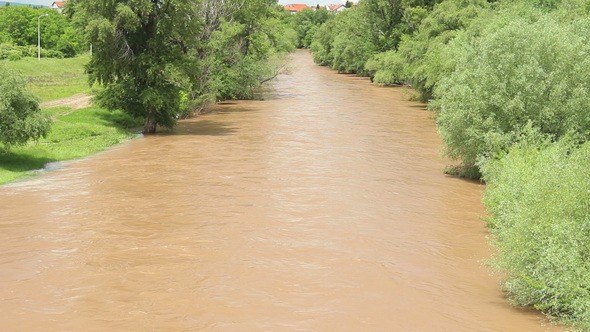
Muddy water being carried away by a fast-moving river is an example of
a)
Weathering
b)
Erosion
c)
Deposition 
d)
A nice place to swim
56.
What is an enormous mass of ice moving over land, causing weathering of rock and soil?
a)
A glacier
b)
An iceberg
c)
An ice wedge
d)
A sand dune
57.
How do plants weather rocks?
a)
During photosynthesis
b)
When roots grow into cracks of rocks and expand the rock breaks.
c)
When the plant moves water from the roots to the leaves, the rock breaks.
d)
Plants don't weather rocks.
58.
What is the wearing away or breaking down of rocks called?
a)
Deposition
b)
Erosion
c)
Glaciers
d)
Weathering
59.
Flood water pounding against a canyon wall and wearing it down is an example of
a)
Weathering
b)
Erosion
c)
Deposition
d)
An avalanche
60.
Which of the following is NOT a slow change to Earth's surface?
a)
Weathering
b)
Erosion
c)
Deposition
d)
Landslides
61.
Which of the following is NOT a fast change in Earth's surface?
a)
Landslides
b)
Erosion
c)
Volcanoes Erupting
d)
Earthquakes
62.
The process of carrying away weathered bits of rocks is called
a)
weathering
b)
erosion
c)
deposition
63.
The process of moving weathered rock and depositing it in another location is called?
a)
weathering
b)
erosion
c)
deposition
64.
A small stream or other source of flowing water cannot form a canyon?
a)
True
b)
False
65.
The process of slowly breaking rocks into smaller pieces is called
a)
weathering
b)
erosion
c)
deposition
66.
Deposited material at the end of a river is called?
a)
landform
b)
delta
c)
canyon
67.
Glaciers shape and carve away the land beneath them and can drastically reshape the landscape over hundreds or even thousands of years.
a)
True
b)
False
68.
A natural land feature on Earth's surface is called
a)
landform
b)
delta
c)
canyon
69.
Weathering and erosion are the same thing.
a)
True
b)
False
70.
Wind blowing sand from one location to another is called
a)
Weathering
b)
Erosion
c)
Deposition
71.
Deltas forming at the mouths of rivers is called?
a)
Weathering
b)
Erosion
c)
Deposition
72.
Water getting into cracks, freezing, and breaking the rocks or pavement apart is called?
a)
Weathering
b)
Erosion
c)
Deposition
73.
Waves dropping sand on the beach is called?
a)
Weathering
b)
Erosion
c)
Deposition
74.
A mudslide flowing down a steep hill is called?
a)
Weathering
b)
Erosion
c)
Deposition
75.
Wind blowing sand from one location to another
a)
Weathering
b)
Erosion
c)
Deposition
76.
Muddy water being carried away by a fast-moving river
a)
Weathering
b)
Erosion
c)
Deposition 
77.
Rocks being made smooth by tumbling across a streambed
a)
Weathering
b)
Erosion
c)
Deposition
78.
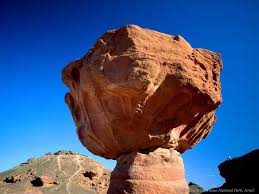
Wind blasting sand at rock and carving out arches
a)
Weathering
b)
Erosion
c)
Deposition
79.
What is the major cause of weathering and erosion to form canyons?
a)
wind
b)
ice
c)
glaciers
d)
moving water
80.
What is the correct order of the processes?
a)
they all happen at the same time
b)
erosion, weathering, deposition
c)
weathering, erosion, deposition
d)
weathering, deposition, erosion
81.
What is the small broken down pieces of rock called?
a)
dirt
b)
grime
c)
sediment
d)
popcorn
82.

What is a Breakwater used for?

a)

To collect water for purrifing water for to drink

b)

To calm waves in order to prevent erosion of the beach.

c)

A wall used for blocking water

83.
The process of breaking up Earth's surface into sediment is called...
a)
sediment
b)
erosion
c)
weathering
d)
deposition 
84.
What is sediment?
a)
the process of rocks being broken down and carried away
b)
bits of rock, sand, and silt caused by the weathering of rocks
c)
the top layer of the soil
d)
decaying plant or animal material 
85.
What happens when weathering and erosion work together?
a)
New Mountains are created
b)
The climate changes overnight
c)
Metal objects become rusty
d)
They change the Earth's surface
86.
How does vegetation in the soil affect the rate of erosion?
a)
It doesn't affect erosion.
b)
It decreases erosion.
c)
It increases erosion.
87.
What is an enormous mass of ice moving over land?
a)
Ice wedging
b)
Glacier
c)
Iceberg
d)
Dune
88.

How do glaciers erode land?

a)

By scraping the soil, picking up large rocks and depositing them in new location

b)

By picking up water from lakes and streams and carrying it to the ocean

c)

By causing rain and snow in an area

d)

By lowering the atmospheric pressure, causing intense windstorms

89.

Texture of soil can be determined by

a)

placing it in water

b)

looking at the size of the particles and how much space is between the particles.

c)

planting vegetables in the soil