Wayground logo

Free Printable Worksheets

Font size

S
M
L
XL
Worksheets

States of Matter

Total questions: 38

Worksheet time: 23mins

Name
Class
Date
1.
Freezing is...
a)
Solid to gas
b)
Liquid to solid
c)
Gas to solid
d)
Liquid to gas
2.
______ is the amount of space an object takes up.
a)
mass
b)
volume
3.
Molecules move quickest in which state of matter
a)
solid
b)
liquid
c)
gas
d)
solid, liquid and gas
4.
What is labelled "B" on the graph?
a)
solids
b)
liquids
c)
gases
d)
a phase change
5.
Matter changing states creates a new substance 
a)
True
b)
False
6.
Phase change from a liquid to a gas that only happens at the surface.
a)
evaporation
b)
boiling
c)
sublimation
d)
melting
7.

Which state of matter takes the shape of its container?

a)

liquid and gas

b)

solid and gas

c)

liquid and solid

d)

liquid only

8.
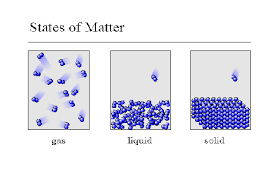
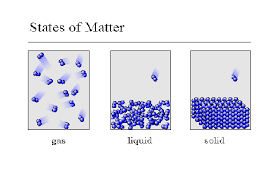
Which state of matter do the particles in this picture represent?
a)
solid
b)
liquid
c)
gas
d)
plasma
9.
When a substance changes phase, this change is a
a)
Physical Change
b)
Chemical Change
10.
Particles slide past each other in this state of matter.  
a)
solid
b)
liquid
c)
gas
d)
solid, liquid and gas
11.
Which state of matter has the highest kinetic energy? 
a)
solid
b)
liquid 
c)
gas
d)
matter
12.
What phase of matter is illustrated in "C"
a)
solid
b)
liquid
c)
gas
d)
melting
13.
All changes in the state of matter of a substance requires
a)
vibration
b)
water
c)
permission
d)
energy
14.
______ is the amount of matter an object has
a)
mass
b)
volume
15.
When the temperature of matter decreases the particles ...
a)
speed up and move farther apart
b)
speed up and move closer together
c)
slow down and move farther apart
d)
slow down and move closer together
16.
When a puddle of water dries up this process is called
a)
Condensation
b)
Evaporation
c)
Melting
d)
Transpiration
17.
What is the boiling point of water?
a)
80 degrees Celsius
b)
27 degrees Celsius
c)
90 degrees Celsius
d)
100 degrees Celsius
18.
Change from gas to liquid is called....
a)
expansion
b)
evaporation
c)
condensation
d)
sublimation
19.
Melting is ...
a)
liquid to solid
b)
solid to liquid
c)
solid to gas
d)
gas to liquid
20.
Which of these is an example of sublimation?
a)
water turning to ice
b)
ice cream dripping
c)
a puddle drying up
d)
dry ice being used to make fog
21.

Which one of theses states has the most energy in its particles?

a)

solid

b)

gas

c)

liquid

22.
As water begins changing from liquid to solid, it will ____ & _____.
a)
freeze, shrink
b)
freeze, expand
c)
condensate, shrink
d)
condensate, expand
23.
As the temperature increases, the ______ increases.
a)
space between atoms
b)
number of electrons
c)
number of atoms
d)
number of solid atoms
24.
Boiling and evaporation are two types of what?
a)
physical properties
b)
condensation
c)
conservation of matter
d)
vaporization
25.

How is a gas defined?

a)

no definite shape, no definite volume

b)

Definite shape, definite volume

c)

Found in stars

d)

Definite volume, no definite shape

26.
Water can be a solid, liquid, and a gas.
a)
True
b)
False, liquid only
c)
False, solid & liquid only
27.
What would cause a decrease in particle movement?
a)
decrease atoms
b)
increase in space between atoms
c)
decrease in temperature
d)
increase in mass
28.
At higher temperatures
a)
particles in an object have less energy
b)
particles in an object move faster
c)
a gas contracts
29.
A gas
a)
has a definite shape but no definite volume
b)
has a definite volume but no definite shape
c)
has fast-moving particles
30.
Thermal energy is...
a)
heat energy.
b)
the energy of motion
c)
energy of nuclear processes.
d)
an indication of physical change.
31.

Snow turns to liquid water when it

a)

freezes.

b)

melts.

c)

condenses.

d)

evaporates.

32.

Mike filled a tray with water and put it in the freezer. The next day, he opened the freezer. How did the water change?

a)

It became a gas.

b)

It became a solid.

c)

It evaporated.

d)

It condensed.

33.

Which of these is an example of water changing from vapor to a liquid?

a)

moisture forming on a mirror when you breathe on it

b)

ice cubes melting when you put them in a warm liquid

c)

river drying up during a hot day

d)

sweat forming on your body when you exercise

34.

What happens a the boiling point of a substance?

a)

solid becomes a liquid

b)

liquid becomes a gas

c)

solid becomes a gas

d)

liquid becomes a solid

35.

Melting, boiling, and freezing are examples of

a)

chemical changes.

b)

physical changes.

c)

magnetic changes.

d)

electrical changes.

36.

When water is changed from a liquid to a gas, what occurs?

a)

atoms lose electrons

b)

a new compound is formed

c)

molecules spread further apart

d)

hydrogen is separated from oxygen

37.

Which of the following has the ability to change matter?

a)

heat

b)

wind

c)

light

d)

sound

38.

What is the freezing point of a liquid?

a)

32 degrees Celsius

b)

50 degrees Celsius

c)

100 degrees Celsius

d)

0 degrees Celsius