wayground logo

Free Printable Worksheets

NEW

Font size

S
M
L
XL
Worksheets

Atoms (8.5 A,B)

Total questions: 60

Worksheet time: 43mins

Name
Class
Date
1.

The smallest particle of an element or matter

a)

Proton

b)

Atom

c)

Electron

d)

Electron Cloud

2.

The central part of an atom that is made up of neutrons and protons

a)

Protons

b)

Neutrons

c)

Nucleus

d)

Reactivity

3.

The region around the nucleus where the electrons may be found.

a)

Electron Cloud

b)

Reactivity

c)

Neutron

d)

Atom

4.

Electron in the outermost energy level of an atom.

a)

Valence Electrons

b)

Protons

c)

Neutrons

d)

Reactivity

5.

Positivley charged particle located in the nucleus of an atom.

a)

Electrons

b)

Protons

c)

Neutrons

d)

Subatomic Particles

6.

Negatively charged particle found outside the nucleus of an atom

a)

Electrons

b)

Protons

c)

Neutrons

d)

Electron Cloud

7.

Is the ability of matter to combine chemically with other substances.

a)

Reactivity

b)

Proton

c)

Subatomic Partices

d)

Electrons

8.

Refers to anything smaller than an atom. Examples: Electrons, protons and neutrons.

a)

Electron cloud

b)

Element

c)

Subatomic Particles

d)

Protons

9.

A subatomic particle of about the same mass as a proton but has no (zero/neutral) electric charge.

a)

Neutron

b)

Proton

c)

Electron

d)

Electron Cloud

10.
Which particle has a positive charge?
a)
electron
b)
orbital
c)
proton
d)
neutron
11.
Choose the particle that has no charge.
a)
nucleus
b)
neutron
c)
proton
d)
electron
12.

This particle determines an elements' identity (what its called).

a)

electron

b)

proton

c)

neutron

d)

valence shell

13.
What is the mass of a proton and a neutron?
a)
1amu
b)
2grams
c)
13amu
d)
10cm
14.
An electron has a _____ charge.
a)
negative
b)
positive
c)
neutral
15.
Describe an Electron Cloud?
a)
the mist outside of an atom
b)
home of the protons
c)
where electrons are located
d)
nucleus
16.

What are the maximum number of electrons that go on the first 3 energy levels?

a)

2,4,16

b)

2,8,8

c)

4,8,12

d)

3,4,6

17.
What are valence electrons?
a)
electrons on the first orbital always
b)
nucleus
c)
the outermost shell
d)
the number of electrons on the outermost orbital
18.
Which particles make up the nucleus of an atom?
a)
protons and neutrons
b)
electrons and protons
c)
electrons, protons, and neutrons
d)
electrons and neutrons
19.
The particles of the atom you can find by knowing the atomic number.
a)
neutrons
b)
protons and electrons
c)
protons and neutrons
d)
atomic mass
20.
The subatomic particle that determines the identity of an element.
a)
neutron
b)
proton
c)
electron
d)
outer shell
21.
The subatomic particle that determines the identity of an element.
a)
neutron
b)
proton
c)
electron
d)
outer shell
22.
What charge does the nucleus have and why?
a)
positive - the neutrons do not have a charge
b)
positive - the neutrons and protons are positively charged particles
c)
neutral - the neutral charge dominates the positive charge
d)
neutral - electrons cancel out the positive charge of the atom
23.
What is the mass number and name of an element with 8 protons and 8 neutrons?
a)
16 - Carbon
b)
16 - Oxygen
c)
24 - Oxygen
d)
8 - Neon
24.
An element with a mass number of 10 and an atomic number of 6 has how many protons?
a)
5
b)
8
c)
6
d)
10
25.
An element with a mass number of 11 and an atomic number of 5 has how many neutrons?
a)
11
b)
5
c)
6
d)
16
26.
An atom has 10 protons, 15 neutrons and 10 electrons what is its mass number.
a)
20
b)
10
c)
5
d)
25
27.
Matter that cannot be broken down into a simpler substance – building blocks of life.
a)
neutron
b)
atom
c)
electron
d)
quarks
28.

Elements on the periodic table increase by...

a)

atomic mass

b)

size

c)

mass number

d)

atomic number

29.
An atom has 13 protons, 15 neutrons and ___ electrons what is its mass number?
a)
13
b)
26
c)
28
d)
15
30.
Most of the mass of an atom is contained here.
a)
electron orbitals 
b)
nucleus
c)
shells
d)
atomic #
31.
What is the difference between the atomic mass and the mass number?
a)
the atomic mass is always a whole number
b)
the atomic mass equals the atomic #
c)
mass number is the rounded atomic mass - always a whole number
d)
electrons
32.
What are electrons?
a)
Negatively charged particles
b)
Neutrally charged particles
c)
Positively charged particles
d)
Uncharged particles
33.
True or False - Protons and Neutrons have about the same mass.
a)
True - They have about the same mass
b)
False - They do not have about the same mass
34.
Where is the nucleus located in an atom?
a)
Near the electron shells/levels
b)
Near the center of an atom
35.
The mass of one proton is equal to the mass of one...
a)
neutron
b)
electron
36.
The mass of one proton is greater than the mass of one...
a)
neutron
b)
electron
37.
The mass of about 1,836 electrons is equal to the mass of one...
a)
proton
b)
neutron
c)
a proton or a neutron
d)
neither a proton nor a neutron
38.
All of the mass of an atom comes from what location?
a)
nucleus
b)
electron cloud
39.
What subatomic particle has no effect on the mass of the atom? 
a)
proton
b)
neutron
c)
electron
40.

What is the atomic mass of the atom pictured?

a)

10

b)

18

c)

18.9984

d)

19

41.
What is the atomic number of the atom pictured? 
a)
9
b)
10
c)
18
d)
19
42.
What is the element name of the atom pictured? 
a)
Fluorine
b)
Neon
c)
Argon
d)
Potassium
43.

What is the mass number of the atom pictured?

a)

11

b)

12

c)

22

d)

23

44.
What is the atomic number of the atom pictured? 
a)
11
b)
12
c)
22
d)
23
45.
What is the element name of the atom pictured? 
a)
Sodium
b)
Magnesium
c)
Titanium
d)
Vanadium
46.
How many electrons are in the atom pictured? 
a)
1
b)
2
c)
3
d)
0
47.
If the atom pictured is neutral, what element would it be? 
a)
Lithium
b)
Helium
c)
Beryllium
d)
Hydrogen
48.

Which of the following determines the identity of an element?

a)

number of protons

b)

atomic mass

c)

number of neutrons

d)

number of shells

49.

How many valence electrons in Flourine (F)?

a)

3

b)

6

c)

7

d)

8

50.

An atom that loses or gains an electron is called an

a)

compound.

b)

ion.

c)

element.

d)

quark.

51.
What is the number of protons that the element in this image contain?
a)
14
b)
7
c)
15
d)
18
52.
The first energy level can hold up to how many electrons?
a)
8
b)
4
c)
2
d)
5
53.

What is the mass number of "F"

a)

9

b)

10

c)

17

d)

19

54.
An atoms overall charge is 
a)
positive 
b)
depends on its mood 
c)
neutral 
d)
negative 
55.
"C" is the element symbol for which element?
a)
calcium
b)
carbon
c)
chlorine
d)
cadmium
56.

What is the chemical symbol for sodium?

a)

Na

b)

So

c)

NaCl

d)

S

57.

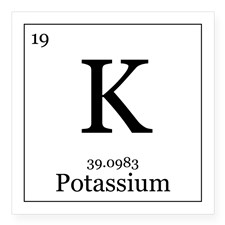
How many neutron are in the atom "K"?

a)

7

b)

2

c)

39

d)

20

58.

To calculate the number of subatomic particles in an atom we use _____________.

a)

SCHNOPS

b)

MAN APE

c)

APE MAN

d)

ROY G BIV

59.

How many valence electrons does Oxygen have?

a)

8

b)

16

c)

33

d)

6

60.

Organic substances have this element

a)

O

b)

C

c)

Al

d)

F