wayground logo

Free Printable Worksheets

NEW

Font size

S
M
L
XL
Worksheets

EMS & HR Diagrams

Total questions: 60

Worksheet time: 51mins

Name
Class
Date
1.
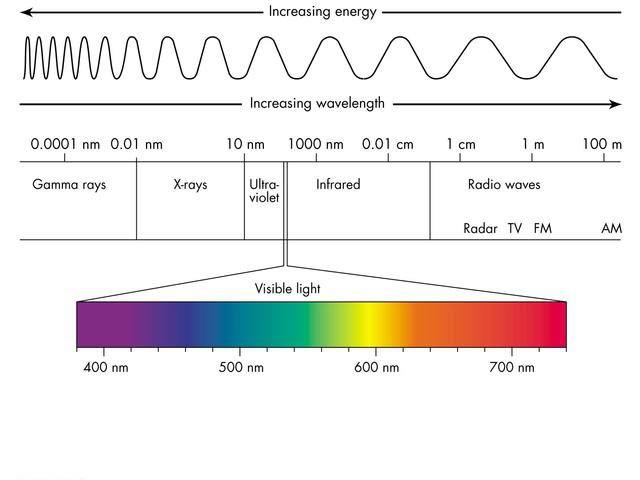
The frequency of infrared waves is..
a)
1012 Hz
b)
1020 Hz
c)
104 Hz
d)
1015 Hz
2.

What is the correct order of the visible light spectrum starting with the longer wavelength?

a)

Red, yellow, orange, blue, violet, indigo

b)

Violet, indigo, blue, green, yellow, orange, red

c)

Green, yellow, blue, indigo, red, orange

d)

Red, orange, yellow, green, blue, indigo, violet

3.
What is an example of a wave with a long wavelength and low frequency?
a)
Gamma rays
b)
Infrared
c)
Radio
d)
Visible light
4.
What gases are in the unknown mixture?
a)
Gas B & Gas D
b)
Gas C & Gas B
c)
Gas A & Gas D
d)
Gas D & Gas C
5.
An example of a wave with a short wavelength, high frequency, and high energy is a 
a)
X-ray
b)
Microwave
c)
Visible light wave
d)
Infrared wave
6.
What waves have the lowest energy? 
a)
Gamma rays
b)
Visible light waves
c)
Radio waves
d)
X rays
7.

Which color has the longest wavelength?

a)

Yellow

b)

Red

c)

Green

d)

Purple

8.

Quasars are extremely distant celestial bodies. Investigators using a special telescope determined that a certain quasar was emitting waves with a frequency of 1.41 x 10⁹ Hz. Using the electromagnetic spectrum provided, investigators were most likely using a telescope that detects -

a)

microwaves

b)

visible light

c)

x-rays

d)

gamma rays

9.

Black holes emit tremendous amounts of energy which result in astronomers using many different means of technology to gather information. Instruments such as the GALEX satellite and Spitzer Space Telescope use different parts of the electromagnetic spectrum to gather data about these strange celestial objects. To view black holes, the GALEX typically operates at a frequency of about 1.3 X 10¹⁵ Hz while the Spitzer Space Telescope operates at 2.2 X 10¹² Hz.

Which two portions of the electromagnetic spectrum are astronomers using to detect information about black holes?

a)

Ultraviolet and X-Ray

b)

Gamma Ray and X-Ray

c)

Ultraviolet and Infrared

d)

Infrared and Radio

10.

The Earth’s atmosphere allows some types of electromagnetic radiation through while others may be blocked or absorbed. Due to this, astronomers developed satellites and telescopes which orbit outside of Earth’s atmosphere. The Cosmic Background Explorer (COBE) satellite took measurements from 1989 to 1993 with an effort to gather information on the background temperature in space resulting from the Big Bang. This was the first step toward confirming data gathered in the 1960’s when an Earth-bound telescope picked up static in the frequency range of 3 x 10⁸ to 3 x 10¹¹ Hz.


Which portion of the electromagnetic spectrum were astronomers detecting?

a)

Microwave

b)

Ultraviolet

c)

X-Ray

d)

Infrared

11.

Scientists observed a celestial object emitting a wavelength of 3 x 10⁻¹⁰m. What type of telescope did the scientists have to use to view this?

a)

Radio wave

b)

Infrared ray

c)

X-ray

d)

Gamma Ray

12.

Scientists observed a celestial object emitting waves with a frequency of 1.41 x 10⁸ Hz. What type of telescope did the scientists have to use to view this object?

a)

Radio wave

b)

Microwave

c)

X-ray

d)

Ultraviolet wave

13.

The frequency of an x-ray is --

a)

1.41 x 10⁻¹⁰ Hz

b)

1.41 x 10¹⁸ Hz

c)

1.41 x 10¹⁰ Hz

d)

1.41 x 10⁻¹⁸ Hz

14.

The wavelength of an infrared ray is --

a)

10-5 m

b)

1012 Hz

c)

105 m

d)

10-12 Hz

15.

Scientists observed a celestial object emitting a wavelength of 3 x 10³m. What type of telescope did the scientists have to use to view this?

a)

Radio wave

b)

Infrared ray

c)

X-ray

d)

Gamma Ray

16.
True or false: as you move along the spectrum, radio to gamma waves, the wavelengths decrease in size (get smaller)
a)
true
b)
false
17.
A wave with a large wavelength will have a ______ frequency and _____ energy
a)
high, low
b)
high, high
c)
low, high
d)
low, low
18.
Select the correct order of waves on the EMS from the longest wavelength to the shortest wavelength
a)
Radio, Micro, Infra, Visible, Ultra, X-ray, Gamma
b)
Gamma, X-ray, Ultra, Vis, Infra, Micro, Radio
c)
Vis, Micro, Infra, Ultra, X-ray, Gamma, Radio
d)
Micro, Radio, Vis, Infra, Ultra, X-ray, Gamma
19.
Which has the LONGEST wavelength and, therefore, the lowest frequency/energy
a)
Gamma Rays
b)
Radio Waves
c)
Visible Light
d)
Infrared rays
20.
Which has the SHORTEST wavelength and, therefore, the highest frequency/most energy
a)
Radio waves
b)
Ultraviolet Rays
c)
Gamma Rays
d)
X-rays
21.
Which section of the spectrum is the ONLY one we can see?
a)
X-rays
b)
Visible Light
c)
Gamma Rays
d)
Ultraviolet Rays
22.
How are electromagnetic waves different from other waves? 
a)
They have very short wavelengths 
b)
They transmit energy instead of matter 
c)
They can travel through empty space
d)
They can change direction by reflection 
23.
Which of the following electromagnetic waves has the lowest energy?
a)
gamma ray
b)
infrared wave
c)
visible light wave
d)
microwave
24.
As the frequency of an electromagnetic wave increases, the amount of energy in that wave...
a)
increases.
b)
decreases.
c)
stays the same.
25.
High frequency waves have _________ wavelengths.
a)
varying
b)
long
c)
the same
d)
short
26.
The distance between two crests or two troughs of a wave is called:
a)
frequency
b)
amplitud
c)
wavelength
d)
hertz
27.
How much of the electromagnetic spectrum is visible?
a)
All of it
b)
None of it
c)
Most of it
d)
Only a small part
28.
Which part of the electromagnetic spectrum has high enough energy to cause damage to eyes and skin, and sometimes even cancer? 
a)
infrared light
b)
visible light
c)
ultraviolet light
d)
microwaves
29.

Which of the following electromagnetic waves has the lowest energy?

a)

infrared light

b)

visible light

c)

ultraviolet light

d)

x-rays

30.
________ is an EM wave that has the LEAST energy.
a)
radio
b)
gamma rays
c)
microwaves
d)
visible light
31.
In the diagram given, what happens as we move to the left?
a)
Stars Get Larger
b)
Stars get Colder
c)
Stars get Hotter
d)
Stars get Brighter
32.
Which color of star is the coolest?
a)
Yellow Star
b)
Red Star
c)
Orange Star
d)
Blue Star
33.
As a whole, Giants are considered hotter than White Dwarfs.
a)
True
b)
False
34.
Stars are formed in a cloud of gas and dust called a - 
a)
nebula
b)
black hole
c)
white dwarf
d)
Super Giant
35.
Our solar system is located inside a galaxy called the _____________.
a)
Local Group
b)
Milky Way
c)
Andromeda
d)
Constellation
36.
Red stars are the _____________.
a)
hottest
b)
coolest
c)
biggest
d)
brightest
37.
Blue stars are the _____________.
a)
hottest
b)
coolest
c)
smallest
38.
Look at the H-R diagram. Which star is
sort of cool, dim (not too much light), and red?
a)
Betelguse
b)
Sirius B
c)
Procyon B
d)
Barnard's star
39.
Which fact about the SUN is FALSE?
a)
The sun is a medium sized star.
b)
The sun is near the center of a disc-shaped galaxy of stars.
c)
The sun is thousands of times closer to the Earth than any other star.
d)
The sun is about 2/3 of the way out from the middle of the Milky Way.
40.
What is found on the x axis of an H-R diagram?
a)
Luminosity
(or brightness)
b)
Temperature
c)
Star Size
d)
Distance
41.
Which is an example of a Main Sequence star?
a)
Betelgeuse
b)
our Sun
c)
Sirius B
d)
Polaris
42.
The HR Diagram shows a relationship of a star's surface temperature and its
a)
color
b)
size
c)
apparent magnitude
d)
absolute magnitude
43.

In ______________ ______________ stars, hydrogen atoms fuse into helium and energy is released in a process called fusion.

a)

supernova

b)

pulsar

c)

main sequence

d)

white dwarfs

44.

The best description of a super giant star would be -

a)

hot and bright

b)

hot and dim

c)

average brightness and temp

d)

cool and bright

45.

Our sun is one of billions of stars in the Milky Way galaxy; which is a _________________________ galaxy.

a)

elliptical

b)

spiral

c)

elongated

d)

irregular

46.

Galaxies are collections of gas, dust, and billions of stars held together by _________________.

a)

fusion

b)

gravity

c)

the big bang

d)

black holes nearby

47.
Energy is created in the core when two _____________ atoms join together to form a ______________ atom.
a)
helium, hydrogen
b)
carbon, hydrogen
c)
nitrogen, helium
d)
hydrogen, helium
48.

What is the best description of a nebula?

a)

a cloud of gas and dust that produce light due to fusion

b)

a large group of stars held together by gravity

c)

a star and planets held together by gravity

d)

a cloud of gas and dust where stars are formed

49.
What type of galaxy is this?
a)
Spiral
b)
Elliptical
c)
Irregular 
d)
Irrational
50.
Which category is our Sun located in?
a)
White Dwarfs
b)
Supergiants
c)
Main Sequence
d)
Giants
51.
Gravity pulls gases and dust particles in space toward one another, squeezing them into a smaller and smaller space. The temperature at the center rises high enough for nuclear fusion of hydrogen to begin.
What stage in a stars life cycle is this describing? 
a)
The birth of a star
b)
The death of a star
c)
Black Hole
d)
Stellar Nebula
52.
What determines the color of a star? 
a)
It's size
b)
It's temperature
c)
It's composition
d)
They are all the same color 
53.
Which star has the lowest temperature?
a)
A
b)
B
c)
C
d)
D
54.
Which spectral class does our star, the sun, belong to?
a)
M
b)
K
c)
G
d)
F
55.

What is the definition of luminosity?

a)

The darkness of a star

b)

The color of the star

c)

The shape of the star

d)

The brightness of a star

56.
HR Diagram stands for
a)
Hertz-Russell
b)
Hertzburg-Russell
c)
Hertzsprung-Russell
d)
Hertzsprung-Rover
57.
To get the sun to appear bigger in our sky, how would the distance between the sun and earth have to change?
a)
Earth would have to move closer to the sun
b)
Earth would have to move farther from the sun
58.
Which of the following best describes a star?  A star is a celestial body ---
a)
composed of rock and metal with a very high density
b)
that is too big to be an asteroid, but too small to be a planet.
c)
that rotates on an axis and revolves around the Sun
d)
composed of gases that emit light due to nuclear reactions
59.
Stars are made up mostly of which two elements?
a)
Hydrogen and Helium
b)
Mercury and Strontium
c)
Iron and Potassium
d)
Krypton and Bismuth
60.
Zeta Eridani has a temperature of 40,000 what is its spectral class?
a)
Spectral Class O
b)
Spectral Class A
c)
Spectral Class G
d)
Spectral Class M