
 Worksheets
Science 8 Final
Total questions: 60
Worksheet time: 3600secs


Which part of the wave is shown at letter B?
crest
trough
wavelength
resting point


Waves show us ...
mass
matter
energy
water


Where are temperatures the highest on Earth?
North of the equator
Near or close to the equator
South of the equator

What causes seasons on Earth?
The angle of the Earth
How hot the sun is at different times of the year
The distance of the Earth

True or False:
The Earth moves closer or farther to the Sun which causes either summer or winter.
True
False


Energy due to motion is ____________ energy.
potential
gravity
kinetic
friction
__________ is stored energy.
Potential energy
Kinetic energy
Gravity energy
None of these
When you are holding a book, energy is stored between the book and Earth; this type of energy is called ________ potential energy.
kinetic
elastic
gravitational
chemical
Can energy be destroyed?
No
Yes
Depends on the situation

What kind of energy is in a moving skateboard?
Potential energy
Kinetic energy

What kind of energy is in a rock sitting at the edge of a cliff?
Potential energy
Kinetic energy

At which point is potential energy the greatest?
W
X
Y
Z
Energy stored by things that stretch is called ________.
kinetic energy
gravitational potential energy
chemical potential energy
elastic potential energy

What brings objects from space into the Earth's atmosphere?
The push of gravity from the sun.
The pull of gravity from Earth.
Friction
Aliens and the force of their UFOs.

Gravity has a tendency to ...
pull two objects with mass together.
push two objects with mass together.
pull two objects with mass apart.
push two objects with mass apart.

If the Earth got closer to the sun, what would happen to the gravitational pull between them?
The gravitational pull would get stronger.
The gravitational pull would get weaker.
The gravitational pull would be the same.
What is Newton's 2nd Law of Motion?
F = m*a
F = m/a
F = m+a
F = m-1
What is Newton's 3rd Law of Motion?
For every force there is a pair of forces.
For every normal force there is an applied force.
For every action there is an equal but opposite reaction.
For every acceleration there is a deceleration.

What is the net force on the bike?
5N forward
5N backwards
35N forward
35N backwards
True or False: Newton's 1st Law of Motion states: "An object at rest will stay at rest and an object in motion will stay in motion unless acted upon by an unbalanced force."
True
False
If forces are _______ then an object is stationary or moving at a constant velocity.
large
small
balanced
unbalanced

Differences in traits are called:
Natural selection
Genetic variation
Artificial selection
Ancestors

What is most likely to happen to moth populations in the picture shown?
Light moths - hunted easily
Dark moths - population increase
Dark moths - hunted easily
Dark moths - population increase
Light moths - hunted easily
Light moths - population increase
Lights moths will change their color to match dark moths.

How do you "win" at natural selection?
Survive
Go extinct
Survive & reproduce

According to the Law of Superposition, the oldest fossils are found ...
At the top of the rock layers
Near the bottom of the rock layers
In the middle of the rock layers

In the blank cladogram, what type of information would go on the lines labeled B?
Shared characteristics
DNA analysis
Common ancestors
Organisms

What is NOT an example of a limiting factor in a population?
Not enough water
Predators
Enough food
An environmental disaster

Which came first, the chicken or the egg?
The chicken
The egg

Which fossil is the oldest?
Mammals
Dinosaurs
Amphibians
Fishes
Trilobites
Which fossil is the youngest?
Mammals
Dinosaurs
Amphibians
Fishes
Trilobites

Why do organisms change over time?
Those with the most helpful traits don't have babies
Those with the most helpful traits have babies that do too
Those with least helpful traits don't have babies
Those with least helpful traits have babies that do too
The first life forms on Earth were similar to ...
Single cell organisms
Multicellular organisms
Flowering plants
Dinosaurs

In the blank cladogram, what type of information would go on the lines labeled A?
Derived characteristics
Common ancestors
DNA analysis
Organisms
Adaptations can be:
Camouflage
Ability to survive cold weather
Hunting skills
All of the above

Which of these animals does NOT have/produce an amniotic egg?
Turtle
Leopard
Lamprey
All three of these animals produce the amniotic egg
The Earth formed ____.
45 million years ago
45 billion years ago
4.5 million years ago
4.5 billion years ago
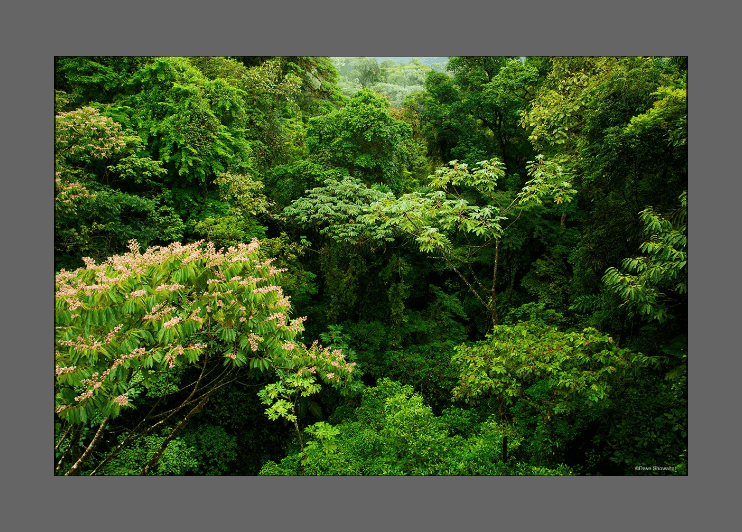
A yellow morph and green morph of an insect lives in the rainforest canopy. You would expect:
The green population to increase and the yellow to decrease
Both populations should stay the same
Both populations will increase
The green population to decrease and the yellow to increase

What is NOT true about natural selection?
Members of the same species have to have different traits
Traits need to be heritable
When parents reproduce, they have babies who have the same traits as them
All traits will help an animal survive
Which of the following pieces of evolution evidence deals with aged and identified fossils?
Fossil record
Comparative embryology
Comparative anatomy
Which of the following pieces of evolution evidence deals with comparing similar structures in various species?
Fossil record
Comparative embryology
Comparative anatomy

What is comparative anatomy?
The comparison of embryos
The comparison of the Earth's layers
The comparison of body/bone structures
The comparison of carbon dating
Which trait is NOT heritable?
The ability to taste certain flavors
How big your muscles get after a year of PE
The color of your hair
The color of your eyes

Look at this graph, what is the y-axis labeled?
Rainfall during the first 9 days of a month
Day of the month
Rainfall in mm
Month

Look at this graph, what is the title?
Snow Hare Population Each Month
Month
Snow Hare Population
Population Graph

Look at this graph, what is the x-axis labeled?
Elk and Bison Population in Yellowstone
Minimum number of animals
Maximum number of wolves
Year

Who is Charles Darwin?
A teacher at El Sausal Middle School
The creator of Snurfle Islands
A scientist that studied evolution through the process called natural selection
Which statement is correct?
Humans evolved into chimpanzees.
Chimpanzees evolved into humans.
Humans and chimpanzees share a common ancestor.
Humans and chimpanzees are not closely related.
A branching diagram that shows how a group of organisms might be related to each other.
Phylogenetics
Cladistics
Cladogram
Taxonomy
A paleontologist uncovers a series of fossils in a piece of rock.
-Fossil A was found 1 meter deep.
-Fossil B was found 3 meters deep.
-Fossil C was found 4 meters deep.
-Fossil D was found 10 meters deep.
Which fossil is the oldest?
Fossil A was found 1 meter deep.
Fossil B was found 3 meters deep.
Fossil C was found 4 meters deep.
Fossil D was found 10 meters deep.
Does the climate on Earth change over time?
True
False

