
 Worksheets
Retest of American Revolution
Total questions: 45
Worksheet time: 26mins
I used propaganda to persuade the colonists to fight against King George III, I made a midnight ride to warn of the regular army arriving, and I was a Son of Liberty.
George Washington
Samuel Adams
Paul Revere
John Adams
I was the leader of the Sons of Liberty, founded the Committee of Correspondence in Boston, and was able to hide when the British looked for me at Battle of Lexington, MA.
John Adams
Paul Revere
King George III
Samuel Adams
The colonists thought that I was a tyrant and my acts were considered intolerable.
Samuel Adams
King George III
General Prescott
Haym Solomom
Who was the main author of the Declaration of Independence?
Thomas Jefferson
George Washington
Benjamin Franklin
John Adams
Who wrote the earliest histories of the American Revolution and was a female patriot playwright (poems, plays, pamphlets)?
Abigail Adams
Deborah Sampson
Thomas Paine
Mercy Otis Warren
Who was the writer of Common Sense, a 50-page pamphlet?
Patrick Henry
Thomas Paine
King George III
Mercy Otis Warren
Who spent most of the American Revolution in France convincing the French to support the Americans in the war and negotiated the Treaty of Paris 1783?
Thomas Jefferson
John Adams
Benjamin Franklin
Patrick Henry
Who advised John Adams to support women's rights?
Mercy Otis Warren
Abigail Adams
Samuel Adams
Daughters of Liberty
Who was a delegate to the Continental Congress and a lawyer and politician that advocated independence from Britain?
Samuel Adams
Thomas Jefferson
John Adams
Benjamin Franklin
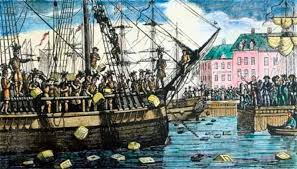
Samuel Adams and Paul Revere led members of the Sons of Liberty in this protest against taxes.
First Continental Congress
Boston Massacre
Boston Tea Party
Second Continental Congress

The Sons of Liberty were....
The children of colonists.
A group of patriots who worked to oppose British rule.
the people who built the Statue of Liberty.
A group of patriots who drank a lot tea.
Which of these people was a spy for the patriots (African-American)?
Thomas Jefferson
George Washington
The Sons of Liberty
James Armistead
If I repeal a law, it is no longer enforced.
True
False
A person who acted against the King of England would have been called a:
traitor
tariff
patriot
tactic
The British government passed measures to punish the colonists called the ___________________ Acts.
monopoly
patriot
boycott
Intolerable
A person who cannot pick a side between two adversaries would be called a __________________.
loyalist
patriot
loser
neutralist
The colonists set up small armies called a ______________
boycott
tariff
independence
militia
Many of the colonists wanted _____________ or freedom to govern on their own.
debt
tactics
independence
acts
A colonist who remained loyal to the King of England would have been called a ____________________.
militia
revolution
traitor
loyalist
Forcing the colonists to pay taxes when they had no say in making the law that created the tax was called ________________.
taxes
Taxation Without Representation
civil disobedience
alliance
The French and Indians formed an ______________ where they agreed to fight together against the British.
alliance
acts
protest
intolerable
I was a Jewish merchant that lived in America. I was very wealthy, and I donated money to help the colonists pay for the Revolutionary War.
Haym Solomon
Abigail Adams
Mercy Otis Warren
Crispus Attucks
I am a Spanish military leader living in Spanish Florida. I helped the American colonists win the Revolution, especially around the Mississippi River area.
Bernardo de Galvez
Sam Adams
Benjamin Franklin
Antonio Lopez de Santa Anna
I was an African American who served in the Continental Army (soldier). I helped the Americans win the battle of Saratoga. I am also known for having served in a legislature.
Wentworth Cheswell
Thomas Jefferson
James Monroe
Thomas Paine
In July of 1776, what historical document was revised and approved by the Second Continental Congress?
Declaration of Independence
Treaty of Paris
Common Sense
Articles of Confederation
According to the Declaration of Independence, what are unalienable rights?
Exists only in time of war
Is given to people by the state in which they live
Cannot be taken away by the government
Belongs only to citizens born in the United States
The principles of government that Thomas Jefferson included in the Declaration of Independence were most influenced by?
Williams Penn's views on religious toleration
King George's belief in divine right
Cotton Mather's sermons on religion
John Locke's Social Contract Theory
The signing of the Treaty of Paris in 1783 was a political victory for the United States because?
the United States could purchase the Louisiana Territory from France
Great Britain recognized the United States as an independent nation
France agreed to give military aid to the United States
Florida became part of the United States
What battle (victory) happened for the Continental army in 1781?
Americans issue the Declaration of Independence
British occupy Fort Ticonderoga
Americans hold Stamp Act Congress
British surrender at Yorktown
Lexington was where the "shot heard round the world" occurred. This was an important battle because?
The British surrendered to the Americans
The colonist proved they could match the British Army
It was the first battle of the American Revolution
George Washington gained valuable battle experience
After the signing of the Treaty of 1783, the Western-most border of the United States became?
Appalachian Mountains
Ohio River
Mississippi River
Rocky Mountains
What disease kill A LOT of soldiers at Valley Forge?
Chicken Pox
Small Pox
Cancer
The flu
Who was the overall leader at Valley Forge?
General George Washington
Baron von Steuben
John Adams
Ben Franklin
Which was NOT a bad condition at Valley Forge for the soldiers?
Cold weather
Little food
Poor Clothing
Plenty of ammunition
After the winter of 1777-1778 the army was...
weak
better trained to fight
totally wiped our
ready to surrender to the British
All the following are examples of civil disobedience, except-
Boston Tea Pary
Tarring and Feathering
claiming neutrality in a discourse (argument)
Boycotts and blockades of British products
After this turning point battle, France allied with the Americans.
Shot Heard Round the World
Battle at Trenton
Battle of White Plains
Battle of Saratoga
Colonial war tactics included all except-
hiding behind trees
wearing colors that blended with the environment
familiar with the territory
biological warfare
An act of treason is an act against-
a home country
taxes
civil disobedience
people who are neutral
What three empires were involved in the American Revolution?
British, Colonial, French
Spanish, French, British
British, French, Portuguese
European, North American, African

