wayground logo

Free Printable Worksheets

NEW

Font size

S
M
L
XL
Worksheets

Prokaryotic/Eukaryotic Cells

Total questions: 80

Worksheet time: 1hrs 18mins
Name
Class
Date
1.
Which of the following is a characteristic of both Eukaryotic and Prokaryotic cells?
a)
ribosomes
b)
nucleus
c)
membrane bound organelles
d)
simple
2.
Which of the following is not a characteristic of a Prokaryotic cell?
a)
unicellular
b)
floating DNA
c)
very small
d)
complex
3.

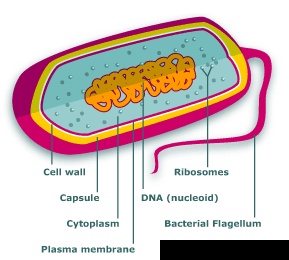
What cell is this?

a)

Prokaryote

b)

Eukaryote

c)

Paramecium

d)

Yeast Cell

4.

What types of cells contain membrane bound organelles?

a)

Prokaryote

b)

Eukaryote

c)

Virus

d)

All of the above

5.
Which of the following is found inside a prokaryote?
a)
cytoplasm
b)
DNA
c)
ribosomes
d)
all of these
6.
Both prokaryotes and eukaryotes have a nucleus.
a)
True
b)
False
7.

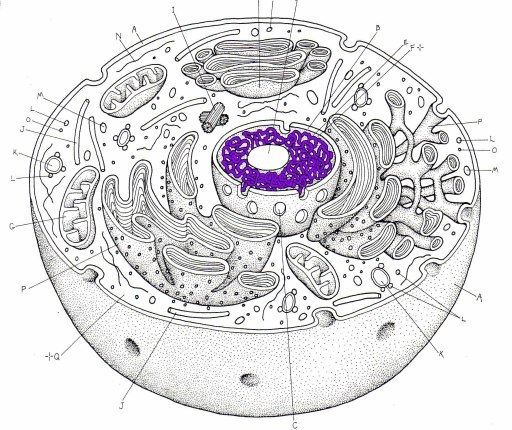
What kind of cell is this?

a)

Eukaryotic/Animal

b)

Prokaryotic/Animal

c)

Eukaryotic/Plant

d)

Prokaryotic/Plant

8.
All living things are made of...
a)
atoms 
b)
cells 
c)
bacteria 
d)
plants 
9.
Plants and animal cells are examples of ___ cells 
a)
prokaryotic cells 
b)
eukaryotic cells 
10.
All cells come from other...
a)
cells 
b)
plants 
c)
nucleus 
d)
microscopes 
11.
Bacteria is what kind of cell?
a)
Eukaryotic
b)
Prokaryotic
12.
How are prokaryotes and eukaryotes similar?
a)
They both contain membrane-bound organelles.
b)
They both have cell membranes.
c)
The both have nuclei.
d)
They both have chloroplasts.
13.
Type of cell shown?
a)
Eukaryotic
b)
Prokaryotic
c)
Bacterial
d)
Plant
14.
Proteins are produced at which cellular structures?
a)
nuclei
b)
ribosomes
c)
mitochondria
d)
chloroplasts
15.
First type of cell to appear on Earth?
a)
Plant
b)
Animal
c)
Prokaryotic
d)
Eukaryotic
16.

Some prokaryotes and eukaryotes have a cellular structure called a flagella. What is the purpose of the flagella?

a)

to transport molecules across the cell membrane

b)

a means of locomotion

c)

to collect food for the cell

d)

to tell the cell the direction of a food source

17.

Which type of cell is bigger?

a)

Prokaryotic

b)

Eukaryotic

c)

Virus

d)

They are all similar in size

18.
All eukaryotes and prokaryotes are surrounded by a _____.
a)
cell wall
b)
cell membrane
c)
cell envelope
d)
loving, supportive family
19.

Which type of cell?

a)

Prokaryotic/Plant

b)

Eukaryotic/Plant

c)

Prokaryotic/Animal

d)

Eukaryotic/Animal

20.

Where is the DNA found in a prokaryotic cell?

a)

floating around in the cytoplasm

b)

in the nucleus

c)

virus do not have DNA

d)

attached to a ribosome

21.

Animals, Plants, Fungi, and Protista

a)

Eukaryotic

b)

Prokaryotic

22.

Which of the following contains a circular piece of DNA floating in the cytoplasm?

a)

Eukaryotic

b)

Prokaryotic

c)

Virus

23.

Which of the following contains ribosomes, a cell wall, and a cell membrane?

a)

Eukaryotic

b)

Prokaryotic

c)

Both

24.

Which of the following contains nucleic acid?

a)

Eukaryotic

b)

Prokaryotic

c)

Both

25.

Which of the following contains mitochondria, ER, and Golgi bodies?

a)

Eukaryotic

b)

Prokaryotic

26.

Which of the following are larger cells and are found composing multicellular organisms?

a)

Eukaryotic

b)

Prokaryotic

27.

Which of the following are always unicellular?

a)

Eukaryotic

b)

Prokaryotic

c)

Virus

d)

Animal Cell

28.
Cells can only be seen with the help of a...
a)
hand lens 
b)
magnifying glass
c)
3D glasses 
d)
microscope 
29.
How is this organism best classified?
a)
unicellular & eukaryotic
b)
multicellular & eukaryotic
c)
unicellular & prokaryotic
d)
multicellular & prokaryotic
30.
Which of the following is NOT a type of eukaryotic cell?
a)
mushroom cell
b)
pea leaf cell
c)
bacterial cell found in Swiss cheese
d)
alligator stomach cell
31.
Which is true of prokaryotic and eukaryotic cells?
a)
Prokaryotic cells are larger than eukaryotic cells.
b)
Eukaryotic cells do not have nuclei, and prokaryotic cells do have nuclei.
c)
Prokaryotic cells lack membrane-bound organelles, and eukaryotic cells contain membrane-bound organelles.
d)
Eukaryotic cells are simpler than prokaryotic cells.
32.
All cells have DNA.
a)
True
b)
False
33.

Has membrane bound organelles (In Complex Cells)

a)

Prokaryote

b)

Eukaryote

c)

Both

34.

Has chloroplast

a)

Prokaryote

b)

Eukaryote

c)

Both

35.

capsule

a)

Prokaryotic

b)

Eukaryotic

c)

Both

36.

nucleoid region

a)

Prokaryotic

b)

Eukaryotic

c)

Both

37.

pili (accel only)

a)

Prokaryotic

b)

Eukaryotic

c)

Both

38.

capable of reproduction

a)

prokaryotic

b)

eukaryotic

c)

both

39.

can obtain and use energy

a)

prokaryotic

b)

eukaryotic

c)

both

40.

can respond and adapt to the environment

a)

prokaryotic

b)

eukaryotic

c)

both

41.

protists

a)

prokaryotic

b)

eukaryotic

c)

both

42.
Which organelle belongs in plant cells only?
a)
Cell Membrane
b)
Mitochondrion
c)
Chloroplast
d)
Nucleus
43.
Which organelle belongs in both plant and animal cells?
a)
Chloroplast
b)
Mitochondrion
c)
Large Central Vacuole
d)
Cell Wall
44.
Acts like a gatekeeper- allowing some materials to pass through it, but not others. 
a)
cytoplasm
b)
cell membrane
c)
mitochondria
d)
vacuoles
45.

Which organelle is responsible for producing energy in the form of ATP?

a)

lysosomes

b)

mitochondria

c)

chloroplasts

d)

vacuoles

46.
This structure regulates the passage of water, food and waste into and out of the cell.
a)
nucleus
b)
vacuole
c)
cytoplasm
d)
cell membrane
47.
Where the genetic material is found in the cell 
a)
nucleolus
b)
cytoplasm
c)
nucleus
d)
chloroplast
48.
A gel-like fluid it takes up most of the space inside the cell. 
a)
cytoplasm
b)
cell membrane
c)
vacuoles
d)
golgi body
49.
food making structure of plant cells
a)
chloroplasts
b)
cell wall 
c)
cytoplasm
d)
vacuole
50.
Provides extra support for the plant cell and gives in shape
a)
chlorophyll
b)
chloroplast
c)
cell wall
d)
vacuole
51.
Bacteria and Archaea are classified as?
a)
eukaryotes
b)
nucleoid
c)
prokaryotes
d)
proteins
52.
ribosomes
a)
an outer covering that separates the cell's interior from its surrounding environment
b)
the genetic material of the cell
c)
consisting of a jelly-like cytosol within the cell in which other cellular components are found
d)
synthesize proteins
53.
Using this image, what organelle is C?
a)
Cell Wall
b)
Mitochondria
c)
Large Cell Vacuole
d)
Chloroplast
54.
What is the function of the mitochondria?
a)
Structure that manufactures ribosomes
b)
Structures that converts nutrients to energy
c)
Stack of membranes that packages chemicals
d)
Structure that contains DNA and directs the cell
55.
What is the function of nucleus?
a)
Structure that organizes motion of chromosomes. 
b)
Structure that contains DNA and directs the cell 
c)
Membrane that surrounds and protects the cell 
d)
Stack of membranes that packages chemicals
56.
Where does photosynthesis occur?
a)
mitochondria
b)
stomata
c)
xylem
d)
chloroplast
57.
I store water in both plant and animal cells. What am I?
a)
cytoplasm
b)
ribosomes
c)
vacuole
d)
lysosomes
58.
What cell part is NOT found in all cells?
a)
Cell Wall
b)
Cell Membrane
c)
Cytoplasm
d)
Genetic Material
59.
This organelle takes food and turns it into ENERGY for plant and animal cells.
a)
Chloroplast
b)
Mitochondria
c)
Lysosome
d)
Ribosome
60.
What does this organism use for movement?
a)
Pseudopod
b)
Cilia
c)
Flagella
d)
legs
61.
What does this organism use for movement?
a)
Pseudopod
b)
Cilia
c)
Flagella
d)
legs
62.
What form are chromosomes in during most of the life of the cell?
a)
DNA
b)
Chromatin
c)
Mitosis
d)
Nucleus
63.
What makes the endoplasmic reticulum rough?
a)
Vessicles
b)
Vacuoles
c)
Ribosomes
d)
Chromosomes
64.
What is found in both plant and animal cells but is much larger in plant cells?
a)
Nucleus
b)
Mitochondrion
c)
Chloroplast
d)
Vacuole
65.

Amino acids link together to form proteins. In which organelle would this process occur?

a)

Lysosome

b)

Ribosome

c)

Centriole

d)

Mitochondria

66.
packages proteins for delivery
a)
Endoplasmic reticulum
b)
ribosomes
c)
golgi apparatus
d)
lysosomes
67.
collect sunlight which it converts to sugars
a)
chloroplasts
b)
cytoplasm
c)
cell wall
d)
mitochondria
68.
break down (digest) worn out cell parts, mostly in animal cells
a)
cytoplasm
b)
lysosomes
c)
mitochondria
d)
vacuoles
69.
Transportation network for the cell, moves materials around in the cell
a)
Lysosome
b)
Nuclear Membrane
c)
Endoplasmic Reticulum
d)
Centriole
70.
What am I?
a)
mitochondria
b)
lysosomes
c)
chloroplast
d)
endoplasmic reticulum
71.
What am I?
a)
cell wall
b)
mitochondria
c)
cytoplasm
d)
chloroplast
72.
What am I?
a)
vacuole
b)
ribosome
c)
endoplasmic reticulum
d)
golgi apparatus
73.
What organelle helps with cell digestion?
a)
Lysosomes
b)
Ribosomes
c)
Golgi Complex
d)
ER
74.
What organelle stores waste and water in both plant and animal cells?
a)
Lysosomes
b)
Golgi Complex
c)
Vacuoles
d)
Endoplasmic Reticulum
75.
Using this image, what organelle is D?
a)
Endoplasmic Reticulum
b)
Flagella
c)
Rough ER
d)
Smooth ER
76.
Using this image, what organelle is N?
a)
Centrioles
b)
Cell Membrane
c)
Golgi Apparatus
d)
Ribosome
77.
Using this image, what organelle is A?
a)
Cell Wall
b)
Large Central Vacuole
c)
Mitochondria
d)
Chloroplast
78.
What is the difference between rough and smooth ER?
a)
There is no difference.
b)
Plants have rough ER, animals have smooth ER.
c)
What type of injuries the Doctors treat.
d)
Rough has ribosomes, smooth does not.
79.
Which 2 organelles are in plants and animals?
a)
cell wall and cytoplasm
b)
nucleaus and plastids
c)
cell membrane and cytoplasm
d)
cell membrane and chlorophast
80.

What structure would a white blood cell use to engulf bacteria?

a)

cilia

b)

flagella

c)

capsule

d)

pseudopod