
 Worksheets
SCI102AX: Unit 3 Review (Chapters 5 & 6)
Total questions: 52
Worksheet time: 3570secs
Name
Class
Date
1.
What is energy?
a)
Force applied over a distamce
b)
How much work is done.
c)
Ability to do work
2.
Energy of motion is which type of energy?
a)
Potential
b)
Kinetic
c)
Sound
d)
Gravitational
3.
Energy that comes from the nucleus of an atom. A form of potential energy.
a)
chemical energy
b)
Nuclear energy
c)
Sound energy
d)
Electrical energy
4.
Energy caused by the movement in the particles of matter. It is a form of kinetic energy.
a)
Nuclear energy
b)
Sound energy
c)
Light energy
d)
Thermal energy
5.
Energy that is stored in bonds between atoms is:
a)
Mechanical energy
b)
Chemical energy
c)
Kinetic energy
d)
Nuclear energy
6.
The energy stored in an object as a result of position or height is -
a)
Mechanical energy
b)
Thermal energy
c)
Gravitational potential energy
d)
Stored mechanical/elastic energy
7.
Mechanical energy
a)
energy built up before being in motion
b)
energy released in a chemical reaction
c)
energy of motion
d)
sum of kinetic and potential energy
8.
On a roller coaster, where is maximum potential energy?
a)
At the bottom of a big hill
b)
When going around a corner
c)
When going upside down
d)
At the top of a big hill
9.

A battery converts what type of energy to another?
a)
sound to kinetic
b)
light to heat
c)
mechanical to electrical
d)
chemical to electrical
10.
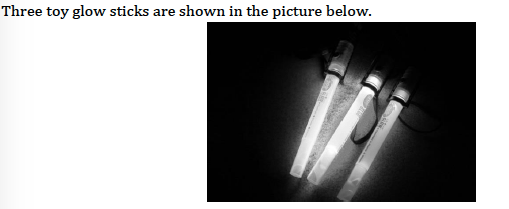
The glow sticks produce light for a short amount of time. The light from the glow stick is a conversion from what to what?
a)
thermal to light
b)
gravitational to potential
c)
radiant to electrical
d)
chemical to light
11.
A boy skating downhill on a skateboard is transforming —
a)
potential energy into kinetic energy
b)
kinetic energy into potential energy
c)
thermal energy into potential energy
d)
kinetic energy into chemical energy
12.

At which point will the skater have the least potential energy?
a)
Point A
b)
Point B
c)
Point C
d)
Point A and C
13.

As a pendulum swings from its highest to lowest position, what happens to its kinetic and potential energy?
a)
Both the potential energy and kinetic energy decrease
b)
The potential energy decreases while the kinetic energy increases
c)
The kinetic energy decreases while the potential energy increases
d)
Bothe the potential energy and kinetic energy increase
14.

Why does the roller coaster car have the greatest amount of potential energy at position A?
a)
The car is at the greatest height at position A.
b)
The car is moving with the greatest velocity at position A.
c)
The car has the greatest mass at position A.
d)
The car has the greatest acceleration at position A.
15.

The cyclist has the most kinetic energy at which point?
a)
A
b)
B
c)
C
d)
NONE
16.

The average kinetic energy of the molecules in a substance refers to its ________________________.
a)
heat
b)
temperature
c)
momentum
d)
viscosity
17.

What would be the effect on the particles if more heat is supplied to the system?
a)
They would slow down
b)
They would stop moving
c)
They would speed up
d)
There would be no effect
18.
Movement of thermal energy from a warmer object to a cooler object
a)
Specific Heat
b)
Heat
c)
Freezing Point
d)
Boiling Point
19.
Compared to metal, water seems to have a ___________ specific heat.
a)
High, it takes a lot of energy to heat up and change temperature
b)
Low, because it does not require a lot of energy to change temperature
20.
A chair is several feet from a fireplace. The side of the chair facing the fireplace gets warm due to
a)
conduction
b)
convection
c)
radiation
21.
Hot coffee is stirred with a spoon; the spoon gets hot due to
a)
conduction
b)
convection
c)
radiation
22.
Warm air over the beach rises while cooler, dense air from the ocean rushes in due to
a)
conduction
b)
convection
c)
radiation
23.
A huge rock at the state park gets hot during the day. The rock was warmed from the Sun by
a)
conduction
b)
convection
c)
radiation
24.
You lay on the same hot rock at night and keep warm from the rock by
a)
conduction
b)
convection
c)
radiation
25.
The type of heat transfer that happens through direct contact of molecules or particles with each other is ___________________.
a)
Convection
b)
Conduction
c)
Radiation
d)
insulation.
26.
In heat transfer, heat always flows from the _______________ substance to the _______________ substance.
a)
Hotter to colder
b)
Colder to hotter
c)
Hotter to hotter
d)
Colder to colder
27.
The kind of heat transfer that travels through space in electromagnetic waves is ______________________.
a)
insulation.
b)
Radiation
c)
Conduction
d)
Convection
28.
___________________ is the type of heat transfer that occurs in fluids, such as warm air rising and cold air sinking; creating wind.
a)
Convection
b)
Conduction
c)
Radiation
d)
insulation.
29.
After an energy conversion, you end up with the same total amount of energy as the original amount of potential energy. Which of the following laws explains this rule?
a)
a. law of energy changes
b)
b. law of conservation of energy
c)
c. law of power and energy
d)
d. law of potential energy
30.
Work done = Force x _________
a)
distance
b)
acceleration
c)
velocity
d)
speed
31.
In order for Work to happen, what 2 things must occur?
a)
Mass and Displacement
b)
Force and Mass
c)
Force and Work
d)
Force and displacement
32.
The unit used to measure work is the
a)
Watt
b)
Newton
c)
Joule
d)
meter
33.
A 5000N block is lifted 10 m. How much work was done?
a)
50000 J
b)
5000 J
c)
500 J
d)
50 J
34.
A person applies a force to a wall.
a)
Work is done because the person uses energy when applying the force
b)
Work is done because the wall heats up at the place where the force is applied
c)
No work is done
35.
In which of these cases is work being done?
a)
A student sleeps
b)
A student pushes a locked door that does not move
c)
a student carries his chair into another room
d)
A student sits on the carpet
36.
How is power defined?
a)
transfer a force through a distance
b)
the rate of speed
c)
the rate of work being done
d)
transfer of space over time
37.
What is the equation for power?
a)
P = Work/time
b)
P = Force/time
c)
P = time/distance
d)
P = Work * time
38.
What is the unit of measurement for Power?
a)
Joules
b)
Newtons
c)
Watts
d)
Meters
39.
How much power does it take to do 360 J of work in 18 sec?
a)
20 W
b)
6,480 J
c)
20 m
d)
6,480 W
40.
You do some work over a certain amount of time and have a power output. If you do the work in half as much time, your power will be:
a)
half as much as originally
b)
same as originally
c)
twice as much as originally
41.
A flat sloping surface that connects lower and higher elevations. It makes raising objects easier
a)
wedge
b)
screw
c)
lever
d)
inclined plane
42.
Two inclined planes placed back to back forms this simple machine
a)
pulley
b)
wedge
c)
lever
d)
wheel and axle
43.
A simple machine that consists a rigid bar that pivot about a fixed point
a)
lever
b)
pulley
c)
wheel and axle
d)
fulcrum
44.

A flagpole is an example of
a)
wedge
b)
pulley
c)
incline plane
d)
wheel and axle
45.

How does a single fixed pulley, like the one seen here, help you do work?
a)
changes the direction of the force
b)
increases the amount of applied force
c)
decreases the amount of applied force
d)
allows you to pull the rope a shorter distance
46.
If you use a crowbar to get the lid off of a bucket, what simple machine are you using?
a)
Inclined Plane
b)
Pulley
c)
Wheel and Axle
d)
Lever
47.

Where should the fulcrum be placed in order for the student to use the least amount of effort possible?
a)
point A
b)
point B
c)
point C
d)
point D
48.
What is effort (input) force?
a)
the force required by a machine in order to accomplish work (the force you put on the machine)
b)
the force which an effort force must overcome in order to do work on an object via a simple machine.
c)
the force the machine exerts on a object
d)
the output work times the input distance
49.
What is resistance (output) force?
a)
the force required by a machine in order to accomplish work (the force you put on the machine)
b)
the force which an effort force must overcome in order to do work on an object via a simple machine.
c)
the force the machine exerts on a object
d)
the output work times the input distance
50.
What is the equation for Actual Mechanical Advantage?
a)
input distance/output distance
b)
output force/input force
51.
Using a lever, Joe is able to lift a 10,000 N car off of the ground with a force of 1000 N. What is the mechanical advantage of the lever?
a)
1
b)
10
c)
100
d)
1000
52.
True or False: No machine is 100 % efficient.
a)
True
b)
False
100 %

