
 Worksheets
Protein Synthesis and Mutations Review
Total questions: 61
Worksheet time: 52mins
Which molecule transfers the correct amino acid to the ribosome during Translation?
RNA polymerase
DNA
tRNA
mRNA
What type of biomolecule does DNA provide the instructions for building?
proteins
carbohydrates
lipids
all of the above
What type of bond holds the nitrogen bases together in DNA?
weak nitrogen bonds
weak hydrogen bonds
strong hydrogen bonds
strong nitrogen bonds
How is the genetic information from DNA Transcribed?
Information cannot travel outside of the nucleus
Information is attached to a carrier protein to get across the nuclear membrane
Information is copied onto a tRNA molecule and travels through a nuclear pore
Information is copied onto a mRNA molecule and travels through a nuclear pore
What enzyme unzips the DNA
DNA Helicase
DNA Polymerase
tRNA
peptase
What are the differences between DNA and RNA? (check all that apply)
DNA stay in the nucleus; RNA travels to the cytoplasm
DNA has base Uracil; RNA has base Thymine
DNA is double stranded; RNA is single stranded
DNA has base Thymine; RNA has base Uracil

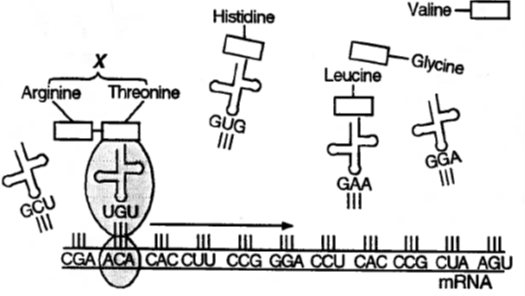
What is the purpose of the diagram?
To replicate DNA before cell division
To assemble nucleotides into mRNA
To synthesize amino acids
To translate the genetic code into a specific sequence of amino acids
How many nitrogen bases make up a codon?
as many as possible
3
2
1
During translation, the ribosome is the site where...?
DNA helicase seperates and copies the DNA
amino acid chains are assembled into proteins
information from DNA is copied into mRNA
free floating amino acids are picked up by tRNA

What type of mutation is shown here?
Substitution
Insertion
Deletion
Point mutation
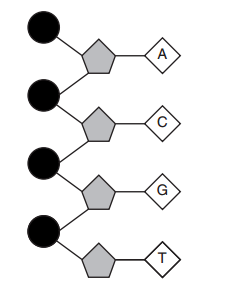
What would be the correct mRNA strand produced from this DNA strand?
TAGACT
ATCTGA
UAGACU
TUCTGA
AUCUGA
Which mutation would change the greatest number of amino acids in a protein?
substitution of a single base at the end of a DNA strand
deletion of a single base at the beginning of a DNA strand
point mutation occurring in the middle of a DNA strand
insertion of a single base at the end of a DNA strand

What process is occurring at number 1 in the diagram?
Translation
mRNA
protein synthesis
Transcription
What structure can be found in both prokaryotic and eukaryotic cells?
Mitochondria
Nucleus
Nucleic Acid
Chloroplast
What is the role of mRNA?
making energy available for cellular activities
creating bonds to form biomolecules
producing sugars to assist with replication
providing information to form proteins
What part of the DNA molecule is responsible for specific traits in an organism?
number of hydrogen bonds that hold the nitrogen bases together
number of carbons in DNA
sequence of nucleotide bases
sequence of phosphates
Which is the complementary DNA strand?
3'AGCATGGTC'5
3'UCGUACCAG'5
5'TCGTACCAG'3
5'UCHUACCAG'3
3'TCGTACCAG'5
What type of mutation is this?
Original DNA;
TATGAACTGGAA
Mutated DNA;
TATGAATTGGAA
Substitution
Insertion
Deletion
Frameshift
Every single cell in your body contains the same DNA. But your eye and heart perform different functions. Which statement best explains how different cells develop?
each cell contains only the active parts of the DNA needed for that function
each cell contains only the DNA needed for that function
each cell has an identical copy of DNA with enzymes controlling the expression of specific genes
each cell has multiple copies of DNA that are effected in different ways by the environment
What is the direct result of an error in transcription?
nuclear membrane is ruptured
amino acids do no bond to tRNA
codon sequence is incorrect
mRNA does not leave the nucleus

Which of these mutations most likely results in the mutated hemoglobin gene?
insertion
deletion
duplication
substitution
TGGCAAGTACGT

GTAGTCA
TGGCAAGTACGT
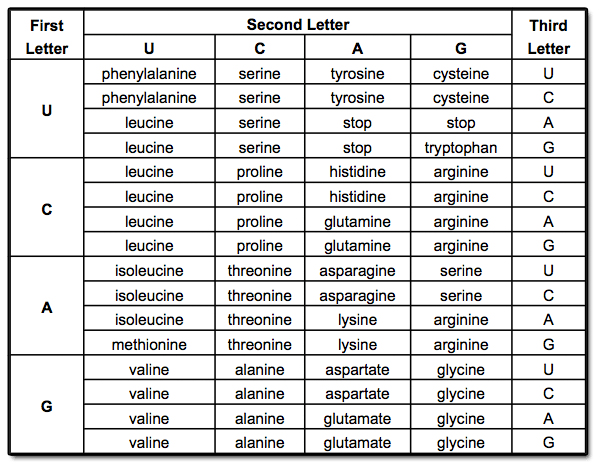
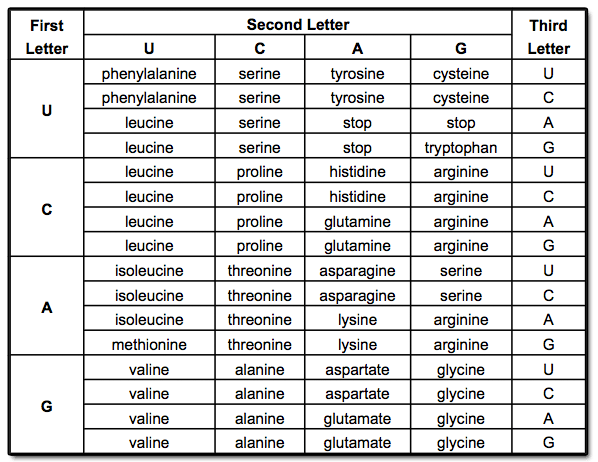
What is the correct amino acid sequence for the mRNA code UAC GGG CAU UAG
Met-Pro-Ala-Val
Met-Pro-Val-Stop
Tyr-Gly-His-Stop
Tyr-Gly-Arg-His
ATG GGA ACT CCA


The sequence of which component of the nucleotide determines the order of amino acids produced during Protein Synthesis?
Nitrogen Base
Phosphate Group
Ribose Sugar
Deoxyribose Sugar
Cells in a developing embryo respond to substances that stimulate them to go through the cell cycle without entering G0 phase. What does this cause?
The cell self distructs
The cell will enter the G0 phase and never leave
Cells will divide uncontrollably and form tumors
Cells make to much DNA
A mutation in which types of cells would only affect the organism and not future generations?
Sperm cells and egg Cells
Sperm cells and Lung cells
Egg Cells and Liver cells
Nerve cell and brain cells
Oxygen is used to break down glucose molecules and releases energy in a process called
photosynthesis
cellular respiration
cytokinesis
fermentation
Which of these chemical reactions produces glucose?
aerobic respiration
anaerobic respiration
photosynthesis
fermentation


Which sequence is correct for the steps of Mitosis?
A
B
C
D

Stage II on the graph represents which phase of the Cell Cycle?
Interphase
Mitosis
Cytokinesis
What are the 4 most abundant elements in the Biomolecules?
(Carbohydrate, Lipid, Protein, Nucleic Acid)
Carbon
Hydrogen
Nitrogen
Potassium
Carbon
Helium
Nitrogen
Phosphorus
Calcium
Hydrogen
Nitrogen
Potassium
Carbon
Hydrogen
Oxygen
Nitrogen
What are the reactants of Photosynthesis?
Oxygen and Carbon Dioxide
Carbon Dioxide and Water
ATP and Oxygen
Oxygen and Glucose
What are the inputs (reactants) of cellular respiration?
carbon dioxide and water
glucose and water
carbon dioxide and oxygen
glucose and oxygen

What are the types of Chemical Energy produced at the end of Photosynthesis and Cellular Respiration?
ATP
Light
ATP
Glucose
Glucose
ATP
Radient
Thermal
A string of nucleotides that contain the information to make a specific protein
Ribose
Amino Acids
tRNA
Gene
ATTGAGCC - Mutated
The example above is an example of a
Place the steps of Protein Synthesis in the correct order.
1. Transfer RNA picks up individual amino acids and carries them to the ribosome.
2. Ribosomal RNA bonds mRNA and tRNA.
3. A single strand of DNA serves as a template for making mRNA.
4. Messenger RNA carries the sequence of nucleotides to the ribosomes.
5. A protein is synthesized.
2,5,3,4,1
3,4,1,2,5
3,2,4,5,1
2,4,1,5,3


An organism's reproductive cells, sperm and egg cells, are called _____.
bacteria
prokaryotes
gametes
pathogens
Which type of cells is made through the process of mitosis and are created for growth, injury repair, or asexual reproduction?
Body Cells (somatic cells)
Sex Cells (gametes)

