wayground logo

Free Printable Worksheets

Font size

S
M
L
XL
Worksheets

Mid-Term Review

Total questions: 113

Worksheet time: 1hrs 26mins

Name
Class
Date
1.

Where is Loch Ness lake?

a)

England

b)

Scotland

c)

Thailand

d)

Sierra Leone

2.
How much sodium chloride and other salts are dissolved in a water sample is the water's ___________________
a)
salinity
b)
composition
3.
Ocean water freezes at a lower temperature than fresh water.
a)
True
b)
False
4.
Water_______ increases with depth in  the ocean because the weight of the water above increases.
a)
temperature
b)
pressure
5.
Which process will increase the salinity of ocean water?
a)
evaporation
b)
currents
c)
Coriolis effect
d)
density
6.
How will the melting of icecaps change the salinity of ocean water?
a)
raise the salinity
b)
lower the salinity
c)
no change to the salinity
d)
I have no idea
7.
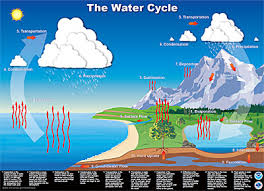
How do clouds RELEASE water?
a)
precipitation
b)
evaporation
c)
transpiration
d)
condensation
8.
Where would we find most of Earth's water?
a)
ocean
b)
icecaps and glaciers
c)
groundwater
d)
air
9.
Why is groundwater part of the water cycle?
a)
it collects precipitation
b)
it is above the ground
c)
it does not condense
d)
it gets heated and precipitates
10.
What is this continent?
a)
Africa
b)
Australia
c)
Europe
d)
Antartica
11.
What continent is pictured here?
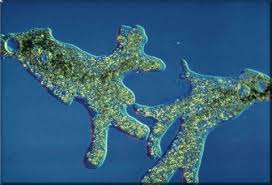
a)
Africa
b)
Asia
c)
Europe
d)
South America
12.
What is this continent?
a)
Asia
b)
Africa
c)
Europe
d)
South America
13.
Which river forms a border with the United States and Mexico?
a)
Colorado
b)
Mississippi
c)
Hudson
d)
Rio Grande
14.

1. The Greeks were the first to use math to navigate and they were also some of the first to use _____.

a)

Canvas

b)

A Compass

c)

Maps

d)

the stars

15.

1. The Vikings discovered ____________ and Greenland.

a)

Europe

b)

The Atlantic Ocean

c)

Iceland

d)

gold

16.

1. Charles Darwin developed the _________.

a)

compass

b)

water tight compartment

c)

modern navigation system

d)

Theory of Evolution

17.
A meridian is another name ____. the The 0o meridian runs through_______________.
a)
a latitude line, the equator
b)
a longitude line, Greenwich England
c)
a longitude line, the widest  part of the earth
18.
Who was the first explorer to sail around the world?
a)
James Cook
b)
Christopher Columbus
c)
Ferdinand Magellan
d)
Vasco de Gama
19.
This group of people were the first to record their sea voyages
a)
Greeks
b)
Phoenicians
c)
Egyptians 
20.
Which is NOT a type of aquatic ecosystem?
a)
ocean
b)
estuary
c)
monastery
d)
wetland
21.
Temperature, sunlight and oxygen are examples of ____ factors.
a)
abiotic
b)
biotic
22.
This means the amount of salt dissolved in water.
a)
salinity
b)
salutation
c)
saturation
d)
saltiness
23.
Rivers are larger, deeper and flow ___ than streams.
a)
slower
b)
faster
24.
What are areas where freshwater meets saltwater called?
a)
wetlands
b)
estuaries
c)
coastal byways
d)
intertidal zones
25.
What are coral reefs?
a)
rock
b)
deposits of bones of dead fish
c)
plants
d)
outside skeletons of tiny, soft-bodied animals
26.
How do fish use oxygen from the water?
a)
breath it with special lungs
b)
gills separate it and send it to the blood stream
c)
take it in through small pores
d)
absorb it through their scales
27.
Which has higher oxygen levels?
a)
faster moving water
b)
slower moving water
c)
speed of water has no effect on oxygen content
d)
all water has the same amount of oxygen
28.
This is a picture of a ____.
a)
Sea lion 
b)
sea turtle 
c)
Sea dolphin
d)
Sea tortoise 
29.
Which animal do not live in the ocean?
a)
Dolphin 
b)
Jellyfish 
c)
Alligator
d)
Blue whale 
30.

Turbidity currents carry ____ down from the ____ .

a)

sediments; continental rise

b)

sediments; continental shelf

c)

poop; continental rise

d)

rocks; continental shelf

31.
the degree to which light penetrates into water
a)
Transparency
b)
Turbidity
c)
Cloudy
d)
Dense
32.
measure of a water's resistanceto the lowering of pH when acids are added to the water
a)
Turbidity
b)
Salinity
c)
Alkalinity
d)
Conductivity
33.

An object will rise up in a fluid if

a)

Gravity and buoyant force equal

b)

Density of object and fluid is equal

c)

the buoyant force is stronger than gravity

d)

if the density of the object is greater than the fluid

34.
If an object displaces more fluid than the weight of the object, will the object sink or float?
a)
Sink
b)
Float
35.
A(n) ______ is a substance with a pH less than 7
a)
Acid
b)
Alkaline
c)
Base
d)
Buffer
36.

When you place a Coke in an Aquarium will it float or sink?

a)

Float

b)

Sink

c)

It will do nothing.

d)

It will be taken by a student in the 8th period.

37.
The pH scale is based off of the concentration of _________ ions.
a)
Oxygen
b)
Hydrogen
c)
Nitrogen
d)
None of the others
38.

If you took all of the salt in the sea a spread it over the land it would be how high?

a)

200 Feet High

b)

500 Feet high

c)

Five Giraffe high

d)

15 Elephants high

39.

What ocean of or sea is the saltest?

a)

Atlantic Ocean

b)

Gulf of Mexico

c)

Red Sea

d)

Pacific Ocean

40.

The salter the water the more easier for you to _________?

a)

Drown

b)

Sink to the bottom of the ocean

c)

Swim

d)

Float

41.

In the video there were two sources of salt in the sea. One was salt spewed up from volcano eruptions that then fell in to the sea and the second was from what__________.

a)

Carbolic acid formed from the carbon dioxide in the air which to the breakdown of rocks.

b)

Dead bodies of dinosaurs.

c)

Explosion at the Morton salt factory.

d)

Fish urinating salt into the sea.

42.

What is the definition of the word brine.

a)

Water in a river.

b)

water found in a frozen lake.

c)

Salt water solution.

d)

27 Giraffe high.

43.
Which process does NOT lead to a decrease in the salinity of water?
a)
runoff from land
b)
precipitation
c)
sea ice melting
d)
evaporation
44.
The salt that is in your salt shaker is the same salt that is in our oceans?
a)
true
b)
false
45.
What is the most abundant salt in the sea?
a)
calcium chloride
b)
potassium chloride
c)
magnesium chloride
d)
sodium chloride
46.

Which is not true about salty water?

a)

Floats on top of freshwater

b)

Higher density

c)

It has more molecules than freshwater

d)

It sinks at the bottom of a container

47.

Which of the following types of water would SINK the fastest?

a)

warm and salty

b)

cold and salty

c)

warm and fresh

d)

cold and fresh

48.

______ causes deep ocean currents

a)

The Coriolis Effect

b)

gravity

c)

wind

d)

density differences

49.
What must aquatic organisms be able to tolerate that live in estuaries?
a)
warm tempatures
b)
freezing cold temperatures
c)
only salt water
d)
both fresh and salt water
50.
Aphotic means ______.
a)
sunlight can reach
b)
sunlight cannot reach
c)
both are correct
51.
How do most pollutants typically get into our watershed?
a)
Factories dump pollution into creeks and rivers
b)
All of our wastewater goes into creeks and rivers
c)
Runoff from heavy rain carries it into creeks and rivers
d)
Oil spills leak into creeks and rivers
52.
What organ is responsible for regulating buoyancy in a bony fish?
a)
swim bladder
b)
operculum
c)
lateral line
d)
dorsal fin
53.
Which of these is an example of precipitation?
a)
snow
b)
air
c)
clouds
d)
vapor
54.
Which of the following would be considered a non-point source pollution:
a)
A pipe leak
b)
Fertilizer runoff
c)
A gas leak from an underground tank
55.

Nitrates and phosphates come from fertilizers and human and animal waste. This leads to eutrophication which is the buildup of what?

a)

Plankton

b)

Algae

56.

Which substance is used in a sewage treatment system to kill harmful bacteria?

a)

ammonia

b)

chlorine

57.

How far from the surface is the Titanic?

a)

370 miles below the water surface

b)

12,500 feet

c)

36,070 feet

d)

5 miles

58.

The blue whale is the largest animal on earth and it usually hunts at depths of around________-

a)

130 feet

b)

330 feet

c)

12,500 feet

d)

700 feet

59.

At what ocean depth does sun light not reach?

a)

12,500 feet

b)

5,280 feet

c)

35,000 feet

d)

3,280 feet

60.

What is the high of Mt Everest?

a)

12,500 Feet

b)

29,029 Feet

c)

3,200 Feet

d)

35,756 Feet

61.
Hydro is a __________ root meaning water.
a)
Asian
b)
Chinese
c)
American
d)
Greek
62.
Which river is blocked by the Hoover Dam?
a)
Mississippi River
b)
Colorado River
c)
Red River
d)
Missouri RIver
63.
By controlling the Yangtze River the Chinese wanted to prevent:
a)
floods
b)
earthquakes
c)
storms
d)
disease
64.
The dam was also built to provide:
a)
money
b)
wind energy
c)
solar energy
d)
electricity
65.
This dam has put a lot of land:
a)
under water
b)
above water
c)
by the water
66.
What pollutant is often released during the manufacturing of cement?
a)
arsenic
b)
mercury
c)
sulfates
d)
phosphates
67.
The water and human wastes that are washed down sinks, showers, and toilets are called __________________.
a)
the water cycle
b)
sewage
c)
thermal pollution
d)
point pollution sources
68.
Where did the BP oil spill take place?
a)
In the Indian Ocean
b)
Gulf of Mexico
c)
Off the coast of Alaska
d)
Pacific Ocean
69.
How much sodium chloride and other salts are dissolved in a water sample is the water's ___________________
a)
salinity
b)
composition
70.
Freshwater has a higher density than salt water. 
a)
True
b)
False
71.
As you go deeper below the ocean surface the temperature increases.
a)
True
b)
False
72.
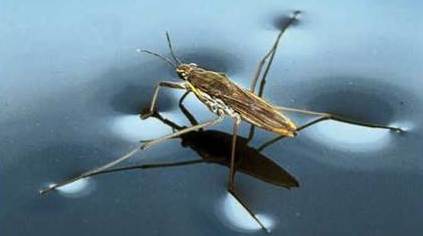
Refer to the picture; this is occurring due to:
a)
Adhesion
b)
Cohesion
73.
Cohesion and adhesion have this in common:
a)
Hydrogen bonding
b)
They create non-polar molecules
c)
Only relate to water
d)
Universal solvent
74.
Which of the following substances are polar?
a)
Oils
b)
Fats
c)
Water
d)
All of the above
75.
In which type of bond are electrons shared unequally?
a)
Non-polar covalent bond
b)
Polar covalent bond
c)
Ionic bond
d)
Hydrogen bond
76.
Bond that forms when one or more electrons are transferred from one atom to another.
a)
Covalent
b)
Hydrogen
c)
Ionic
d)
Metallic
77.
What is Specific Heat?
a)
The  amount of thermal energy required to increase the temperature of 1kg of a material by 1°C.
b)
The  amount of radiant energy required to increase the temperature of 1kgof a material by 1°C
c)
The  amount of energy required to increase the temperature of 1kgof a material by 1°C.
d)
The  amount of friction  required to increase the temperature of 1kgof a material by 1°C.
78.

CALCIUM

a)

C

b)

Ca

c)

Cu

d)

Cl

79.
Water compound
a)
NaCl
b)
H2O
c)
Protein
d)
CaCO
80.
Element is a
a)
pure substance
b)
compound
c)
mixture
d)
molecule
81.
A glass of Kool Aid/ Tang juice can be classified as
a)
element
b)
homogeneous
c)
heterogeneous
d)
suspension
82.
Atoms that lose electrons become...
a)
negatively charged (cations)
b)
positively charged (anions)
c)
negatively charged (anions)
d)
positively charged (cations)
83.
Atoms that gain electrons become...
a)
negatively charged (anions)
b)
positively charged (cations)
c)
remain neutrally charged
d)
21
84.
METALS are more likely to LOSE electrons, so they tend to form ...
a)
anions
b)
cations
c)
neutral atoms
d)
negative ions
85.

In ocean water which ion is the most prevalent?

a)

SO4--

b)

Cl-

c)

Na+

d)

K+

86.

This anatomical structure that fish possess main function is to provide stability:

a)

Tail fin

b)

scales

c)

gills

d)

dorsal fin

87.
This fin is responsible for propulsion. 
a)
Dorsal
b)
Anal
c)
Pelvic
d)
Caudal
88.
This fin creates lift, allowing fish to move vertically. 
a)
Caudal
b)
Dorsal
c)
Pectoral
d)
Pelvic
89.
What animal chases Ariel and Flounder in the beginning of the movie?
a)
A Shark
b)
An Eel
c)
An Octopus
d)
A Fish
90.
What animal are whales related to?
a)
Elephants 
b)
Hippos
c)
Bears
d)
Sea Lions
91.
During which stage do clouds form?
a)
condensation
b)
evaporation
c)
precipitation
92.
Water with high turbidity 
a)
is cloudy and hard to see through
b)
is clear
93.
mass/volume = 
a)
force
b)
pressure 
c)
density
d)
weight
94.
What are the skeletons of sharks and rays made of?
a)
Chitin
b)
Calcium carbonate
c)
Cartilage
d)
Sodium Chloride
95.

What is the name of this shark

a)

Great white shark

b)

Hammerhead Shark

c)

Whale Shark

d)

Sand Shark

96.

What is the name of this shark?

a)

Hammerhead Shark.

b)

Bull shark

c)

Whale Shark.

d)

Spotted Shark

97.
a)

A Great white Shark

b)

This is a Bull Shark

c)

This is a Sting Ray

d)

This is a hammer head shark.

98.

What type of animal is this?

a)

This is a Sting Ray

b)

This is a Manta Ray

c)

This is a Hammerhead Shark

d)

This is a dogfish shark.

99.

Which of the following fish has a skeleton most like a shark?

a)

a. Stingray

b)

b. Goldfish

c)

c. Marlin

d)

d. Barracuda

100.
This picture is an example of which group of invertebrates?
a)
Segmented worms
b)
Fish
c)
Sponges
d)
Arthropods
101.
What is an invertebrate?
a)
An animal with a backbone
b)
a mammal
c)
An animal without a backbone
d)
birds
102.
Sponges have many pores or ______ to circulate water. 
a)
osculum
b)
holes
c)
ostia
d)
spongin
103.
cells have sticky, funnel-shaped collar to collect food particles and a flagellum that creates a water current
a)
amoebocyte
b)
ostiocyte
c)
pinacocyte
d)
choanocyte
104.
Which animal belongs to the Kingdom Animalia?
a)
Sponge
b)
Amoeba
c)
Paramecium
d)
Euglena
105.
Which phylum is mainly asymmetrical?
a)
cnidaria
b)
porifera (sponges)
c)
echinodermata
d)
arthropoda
106.
What filters food and eliminates waste from the water it lives in?
a)
sponge
b)
segmented worm
c)
arthropod
d)
mollusk
107.
Why are coral reefs so important?
a)
They are habitats to 25% of the animals on the planet 
b)
They are needed to generate income for developing areas through tourism
c)
They increase food and shelter resources for larger fish improving populations of commercially harvested species
d)
All of these are benefits of coral reef systems
108.
What type of water does coral prefer?
a)
Deep
b)
Shallow
109.
What type of coral builds reefs?
a)
Hard
b)
Soft
110.
What type of water does coral prefer?
a)
Warm
b)
Cold
111.

Where are coral reefs located?

a)

tropical oceans

b)

beach

c)

the desert

d)

fresh water lakes

112.

what is a coral reef?

a)

A ridge of rock like animals in the sea

b)

a rock that is pink

c)

purple stuff

113.

What percentage of the ocean is taken up by coral reefs?

a)

10-12 percent

b)

25 percent

c)

less than one percent

d)

more than fifty percent