wayground logo

Free Printable Worksheets

Font size

S
M
L
XL
Worksheets

Optional OST practice questions and concepts

Total questions: 125

Worksheet time: 1hrs 19mins

Name
Class
Date
1.
1. Part A only
a)
A
b)
B
c)
C
d)
D
2.
2. Part B Only
a)
A
b)
B
c)
C
d)
D
3.
3.
a)
A
b)
B
c)
C
d)
D
4.
4. Part A
a)
A
b)
B
c)
C
d)
D
5.
5. Part B
a)
A
b)
B
c)
C
d)
D
6.
6. What does the term substrate refer to?
a)
The part of the enzyme where objects attach
b)
The part that attaches to the enzyme's active site
c)
The part that changes the shape of the enzyme
d)
A kind of lobster based cuisine found only in indigenous Australian food banks.
7.
7. Enzymes are made of
a)
Carbohydrates
b)
Lipid
c)
Protein
d)
Nucleic Acid
8.
8. What is the most essential characteristic of enzymes that derives from its structure?
a)
Because enzymes are protein they have the capacity to change shape
b)
Because enzymes are made of lipids they have the capacity to keep out water
c)
Because enzymes are made of carbohydrates they have a constant supply of energy available
d)
Because enzymes are palindromic, they have the ability to swap DNA segments and hybridize new characteristics that are best suited for that given environment
9.
9. Which of the following best describes the role of enzymes in biological reactions?
a)
a) Enzymes provide energy for the reaction.
b)
b) Enzymes speed up the rate of the reaction.
c)
c) Enzymes change the direction of the reaction.
d)
d) Enzymes prevent the reaction from occurring.
10.
10. Which of the following factors can affect the activity of enzymes?
a)
a) Temperature and pH
b)
b) Light intensity and color
c)
c) Gravity and pressure
d)
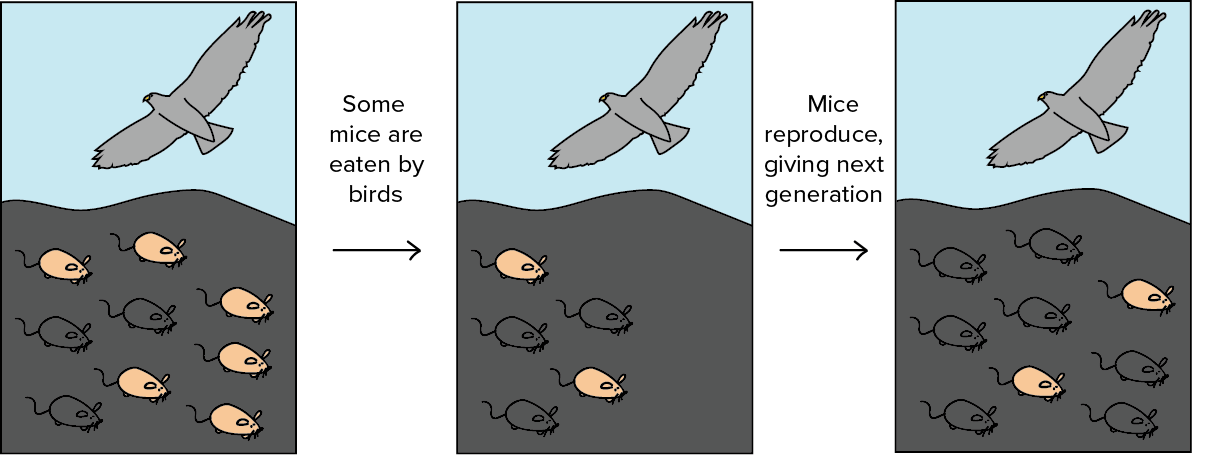
d) Volume and concentration
11.
What is structure A?
a)
Substrate
b)
Active site
c)
Enzyme
d)
Products
12.
What is structure D?
a)
Substrate
b)
Active site
c)
Enzyme
d)
Products
13.
What is structure C?
a)
Substrate
b)
Active site
c)
Enzyme
d)
Products
14.
What is structure E, F, G?
a)
Substrate
b)
Active site
c)
Enzyme
d)
Products
15.
Which is NOT true?
a)
Enzymes speed up chemical reactions
b)
Enzymes react best at a specific temperature
c)
Enzymes only control ONE type of reaction
d)
Enzymes are made of lipids
16.
What is indicated by letter A?
a)
enzyme
b)
product
c)
substrate
d)
active site
17.
The pH at which an enzyme is most efficient is called the _________ pH of an enzyme.
a)
neutral
b)
optimum
c)
minimum
d)
experimental 
18.

What happens when enzymes are heated to a high temperature?

a)

The enzymes die.

b)

The shapes of the enzymes are altered.

c)

The enzymes' amino acid sequence changes.

d)

The enzymes remain the same.

19.

Enzymes are proteins that have two primary functions. Which answer below has the correct paring of functions?

a)

Raises activation energy and slows rate of reaction

b)

All of the above

c)

Lowers activation energy and increases the rate of reaction

d)

None of the above

20.

Enzymes are

a)

Lipids

b)

Protein

c)

Carbohydrates

d)

Nucleic Acids

21.

Enzymes are proteins that have a three-dimensional shape that is specific to a particular substrate. Environmental conditions can change the shape of the protein.

What is the most likely result if the shape of the enzyme changes?

a)

The substrate will change its shape to match the enzyme.

b)

The enzyme will no longer be able to catalyze the reaction with the substrate.

c)

The products made from the enzyme and the substrate will be changed.

d)

The enzyme will be able to bind to more diverse substrates than before.

22.

Which best explains why the rate of a biochemical reaction decreases at high temperatures?

a)

The activation energy increases.

b)

The shape of the enzyme changes.

c)

The enzyme-substrate complex forms.

d)

The bonds between substrates are broken.

23.

a)

F

b)

G

c)

H

d)

J

24.
a)
A
b)
B
c)
C
d)
D
25.
A Only
a)
A
b)
B
c)
C
d)
D
26.
B Only
a)
A
b)
B
c)
C
d)
D
27.
The gene that causes Huntington’s Disease is autosomal dominant. Consider one couple where the wife has the disease as did her mother. The husband does not. The children, now that they are 18 years old, are considering taking the blood test to determine if they have the gene for Huntington’s. Many people in their situation have chosen not to take the test. Which of the following is true?
a)
There is a 50% chance that only a daughter will inherit the disease.
b)
There is a 50% chance that only a son will inherit the disease.
c)
It is certain that one of the children has the gene.
d)
There is a 50% chance that any child of these parents would have the disease.
28.
In one strain of mice, fur color ranges from white to darkest brown with every shade of brown in between. This pattern of inheritance for fur color is most likely controlled by
a)
Multiple genes
b)
A single gene with many alleles
c)
Pleiotropy
d)
Incomplete Dominance
29.
In guinea pigs, the gene for short hair is dominant, and the gene for long hair is recessive. The gene for black hair color is dominant over the gene for white hair color, which is recessive. A cross between two guinea pigs produces a litter of 9 short-haired black guinea pigs and 3 short haired white guinea pigs. What is the most likely genotype of the parent guinea pigs in this cross?
a)
SSBB x SSBB
b)
SSBB x SSBb
c)
SsBb x SsBb
d)
SSBb x Ss Bb
30.
A couple has 6 children, all girls. If the mother gives birth to a 7th child, what is the probability that the seventh child will be a girl?
a)
6/7
b)
1/128
c)
½
d)
1
31.
In a certain species of plant, the trait for tall is dominant (T) and the trait for short is recessive (t). The traid for yellow seeds is dominant (Y) and the trait for green seeds is recessive (y). A cross between two plants results in 292 tall yellow plants and 103 short green plants. Which of the following are most likely to be the genotypes of the parents?
a)
TtYY x Ttyy
b)
TTYy x TTYy
c)
TTyy x TTYy
d)
TtYy x TtYy
32.
A round watermelon is crossed with a long watermelon and all the offspring are oval. If two oval watermelons are crossed, what is the percent of watermelons that will be round?
a)
0
b)
25%
c)
50%
d)
75%
33.
A round watermelon is crossed with a long watermelon and all the offspring are oval. If two oval watermelons are crossed, what is the percent of watermelons that will be round? This case is an example of:
a)
Codominance
b)
Incomplete Dominance
c)
Complete Dominance
d)
Pleiotropy
34.
Which is true about a testcross?
a)
It is a mating between two hybrid individuals
b)
It is a mating between a hybrid individual and a homozygous recessive individual
c)
It is a mating between an individual of unknown genotype and a homozygous recessive individual
d)
It is a mating to determine which individual is homozygous recessive.
35.

In pea plants, the allele for tall plants (T) is dominant over the allele for short plants (t). If a heterozygous tall plant is crossed with a short plant, what percentage of the offspring are expected to be tall?

a)

100%

b)

75%

c)

50%

d)

25%

36.

In humans, brown eyes (B) are dominant over blue eyes (b). If a heterozygous brown-eyed person mates with a blue-eyed person, what is the probability that their child will have blue eyes?

a)

0%

b)

25%

c)

50%

d)

100%

37.
1. Part A Only
a)
A
b)
B
c)
C
d)
D
38.
2. Part B Only. Which graph shows the relationship between the rate of photosynthesis and light intensity? Rate of photosynthesis is on the Y axis, light intensity is on the X axis.
a)
A
b)
B
c)
C
39.
3.
a)
A
b)
B
c)
C
d)
D
40.
4.
a)
A
b)
B
c)
C
d)
D
41.
5. Read through the problem described below. Which of the following outcomes is most likely to occur based on the experimental conditions?
a)
A The lower the mass and the smaller the distance, the more Carbon Dioxide will be produced.
b)
B The lower the mass and the higher the distance, the more Carbon Dioxide will be produced.
c)
C The higher the mass and the higher the distance, the more Oxygen will be produces.
d)
D The higher the mass and the smaller the distance, the more Oxygen will be produced.
42.
6.
a)
A
b)
B
c)
C
d)
D
43.
7.
a)
A
b)
B
c)
C
d)
D
44.
8. Part A Students in a biology class conduct an experiment to determine the effect of temperature on the rate of photosynthesis in a plant. They place a plant into a tube filled with water. Then, the students place the test tube under a light and slowly increase the temperature of the water. They record their results and display them on a graph as shown. Which statement is supported by the data in the graph?
a)
A The rate of oxygen production is lowest in section M
b)
B The rate of oxygen production is greatest in section M
c)
C The production of water molecules is greatest in section L
d)
D The number of carbon dioxide molecules is greatest in section K.
45.
9. Part B Students in a biology class conduct an experiment to determine the effect of temperature on the rate of photosynthesis in a plant. They place a plant into a tube filled with water. Then, the students place the test tube under a light and slowly increase the temperature of the water. They record their results and display them on a graph as shown. Which statement explains the effect of temperature on the rate of photosynthesis?
a)
A Oxygen molecules break down at temperatures above 25 degrees C
b)
B The rate of photosynthesis is unaffected by the temperature of the water
c)
C The number of chloroplasts in the cell decreases as temperature increases
d)
D Enzymes involved with plant photosynthesis are disrupted at temperatures above 25 degrees C
46.

In an experiment to observe the effects of light intensity on the growth of aquatic plants, which of the following predictions is most accurate?

a)

A Higher light intensity will decrease the plant's growth rate due to overexposure.

b)

B Light intensity has no significant effect on the growth of aquatic plants.

c)

C Higher light intensity will increase the plant's growth rate up to a certain point, after which it will have no additional effect.

d)

D Lower light intensity will increase the plant's growth rate by stimulating chlorophyll production.

47.

During a lab experiment, students investigate how soil pH affects the germination rate of bean seeds. Which outcome is most likely if the soil pH is significantly lower than the optimal range for bean seed germination?

a)

A The germination rate will increase because bean seeds prefer acidic conditions.

b)

B The germination rate will decrease due to the unfavorable acidic conditions.

c)

C Soil pH has no effect on the germination rate of bean seeds.

d)

D The germination rate will initially decrease, then increase as the seeds adapt to the pH level.

48.

In an investigation to determine the optimal temperature for enzyme activity in the human body, what is the most likely outcome as the temperature deviates significantly from 37 degrees Celsius?

a)

A Enzyme activity will increase indefinitely with temperature.

b)

B Enzyme activity will decrease because most human enzymes denature at temperatures above or below 37 degrees Celsius.

c)

C Temperature changes have no impact on enzyme activity in the human body.

d)

D Enzyme activity will first decrease, then sharply increase beyond a certain temperature.

49.

During an experiment to test the effect of light color on plant growth, which color of light is expected to result in the highest growth rate?

a)

A Red light due to its high energy and efficiency in photosynthesis.

b)

B Green light because it is the color most plants appear to be.

c)

C Blue light due to its role in promoting chlorophyll absorption.

d)

D Ultraviolet light as it provides the most energy.

50.

In a study examining the impact of fertilizer types on tomato plant yield, which outcome is most likely if organic fertilizers are used compared to synthetic fertilizers?

a)

A Higher yield due to better nutrient absorption with organic fertilizers.

b)

B Lower yield because synthetic fertilizers are more potent.

c)

C No difference in yield, as plants cannot distinguish between nutrient sources.

d)

D Initial decrease in yield with organic fertilizers, followed by a long-term increase.

51.

When investigating the effects of drought stress on plant transpiration rates, what is the expected outcome as the drought condition intensifies?

a)

A Transpiration rates will increase as plants try to cool down.

b)

B Transpiration rates will decrease to conserve water.

c)

C No change in transpiration rates, as plants adapt quickly to drought.

d)

D Transpiration rates will first decrease, then increase as the drought persists.

52.
a)
A
b)
B
c)
C
d)
D
53.
a)
Option 1
b)
Option 2
c)
Option 3
d)
Option 4
e)
Option 5
54.
Given this situation answer the following question: Which tank would you expect no change in frequency?
a)
Tank 1
b)
Tank 2
c)
Neither tank
55.
Given this situation, answer the following question: What do you expect to happen in tank 2?
a)
Red fish will increase, Yellow Fish will increase
b)
Red Fish will increase, Yellow Fish will decrease
c)
Red Fish will decrease, Yellow Fish will decrease
d)
Red fish will decrease, Yellow Fish will increase
56.
a)
A
b)
B
c)
C
d)
D
57.
1
a)
A
b)
B
c)
C
d)
D
58.
2
a)
The lake trout is the red dotted line
b)
The sea lamprey is the blue solid line
c)
The lake trout will have the higher population at year 50
d)
The lake trout is the blue solid line
e)
The sea lamprey is the red dotted line
59.
3
a)
#2 goes in the first box
b)
#4 goes in the second box
c)
#3 goes in the third box
d)
#1 Goes in the first box
e)
#3 goes in the first box
60.
4
a)
A
b)
B
c)
C
d)
D
61.
5
a)
Deer Population: Increases
b)
CC During B: Increase
c)
CC During: At Equilibrium
d)
Deer Population: Decreases
e)
Deer Population: At Equilibrium
62.
6
a)
A
b)
B
c)
C
d)
D
63.
7
a)
A: 15
b)
B: 8000
c)
A: 10
d)
A: 20
e)
A: 25
64.
8
a)
Marine Environments: Time 1
b)
Unused: Time 3
c)
Volcanoes: Time 2
d)
Marine Environments: Time 2
e)
Marine Environments: Time 3
65.
9
a)
A
b)
B
c)
C
d)
D
66.
10
a)
A
b)
B
c)
C
d)
D
67.
11
a)
A
b)
B
c)
C
d)
D
68.
12
a)
Working Down: 4, 2, 3, 1
b)
Working Down: 2, 3, 1, 4
c)
Working Down: 1, 3, 4, 2
d)
Working Down: 3, 4, 2, 1
69.
Part B
a)
A
b)
B
c)
C
d)
D
70.
Part C
a)
A
b)
B
c)
C
d)
D
71.
Part A
a)
A
b)
B
c)
C
d)
D
72.
A (Select more than one)
a)
Option 1
b)
Option 2
c)
Option 3
d)
Option 4
73.
B
a)
A
b)
B
c)
C
d)
D
74.
A
a)
A
b)
B
c)
C
d)
D
75.
B
a)
A
b)
B
c)
C
d)
D
76.
Select more than one
a)
Option 1
b)
Option 2
c)
Option 3
d)
Option 4
e)
Option 5
77.
A
a)
A
b)
B
c)
C
d)
D
78.
Select more than one
a)
Option 1
b)
Option 2
c)
Option 3
d)
Option 4
e)
Option 5
79.
A
a)
A
b)
B
c)
C
d)
D
80.
B Select more than one
a)
Option 1
b)
Option 2
c)
Option 3
d)
Option 4
81.
a)
A
b)
B
c)
C
d)
D
82.
a)
A
b)
B
c)
C
d)
D
83.
Select more than one
a)
A
b)
C
c)
E
d)
B
e)
D
84.
A farmer wants to know which given plants come from two given adult plants. Using gel electrophoresis, the farmer tests the same specific section of DNA in the two adult parent plants. Then, he tests the same section on 6 individual young plants to determine relatedness. The results are shown below. Which of the following between Y1-Y6 could be offspring? (Note that they have to get genes from both parents)
a)
Y1
b)
Y3
c)
Y4
d)
Y6
e)
Y2
85.
Which DNA Sample has the same allele as the resistant plant sample?
a)
1
b)
2
c)
3
86.
a)
A
b)
B
c)
C
d)
D
87.
a)
A
b)
B
c)
C
d)
D
88.
a)
A
b)
B
c)
C
d)
D
89.
a)
A
b)
B
c)
C
d)
D
90.
1.
a)
A
b)
B
c)
C
d)
D
91.
5.
a)
A
b)
B
c)
C
d)
D
92.
11.
a)
A
b)
B
c)
C
d)
D
93.
2.
a)
A
b)
D
c)
F
d)
B
e)
C
94.
3. What is the correct order of the types of movement from left to right?
a)
ATP, Channel, Phospholipids
b)
Channel, Phospholipid, ATP
c)
Phospholipid, Channel, ATP
d)
Phospholipid, ATP, Channel
95.
4.
a)
A
b)
B
c)
C
d)
D
96.
5. What concentrations of salt does each cell have from top to bottom?
a)
2%, 4%
b)
4%, 2%
c)
3%, 3%
97.
6. (a)If you labelled the top three boxes (the ones with H2O movement), 1, 2, and 3 from top to bottom, what would the correct order be for Letter A from left to right?
a)
1, 2, 3
b)
1, 3, 2
c)
3, 1, 2
d)
2, 3, 1
98.
7 (part B). If you labelled the bottom three boxes (burst, no effect, and shrivel) 1, 2, and 3 from top to bottom; what would the correct order be for letter B from left to right?
a)
Shrivel, Burst, No Effect
b)
Burst, Shrivel, No Effect
c)
Shrivel, No Effect, Burst
d)
Burst, No Effect, Shrivel
99.
8.
a)
A
b)
B
c)
C
d)
D
100.
9.
a)
A
b)
B
c)
C
d)
D
101.
10. Letter A.
a)
Water moves into tubing
b)
Water moves out of tubing
c)
No Water movement
102.
11. Part B
a)
Salt into tubing
b)
Salt out of tubing
c)
No salt movement
103.
12.
a)
A
b)
B
c)
C
d)
D
104.
12.
a)
A
b)
B
c)
C
d)
D
105.
1. What is the function of the cell membrane?
a)
a. Provides organization and shape of the cell
b)
b. Transports materials within the cell
c)
c. Builds proteins
d)
d. Maintains homeostasis by allowing selective passage of substances
106.
2. What determines which molecules can pass freely through the cell membrane?
a)
a. Organization and shape of the cell
b)
b. Transport proteins within the cell
c)
c. Molecular properties and concentration of the substances
d)
d. Energy input required for passage
107.
3. Which type of cells have a complex network of proteins for organization and shape?
a)
a. Prokaryotes
b)
b. Eukaryotes
c)
c. Multicellular organisms
d)
d. Primitive cells
108.
4. What is the role of specialized parts within the cell?
a)
a. Transport materials
b)
b. Transform energy
c)
c. Build proteins
d)
d. All of the above
109.
5. Which type of cells do not have the same chemical reactions as most of the other cells in multicellular organisms?
a)
a. Prokaryotes
b)
b. Eukaryotes
c)
c. Multicellular organisms
d)
d. Primitive cells
110.
8. From which type of cells did complex multicellular organisms descend?
a)
a. Prokaryotes
b)
b. Eukaryotes
c)
c. Primitive cells
d)
d. None of the above
111.
11. How do molecules pass through the cell membrane?
a)
a. By diffusion
b)
b. Through active transport
c)
c. By osmosis
d)
d. All of the above
112.
14. What do eukaryotes, cells with nuclei, develop from?
a)
a. Prokaryotes
b)
b. Multicellular organisms
c)
c. Primitive cells
d)
d. None of the above
113.
Why is the mouse population changing over time?
a)
The light mice can reproduce more successfully than the dark mice
b)
The hawks eat more dark mice than light mice because the dark mice taste better
c)
The hawks eat more light mice than dark mice because they can see the light mice more easily
d)
The hawks eat more dark mice than light mice because they can see the dark mice more easily
114.

What type of selection is depicted in the picture? 

a)

stabilizing 

b)

directional 

c)

disruptive 

d)

the answer is not here

115.

What type of selection?

The image shows a population distribution where selection acts against the mean, favoring extreme traits at both ends. This type of selection is known as disruptive selection, as it leads to a bimodal distribution by selecting against average traits and favoring extremes.

a)

Directional 

b)

Stabilizing

c)

Disruptive

116.

What is a population in genetic equilibrium?

a)

A) A population where allele frequencies change and the population evolves.

b)

B) A population where allele frequencies in the population remain the same and the population does not evolve.

c)

C) A population that has an excess of mutations leading to rapid evolution.

d)

D) A population that is isolated from other populations and evolves differently.

117.

Why don't populations grow indefinitely?

a)

limiting factors

b)

only biotic factors

c)

only abiotic factors

d)

none of the above

118.

What is the arrow pointing at?

a)

carrying capacity

b)

biotic potential

c)

density-independent

d)

density dependent

119.

The exponential graph is a graph that shows us population size increasing quickly, which one below shows us that

a)
b)
c)
d)
120.
Has membrane bound organelles
a)
Prokaryote
b)
Eukaryote
c)
both
121.
One example of a prokaryote is a...
a)
fungus
b)
bacteria
c)
animal
d)
plant
122.
Where is the DNA found in a prokaryotic cell? 
a)
floating around in the cytoplasm 
b)
in the nucleus 
c)
in the ribosomes
d)
attached to the cell membrane
123.
Where is the DNA found in a eukaryotic cell? 
a)
floating around in the cytoplasm 
b)
in the nucleus 
124.

What is the independent variable?

a)

The variable that is not changed

b)

The variable that is being observed

c)

The variable that you purposely change (manipulate)

d)

The variable that responds to the change

125.

What is the dependent variable?

a)

The variable that does not change

b)

The variable that you purposely manipulate

c)

The variable that is kept constant on purpose

d)

The variable that responds to the change