
 Worksheets
Matter and Atoms Review
Total questions: 44
Worksheet time: 1hrs 2mins
Name
Class
Date
1.
Which of the following describes a solid?
a)
Matter that keeps its own size and shape
b)
Matter that does not have its own size and shape
c)
Matter that has its own volume but not size and shape
2.
Which of the following describes liquids?
a)
Matter that keeps its own size and shape
b)
Matter that has its own volume, but not its own size and shape
c)
Matter that does not have its own size and shape
3.
Which of the following describes gas?
a)
Matter that has its own volume, but not its own size and shape
b)
Matter that does not have its own size and shape
c)
Matter that keeps its own size and shape
4.
What is volume?
a)
Something about an object you can observe with you senses
b)
To put two or more things together
c)
The amount of space matter takes up
5.
___________ is what all things are made of.
a)
Matter
b)
Money
c)
Love
6.
Matter is made of tiny particles called __________.
a)
Dust
b)
Calcium
c)
Atoms
d)
Water
7.
The 4 stages of matter are:
a)
liquid, gas, solid, heat
b)
plasma, fruit juice, lollipops, and chocolate
c)
ice, water, steam, plasma
d)
liquid, gas, solid, plasma
8.
What is the atomic number?
a)
the number of protons
b)
the number of protons and neutrons
c)
the number of neutrons
d)
the number of protons and electrons
9.
What is the mass number?
a)
the number of protons
b)
the number of protons and neutrons
c)
the number of neutrons
d)
the number of protons and electrons
10.

What is the atomic number of this nucleus?
a)
1
b)
3
c)
4
d)
7
11.

What is the mass number of this nucleus?
a)
1
b)
3
c)
4
d)
7
12.
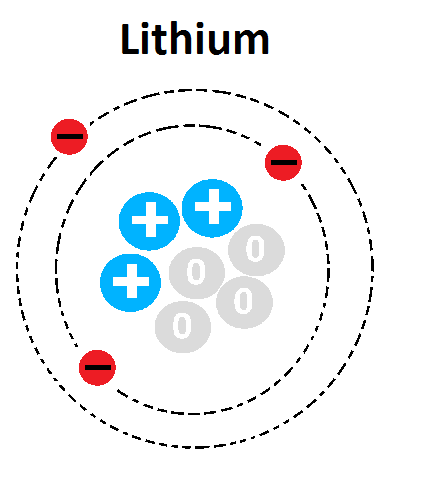
What is the atomic number of this atom?
a)
1
b)
3
c)
4
d)
7
13.
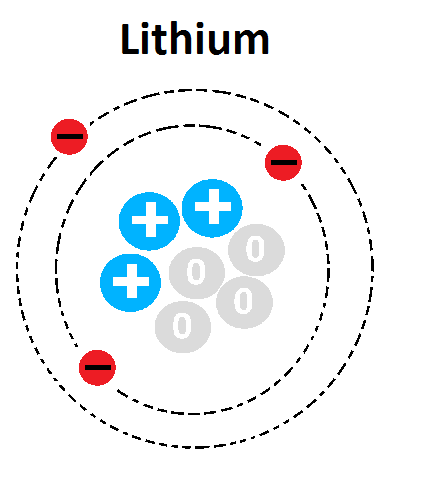
What is the atomic mass of this atom?
a)
1
b)
3
c)
4
d)
7
14.
What is the formula for density?
a)
density = mass x volume
b)
density = mass / volume
c)
density = mass + volume
d)
density = mass - volume
15.
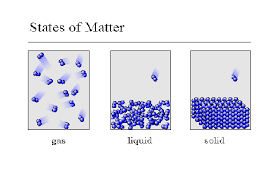
A gas
a)
has a definite shape but no definite volume
b)
has a definite volume but no definite shape
c)
has fast-moving particles
16.
The state of matter that has no definite size or shape is
a)
Solid
b)
Liquid
c)
Gas
17.
Particles (molecules) in a ______________________ have more energy than the other states of matter.
a)
gas
b)
solid
c)
liquid
18.
Particles of a liquid
a)
are tightly packed together and stay in a fixed position.
b)
have no viscosity.
c)
decrease in volume with increasing temperature.
d)
are free to move around one another but still touch.
19.
Particles (molecules) in a ______________________ have more energy than the other states of matter.
a)
gas
b)
solid
c)
liquid
20.
The positive particles of an atom are
a)
electrons
b)
positrons
c)
neutrons
d)
protons
21.
the central region of an atom where its neutrons and protons are is its
a)
nucleus
b)
electron cloud
c)
core
d)
center
22.
all matter is made of what
a)
energy
b)
atoms
c)
electrons
d)
compounds
23.
Particles in an atom that are neutral and have no charge are
a)
negatrons
b)
electrons
c)
neutrons
d)
protons
24.
In the modern periodic table elements are arranged by:
a)
atomic mass
b)
atomic number
c)
valence electrons
d)
number of isotopes
25.
An atoms overall charge is
a)
positive
b)
depends on its mood
c)
neutral
d)
negative
26.
all matter is made of what
a)
energy
b)
atoms
c)
electrons
d)
compounds
27.
If an atom has 3 electrons, how many protons does it have?
a)
1
b)
2
c)
4
d)
3
28.
The subatomic particle with a negative charge is the
a)
electron
b)
proton
c)
neutron
d)
nucleus
29.
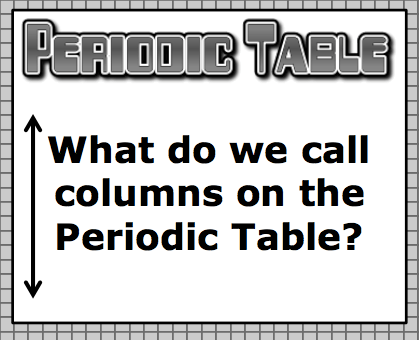
a)
Periods
b)
Groups
30.
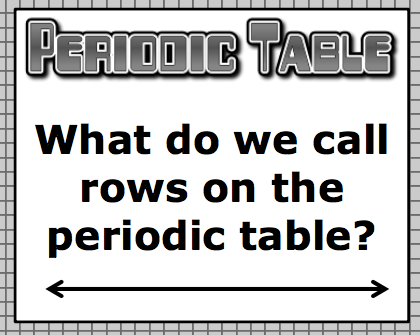
a)
Periods
b)
Groups
31.

a)
energy levels
b)
valence electrons
c)
protons
d)
neutrons
32.

How did Mendeleev arrange the elements?
a)
alphabetical
b)
density
c)
melting point
d)
atomic mass
33.

The horizontal row on the periodic table is called a
a)
group
b)
family
c)
period
d)
atomic number
34.

A vertical column is called...
a)
group
b)
tower
c)
period
d)
crew
35.
A ___________ is an arrangement of elements in columns
a)
columns
b)
rows
c)
periodic table
d)
electron shell
36.
Each column in the periodic table is called a
a)
period
b)
group
c)
cluster
d)
unit
37.
The atomic number tells you what?
a)
number of electrons
b)
number of protons
c)
number of neutrons
d)
both electrons and protons in an atom.
38.
The atomic number describes the number of protons in an atom and that same atom can have a different number of neutrons which is called an isotope.
a)
True
b)
False
39.
Density is defined as
a)
the amount of matter
b)
the amount of mass in a given volume
c)
the amount of volume
d)
the shape of the matter
40.
A combination of 2 or more substances that cannot be easily separated is called-
a)
a mixture
b)
a solution
c)
a solute
d)
a solvent
41.
A substance that contains only one type of atom is a(n)
a)
compound
b)
element
c)
heterogeneous mixture
d)
homogeneous mixture
42.
Which of these is a mixture?
a)
Uncooked chocolate chips and cookie dough blended together with a spoon.
b)
Distilled water
c)
A nugget of gold
d)
A molecule of Oxygen
43.
Two or more elements chemically combined:
a)
an atom
b)
a compound
c)
a mixture
d)
a pure substance
44.
A molecule that has two or more different elements bonded together. Example: H and O=H2O
a)
molecules
b)
elements
c)
compounds
d)
atoms
100 %

