
 Worksheets
Atomic Models and the Periodic Table
Total questions: 65
Worksheet time: 52mins
Name
Class
Date
1.

What element is this?
a)
Helium
b)
Hydrogen
c)
Argon
d)
Silver
2.

What element is represented in this Bohr Model?
a)
Carbon
b)
Hydrogen
c)
Aluminum
d)
Lithium
3.
How are electrons arranged in an atom?
a)
In groups of five
b)
In energy levels
c)
By color
d)
By shape
4.
An element with five valence electrons is
a)
phosphorus
b)
oxygen
c)
beryllium
d)
rubidium
5.

How many electrons are in the outer (valence) shell of Chlorine (Cl)?
a)
1
b)
3
c)
6
d)
7
6.
What subatomic particles would you find in the nucleus of an atom?
a)
Protons only
b)
Protons and Neutrons
c)
Neutrons and Electrons
d)
Protons and Electrons
7.
Which subatomic particles contribute the most to the mass of an atom?
a)
Protons, Neutrons, Electrons
b)
Protons only
c)
Protons and Electrons
d)
Protons and Neutrons
8.

What is the number of protons that the element in this image contain?
a)
14
b)
7
c)
15
d)
18
9.
Protons and Electrons balance the charge of an atom.
a)
True
b)
False
10.
If an atom has 12 positively charged subatomic particles, which of the following must it also have to be considered a neutral atom?
a)
12 neutrons
b)
12 electrons
c)
12 protons
d)
24 protons and neutrons
11.
An atom has 10 protons, 15 neutrons and 10 electrons what is its mass number.
a)
20
b)
10
c)
5
d)
25
12.

The mass of one proton is greater than the mass of one...
a)
neutron
b)
electron
13.

What is the atomic number of the atom pictured?
a)
9
b)
10
c)
18
d)
19
14.
What is the element name of the atom pictured?
a)
Fluorine
b)
Neon
c)
Argon
d)
Potassium
15.
Which scientist conducted experiments using alpha particles and thin gold foil, which later helped him develop his model for the atom?
a)
Ernest Rutherford
b)
Kneels Bore
c)
Niels Bohr
d)
Earnest Rutherfraud
16.
Which scientist discovered the electron, which helped him develop a model of the atom?
a)
Niels Bohr
b)
John Dalton
c)
Ernst Rutherford
d)
J.J Thompson
17.
What is an atom mostly made up of?
a)
protons
b)
electrons
c)
empty space
d)
neutrons
18.
This particle is found in the nucleus and has no charge
a)
Neutron
b)
Proton
c)
Electron
19.
This particle is found in the nucleus and has a positive charge
a)
Electron
b)
Proton
c)
Neutron
20.
This is a negatively charged particle found outside the nucleus
a)
Electron
b)
Proton
c)
Neutron
21.
All matter is made of what?
a)
energy
b)
atoms
c)
electrons
d)
compounds
22.

What scientist is best known for his "Plum Pudding" model of the atom?
a)
J.J. Tomson
b)
Ernest Rutherford
c)
John Dalton
d)
Democritus
23.

What contribution did John Dalton make to atomic theory?
a)
He discovered that every atom was positively charged.
b)
He discovered that every element consisted of one type of atom.
c)
He discovered that atoms had nuclei.
d)
He discovered that atoms could be divided into smaller parts.
24.

Place the following scientists in order, from earliest to latest:
A) Ernest Rutherford
B) J.J. Thomson
C) John Dalton
A) Ernest Rutherford
B) J.J. Thomson
C) John Dalton
a)
B,C,A
b)
C,A,B
c)
A,C,B
d)
C,B,A
25.

Who came up with this model of an atom?
a)
J.J. Thompson
b)
Ernest Rutherford
c)
Neils Bohr
d)
James Chadwick
26.
Contributes basically no mass to an atom.
a)
protons
b)
neutrons
c)
electrons
d)
protons and neutrons
27.
Neon has an atomic number of 10 and an atomic mass of 20.180. How many protons, electrons, and neutrons will it have?
a)
P=10 E=10 N=11
b)
P=5 E=5 N=10
c)
P=10 E=10 N=10
d)
P=10 E=5 N=5
28.

How did Mendeleev arrange the elements?
a)
alphabetical
b)
density
c)
melting point
d)
atomic mass
29.
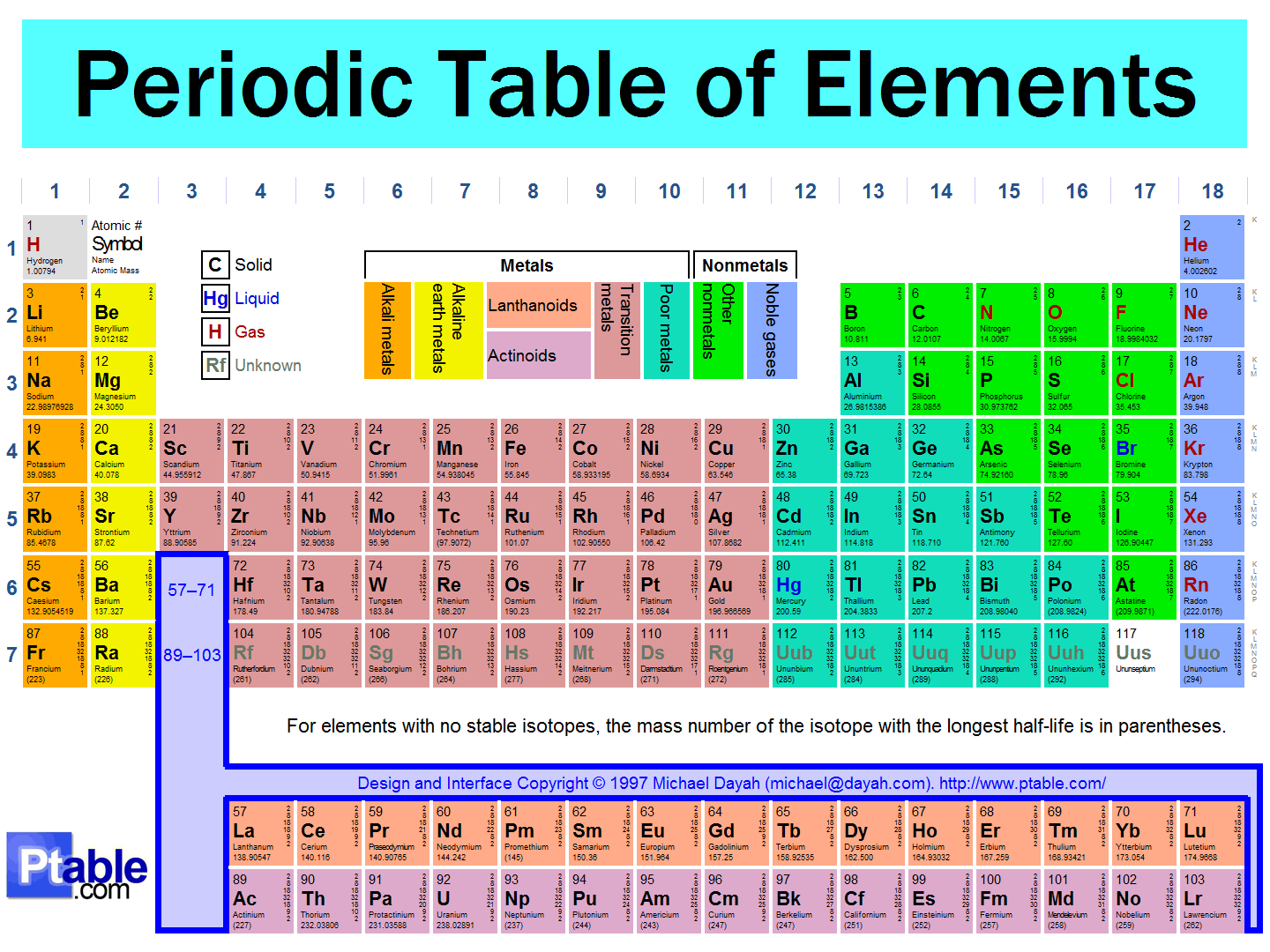
The horizontal row on the periodic table is called a
a)
group
b)
family
c)
period
d)
atomic number
30.

A vertical column is called...
a)
group
b)
tower
c)
period
d)
crew
31.

Which of the following is the most metallic element in period 3?
a)
Boron (B)
b)
Sodium (Na)
c)
Argon (Ar)
d)
Silicon (Si)
32.
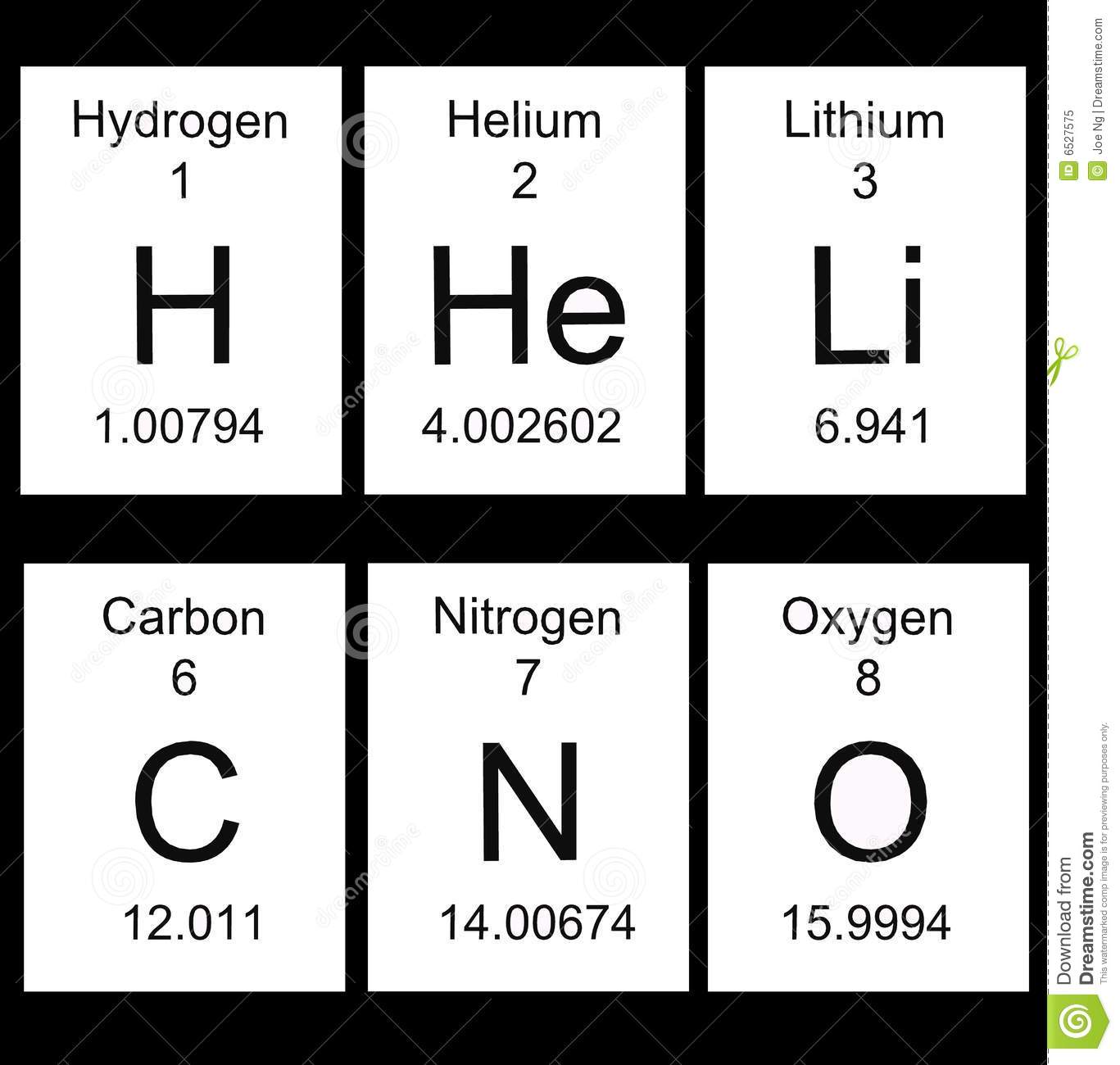
The number at the bottom of each square on the periodic table is the ...
a)
atomic number
b)
atomic mass
c)
chemical symbol
d)
element name
33.
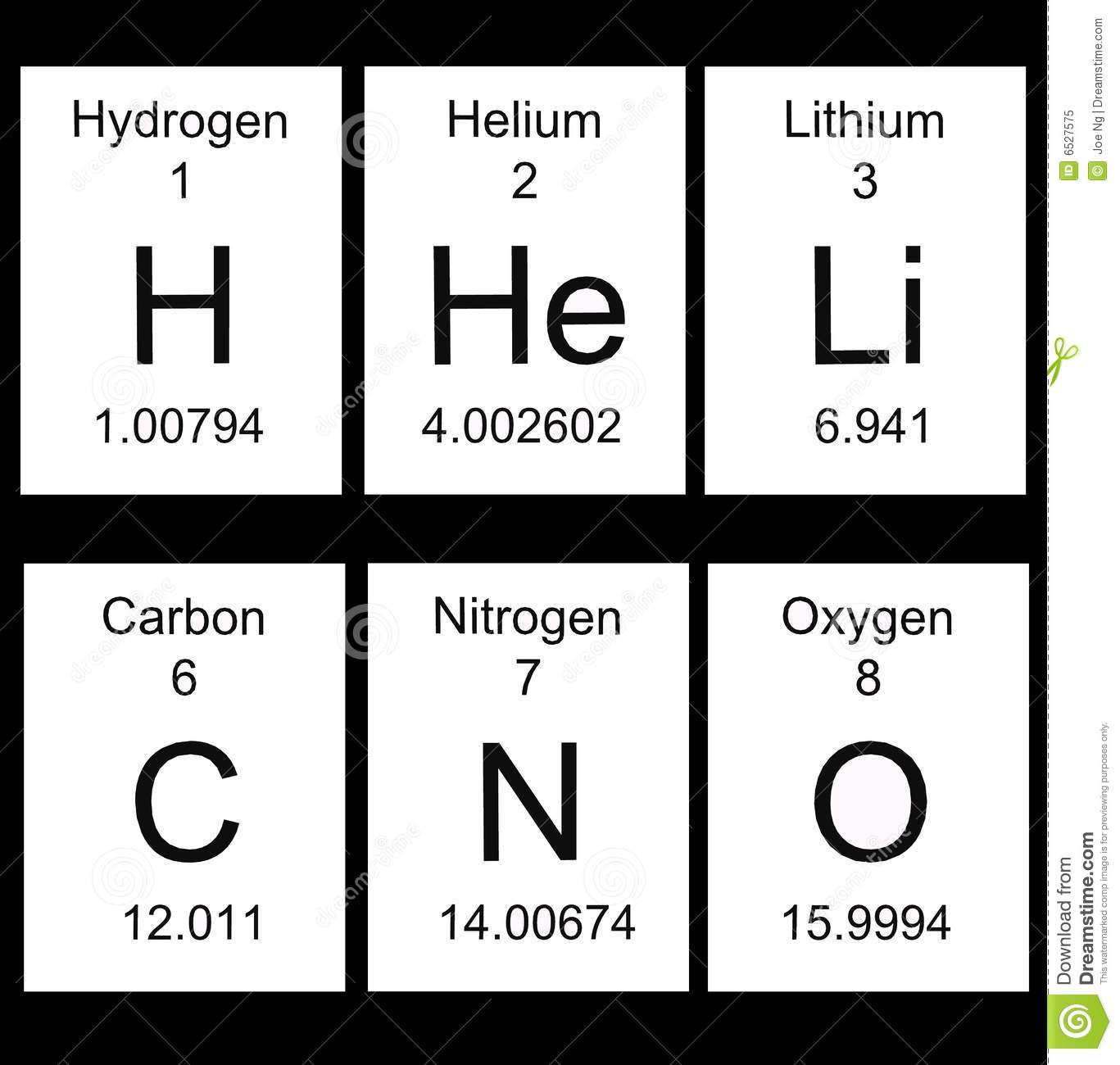
What is the chemical symbol for Lithium?
a)
H
b)
He
c)
Li
d)
N
34.

Most of the elements on the periodic table are classified as _____.
a)
Metals
b)
Nonmetals
c)
Metalloids
d)
Periods
35.
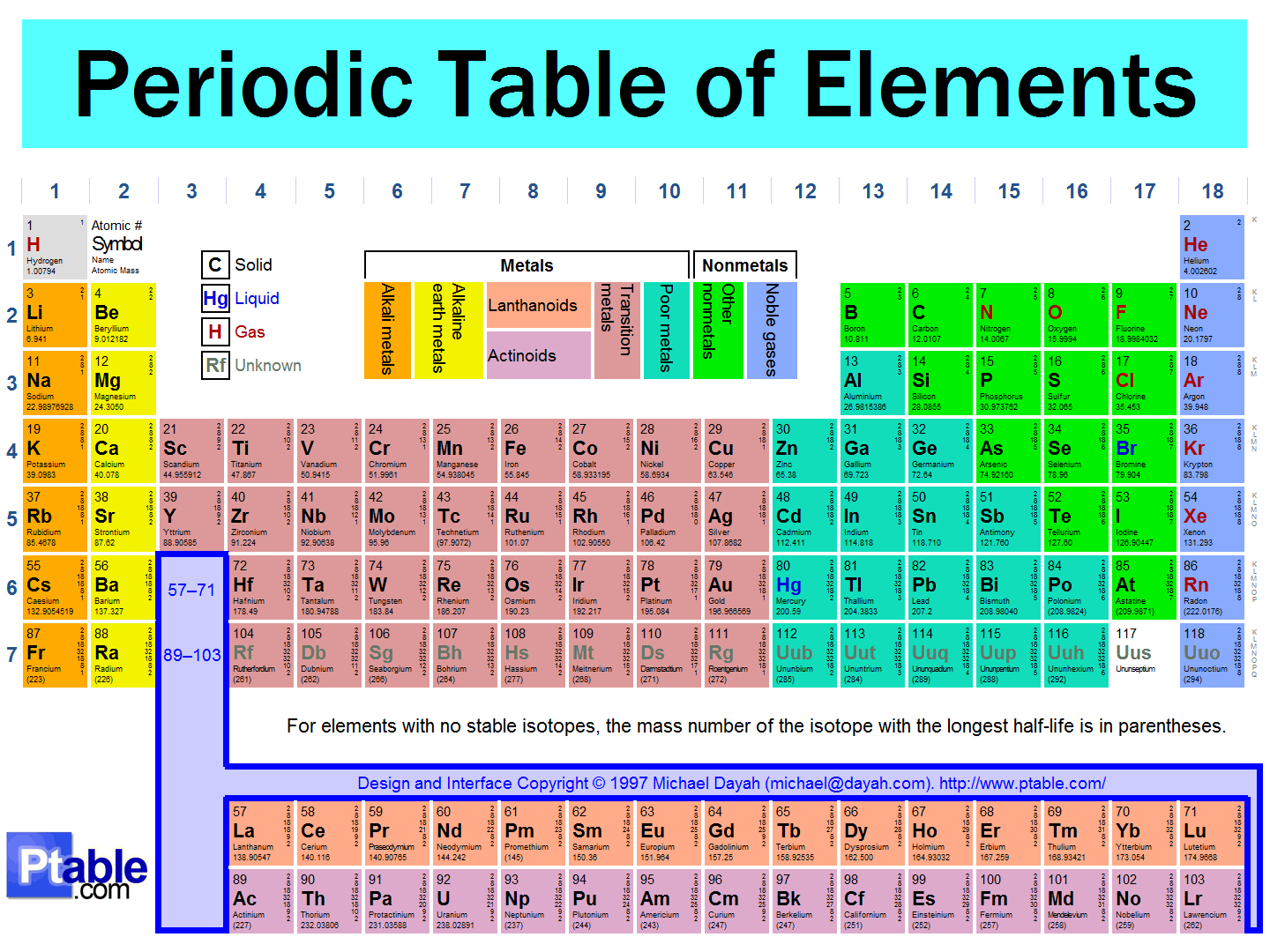
This class of elements are sometimes called "semiconductors."
a)
Metals
b)
Nonmetals
c)
Metalloids
d)
Groups
36.
Elements which are shiny, conduct electricity and heat are called
a)
metal
b)
nonmetal
c)
metalloid
d)
nonexistent
37.

The atoms along the staircase are called
a)
metals
b)
nonmetals
c)
metalloids
d)
noble gases
38.
A proton is....
a)
A negatively charged subatomic particle
b)
A positively charged subatomic particle
c)
A neutrally charged subatomic particle
d)
The only subatomic particle located in the nucleus
39.
A neutron has a charge of
a)
+2
b)
No charge
c)
-1
d)
+1
40.
How many electrons does Oxygen need to fill its outer shell?
a)
3
b)
4
c)
1
d)
2
41.
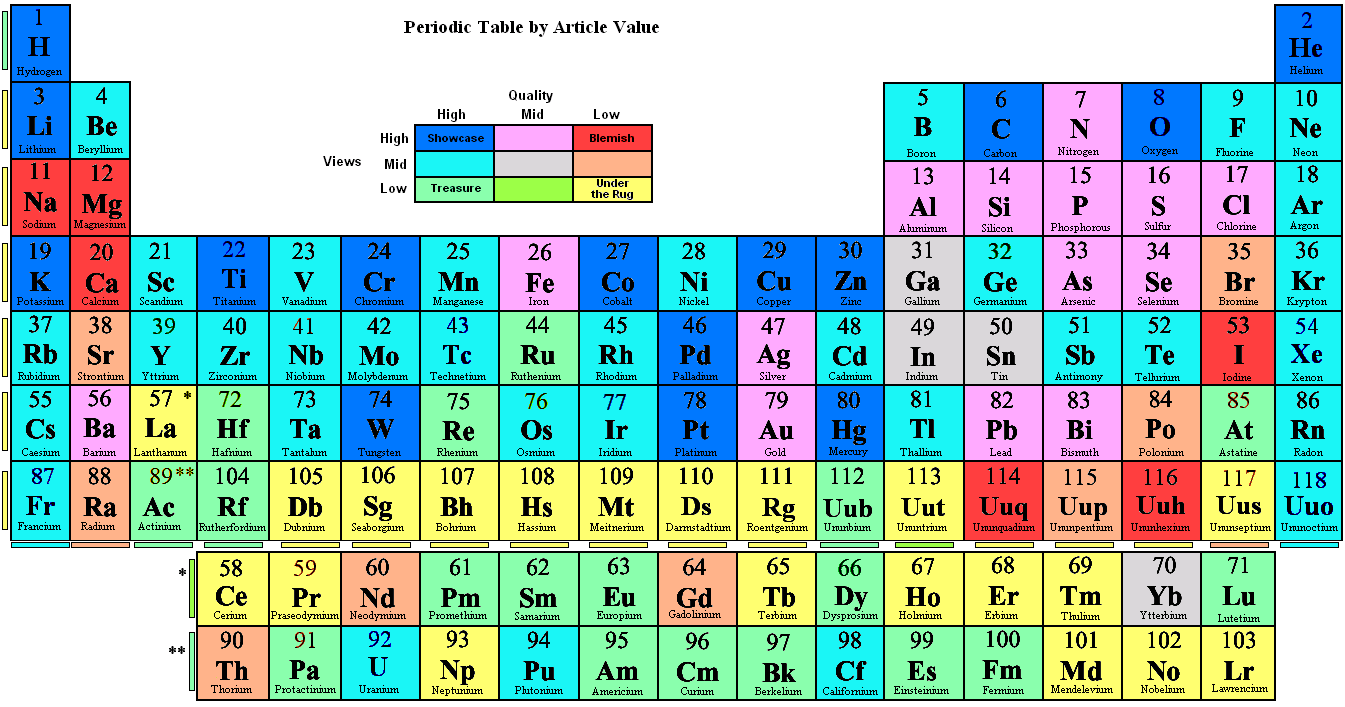
The period for Bromine is ___________.
a)
3
b)
2
c)
4
42.
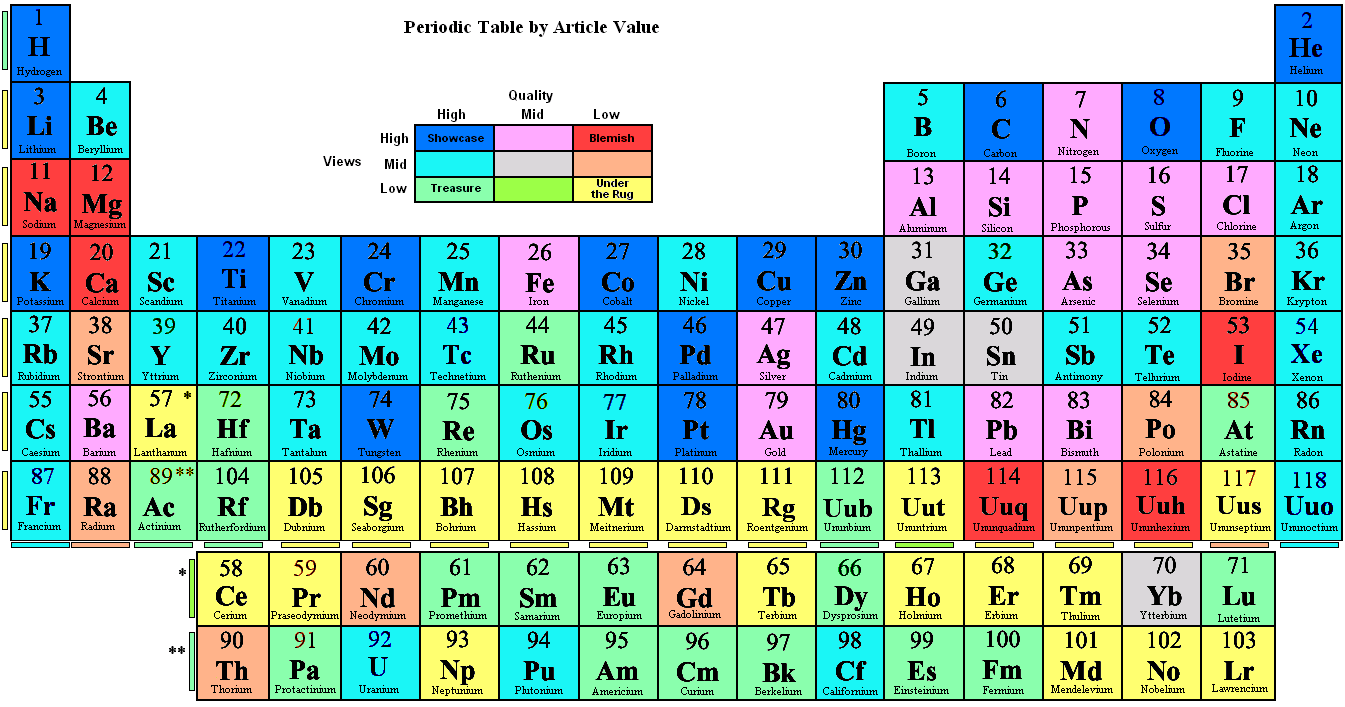
Beryllium is in group number______.
a)
Group 2
b)
Group 3
c)
Group 4
d)
Group 7
43.
The periodic table has __ periods.
a)
18
b)
8
c)
2
d)
7
44.
An element's identity is determined by the number of
a)
electrons.
b)
protons.
c)
neutrons.
d)
valence.
45.
Elements in the same ________ are more chemically similar.
a)
group
b)
period
c)
club
d)
table
46.
What period and group is Silver (Ag)?
a)
Period 2, Group 1
b)
Period 3, Group 16
c)
Period 5, Group 11
d)
Period 2, 14
47.
The elements in this group only have 1 valence electron and include Li, Na, and K.
a)
Group 11
b)
Group 1
c)
Group 3
48.
Which of the following is not a property of metals?
a)
brittle
b)
malleable
c)
lustrous
d)
conductive
49.
Rows on the period table are called _____ while columns are called _____.
a)
groups, families
b)
groups, periods
c)
periods, groups
d)
families, groups
50.
The periodic table has __ groups.
a)
8
b)
7
c)
18
d)
2
51.
Why is water NOT on the periodic table?
a)
It is naturally occuring
b)
It is a compound, not an element
c)
It exists as a solid, a liquid, and a gas
d)
Its chemical formula doesn't fit
52.
Which of these metals is usually observed in a "liquid" state?
a)
Cadmium
b)
Indium
c)
Mercury
d)
Thallium
53.
How many metalloids are in the Nitrogen family?
a)
0
b)
1
c)
2
d)
8
54.
What is the element symbol for boron?
a)
B
b)
Bo
c)
Bn
d)
W
55.
Most of the nonmetals on the periodic table are located...
a)
on the left side
b)
at the bottom
c)
on the right side
d)
in the middle
56.
Atomic mass - Atomic Number =
a)
protons
b)
neutrons
c)
electrons
d)
Average Mass
57.
Which of the subatomic particles is the heaviest?
a)
electrons
b)
protons
c)
neutrons
d)
protons and neutrons have equal mass
58.
The relative mass of an electron is...
a)
1
b)
2
c)
0
d)
3
59.
The relative mass of a proton/neutron is.....
a)
0
b)
1
c)
2
d)
3
60.
I am anything that has mass and takes up space!
a)
energy
b)
matter
c)
molecules
d)
atoms
61.
I am the smallest whole particle of matter.
a)
atom
b)
compound
c)
molecule
d)
mixture
62.
Which particle carries a negative charge?
a)
protons
b)
neutrons
c)
electrons
63.
A pure substance that cannot be broken down into any other substance by chemical or physical means. There are about 100 of us shown in the Periodic Table
a)
compound
b)
mixture
c)
molecule
d)
element
64.

How many protons are in Beryllium?
a)
4
b)
9
c)
5
d)
2
65.
What does malleable mean?
a)
able to bend
b)
will break easily
c)
can be used for wire
d)
is shiny
100 %

