
 Worksheets
AP Biology Gene Regulation
Total questions: 17
Worksheet time: 10mins
Name
Class
Date
1.
Most gene regulation happens at which step along the way?
a)
translation
b)
transcription
c)
signal transduction
d)
DNA replication
2.
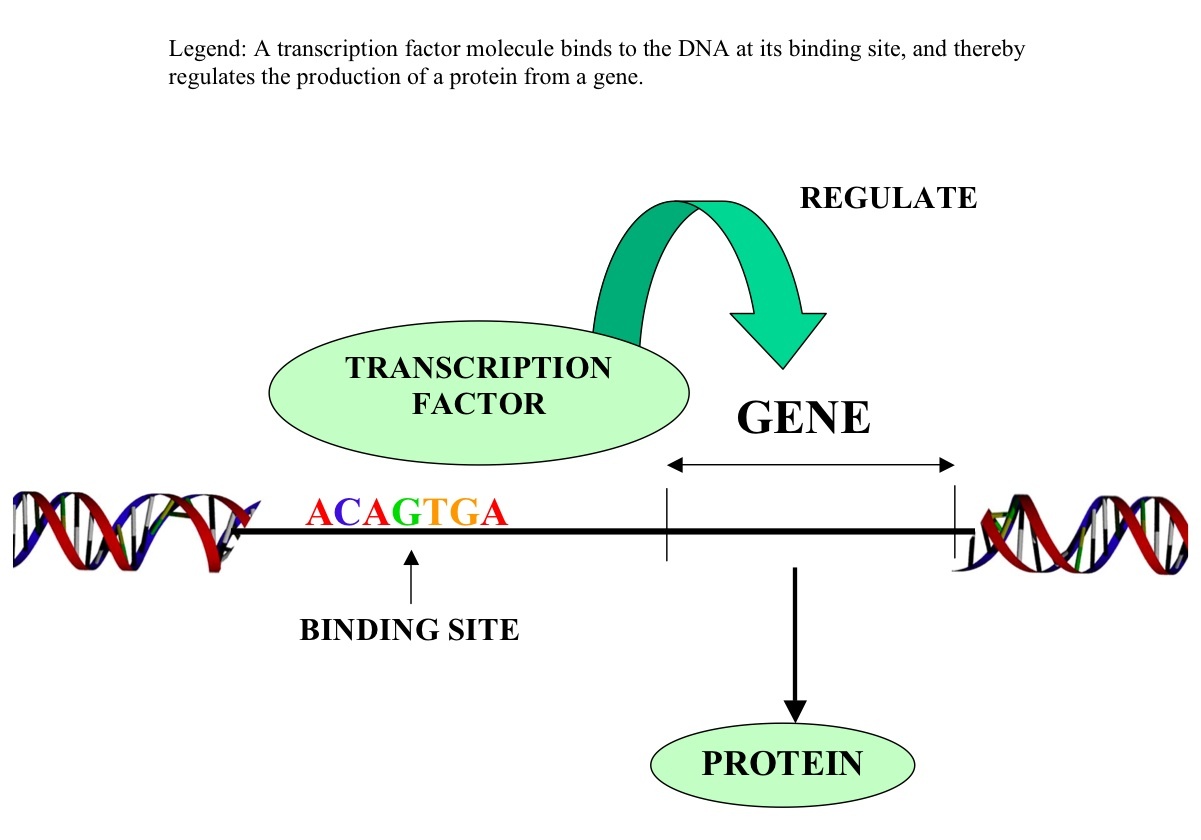
In eukaryotes, proteins that help the RNA polymerase bind to the regulatory region for transcription are called ____________.
a)
transcription factors
b)
topoisomerase
c)
regulatory genes
d)
activators
3.
How can a person's muscle cells have the same exact DNA sequences as their nerve cells even though the look and perform completely different?
a)
The two different cells become mutated
b)
The proteins expressed in each cell are different
c)
They actually have different DNA in the two types of cells.
d)
The genome of the different cells changes
4.
All of the following are true about DNA methylation EXCEPT
a)
takes place on the DNA
b)
enzymes add a methyl group
c)
when it occurs, transcription is more likely to occur
d)
chromatin becomes more tightly packed
5.
All of the following are true about histone acetylation EXCEPT
a)
takes place on the histone
b)
enzymes add a acetyl group
c)
when it occurs, transcription is more likely to occur
d)
chromatin becomes more tightly packed
6.
Inheritance of traits by mechanisms not directly involving nucleotide sequence is called
a)
epigenetic inheritance
b)
differential gene expression
c)
chromosomal inheritance
d)
gene regulation
7.
A distal control region that activators bind to are bent to contact mediator proteins and form the transcription initiation complex
a)
enhancers
b)
promoters
c)
repressors
d)
transcription factors
8.
Alternative RNA splicing ____.
a)
is a mechanism for increasing the rate of translation
b)
can allow the production of proteins of different sizes and functions from a single mRNA
c)
can allow the production of similar proteins from different RNAs
d)
increases the rate of transcription
9.
If an mRNA molecule has introns and exons in it, where is it?
a)
At a ribosome
b)
In the nucleus
c)
in the rough ER
d)
could be in the nucleus or the ribosome
10.
What role do homeobox genes play in cell differentiation?
a)
They cut double-stranded loops into microRNA.
b)
They attach to a cluster of proteins to form a silencing complex, which binds to and destroys certain RNA.
c)
They block certain gene expression.
d)
They code for transcription factors that activate other genes important in cell development and differentiation.
11.
In flies, the group of homeobox genes that determines the identities of each segment of a fly's body is the group known as
a)
Silencing Complexes
b)
Promoters
c)
Hox Genes
d)
Operators
12.
As an embryo develops, different sets of genes are regulated by
a)
mRNA and lac repressors.
b)
promoters and operators.
c)
transcription factors and repressors.
d)
operons and operators.
13.
The “switches” that trigger particular patterns of development and differentiation in cells and tissues are
a)
mRNA molecules.
b)
silencing complexes.
c)
Dicer enzymes.
d)
master control genes.
14.
What is a Hox gene?
a)
a class of regulatory genes that determine the identity of body parts and regions in an animal embryo.
b)
found in many homeotic genes that regulate development
c)
a group of homeotic genes clustered together that determine the head to tail identity of body parts in animals.
15.
In embryonic development, the process by which cells specialize is called
a)
differentiation
b)
morphogenesis
c)
cell division
d)
endoplasmic reticulum
16.
Homeobox genes in flies are
a)
what tell the flie's body how to differniate cells.
b)
are called hox genes
c)
is what codes for transcription factors in other genes
d)
All of the above
17.
What is the function of a homeotic gene?
a)
are transcription factors
b)
cause mutations
c)
regulate organs that develop parts of the body.
d)
All of the above
100 %

