
 Worksheets
Sedimentary Rock, Fossils and Fossil Fuels
Total questions: 64
Worksheet time: 45mins
Name
Class
Date
1.

Rock made of layers of compressed sediments
a)
metamorphic rock
b)
igneous rock
c)
sedimentary rock
d)
school house rock
2.
Small pieces of rock are also called
a)
sediment
b)
coal
c)
organic matter
d)
erosion
3.

The breakdown of rock into smaller particles from the effects of wind, water and ice
a)
erosion
b)
cementation
c)
pressure
d)
weathering
4.

Wind, water, ice and gravity carry sediments away
a)
weathering
b)
deposition
c)
erosion
d)
cementation
5.

Sediments are left behind in rivers lakes and oceans
a)
weathering
b)
erosion
c)
cementation
d)
deposition
6.

When the pressure of new sediment layers is deposited on top of older layers
a)
erosion
b)
compaction
c)
pressure
d)
weathering
7.
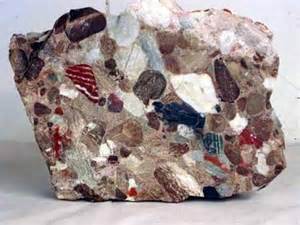
The process of layers become glued together by minerals forming sedimentary rocks
a)
sticking
b)
pressuring
c)
cementation
d)
deposition
8.

The waste and remains of plants and animals
a)
organic matter
b)
fossil fuels
c)
fossils
9.

Decay or decomposition means to
a)
break into smaller parts
b)
make into larger parts
c)
destroy something
d)
fix something
10.

Preserved parts or traces of animals and plants that lived in the past
a)
natural gas
b)
imprints
c)
photos
d)
fossils
11.
Sedimentary rocks are formed by
a)
Cooling of lava or magma
b)
Heat and pressure
c)
Compacting and cementing
d)
Fossil fuels
12.
What is the breaking down of rocks?
a)
Weathering
b)
Cementation
c)
Erosion
d)
Deposition
13.
The process in which dissolved minerals crystallize and glue sediment together.
a)
cementation
b)
deposition
c)
organic rock
14.
What is deposition?
a)
Pieces of sediment come to rest on a surface
b)
Movement of sediment
c)
Breaking down of sediment
d)
The gluing of sediments
15.

Fossils are made by
a)
Plants dying
b)
Animals or plants are imprinted on a layer of sedimentary rock
c)
Breaking down of rocks
d)
Heat
16.
The process by which water, ice, wind or gravity moves weathered rock and soil from one place to another.
a)
weathering
b)
erosion
c)
deposition
d)
dumptruck
17.

These rocks were broken apart from the continuous freeze/thaw of water in the cracks of the rocks. This is an example of:
a)
ice wedging
b)
acid rain
c)
permeability
d)
abrasion
18.

What are the remains of once living things called?
a)
amber
b)
fossils
c)
species
d)
extinct
19.
Fossils give clues about the past.
a)
True
b)
False
20.
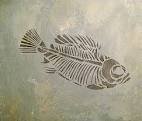
If scientists found this fossil, what could they infer?
a)
What fish are like today
b)
That this fish lacked oxygen
c)
What kind of animal ate this fish
d)
that water once covered the area
21.
A fossil animal has a mouth full of sharp, pointed teeth. What can you infer about the animal?
a)
The animal ate fruits and vegetables.
b)
The animal is closely related to a shark.
c)
The animal did not live on land.
d)
The animal ate meat.
22.
Which agents break down earth materials?
a)
wind only
b)
earthquakes and gravity
c)
ice and 007
d)
wind, water, and ice
23.
Sedimentary rocks may contain fossils
a)
True
b)
False
24.

Sedimentary rocks form in layers near or under ______________!
a)
time
b)
heat
c)
water
d)
ice
25.
Weathering, Erosion, Deposition, ___________ and ____________
a)
cementation, compaction
b)
compaction, cementation
c)
layers, compaction
d)
water, heat
26.
The movement of weathered material (sediment) is called?
a)
weathering
b)
erosion
c)
deposition
27.
What is the process that presses sediments together?
a)
Erosion
b)
Deposition
c)
Compaction
d)
Cementation
28.
What is the process in which dissolved minerals crystallize and glue particles of sediment together?
a)
Erosion
b)
Deposition
c)
Compaction
d)
Cementation
29.
Which of the following are fossil fuels?
a)
coal
b)
oil
c)
natural gas
d)
petroleum
e)
all of them
30.
Which of the following was needed in order for coal to form?
a)
sea organisms
b)
plants
c)
sunlight
d)
animals
31.
Which of the following was needed for oil to form?
a)
sea organisms
b)
plants
c)
sunlight
d)
trees
32.
Which of the following was needed for natural gas to form?
a)
sea organisms
b)
plants
c)
sunlight
d)
trees
33.
What is needed for all fossil fuels to form?
a)
Heat
b)
Pressure
c)
A lot of time
d)
All of these
34.
Which fossil fuel takes the most heat to form?
a)
coal
b)
oil
c)
natural gas
d)
petroleum
35.
How long does it take fossil fuels to form?
a)
a few days
b)
a few months
c)
a few years
d)
millions of years
36.
How are Sedimentary Rocks formed?
a)
Cooling and Hardening
b)
Heat and Pressure
c)
Compacting and Cementing
d)
Melting
37.
Where can the oldest layer be found?
a)
The top layer
b)
The middle layer
c)
They are all the same age
d)
The bottom layer
38.
In what kind of rock can fossils be found?
a)
Sedimentary Rocks
b)
Igneous Rocks
c)
Metamorphic Rocks
d)
Granite
39.
How are fossils created?
a)
Traces of organisms get turned into stone.
b)
Dead organisms are quickly buried for millions of years.
c)
Animals get trapped.
d)
All of the above
40.
What are the 3 main fossil fuels?
a)
Coal, Oil, and Gasoline
b)
Coal, Oil, and Natural Gas
c)
Electricity, Gasoline, Petroleum
d)
Coal, Oil, Non-renewable Resources
41.
Fossil Fuels formed over long periods of time after particles in water settled to the sea floor and formed marine mud. What kinds of particles needed to be present in the marine mud in order for fossil fuels to form.
a)
Mostly sand and a few small bits of wood
b)
Mostly decaying organisms
c)
Mostly lava and a few sedimentary rocks
d)
Mostly metal minerals
42.
Oil and natural gas were formed from ___________________
a)
marine organisms
b)
dead plants
c)
trees
43.
Petroleum and natural gas form from...
a)
strong winds
b)
cooled magma
c)
radioactive materials
d)
remains of plants and animals
44.
Which of the following is a fossil fuel?
a)
Wind
b)
Coal
c)
Solar
d)
Biomass
45.
Which of the following is a nonrenewable resource?
a)
milk
b)
coal
c)
biomass
d)
water
46.
What type of fossil fuel is mined from the ground?
a)
wind
b)
coal
c)
biomass
d)
air
47.
Fossil fuels are classified as nonrenewable because they.......
a)
require expensive equipment
b)
take millions of years to replace
c)
can be found all over
d)
provide all the energy we use
48.
Which of these is not a fossil fuel?
a)
Coal
b)
Oil
c)
Olive Oil
d)
Natural Gas
49.
What is the definition of a renewable resource?
a)
things that don't run out
b)
things that do run out
c)
stuff that makes things happen
d)
none of the above
50.
Which of the following is not a fossil fuel?
a)
natural gas
b)
electricity
c)
oil
d)
petroleum
51.

Which layer formed first?
a)
Rock Layer W
b)
Rock Layer X
c)
Rock Layer Y
d)
Rock Layer Z
52.
Fossils give us evidence about which of the following?
a)
plants and animals that lived long ago
b)
how weathering and erosion break down rocks
c)
the other planets in our solar system
d)
the transfer of energy from one form to another
53.

__________ is an energy resource that WILL run out in the next several hundred years.
a)
Renewable Energy Resource
b)
Nonrenewable Energy Resource
c)
Fossil Fuels
d)
Forever Fuels
54.

Coal is a __________ energy resource.
a)
Renewable
b)
Nonrenewable
55.

Solar Power is a __________ energy resource.
a)
Renewable
b)
Nonrenewable
56.

Natural Gas is a __________ energy resource.
a)
Renewable
b)
Nonrenewable
57.

Oil is a __________ energy resource.
a)
Renewable
b)
Nonrenewable
58.

Wind is a __________ energy resource.
a)
Renewable
b)
Nonrenewable
59.
Non-renewable or Renewable: Water
a)
Renewable
b)
Non-Renewable
60.
Non-renewable or Renewable: Animals
a)
Renewable
b)
Non-Renewable
61.
Non-renewable or Renewable: minerals
a)
Renewable
b)
Non-Renewable
62.
Non-renewable or Renewable: Wind
a)
Renewable
b)
Non-Renewable
63.

Which of the following is a fossil fuel-
a)
Coal
b)
Biomass
c)
Solar
d)
Uranium
64.
How do we produce energy from fossil fuels?
a)
Burning it
b)
Melting it
c)
Using it to turn a turbine
d)
Decaying it
100 %

