Wayground logo

Free Printable Worksheets

Font size

S
M
L
XL
Worksheets

Ionic & Covalent Test Review

Total questions: 50

Worksheet time: 56mins

Name
Class
Date
1.
What is the formula for magnesium phosphide?
a)
Mg3P2
b)
Mg2P3
c)
Mg2(PO4)3
d)
Mg3(PO4)2
2.
Write the formula for barium + nitrogen
a)
Ba2N3
b)
Ba3N2
c)
BaN
d)
BaN3
3.
The chemical formula of potassium iodide is
a)
KI
b)
PI
c)
KI₂
d)
K₂I
4.
What is the formula for lithium oxide?
a)
LiO
b)
LiO2
c)
Li2O
d)
Li2O3
5.
A negatively-charged ion.
a)
atom
b)
cation
c)
anion
d)
electron
6.
Cations are
a)
positive
b)
negative
c)
on the right side of the periodic table.
d)
nonmetals
7.
Which of the following elements would require Roman Numerals when it is named?
a)
Ga
b)
Ca
c)
B
d)
Au
8.
AlP
a)
Aluminum Phosphate
b)
Aluminum Phosphide
c)
Aluminum (III) Phosphorus
9.
LiOH
a)
Lithium monoxhydride
b)
Lithium Hydroxide
c)
Lithium oxyhydrogen
10.
Which molecule contains one unshared pair of valence electrons? 
a)
H2O
b)
NH3
c)
CH4
d)
CO2
11.
A covalent bond is formed between
a)
nonmetal and nonmetal
b)
metal and metal
c)
cation and anion
d)
metal and nonmetal
12.

Write the formula for: diboron hexabromide

a)

B2Br6

b)

BBr3

c)

Br6B2

d)

B2Br7

13.

What is the chemical formula for the compound tetrafluorine dioxide?

a)

4F2O

b)

F4O2

c)

F5O2

d)

F2O4

14.
What is the name of
N4O9
a)
nitrogen nonoxide
b)
tetranitride nonoxide
c)
tetranitrogen nonoxide
d)
tetranitrogen nonaoxide
15.
What is the bond angle for this molecule?
a)
109.5
b)
120
c)
107
d)
90
16.
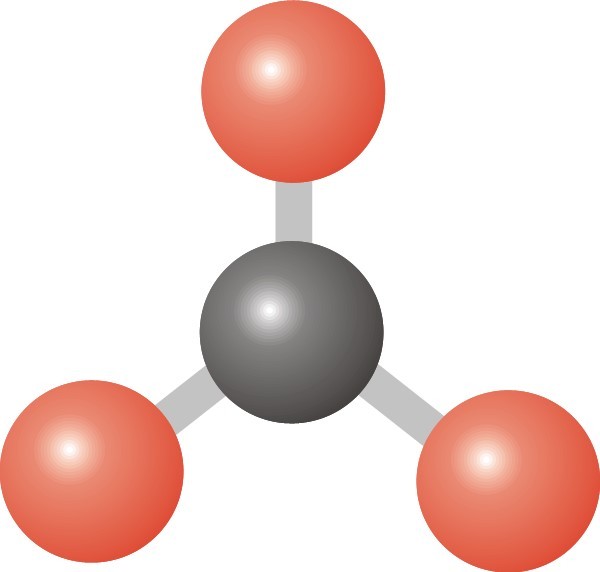
What molecular shape is the structure shown here? (BCl3)
a)
linear
b)
trigonal planar
c)
tetrahedral
d)
trigonal pyramidal
17.
Boron, an exception when it comes to stability, only needs to be surrounded by ____ valence electrons.
a)
2
b)
4
c)
6
d)
8
18.
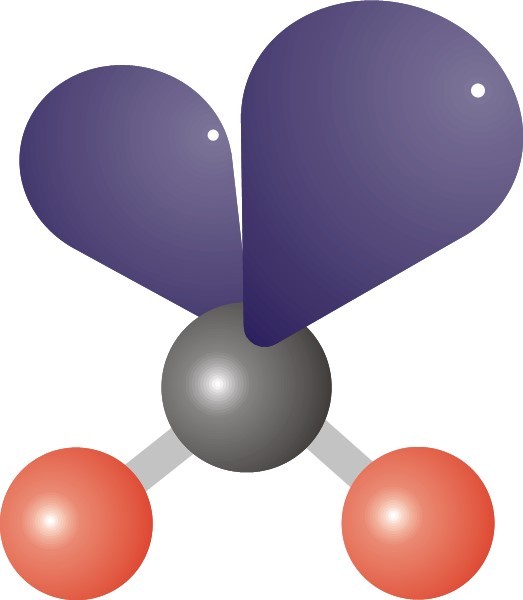
What molecular shape is the structure shown here? (H2O)
a)
tetrahedral
b)
trigonal planar
c)
bent
d)
trigonal pyramidal
19.
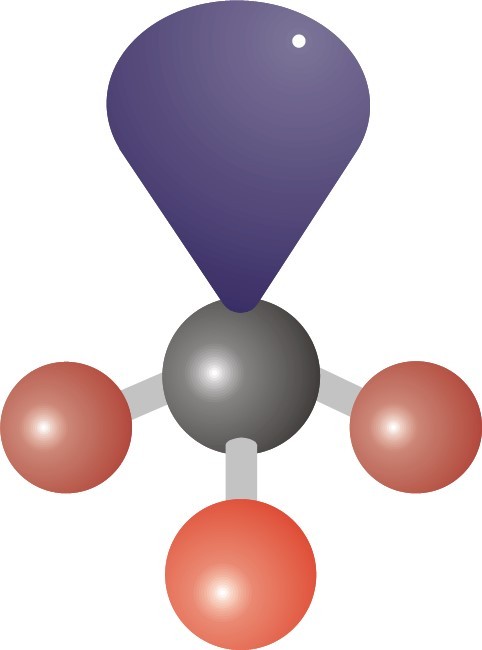
Determine the molecular geometry of ammonia (NH3).
a)
trigonal pyramidal
b)
trigonal planar
c)
bent
d)
tetrahedral
20.
VSEPR is used to predict the shape of individual molecules based to the extent to which valence electrons...
a)
attract each other
b)
repel each other
c)
bond with each other
d)
mock each other
21.
To determine the SHAPE of a molecular compound you assess the number of bonding groups and unshared electron pairs...
a)
on the central atom only
b)
on all elements in the compound
c)
on the cations only
d)
on the anions only
22.
SiCl4 has what shape?
a)
square planar
b)
square pyramidal
c)
tetrahedral
d)
octahedral
23.
A bond where electrons are NOT shared equally? 
a)
polar covalent
b)
nonpolar covalent
24.

3 shared pairs and 1 unshared pairs

a)

true linear

b)

trigonal planar

c)

bent

d)

tetrahedral

e)

trigonal pyramidal

25.

Tetrahedral molecules are

a)

polar

b)

non-polar

26.

2 shared pairs and 2 unshared pairs

a)

true linear

b)

trigonal planar

c)

bent

d)

tetrahedral

e)

trigonal pyramidal

27.

Bent molecules are

a)

polar

b)

non-polar

28.

trigonal Planar molecules are

a)

polar

b)

non-polar

29.

trigonal pyramidal molecules are

a)

polar

b)

non-polar

30.

polarity of bonds is based on

a)

atomic radius of each element

b)

electronegativity of each element

c)

the protons

d)

how electrons are transferred

31.
Which molecule would have this shape?
a)
BF3
b)
CH4
c)
PCl5
d)
CO2
32.
What molecule could this be? 
a)
BF3
b)
CH4
c)
H2O
d)
CO2
33.
Who could this be? 
a)
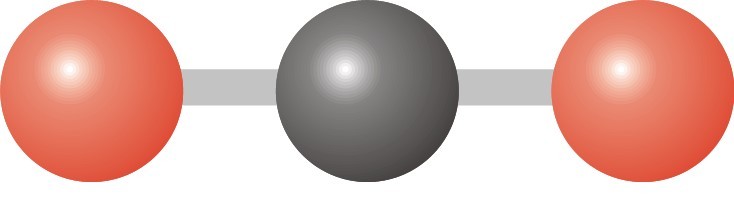
CO2
b)
NH3
c)
H2S
d)
CH4
34.
Who could this be?
a)
H2O
b)
NH3
c)
CO2
d)
CH4
35.
Which of the following is nonpolar?
a)
PH3
b)
H2O
c)
SiO2
d)
SeS2
36.
Which of the following describes water?
a)
Linear structure, nonpolar
b)
Linear structure, polar
c)
Bent structure, nonpolar
d)
Bent structure, polar
37.
Nitrogen will ____ electrons when forming an ionic bond.
a)
gain 1
b)
lose 1
c)
gain 3
d)
lose 3
38.
According to VSEPR, molecules adjust their shapes to keep which of the following as far away as possible?
a)
Pairs of valence electrons
b)
Inner shell electrons
c)
Mobile Electrons
d)
Electrons closest to the nucleus
39.
 A lone pair is defined as
a)
A pair of bonding electrons
b)
One non-bonding electron
c)
A pair of non-bonding electrons
d)
A pair of electrons on the central atom
40.
hydrochloric acid
a)
HClO3
b)
HClO2
c)
HClO
d)
HCl
41.
nitrous acid
a)
H2NO3
b)
HNO3
c)
HNO2
d)
H2NO2
42.
Name the acid: HC2H3O2
a)
Acetic Acid
b)
Acetous Acid
c)
Hydrogen Acetate
d)
Hydrogen Dicarbon Trihydrogen Dioxygen
43.

2 bonded atoms and 0 lone pairs

a)

linear

b)

trigonal planar

c)

bent

d)

tetrahedral

e)

trigonal pyramidal

44.

4 shared pairs and 0 unshared pairs

a)

true linear

b)

trigonal planar

c)

bent

d)

tetrahedral

e)

trigonal pyramidal

45.
The most electronegative atom in the periodic table is:
a)
Fluorine
b)
Helium
c)
Neon
d)
Francium
46.
The molecule shown in the diagram can best be classified as a
a)
polar covalent molecule
b)
nonpolar covalent molecule
c)
ionic compound
d)
nonpolar ionic compound
47.
Will this molecule be polar or nonpolar? H2S
a)
polar
b)
nonpolar
48.
Will this molecule be polar or nonpolar? PH3
a)
polar
b)
nonpolar
49.
Will this molecule be polar or nonpolar? CH4
a)
polar
b)
nonpolar
50.
What geometry will this molecular structure have?: PH3
a)
bent
b)
tetrahedral
c)
linear
d)
trigonal pyramidal