
 Worksheets
Thou Shall Not Forget (Units 1-3
Total questions: 55
Worksheet time: 42mins

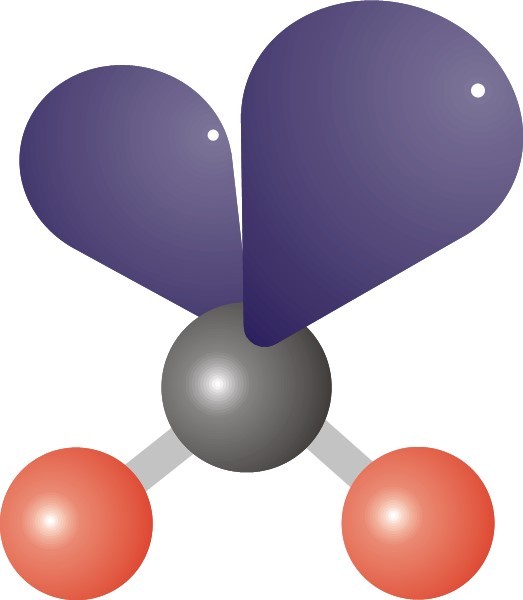
What compound could this be?
CO2
NH3
H2S
CH4
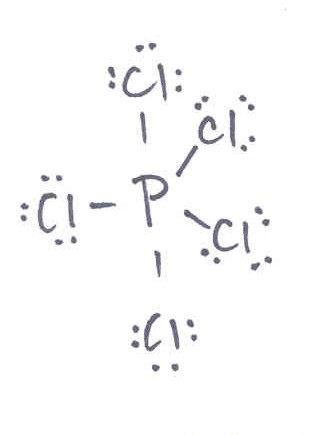
Draw the Lewis Dot structure for PCl5 and determine the predicted molecular geometry
octahedral
trigonal pyramidal
seesaw
trigonal bipyramidal



Filtering separates mixtures based on differences in what property?
Chemical
Solubility
Particle size
Density
What is the equation for calculating the density of a substance?
D=m/v
m=D/v
D=v*m
D=v/m
When an electron is in a lower energy level, it is ________________ away from the nucleus
Closer
Farther
When reading a PES (Photoelectric Spectroscopy) graph, what does the height of a peak represent?
The number of electrons
The number of protons
The mass or the isotope
The amount of energy the electron has
Isotopes of an element have the same number of __________, but different number of __________.
protons, neutrons
neutrons, protons
protons, electrons
electrons, protons
When reading a PES (Photoelectron Spectroscopy) graph, a larger binding energy means that the electrons are _________________ the nucleus?
Closer to
Farther from
Distillation separates mixtures based on differences in what property?
Solubility
Boiling Point
Particle Size
State of Matter
What type of change conserves mass?
none
chemical
physical
chemical and physical
When an electron is in a higher energy level, it has ___________ Coulombic attraction to the nucleus
More
Less

What is the measurement of the burette? (in mL)
6.6mL
6.64mL
7.36mL
7.3mL
Which orbital comes after 4s?
3d
5s
4p
4d
Are cations larger or smaller than their neutral atoms?
Larger
Smaller
Same size
Which piece of glassware is the most precise
beaker
graduated cylinder
burette
test tube
Moving across a row (L to R) on the periodic table, Zeff _________________
Increases
Decreases
Stays the same
What type of change separates a compound into elements?
physical
chemical
chemical and physical
Why do atoms get smaller moving across a period (L to R) on the periodic table?
More protons (q) to attract the electrons
Fewer protons (q) to attract the electrons
More energy shells (r) so it can't attract the electrons
Fewer energy shells (r) so it attracts the electrons closer
Why are anions larger than their neutral atoms?
More shielding that repels the other electrons
Fewer protons to attract electrons
More electrons to attract protons
More Zeff to attract electrons
Which piece of glassware is the least precise?
graduated cylinder
beaker
burette
When an electron is in a lower energy level, it has a ________________ 1st ionization energy
Higher
Lower
Same
What is the total # of covalent bonds carbon has to make when drawing a Lewis structure?
12
6
4
8
Which electrons are removed first when making a cation?
s
p
d
f
What do mass spectroscopy graphs measure?
Mass of isotopes
Mass of protons
Energy of electrons
Number of electrons
What is the bond angle in BF3?
90
120
109.5
180
When reading a PES graph, a larger binding energy means that the electrons are ____________ from the nucleus?
closer
farther
the same distance
Which orbital comes after 4p?
5s
4s
3d
4p
What is the bond angle in H2O?
120
90
180
109.5
Fill in the blanks germanium is a ________________, hydrogen is a _________________ and uranium is a ________________
metal, non-metal, metalloid
metalloid, non-metal, metal
non-metal, metal, metalloid
Are asymmetrical molecules polar or nonpolar?
Polar
non-polar
neither
What is the bond angle in NH3
120
109.5
180
90
List the 3 Intermolecular forces from weakest to strongest
hydrogen bonding, london dispersion, dipole dipole
london dispersion, hydrogen bonding, dipole dipole
london dispersion, dipole dipole, hydrogen bonding
dipole dipole, hydrogen bonding, london dispersion
List ALL the Intermolecular forces that exist in PCl3
hydrogen bonding, london dispersion
london dispersion, hydrogen bonding, dipole dipole
london dispersion, dipole dipole
london dispersion
Are anions larger or smaller than their neutral atoms?
Larger
Smaller
Same size
“More polarizable” refers to which Intermolecular Force?
hydrogen bonding
london dispersion
dipole dipole
What is an example of a covalent network solid?
Salt
Diamond
Sugar
Water
Name a property that decreases as Intermolecular Forces increase.
Vapor pressure
Conductivity
Melting point
Solubility
P and V are ___________________ related?
inversely
directly
The more molar mass a gas has, the_________________ it moves
faster
slower
Average Kinetic Energy is another term for _____________.
Heat
Temperature
Pressure
Activation energy
Real gases behave most like an ideal gas at what conditions of temperature and pressure?
High T, Low P
High P, Low T
High V, Low T
When an electron is in a lower energy level, it has a ___________ 1st ionization energy
Higher
Lower
What is the hybrid orbital used in CH4?
sp3
sp
sp2
What is the hybrid orbital used in CO2
sp3
sp
sp2

Count the number of sigma and pi bonds in this molecule:
13 sigma, 1 pi
14 sigma, 2 pi
1 sigma, 14 pi
2 sigma, 13 pi
Why are asymmetrical molecules polar?
Their dipoles do not cancel
Their dipoles cancel
What is the bond angle in SO2
120
90
180
109.5
Name a property that increases as Intermolecular Forces increase.
Vapor pressure
Conductivity
Melting point
Solubility
When a molecular solid melts or boils, which bonds break?
Intermolecular
Intramolecular

