Wayground logo

Free Printable Worksheets

Font size

S
M
L
XL
Worksheets

Animals/Animal Behavior Quiz

Total questions: 50

Worksheet time: 29mins

Name
Class
Date
1.

Which of the following phyla describes the segmented worms?

a)

Arthropoda

b)

Hermaphrodites

c)

Nematoda

d)

Annelida

2.

How many "hearts" does an earthworm have?

a)

0

b)

1

c)

2

d)

5

3.

Which part of the body of earthworm that acts as kidneys?

a)

Nephridia

b)

Setae

c)

Typhlosole

d)

Coelom

4.

Which term refers to the hard bristle-like, chitinous structures that allow annelids to move?

a)

Nephridia

b)

Spongin

c)

Setae

d)

Cilia

5.

Annelids are hermaphrodites. Define this term.

a)

They have three tissue layers.

b)

They have a body cavity.

c)

They produce both egg and sperm.

d)

They can regenerate lost body parts.

6.
They are invertebrates with an exoskeleton, segmented body, and jointed appendages. They have an open circulator system and reproduce sexually. What are they?
a)
Arthropod
b)
Crustacean
c)
Arachnid
d)
Insect
7.
An arthropod’s _______ protects it and keeps it from drying out. It is made of _______ and does not grow with the animal.
a)
exoskeleton, antennae
b)
exoskeleton, chitin
c)
abdomen, chitin
d)
antennae, exoskeleton
8.
Some animals go through a process called ________ during their life cycle in which their bodies undergo dramatic changes in form as they develop.
a)
Metamorphosis
b)
Molting
c)
Chitin
d)
Exoskeleton
9.
The hard outer coating of an arthropod is called an _______.
a)
Molting
b)
Chitin
c)
Exoskeleton
d)
Abdomen
10.

Diffusion allows amphibians to

a)

Breathe through their gills

b)

Breathe through their lungs

c)

Breathe through their skin

d)

Reproduce

11.
What does it mean to be cold blooded?
a)
Body temperature changes as outside temperature changes. 
b)
Body temperature is always colder than outside. 
c)
Body temperature is always hotter than outside.
12.
Which of these groups of animals are amphibians?
a)
frogs, toads, and salamanders
b)
bees, termites, and ants
c)
snakes, lizards, and turtles
d)
cows, foxes, sheep
13.
Where do amphibians lay their eggs?
a)
in water
b)
on land
c)
in the dessert
d)
they do not lay eggs
14.
To get air through their skin, amphibians must
a)
stay moist
b)
eat insects
c)
live in holes
d)
lay eggs
15.

Which is one of the traits to be a mammal?

a)

must have a high temperature

b)

males must be able to feed their babies meat

c)

must have gills

d)

females must be able to feed their babies milk

16.

Which of the following are basic traits a mammal must have to be a mammal?

a)

hair, warm blooded, and differentiated teeth

b)

hair, cold blooded, and have scales

c)

fur, warm blooded, and have scales

d)

fur, cold blooded, and mothers can feed their babies mil

17.
Which of the following is a structure that mammals share that enables them to feed their young?
a)
diphyodont
b)
mammary glands
c)
sebaceous glands
d)
aortic arch
18.
Which of the following is a correct description of a mammalian heart?
a)
2 chambered heart with an aortic arch 
b)
a three chambered heart without an aortic arch
c)
a three chambered heart with an aortic arch
d)
a four chambered heart with an aortic arch
19.
In _____, an animal uses what it already knows to figure out a new problem
a)
imprinting
b)
conditioning
c)
instinct learning
d)
insight learning
20.

In order to ensure that mating and reproduction occur, some animals perform

a)

migration

b)

courtship behavior

c)

hibernation

d)

behavior

21.
When some birds fly south in the winter, they are showing ___ behavior
a)
migration
b)
hibernation
c)
territorial
d)
circadian
22.
Animals may compete for food by showing ____ which is a threatening behavior
a)
aggression
b)
conditioning
c)
response
d)
imprinting
23.
______ is a state of greatly reduced body activity in the winter
a)
Circadian rhythms
b)
Hibernation
c)
Trial-and-error
d)
Behavior
24.
Behavior patterns that follow a daily cycle are called
a)
trial-and error
b)
circadian rhythms
c)
hibernation rhythms
d)
learning rhythms
25.
When you learned to ride a bike, you became better the more you practiced. This is called ____ learning.
a)
insight
b)
behavioral
c)
trial-and-error
d)
instinct
26.
A chick following a lawnmower because it was the first moving object it ever saw is an example of
a)
imprinting
b)
conditioning
c)
trial and error
d)
insight
27.
Why is a spider spinning a web an innate behavior?
a)
It learns how to spin the web from its mother.
b)
It learns how to spin a web through insight learning.  
c)
It is born knowing how to spin a web.
d)
It learns how to spin a web through observational learning.
28.
Michael went to the circus and saw a seal balance a beach ball on its nose.  This is an example of a...
a)
instinct
b)
mimicry
c)
camouflage
d)
learned behavior
29.
Behaviors that are passed on from parents to offspring without teaching or training are called what? 
a)
inherited or innate behaviors
b)
learned behaviors
c)
instincts
d)
imprinted behaviors
30.
A cat is stalking a mouse. What is the stimulus for this behavior?
a)
food (prey)
b)
avoiding predation
c)
seasonal change
d)
reproduction
31.
A rabbit is running away from a fox. What is the stimulus for this behavior?
a)
avoiding a predator
b)
food
c)
migration
d)
estivation
32.
Getting use to something after being exposed to it for a long period of time is an example of which type of learned behavior?
a)
insight learning
b)
playing
c)
habituation
d)
observational learning
33.
A way of learning that involves a reward or punishment is called?
a)
observational learning
b)
operant conditioning
c)
habituation
d)
playing
34.

Which is an example of courtship?

a)

A peacock shows off his feathers

b)

A rabbit runs away from a wolf

c)

A bear hibernates

d)

Bees communicating with pheromones

35.
The female is usually the one who chooses whether or not to mate.
a)
True
b)
False
36.
What type of animal maintains a near constant body temperature
a)
ectothermic
b)
endothermic
c)
neither
37.

Which of the following is the most appropriate explanation of estivation?

a)

Estivation is a state of greatly reduced body activity, used to conserve food stored in the body.

b)

Estivation is the movement of animals from one place to another in response to season changes.

c)

Estivation is a behavioral process whereby adults of the same species attract each other for a potential mate.

d)

Estivation is a social behavior in which certain animals travel together in groups to protect each other.

38.

Imprinting and conditioning would both be classified as which type of behaviors…

a)

Inherited behaviors

b)

Innate Behaviors

c)

Learned Behaviors

d)

None of the above

39.

In the list of animals below, which animal is most likely to hibernate?

a)

Ducks

b)

Salmon

c)

Ground Squirrels

d)

Monarch Butterflies

40.

This is an automatic response to protect eyes from objects, drying out, or infection:

a)

blinking

b)

sleep

c)

sweating and panting

41.

In Pavlov's dog experiment, he tested classic conditioning by:

a)

putting them in a pen with a lever they could push for food

b)

puting them in a maze with food at the end or with no food at the end.

c)

imprinting the puppies with a mama cat

d)

teaching them to salivate at the ringing of a bell

42.
What behaviors are favored by natural selection?
a)
behaviors that use the most stored energy
b)
behaviors that increase survivorship and decrease reproduction rate
c)
behaviors that have short-term benefits but long-term costs
d)
behaviors that increase survivorship and reproduction rate
43.

Aphids are tiny insects that live on and eat the leaves of plants, removing vital nutrients from the plants.

a)

Predation

b)

Parasitism

c)

Commensalism

d)

Mutualism

44.
Cattle egrets forage (feed) in fields among cattle. The egret gets easy access to flying insects stirred up by the cattle, and the cattle don't care if they are there or not.
a)
mutualism
b)
commensalism
c)
competition
d)
parasitism
45.
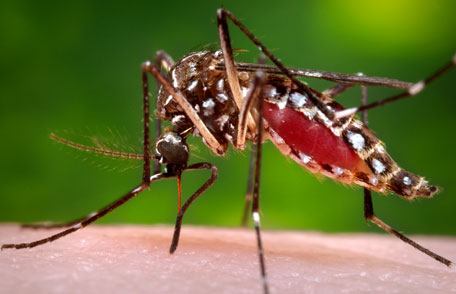
When a mosquito bites you, you are the __________ and the mosquito is the  ____________.
a)
host, hostess
b)
parasite, host
c)
host, parasite
d)
prey, predator
46.

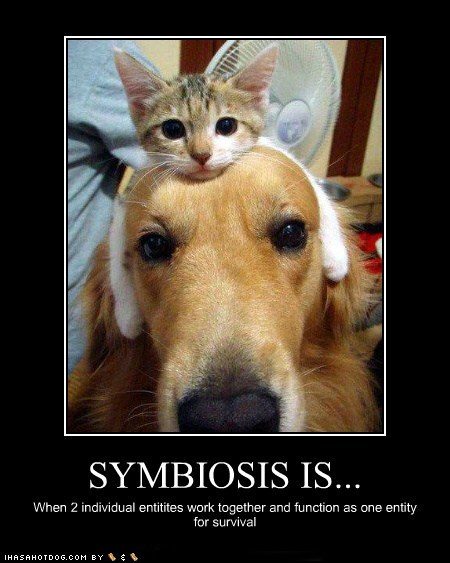
A relationship in which two species live closely together.

a)

resource

b)

mutualism

c)

succession

d)

symbiosis

47.
Learning that results from the consequences of behaviors is called
a)
Learning that results from the consequences of behaviors is called
b)
Operant conditioning
c)
Classical conditioning
d)
Positive conditioning
48.
What is punishment?
a)
 Anything that the subject will work to avoid
b)
 Any unpleasant stimulus
c)
 Anything that the subject dislikes
d)
 Anything that decreases the frequency of a behavior
49.

1. What is an adaptation?

a)

A feature or behavior that helps an animal survive.

b)

The food that an animal eats.

c)

How energy moves in a food web.

50.
What classification of animals do humans belong to?
a)
fish
b)
mammals
c)
reptiles
d)
amphibians