Wayground logo

Free Printable Worksheets

Font size

S
M
L
XL
Worksheets

Stimulus & Response Unit 5

Total questions: 88

Worksheet time: 1hrs 8mins

Name
Class
Date
1.
 After eating spoiled food, you begin to develop bacteria inside your body.  What is the body’s most natural response to this happening?
a)
You become hyper
b)
Your body does nothing since there is no internal change occurring
c)
You start to develop a fever and vomit to get rid of the bacteria
d)
a.  Your body automatically shuts itself down and you fall asleep.  
2.
What is the internal state of balance called?
a)
Stimulus
b)
Response
c)
Homeostasis
d)
Homozygous
3.
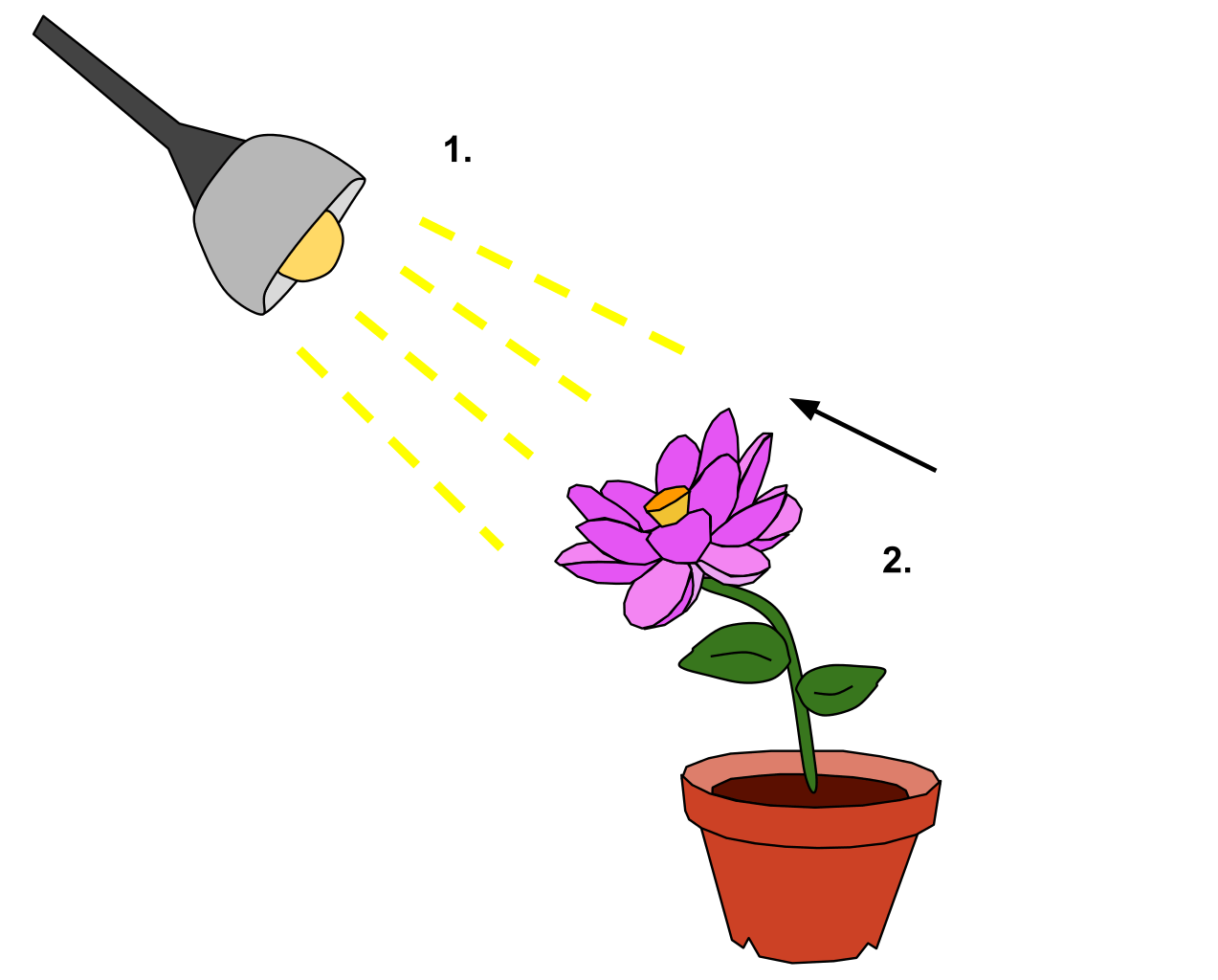
This picture represents which type of tropism?
a)
Thigmotropism
b)
Geotropism
c)
Hydrotropism
d)
Phototropism
4.
Which type of tropism involves a flower following the sun to obtain the most amount of light?
a)
Geotropism
b)
Thigmotropism
c)
Hydrotropism
d)
Phototropism
5.
In thigmotropism, what is the stimulus and the response?
a)
       Stimulus: sunlight; response: growing towards light
b)
       Stimulus: touch; response: leaves fold up 
c)
Stimulus: gravity; response: roots growing downward
d)
     Stimulus: water; response: roots growing toward water
6.
Over the winter break last year, there was an extreme blizzard in Lubbock, Texas.  This blizzard was caused by a major drop in temperature, causing precipitation to freeze into snow.  If a Texan were to step outside during this blizzard, their skin would start to form goose bumps and they would begin to shiver. In this situation, what is the stimulus and the response?
a)
   Stimulus: precipitation is in the air; response: precipitation freezes
b)
   Stimulus: Texan steps outside in the cold; response: blizzard occurs
c)
Stimulus: cold drop in temperature; response: shivering and goose bumps
d)
   Stimulus: winter break started;  response: precipitation starts
7.
 Hand sanitizer kills bacteria. Some bacteria are resistant to the tryptophan that is in hand sanitizer. These bacteria do not die and will survive and reproduce. Over time, the bacteria have evolved to be resistant to the tryptophan. This situation represents which type?
a)
Natural selection because humans choose to apply the hand sanitizer containing tryptophan
b)
Natural selection because only those best adapted will survive and reproduce
c)
Selective breeding because humans choose to apply the hand sanitizer containing tryptophan
d)
Selective breeding because only those best adapted will survive and reproduce
8.
When an individual is sick with the common cold, the body produces white blood cells to fight off the infection.  The lymph nodes will then drain the excess fluids from the infected area. What is the stimulus and the response?
a)
Stimulus- white blood cells are produced to fight infection, Response- sick person
b)
    Stimulus- fluid is drained, Response- white blood cells are produced to fight infection
c)
     Stimulus- sick with the cold, Response- white blood cells are produced to fight infection
d)
Stimulus- sick with the cold, Response- swelling goes down in infected area
9.
When on a beach vacation, Consuela relaxed and laid out in the sun for hours.  As a result, she received a sunburn that covered most of her skin. Would this response come from an internal or external stimulus?
a)
   Internal- her skin was burned at a cellular level
b)
Internal- her skin is a part of her body
c)
   External- the stimulus was caused by the beach which is outside
d)
External- the stimulus was caused by the sun which is outside
10.
How does natural selection affect genetic diversity? (think about the M&M activity)
a)
Natural selection increases genetic diversity
b)
    Natural selection keeps genetic diversity the same
c)
      Natural selection decreases genetic diversity
d)
      Natural selection has no effect on genetic diversity
11.
 Which of the following would be the appropriate response when the body’s internal temperature drops below homeostasis?
a)
Sweating
b)
Throwing up
c)
Shivering
d)
Death
12.

Which situation best describes the act of maintaining homeostasis?

a)

An organism sweating when their body temperature begins to rise

b)

A plant on a window sill growing towards sunlight

c)

A bear hibernating in the winter months

d)

All of the above

13.

Identify the stimulus....."Birds flock to shelter when it starts to hail outside

a)

Birds flock to shelter

b)

It starts to hail outside

14.

Identify the stimulus..."A loud noise causes you to cover your ears"

a)

A loud noise

b)

You cover your ears

15.

Identify the stimulus..."A person shivers because it is cold outside"

a)

Cold temperature

b)

A person shivers

16.

Identify the response..."A squirrel scratches at a flea bite"

a)

A flea bite

b)

A squirrel scratches

17.

Identify the response..."An organism is hungry so it eats some food"

a)

Feeling hungry

b)

Eating food

18.

Identify the stimulus..."Roots growing down towards gravity"

a)

Roots growing down

b)

The force of gravity

19.

Identify the response..."A plant's stem fighting against the force of gravity by growing upwards"

a)

A plant stem

b)

A plant stem fighting gravity

c)

Gravity

20.

Is the stimulus external or internal....A loud noise?

a)

Internal

b)

External

21.

Is the stimulus internal or external? Feeling hungry

a)

Internal

b)

External

22.

Identify the tropism in the picture.

a)

Positive Geotropism

b)

Negative Phototropism

c)

Positive Phototropism

d)

Negative Gravitropism

23.

Identify the tropism in the picture.

a)

Geotropism

b)

Positive Thigmotropism

c)

Hydrotropism

24.

Identify the tropism in the picture.

a)

Positive Hydrotropism

b)

Negative Phototropism

c)

Positive Gravitropism

d)

Positive Thigmotropism

25.

Identify the tropism in the picture.

a)

Positive Thigmotropism

b)

Negative Thigmotropism

c)

Geotropism

d)

Negative Hydrotropism

26.

Identify the tropism in the picture.

a)

Positive Thigmotropism

b)

Positive Hydrotropism

c)

Negative Thigmotropism

d)

Positive Geotropism

27.
Identify the stimulus: You are walking home from school one day when a large dog jumps out at you from behind a tree.  He starts to growl and shows his teeth.  You quickly turn around and walk in the opposite direction. 
a)
Dog growling and showing teeth
b)
walking in opposite direction
c)
walking home from school
d)
tree
28.
Identify the response:
You are walking home from school one day when a large dog jumps out at you from behind a tree.  He starts to growl and shows his teeth.  You quickly turn around and walk in the opposite direction. 
a)
dog growling and showing teeth
b)
you quickly turn and walk away
c)
tree
d)
dog
29.
Identify the stimulus:
You are at the mall walking through the food court. You smell fresh baked pizza and realize that you skipped lunch.  You buy a piece of pizza and eat it before going to buy your CD.
a)
the smell of pizza
b)
buying a pizza
c)
food court
d)
buying the CD
30.
Identify the response:
You are at the mall walking through the food court. You smell fresh baked pizza and realize that you skipped lunch.  You buy a piece of pizza and eat it before going to buy your CD
a)
the smell of pizza
b)
buying a piece of pizza
c)
buying the CD
d)
food court
31.
Identify the stimulus
a)
hunger
b)
thirst
c)
blinking
d)
eating
32.
Identify the response
a)
hunger
b)
thirst
c)
eating
d)
smelling
33.
Shark swims toward the direction of blood.
a)
Stimulus
b)
Response
34.
Plant grows toward the direction of sunlight.
a)
Stimulus
b)
Response
35.
A person feels the heat of a hot stove.
a)
Stimulus
b)
Response
36.
A bat hears the flapping wings of an insect.
a)
Stimulus
b)
Response
37.
The stimulus is most closely related to....
a)
the cause
b)
the effect
c)
the hypothesis
d)
the conclusion
38.
A plant's root grow in a downward direction in response to what force? 
a)
sunlight
b)
gravity
c)
soil
d)
turgor pressure
39.

What type of stimulus is

The smell of pizza?

a)

Internal

b)

External

40.
Which is NOT a RESPONSE to environmental stimuli
a)
blinking
b)
storing food in the form of fat
c)
having lungs or gills
d)
gathering and storing food
41.
Endothermic animals 
a)
do not have a constant body temperature
b)
bask in the sun for energy
c)
maintain their own body temperature
d)
do not need to eat often
42.
Specific actions that an animal does that can be observed are 
a)
Behaviors
b)
Responses
c)
Stimuli
d)
Mimicry
43.
Some mammals begin to store nutrition in the form of fat.  This is a response to which stimuli?
a)
Shorter days and warmer weather
b)
Longer days and colder weather
c)
Warmer weather and longer days
d)
Colder weather and shorter days
44.
A sea turtle digging a nest in the sand is an example of 
a)
inherited behavior
b)
learned behavior
c)
inappropriate behavior
d)
a defense
45.
What defense mechanism does the horned lizard use to escape predators?
a)
Climbs a tree
b)
Squirts blood from its eye
c)
It will eject an ink cloud
d)
It will release a foul odor
46.
Which is NOT a response to temperatures becoming warmer?
a)
Shedding
b)
Shivering
c)
Panting
d)
Sweating
47.
An inherited behavior is 
a)
a behavior that needs to be taught to the animal
b)
a defense mechanism
c)
a behavior an animal is born knowing how to do
d)
a behavior that results in sweating
48.
Which is a learned behavior?
a)
Being polite
b)
Having blue eyes
c)
Growing tall
d)
Being right-handed
49.
Some male birds decorate their nests with berries and ornaments to attract females.  This behavior is an example of 
a)
camouflage
b)
mimicry
c)
defense
d)
courtship
50.
Some animals shed fur as a way to cool down.  What environmental stimulus leads to this?
a)
Seasons and temperatures becoming cooler
b)
The sun comes closer to Earth
c)
Seasons and temperatures get warmer
d)
It's beach season and they want to look good in a bathing suit
51.
Which organism is most likely a fish?
a)
1
b)
2
c)
3
d)
4
52.

All living organisms need gases to live. In plants, gas exchange occurs mainly in the

a)

waxy covering over the leaf

b)

stomata of the leaf

c)

roots

d)

lungs

53.

What form of energy is stored in food?

a)

light energy

b)

kinetic energy

c)

chemical energy

d)

mechanical energy

54.
When a person exercises, temperature changes occur on the body’s surface. Which of the following would be the correct way for the body to maintain homeostasis during intense exercise? 
a)
run fast
b)
increased oxygen intake for energy
c)
sweating
d)
sweating and increased oxygen intake for energy
55.
Which of the following would be the appropriate stimulus and response for geotropism?
a)
Stimulus= Touch; Response= Close leaves
b)
Stimulus= Gravity; Response= roots grow down, stem grows up
c)
Stimulus= gravity; Response= grows toward the light
d)
Stimulus= Light; Response= roots grow toward water
56.
What is the correct stimulus for hydrotropism?
a)
Gravity
b)
Touch
c)
Water
d)
Sunlight
57.
This picture would represent which type of tropism?
a)
Phototropism
b)
Geotropism
c)
Hydrotropism
d)
Thigmotropism
58.
Tony falls and cuts his hand on a rusty nail. He hasn’t had his tetanus shot and develops violent muscle spasms from the tetanus bacteria. What is the stimulus and the response?  
a)
Stimulus: Tony falls, Response: Hasn’t had a tetanus shot
b)
Stimulus: tetanus bacteria, Response: violent muscle spasms
c)
Stimulus: rusty nail, Response: muscle spasms
d)
Stimulus: tetanus bacteria: Response: cuts hand on rusty nail
59.
The human body is complex, consisting of many types of cells. Each cell plays a specific role in maintaining the body’s balance. This internal balance is called___________ 
a)
Internal equilibrium 
b)
Homeostasis 
c)
Balance
d)
A good state
60.
How would a plant respond to cold weather to maintain homeostasis? 
a)
The plant would enter a dormant phase where the chloroplasts producing sugar greatly slows down.
b)
The plant uses the little bit of sunlight to cause the chloroplasts to create lots of sugar for later.
c)
The plant stops producing any type of sugar and just stays very still.
d)
It will not respond and will eventually die. 
61.
Which of the following would be a response to fear?  
a)
 The muscles tighten up and freeze.
b)
Adrenaline is pumped into the body to allow for either running or fighting
c)
Breathing increases to allow more oxygen to get into the blood to help create more energy.
d)
All of the above. 
62.
Why is transpiration an important process to maintain homeostasis? 
a)
Allows the plant to go through photosynthesis
b)
Allows the plant to get rid of excess water in high temperatures to prevent death.
c)
Allows the plant to respond to cold weather
d)
Its an adaption for changes in weather
63.
Which of the following would be an example of an internal stimulus? 
a)
A man gets a blood clot in the brain, causing a stroke. 
b)
A woman gets heat stroke from being out in the sun too long. 
c)
A dog pants in the heat. 
d)
A man bleeds from accidentally cutting himself. 
64.
Poison Ivy growing on a tree due to touch.
a)
Gravitropism 
b)
Phototropism
c)
Thigmotropism
d)
Hydrotropism
65.
The root of a plant growing down is a result of _______________.
a)
Gravitropism 
b)
Phototropism 
c)
Thigmotropism
d)
Hydrotropism
66.
What does photo mean?
a)
Print
b)
Picture
c)
Make
d)
Light 
67.

A plant growing in response to the sunlight.

a)

Gravitropism

b)

Phototropism

c)

Thigmotropism

d)

Hydrotropism

68.
When the plant responds to gravity that is called ________________.
a)
Phototropism
b)
Thigmotropism
c)
Geotropism
d)
Hydrotropism
69.
What does this picture represent? 
a)
thigmotropism
b)
Phototropism
c)
Hydrotropism
d)
Geotropism
70.
What does this picture represent? 
a)
thigmotropism
b)
Phototropism
c)
Hydrotropism
d)
Geotropism
71.
What does this picture represent? 
a)
thigmotropism
b)
Phototropism
c)
Hydrotropism
d)
Geotropism
72.
What in the world is turgor pressure? 
a)
How much care the plant receives from farmers
b)
How much carbon dioxide is in the vacuole of a plant cell
c)
When the vacuoles of plant cells swell up with water and make the plant rigid
d)
How much soil is being used to plant the crop
73.
What is germination?
a)
When the seed begins to grow roots and exert force (push) into soil to grow upward
b)
When a plant grows towards the sources of light
c)
When a plants roots grow downward in response to gravity
d)
None of the above
74.
When plant cells lack rigidity (stiffness) due to lack of water in the vacuoles, this is called _______________.
a)
Phototropism
b)
Dormancy
c)
Wilting
d)
Turgor pressure
75.
Why do plants wilt?
a)
low turgor pressure
b)
high turgor pressure
c)
too much water
d)
no cell membrane
76.
Which part of a plant is responsible for transpiration?
a)
leaves
b)
stem
c)
roots
d)
flower
77.
What is transpiration?
a)
The evaporation of water through the stoma (holes) in plants
b)
Excess sugar being released from the leaves
c)
The way a plant makes its food
d)
When the plant uses sugar for energy
78.
A period in a plant’s life where development is temporarily stopped to conserve energy.
a)
Dormancy
b)
Turgor Pressure
c)
Wilting
d)
Transpiration
79.
What are the levels of organization of a biosphere from smallest to largest?
a)
Cell, Tissue, Organ, Organ System, Organism, Population, Community, Ecosystem
b)
Population, Cell, Tissue, Organism, Community, Ecosystem, Biosphere
c)
Organism, Population, Community, Ecosystem, Biosphere
d)
Cell, Tissue, Organ, Organ System, Organism
80.
A simple, single celled organism is called _________________.
a)
Multicellular
b)
Unicellular
c)
Acellular
d)
Noncullular
81.
Which cell part's function is to produce protein?
a)
Cell Membrane
b)
Vacuole
c)
Cytoplasm
d)
Ribosome
82.
Which cell part controls what enters/ exits the cell?
a)
Nucleus
b)
Cell Wall
c)
Chloroplasts
d)
Cell Membrane
83.
Which cell part's function is to capture sunlight to produce food energy?
a)
Cytoplasm
b)
Chloroplasts
c)
Endoplasmic Reticulum
d)
Vacuole
84.

Which part of the cell stores water in a plant cell and aides in turgor pressure?

a)

Mitochondria

b)

Ribosome

c)

Chloroplast

d)

Vacuole

85.
What are the products of photosynthesis?
a)
Carbon dioxide and water
b)
Carbon dioxide and oxygen
c)
Glucose and oxygen
d)
Glucose and water
86.
A student is collecting the gas given off from a plant in bright sunlight at a temperature of 27°C. The gas being collected is probably ________.
a)
oxygen
b)
carbon dioxide
c)
ATP
d)
glucose
87.
What is the source of energy for photosynthesis?
a)
Carbohydrates (chemical energy)
b)
Light (radiant energy)
c)
Heat (thermal energy)
d)
Wind (kinetic energy)
88.

What do animals release that plants take in during the process of photosynthesis?

a)

Carbon

b)

Oxygen

c)

Carbon Dioxide

d)

Nitrogen