Wayground logo

Free Printable Worksheets

Font size

S
M
L
XL
Worksheets

WAVES SUBUNIT REVIEW (8P3A1-4)

Total questions: 59

Worksheet time: 1hrs 24mins

Name
Class
Date
1.
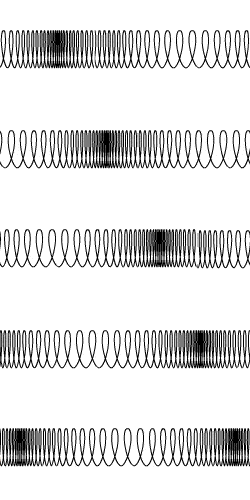
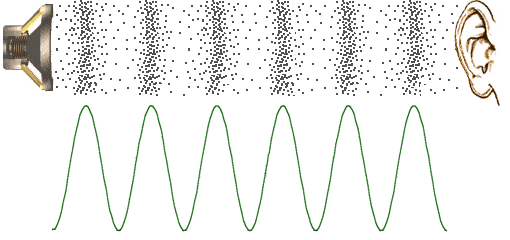
The parts of a longitudinal wave that are closest together or the place on a longitudinal  wave that is pushed together is called what? 
a)
Rarefaction
b)
Crest
c)
Trough
d)
Compression
2.

The parts of a longitudinal wave that are spread far apart is called what?

a)

Rarefaction

b)

Crest

c)

Trough

d)

Compression

3.
What type of wave is this?
a)
Longitudinal
b)
Transverse
4.
What type of wave is this?
a)
Mechanical
b)
Electromagnetic
5.

Which type of wave moves the medium up and down perpendicular at right angles across the direction in which the wave is traveling?

a)

Transverse Waves

b)

Longitudinal Waves

c)

Surface Waves

d)

None of these

6.
What kind of wave is pictured below?
a)
compressional wave
b)
transverse wave
c)
sound wave
d)
mechanical wave
7.
 rarefaction
a)
a
b)
b
c)
d
d)
c
8.

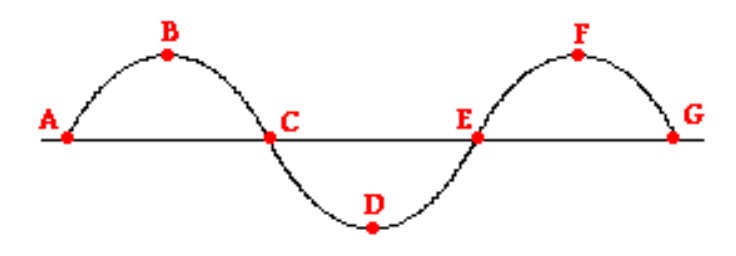
Which letter(s) represent the trough of the wave?

a)

A

b)

B & D

c)

D

d)

C & G

9.
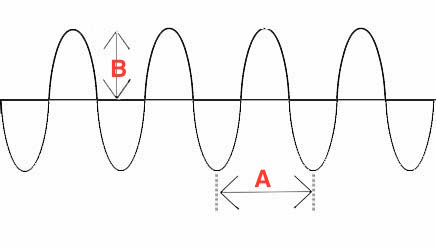
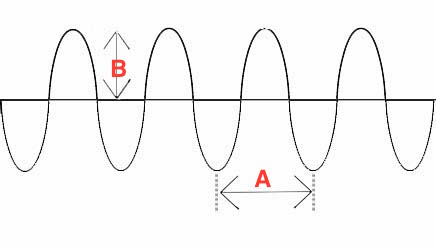
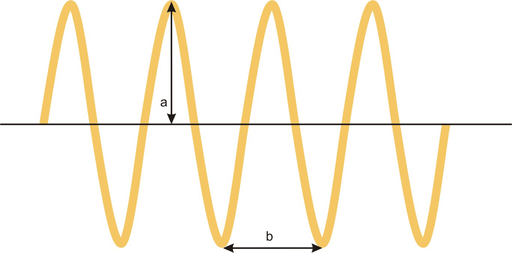
What property of this wave is represented by the letter "A"
a)
amplitude
b)
crest
c)
trough
d)
wavelength
10.
The higher the frequency, the ___ the waves are together and the greater the energy carried by the waves will be. 
a)
FURTHER
b)
CLOSER
c)
NEITHER
11.
What property of the wave is represented by the letter "B"?
a)
amplitude
b)
crest
c)
trough
d)
wavelength
12.
When the frequency of a wave increases, what happens to the wavelength?
a)
The wavelength is not directly affected by the frequency of a wave.
b)
The wavelength increases.
c)
The wavelength decreases.
d)
More specific information is needed to form a conclusion about the wavelength.
13.
Choose the correct relationship for wavelength and frequency.
a)
Higher Frequency=Longer Wavelength
b)
Lower Frequency=Shorter Wavelength
c)
Higher Frequency=Shorter Wavelength
d)
Higher Frequency=Identical Wavelength
14.
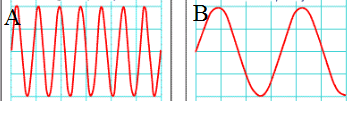
Which wave has a lower frequency?
a)
A
b)
B
15.

If a wave increases its frequency, what will happen to the wavelength?

a)

it will increases

b)

it will decreases

c)

it will stays the same

16.
If the speed of a wave remains constant, how will the wavelength change if the frequency increases?
a)
The wavelength decreases.
b)
The wavelength increases.
c)
The wavelength stays the same.
17.
If the wavelength of a wave stays the same and the frequency decreases, how will the speed change?
a)
The speed will stay the same.
b)
The speed will increase.
c)
The speed will decrease.
18.
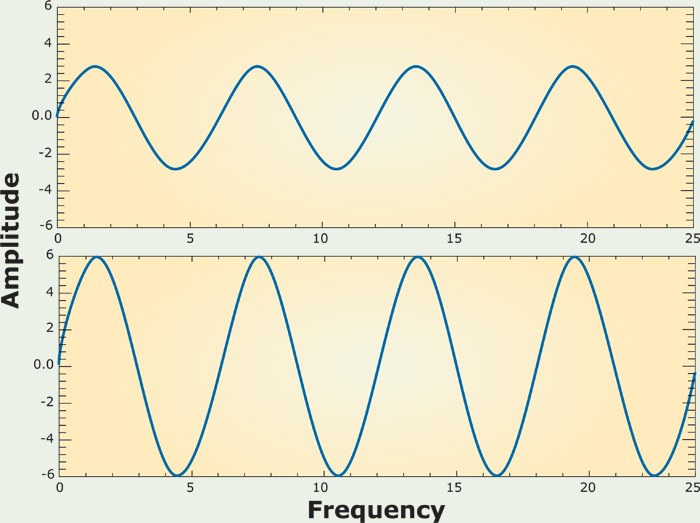
How much energy is the bottom wave carrying, compared to the top wave? 
a)
bottom is carrying more energy than top
b)
bottom is carrying the same energy as top
c)
you cannot tell from the picture
d)
bottom is carrying less energy than top
19.
________ wave’s speed changes AND ________ speed stays same. 
a)
electromagnetic, mechanical
b)
mechanical, electromagnetic
c)
transverse, electromagnetic
d)
transverse, mechanical
20.
Which has the LONGEST wavelength and, therefore, the lowest frequency/energy
a)
Gamma Rays
b)
Radio Waves
c)
Visible Light
d)
Infrared rays
21.
Which has the SHORTEST wavelength and, therefore, the highest frequency/most energy
a)
Radio waves
b)
Ultraviolet Rays
c)
Gamma Rays
d)
X-rays
22.
Put the visible light colors in order from longest wavelength to shortest wavelength
a)
Violet, Indigo, Blue, Green, Orange, Yellow, Red
b)
Red, Yellow, Green, Orange, Violet, Blue, Indigo
c)
Red, Orange, Yellow, Green, Blue, Indigo, Violet
23.
Select the correct order of waves on the Electromagnetic Spectrum
a)
Radio, Micro, Infra, Visible, Ultra, X-ray, Gamma
b)
Gamma, X-ray, Ultra, Vis, Infra, Micro, Radio
c)
Vis, Micro, Infra, Ultra, X-ray, Gamma, Radio
d)
Micro, Radio, Vis, Infra, Ultra, X-ray, Gamma
24.
Hey!  That straw looks broken.  Why?
a)
reflection
b)
refraction
c)
transmission
d)
absorption
25.
What does this picture show?
a)
Constructive Interference
b)
Destructive Interference
c)
Refraction
d)
Diffraction
26.
When a wave moves around a barrier or though an opening it is known as what?
a)
Diffraction
b)
Refraction
c)
Rarefaction
d)
Destruction
27.
This image is representing what wave interaction?
a)
Refraction
b)
Diffraction
c)
Reflection
d)
Interference
28.
What phenomenon does this image demonstrate?
a)
Constructive interference
b)
Destructive interference
c)
Increasing frequency
d)
Increasing period
29.
What phenomenon does this image demonstrate?
a)
Constructive interference
b)
Destructive interference
c)
Increasing frequency
d)
Increasing period
30.
What is happening in this picture?
a)
Reflection
b)
Refraction
c)
Diffraction
d)
Absorption
31.
Which objects on the table are "Opaque"?
a)
Pitcher; Supply Box; Pencil
b)
Book; Pencil; Rock
c)
Pencil; Book; Goggles
32.
Which objects on the table are "Transparent"?
a)
Rock; Pencil
b)
Cup; Goggles
c)
Supply Box; Fish Bowl
33.
Which objects on the table are "Translucent"?
a)
Fish Bowl; Supply Box; Goggles
b)
Pencil; Fish Bowl; Cup
c)
Fish Bowl; Supply Box; Pitcher
34.
What's going on here? 
a)
Red light is being refracted; all other colors are absorbed.
b)
Red light is being absorbed; all other colors are reflected.
c)
Red light is transmitted; all other colors are refracted.
d)
Red light is reflected; all other colors are absorbed. 
35.

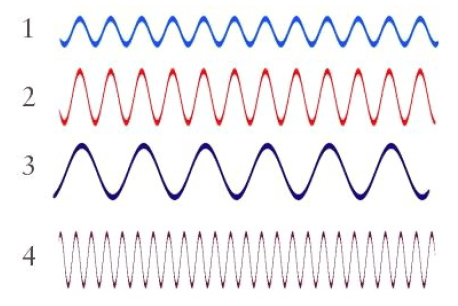
Which wave in the diagram has the highest frequency?

a)

1

b)

2

c)

3

d)

4

36.
Frequency is
a)
Amount of time it takes for one wavelength
b)
How many wavelengths are completed in one second
c)
Distance between two crests or two troughs
d)
Amount of energy in a wave
37.

Which is the correct equation for calculating the speed of a wave?

a)

T = 1/f

b)

Speed= Wavelength x Period

c)

Speed = Wavelength/Frequency

d)

Speed= Frequency x Wavelength

38.

These waves have the same what?

a)

amplitude

b)

frequency

c)

period

d)

wavelength

39.

Waves only transfer what?

a)

Heat

b)

Light

c)

Energy

d)

Food

40.
What is the speed of a sound wave that has a frequency of 250 hertz and a wavelength of 8 meters? 
a)
31 m/s
b)
250 m/s
c)
2000 m/s
d)
5280 m/s
41.
What is the wavelength of the sound wave that has a frequency of 340 hertz as it travels through the air at 680 m/s?
a)
0.01 m
b)
0.5 m
c)
2.0 m
d)
200 m
42.
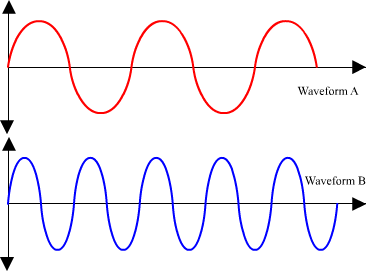
How many waves are in this wave chain or what is the frequency of the wave?
a)
6
b)
3
c)
4
d)
5
43.
A wave has wavelength of 10 m and a speed of 340 m/s. What is the frequency of the wave?
a)
34 m/s
b)
3400 Hz
c)
3400 m/s
d)
34 Hz
44.
A wave has wavelength of 10 m and a speed of 340 m/s. What is the period of the wave?
a)
0.029s
b)
0.029Hz
c)
34Hz
d)
34s
45.

Which statement can be made based on these data?

a)

Sound waves are slowest in liquids and fastest in gases.

b)

Sound waves are fastest in solids and slowest in gases.

c)

Speed of a sound wave increases from one medium to another.

d)

Speed of a sound wave decreases from one medium to another.
46.
The electromagnetic spectrum in order of decreasing (long to short) wavelength is 
a)
gamma, x-ray, sound, light, UV, infrared, microwave, radio
b)
radio, microwave, infrared, sound, UV, x-ray, gamma 
c)
gamma, x-ray, UV, visible light, infrared, microwave, radio 
d)
radio waves, microwaves, visible light, X-rays 
47.
Which statement is incorrect?
a)
Electromagnetic waves can travel in or through space
b)
Electromagnetic waves can travel through a medium
c)
Mechanical waves can travel through or in space
d)
Mechanical waves require a medium to travel through
48.
A wave has a frequency of 8 Hz and a wavelength of 4 meters. What is the period of the wave?
a)
16 sec
b)
2 m
c)
0.5 sec
d)
0.125 sec
49.
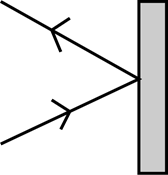
The illustration shows a light ray striking an object.
In the illustration, the light ray striking the object is-
a)
absorbed
b)
stopped
c)
reflected
d)
refracted
50.
If the top wave is 40 cm and the bottom wave is 45 cm, when they meet, what will be the amplitude of the wave produced?
a)
45 cm
b)
5 cm
c)
40 cm
d)
85 cm
51.

Which diagram shows refraction?

a)

A

b)

B

c)

C

d)

D

52.

Which wave has a higher amplitude?

a)

The wave on top

b)

The wave on bottom

c)

They both have the same amplitude

53.
Which order is correct going from the shortest to the longest wavelength?
a)
x-rays, ultraviolet rays, infrared rays, microwaves, radio waves
b)
radio waves, infrared rays, ultraviolet rays, x-rays, gamma rays
c)
ultraviolet rays, radio waves, gamma rays, x-rays, infrared rays
d)
gamma rays, radio waves, x-rays, ultraviolet, infrared rays
54.
This wave has the lowest frequency on the spectrum out of the following 
a)
microwaves
b)
visible light
c)
x-rays
d)
gamma ray
55.
Which of the following electromagnetic waves has the lowest energy?
a)
gamma ray
b)
infrared wave
c)
visible light wave
d)
radio waves
56.

Electromagnetic Waves are only ___________ waves.

a)

Transverse

b)

Compression

c)

Longitudinal

d)

Seismic

57.

Pitch is dependent on

a)

Frequency

b)

Wavelengths

c)

Speed

d)

Amplitude

58.

Which is the correct equation for calculating the period for the speed of a wave?

a)

T = 1/f

b)

Speed= Wavelength x Period

c)

Speed = Wavelength/Frequency

d)

Period= Frequency x Wavelength

59.

What waves move like this?

a)

Electromagnetic waves

b)

Mechanical Waves

c)

Sound Waves

d)

Primary Waves