
 Worksheets
Ultimate Civics 2nd 9 week
Total questions: 59
Worksheet time: 40mins
The main criticism of the Articles of Confederation was?
Central government was too weak
The government was too perfect
The taxes were too high
There were no laws
How did they make a better government than the articles?
Created the three branches
Kept one branch but improved it
Took away some rights to help people
Increased taxes and military participation
What was the main disagreement between federalist and anti-federalist
How to give power to the people
The division of power between central and state governments
How to create new governments
The way it created new states
Alexander Hamilton was supported by which political party?
Anti-Federalist
Communist
Federalist
Monarchy
AFTER colonial independence the first try at a constitution was
The U.S. Constitution
Articles of Confederation
The Bill of Rights
7 Articles
Popular Sovereignty is closely related to ?
Natural Rights
The Bill of Rights
Social Contract
Impeachment
What system of government did the Constitution create?
Republic
Direct Democracy
Unitary
Socialism
Why do we have our President step down or limit the presidential term?
Limited government
Rule of Law
Separation of Power
No real reason
Which part of the government outlines the 6 purposes of government?
Article 1
Article 2
Preamble
The Introduction
"We the people" means ?
The power belongs to the government
The federalist were right
The power belongs to the people and the government must protect them
It is catchy and means everyone
Posterity means?
Past generations
Present generations
Future generations
Posture
What level of government can declare war and make a post office?
Federal
State
Local
Which constitutional principle ensures elected leaders can be held accountable for their actions?
majority rule
separation of powers
freedom of speech
rule of law
Which Enlightenment idea, created by Montesquieu, argued that the government should be divided into three branches?
separation of powers
checks and balances
natural law
social contract
" no one ought to harm another in his life, liberty, health, or possessions." What enlightenment theory is presented here?
social contract theory
natural law
separation of powers
checks and balances
How did Montesquieu ides help guard from a tyrannical king?
Separating the powers, limited government
Keeping all the power in one place
More power to central
No power
What was the historical significance of the Mayflower Compact?
Rule of Law
Common Sense
Self Government
Limited Government
The second part of the declaration contains a list of?
Good things the king has done
Laws
Grievances
Names of citizens
According to John Locke and Thomas Jefferson when is it okay to abolish a government?
When the government doesn't protect individual liberties and natural rights
When they raise taxes
When the army gets too big
When the government creates new laws that some people disagree with.
The second part of the declaration contains a list of?
Good things the king has done
Laws
Grievances
Names of citizens
Who was the main author of the Declaration of Independence?
Benjamin Franklin
James Madison
Thomas Edison
Thomas Jefferson
According to this passage, what is the principal role of government?
“We hold these truths to be self-evident, that all men are created equal, that they are endowed by their Creator with certain unalienable Rights, that among these are Life, Liberty, and the pursuit of Happiness. That to secure these rights, Governments are instituted among Men, deriving their just powers from the consent of the governed.”
To promote the creation of new laws
To protect the natural rights of citizens
To glorify the ruler in the eyes of the Creator
To decide which individuals have natural rights


Which Constitutional principle means that no one is above the law?
Rule of Law
Checks and Balances
Equal Protection of the Law
Justice for All
The Magna Carta promoted the ideas of...
Choose all that apply.
limited government
free speech
independence
freedom of religion
What was a pamphlet published by Thomas Paine in 1776 to convince the American colonists to support becoming independent from England?
English Bill of Rights
Common Sense
Magna Carta
Mayflower Compact
What was the government document written in 1689 that expanded the powers of the English Parliament, expanded the rights of the people, and further limited the rights of the king?
Magna Carta
Mayflower Compact
English Bill of Rights
Common Sense
What was the government document written in 1215 that limited the power of the king of England (limited monarchy) and protected the rights of the nobility?
Magna Carta
English Bill of Rights
Mayflower Compact
Declaration of Independence
The Mayflower Compact promoted the big idea of...
self-government
due process
rights
rule of law
The following quote, as written in the Magna Carta, “No free man shall be taken, or imprisoned…exiled, or in any way harmed…save by the lawful judgment of his peers [equals]” means which of the following?
security of lawful judgment
rule of law
due process of law
the right to trial by a jury
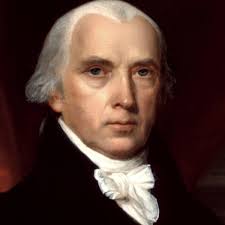
Who is known as the "Father of the Constitution"?
George Washington
Alexander Hamilton
James Madison
Benjamin Franklin
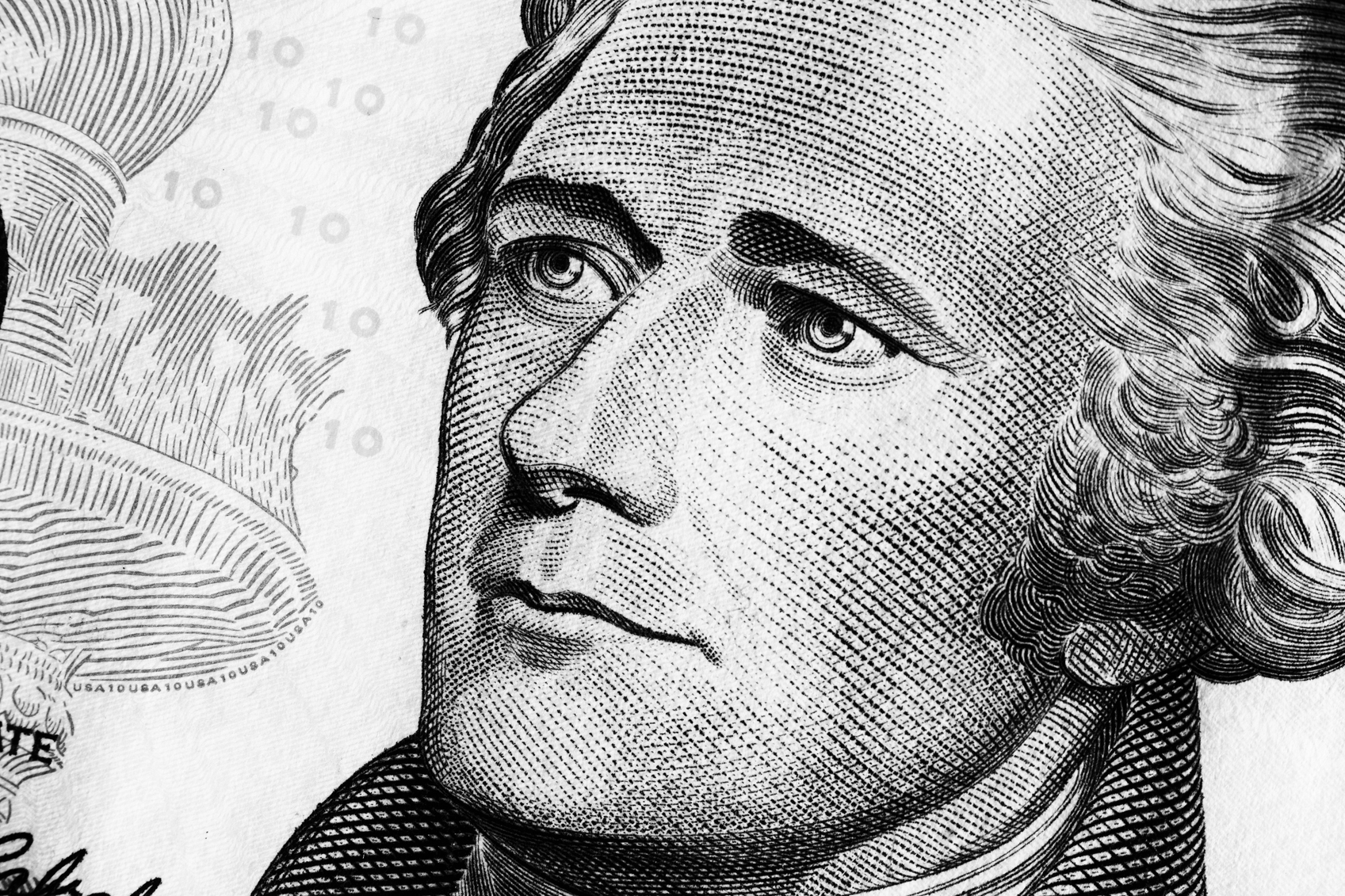
Who is known as the leader of the Federalists?
Alexander Hamilton
John Adams
Patrick Henry
Benjamin Franklin
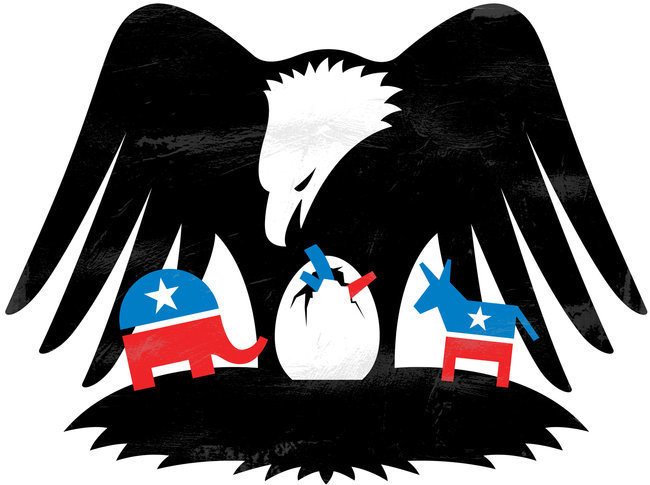
The Federalist and Anti-Federalists groups are known as _______________.
Governing Groups.
Political Parties.
Militia's.
Delegates.

The ___________ are for the ratification (approval) of the U.S Constitution.
Federalists
Anti-Federalists
Whiggs
Representatives
The ___________ are NOT for the ratification (approval) of the U.S Constitution.
Anti-Federalists.
Federalists.
Whiggs.
Supreme Court Justices.
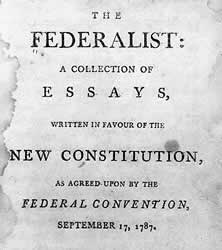
The "Federalist Papers" were written to:
Explain and convince the people into supporting the new U.S Constitution.
spark a new revolution among the American people against their government.
oppose a strong centralized government.
create a new monarchy.
Anti-Federalists were in favor of:
States Rights and the protection of individual rights.
A strong Central Government.
A Monarchy (King & Queen) to rule over the country.
a powerful National Government
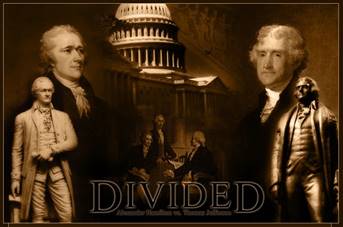
The Anti-Federalists wanted to:
ratify the new constitution and establish a powerful central government.
fix the Articles of Confederation.
Replace the Articles of Confederation.
get rid of strong State governments.
The Delegates (Representatives) who signed the U.S Constitution are known as:
Free Masons.
leaders of the New U.S.
Founding Fathers.
Anti-Federalists.

