wayground logo

Free Printable Worksheets

Font size

S
M
L
XL
Worksheets

VST 2A

Total questions: 81

Worksheet time: 2hrs 50mins

Name
Class
Date
1.

Which of the following is a factual conclusion that may be made from the data in the tables?

a)

As the temperature increases in both air and water the speed of sound stays the same

b)

As the temperature increases in both air and water the speed of sound decreases

c)

As the temperature decreases in both air and water the speed of sound increases

d)

As the temperature decreases in both air and water the speed of sound decreases

2.

Which of the following is true?

a)

The hours of daylight has no impact on temperature

b)

As the hours of darkness increase the average temperature tends to increase

c)

As the hours of darkness increase the average temperature tends to decrease

d)

The hours of darkness has no impact on temperature

3.

Select all statements that are true

a)

The Sun is higher in the sky in summer than in winter

b)

The Earth is closer to the Sun in Summer

c)

When the northern hemisphere experiences summer the southern hemisphere experiences winter

d)

The amount of daily sunlight in spring and fall are similar

4.

Which of the following can be concluded from the graph?

a)

There are approximately 6 more hours of daylight in the summer than in the winter

b)

There are approximately 6 more hours of daylight in the winter than in the summer

5.
a)

There is one mistake with the boxes that are checked.

b)

There are two mistakes with the boxes that are checked

c)

There are three mistakes with the boxes that are checked

d)

There are no mistakes with the boxes that are checked

6.

Which fertilizer helped plants grown the least?

a)

Compost

b)

Manure

c)

Egg Shells

d)

Seaweed

7.

the chairs are blue

a)

Observation

b)

Inference

8.

This school is old

a)

Inference

b)

Observation

9.
Mass is a measure of the amount of ______ in an object.
a)
space
b)
matter
c)
water
d)
pores
10.
All of science is based on...
a)
Periodic Table
b)
Questions and Observations
c)
Ms. Gardner's Thinking
d)
Data
11.
Why is it important to collect data?
a)
They are magically delicious
b)
in order to share your results from others
c)
It gives you busy work
d)
because
12.

What do you do after you come up with a hypothesis?

a)

conclude

b)

test

c)

do a victory dance

d)

tell your teacher

13.
What is an inference?
a)
a question
b)
an observation
c)
conclusion or deduction based on observations
d)
unit of measurement for mass
14.
This step should be done and redone in order to make sure of the results.
a)
conduct an experiment
b)
conclude
c)
record data
d)
clean up after doing the lab
15.

If you wanted to measure an object's length in metrics you would use?

a)

triple balance beam

b)

yard stick

c)

compound microscope

d)

meter stick

16.
What metric unit of measurement is used to measure volume?
a)
Liters
b)
Grams
c)
Ounces
d)
Meters
17.
What is the definition of "weight"?
a)
measure of the force of gravity on your body
b)
the time it takes to get on a ride 
c)
the amount of matter in an object
d)
the size of an object
18.
The weight of an object _________ as it moves away from the center of Earth.
a)
increases
b)
stays the same
c)
triples
d)
decreases
19.
The mass of an object ___________ as it moves away from the center of Earth
a)
stays the same
b)
decreases
c)
increases
d)
doubles
20.
As an object's mass increases, its gravitational pull will ____________.
a)
decrease
b)
increase
c)
stay the same
d)
get weaker
21.
Select the temperature in °F
a)
30°F
b)
10°F
c)
20°F
d)
0°F
22.
Select the temperature in °C
a)
30°C
b)
100°C
c)
90°C
d)
40°C
23.
Select the temperature in °C
a)
50°C
b)
10°C
c)
20°C
d)
60°C
24.
Select the temperature in °C
a)
0°C
b)
30°C
c)
40°C
d)
10°C
25.
Subtract to find the volume of an object if
The volume of the object & water is 48 mL
The volume of water is 42 mL
a)
6 mL
b)
5 mL
c)
4 mL
26.
Subtract to find the volume of an object if
The volume of the object & water is 30 mL
The volume of water is 20 mL
a)
5 mL
b)
50 mL
c)
10 mL
27.
Subtract to find the volume of an object if
The volume of the object & water is 44 mL
The volume of water is 33 mL
a)
11 mL
b)
10 mL
c)
11 g/cm3
28.
Subtract to find the volume of an object if
The volume of the object & water is 30 mL
The volume of water is 25 mL
a)
5 mL
b)
55 mL
c)
10 mL
29.
What will happen when these magnets are brought close together?
a)
They will attract each other.
b)
They will repel each other.
c)
Both magnets will turn to the left
d)
Both magnets will turn to the right
30.
Magnets have a north and a south ___________
a)
shape
b)
color
c)
pole
d)
region
31.
Iron, Nickel and cobalt are all __________________ materials
a)
Shiny
b)
poles
c)
magnetic
d)
cold
32.
Where is the strongest attraction force of the magnet?
a)
at the poles
b)
in the middle
c)
above the magnet
d)
below the magnet
33.
Which object would a magnet attract?
a)
a glass bottle
b)
a piece of paper
c)
a metal paper clip
compass
d)
a rubber eraser
magnetic field
34.
A magnet will attract scissors if the scissors contain: 
a)
copper
b)
aluminum
c)
gold
d)
nickel
35.
What happens when two north poles of a magnet are placed together?
a)
they repel
b)
they attract
c)
they cancel each other out
d)
the strength of the magnet is doubled
36.
True or False: All metals are attracted to magnet.
a)
True
b)
False
37.
Which of the following is true about a bar magnet?
a)
Its magnetic field is strongest near its center.
b)
It is surrounded by a magnetic field.
c)
The north pole is stronger than the south pole.
d)
The south pole is stronger than the north pole.
38.
A device that uses a free-moving magnetic needle to show direction is a:
a)
Ruler
b)
magnet
c)
compass
d)
magnetic field
39.
A north pole and a south pole will attract.
a)
True
b)
False
40.
This is a picture of a ________________ magnet.
a)
bar 
b)
circle 
c)
horseshoe
d)
paddle
41.
Which two metals will be attracted by a magnet?
a)
iron and steel
b)
gold and silver
c)
aluminum and lead
d)
copper and cobalt
42.
The space around a magnet where the force of a magnet can attract best is called__________
a)
magnetism
b)
bar magnet
c)
horseshoe magnet
d)
magnetic field
43.
Which of the following tells you that a chemical change may have occurred?
a)
Change Shape
b)
Melting
c)
Vaporizing
d)
Change in color
44.
What happens in ALL chemical changes?
a)
Change in state of matter
b)
A new substance is formed
c)
Bubbles are produced
d)
An explosion
45.
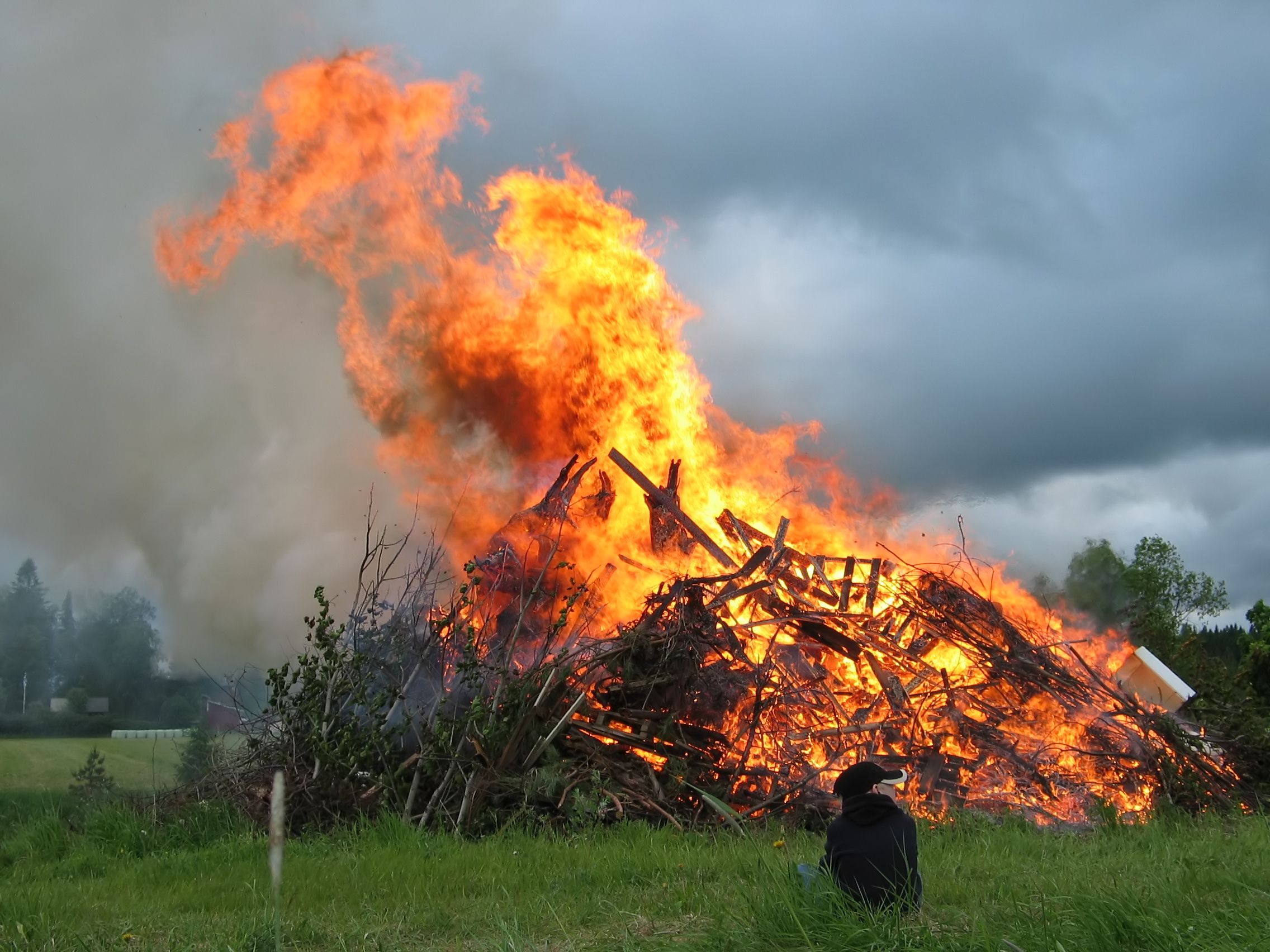
Is wood burning a physical or chemical change?
a)
Physical 
b)
Chemical
46.
Is milk going sour a physical or chemical change?
a)
Physical 
b)
Chemical
47.
Is Gatorade powder dissolving in water physical or chemical change?
a)
Physical 
b)
Chemical
48.
Is mold growing on cheese a physical or chemical change?
a)
Physical 
b)
Chemical
49.
Is making orange juice a physical or chemical change?
a)
Physical 
b)
Chemical
50.
Is sharpening a pencil a physical or chemical change?
a)
Physical 
b)
Chemical
51.
Is copper tarnishing a physical or chemical change?
a)
Physical 
b)
Chemical
52.
Is the formation of the grand canyon a physical or chemical change?
a)
Physical 
b)
Chemical
53.
Which of the following is a reactant
a)
CH4
b)
H2O
c)
CO2
d)
2H2O
54.
In an exothermic reaction, energy is _________.
a)
Released
b)
Absorbed
c)
Stored
d)
Doubled
55.
During Photosynthesis energy is absorbed. What kind of reaction is it?
a)
Physical
b)
Exothermic
c)
Endothermic
d)
Photothermic
56.
The Law of Conservation of Mass tells us matter can't  ______________.
a)
change color
b)
change state of matter
c)
be created or destroyed
d)
change temperature
57.
Which of the following IS a clue that a chemical change has occurred? 
a)
State of matter change
b)
Size Change
c)
Change in temperature
d)
Shape change
58.
In a chemical reaction, how do the reactants compare to the products?
a)
They are the same
b)
They are different
59.
Freezing Juice?
a)
Physical Change
b)
Chemical Change
60.
Melting a chocolate bar?
a)
Physical Change
b)
Chemical Change 
61.
Exploding Fireworks?
a)
Physical Change 
b)
Chemical Change 
62.
Rotting bananas?
a)
Physical Change
b)
Chemical Change
63.
Cutting your hair?
a)
Physical Change
b)
Chemical Change
64.
If enough heat is taken away from a container of water, what will happen to the water?
a)
It will begin to boil.
b)
It will become a solid.
c)
It will turn into a gas.
d)
It will increase in weight.
65.
What happens when a piece of wood burns?
a)
A physical change takes place.
b)
A chemical change takes place.
c)
The wood loses its gravity.
d)
The wood loses its inertia.
66.
Which answer makes a correct statement?
a)
Physical change only changes the size.
b)
Physical change only changes the color.
c)
Physical changes begin and end with the same matter.
d)
Physical changes change the matter into something total different.
67.
Which is NOT an example of condensation?
a)
Dew is found on the grass on a summer morning.
b)
Drops of water form on a cold can of soda on a hot day.
c)
A bucket of water left uncovered eventually becomes empty.
d)
The walls of a bathroom are damp after someone takes a showers.
68.
The diagram below shows changes happening to water in a specially shaped bottle.
What changes did the water undergo?
a)
melting and then freezing
b)
freezing and then evaporation
c)
condensation and then melting
d)
evaporation and then condensation
69.
Which action would cause the weight of an object or substance to decrease?
a)
stirring it
b)
burning it
c)
freezing it
d)
dissolving it
70.
______ is the amount of space that an object takes up.
a)
volume
b)
space
c)
room
d)
density
71.
Which property of a substance depends on how much of the substance there is?
a)
mass
b)
density
c)
boiling point
d)
melting point
72.
A change that does not result in a new substance.
a)
Physical Change
b)
Chemical Change 
73.
Students observed as small drops of water collected on the outside of a glass.
Which statement BEST describes why the water vapor in the air formed liquid water on the outside of the glass?
a)
The humidity outside the glass turns the vapor to liquid water.
b)
The water vapor pulls the water from inside the glass to outside the glass.
c)
The temperature of the water inside the glass is colder than the air outside the glass.
d)
The temperature of the water inside the glass is warmer than the air outside the glass.
74.
A teacher is demonstrating physical and chemical changes to her class. Which action should she use to demonstrate a chemical change?
a)
cutting a piece of paper
b)
folding a piece of paper
c)
tearing a piece of paper
d)
burning a piece of paper
75.
A student is creating a potting soil mix. She combines 100 grams of sand, 200 grams of soil, and 200 grams of pebbles to make her potting soil. What is the mass of the potting soil?
a)
100 grams 
b)
200 grams
c)
300 grams
d)
500 grams
76.
A group of students investigated physical and chemical changes using paper.  The students recorded their observations in a table.
Which student correctly recorded all the changes that took place?
a)
Student 1
b)
Student 2
c)
Student 3
d)
Student 4
77.
Which of the following is a sign that a chemical reaction has occurred?
a)
change in shape
b)
melting
c)
formation of a gas
d)
dissolving
78.
What kind of properties can only be observed when a substance changes into a different substance?
a)
physical properties
b)
chemical properties
c)
liquid properties
d)
real properties
79.
A change in the size, shape, or state of matter.
a)
chemical change
b)
physical change
c)
chemical reaction
d)
electron change
80.
Photosynthesis is an example of a
a)
physical change
b)
chemical change
81.
When you break a cracker into pieces it is a 
a)
Chemical change
b)
Physical change
c)
Chemical Weathering
d)
Physical Weathering