wayground logo

Free Printable Worksheets

Font size

S
M
L
XL
Worksheets

Space practice test

Total questions: 83

Worksheet time: 2hrs 57mins
Name
Class
Date
1.
When does a lunar eclipse occur?
a)
At night
b)
When the moon's shadow is on the earth
c)
when the moon comes between the sun and earth
d)
During the day
2.
A solar eclipse only happens during a ________ moon.
a)
New
b)
Cresent
c)
Gibbous
d)
Full
3.
A lunar eclipse only happens during a ________ moon.
a)
New
b)
Cresent
c)
Gibbous
d)
Full
4.
Where must you be to see a total solar eclipse?
a)
a corona
b)
an orbit
c)
the moon's shadow
d)
the earth's shadow
5.
What do we call the sun's outer atmosphere that you see during a solar eclipse?
a)
an umbra
b)
a corona
c)
an orbit
d)
a shadow
6.
What is the darkest inner part of the shadow cone called, where a total eclipse can be viewed.
a)
Total
b)
Umbra
c)
Penumbra
7.
What is the larger outer lighter part of the shadow cone called, where a partial eclipse can be viewed?
a)
Partial
b)
Umbra
c)
Penumbra
8.
In order to have an eclipse, the Moon, Sun and Earth have to be?
a)
Below each other
b)
Above each other
c)
In alignment
9.
Which type of eclipse occurs when the Moon comes directly between Earth and the Sun?
a)
Lunar eclipse
b)
Solar eclipse
10.
A solar eclipse only occurs during which moon phase?
a)
1st Quarter
b)
New Moon
c)
Full Moon
d)
3rd Quarter
11.
Which of the following is NOT true about a total solar eclipse?
a)
It can be viewed from every spot on earth
b)
It is dangerous to look at without the proper device
c)
When it happens, the moon blocks all of the sun except the corona
d)
You must be within the moon's umbra to see it
12.
We do NOT have a solar or lunar eclipse each month because...
a)
The tilt of the moon's orbit is at 5 degrees
b)
The moon is too small
c)
The moon's orbital distance changes
d)
All choices
13.
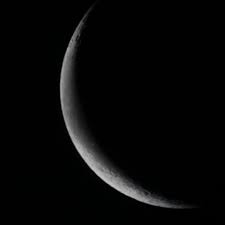
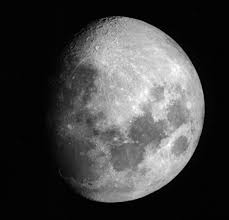
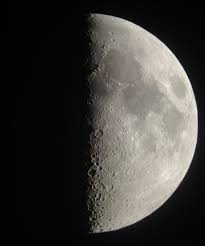
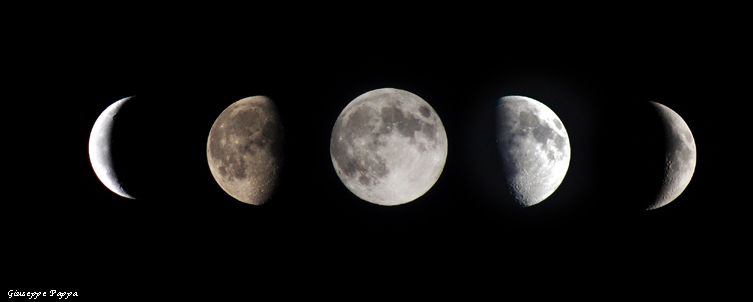
Name the moon phase
a)
waning crescent
b)
waxing crescent
c)
waning gibbous
d)
waxing gibbous
14.
Name the moon phase
a)
waning crescent
b)
waxing crescent
c)
waning gibbous
d)
waxing gibbous
15.
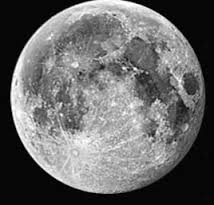
Name the moon phase
a)
First Quarter
b)
Last Quarter
c)
New Moon
d)
Full Moon
16.
Name the moon phase
a)
First Quarter
b)
Last Quarter
c)
New Moon
d)
Full Moon
17.
Name the moon phase
a)
First Quarter
b)
Last Quarter
c)
New Moon
d)
Full Moon
18.
Name the phase of the moon for letter a
a)
First Quarter
b)
Last Quarter
c)
Waxing Gibbous
d)
Waning Gibbous
19.
Name the phase of the moon for letter f
a)
Waning Gibbous
b)
Waxing Gibbous
c)
Waning Crescent
d)
Waxing Crescent
20.
What is illuminating the Moon?
a)
Nuclear Fusion
b)
Sunlight
c)
Mirrors
d)
Flood Lights
21.
Name the moon phase
a)
waning crescent
b)
waxing crescent
c)
waning gibbous
d)
waxing gibbous
22.
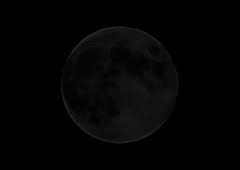
Which moon phase is when you can't see the moon at all?
a)
Waning crescent
b)
Full moon
c)
Waxing gibbous
d)
New moon
23.
The cycle of the moon lasts about a _.
a)
day
b)
year
c)
week
d)
month
24.
How many phases does the moon go through?
a)
4
b)
8
c)
10
d)
16
25.
Name the moon phase
a)
Waning Crescent
b)
Waxing Crescent
c)
Waning Gibbous
d)
Waxing Gibbous
26.
The 1st Quarter moon is lit on the:
a)
Left Side
b)
Right Side
27.
Name the moon phase that would come AFTER this moon.
a)
waning crescent
b)
waxing crescent
c)
waning gibbous
d)
waxing gibbous
28.

Tides are caused by the difference in the gravitational force of the ________ and ________ across the ________.

a)

earth, sun, moon

b)

sun, mars, jupiter

c)

sun, moon, earth

d)

tide, water, sun

29.

A[n] ___________ tide occurs when the sun, Earth, and the moon are nearly in a line.

a)

spring

b)

high

c)

low

d)

neap

30.

A[n] ______________ tide occurs when the sun is at right angles to the line between Earth and the moon.

a)

high

b)

neap

c)

low

d)

spring

31.
Which body has the greater effect on Earth's tides?
a)
Sun
b)
Saturn
c)
Moon 
d)
Venus
32.
What happens when there is a spring tide
a)
Short Tides and semi-short tides
b)
High tides and very low tides
c)
low tides and medium tides
d)
small tidal ranges
33.
What do we call a tide that has a large range?
a)
gravity
b)
wind
c)
spring
d)
neap
34.
What do we call tides that have a smaller range that happen when the sun and moon are at right angles to each other?
a)
Neap Tide
b)
Spring Tide
c)
Larger Change
d)
Smaller Change
35.
What type of tides would this arrangement of earth-moon-sun create?
a)
neap tide
b)
spring tide
c)
new moon tide
d)
full moon tide
36.
What type of tide would this arrangement of earth-moon-sun create?
a)
full moon tide
b)
new moon tide
c)
neap tide
d)
spring tide
37.
Which moon phase is shown in this diagram?
a)
new moon
b)
first quarter
c)
full moon
d)
last quarter/3rd quarter
38.
What causes tides?
a)
gravity
b)
wind
c)
spring
d)
neap
39.
At the same time the sea is drawn to the moon, another tidal bulge takes place on other side of Earth.  True or False?
a)
True
b)
False
c)
Maybe
d)
I don't know!
40.
If tides alternate from high to low and there are two of each type of tide a day, about how many hours will generally be between each different tide?
a)
2 hours
b)
6 hours
c)
12 hours
d)
24 hours
41.

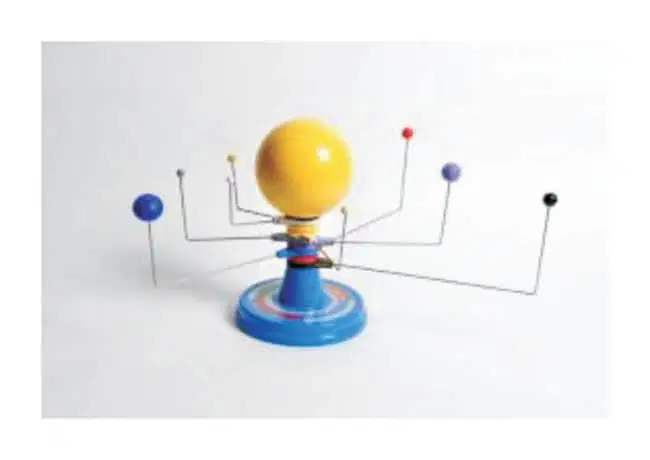
A student makes a model of how the planets orbit the Sun. He used a basketball ball to represent the Sun. He used ping-pong balls to represent each planet and painted each one a different color. Then, he placed all the ping-pong balls equal distances apart in a line extending out from the sun.


What are two limitations of the student's model? (Limitations are things about the model that limit its accuracies)

a)

He used the same size balls to represent the planets.

b)

He made planets orbit the sun.

c)

The planets are not the correct distances from the sun.

d)

The solar system can't be modeled using actual objects.

42.

Which PLANET in our solar system is closest from the Sun?

a)
Earth
b)

Pluto

c)

Mercury

d)
Saturn
43.

How do the sizes of the outer planets (4 furthest to the sun) compare to the sizes of the inner planets (4 closest from the sun)?

a)

The inner planets are larger.

b)

The outer planets are smaller.

c)

There is no size difference between the inner and outer planets.

d)

The outer planets are larger.

44.

Describe how the distances between the orbits of the inner planets (1st four from the sun) compare to the distances between the orbits of the outer planets (four farthest from the sun).

a)

The distances between orbits of the outer planets are much smaller.

b)

The distances between orbits of the outer planets are much larger.

c)

The distances between orbits of the inner planets are much larger.

d)

There is no difference between the distances of the orbits of the inner planets and the outer planets.
45.

Why is making a model of the solar system difficult?

a)

Its hard to find objects to represent each planet

b)

The solar system is so big and the objects in it are so small in comparison

c)

There are too many parts in a model

d)

The objects are too close together to put in a model

46.

Which planet in the Solar system is the hottest on average?

a)

Mercury

b)

Venus

c)

Mars

d)

Saturn

47.

Which planet in our solar system has the fastest orbit of the Sun?

a)

Mercury

b)

Venus

c)

Earth

d)

Mars

48.
What planet in the Solar system has the lowest average temperature?
a)
Uranus
b)
Neptune
c)

Pluto

d)

Jupiter

49.

What planet is rotating the fastest on its axis?

a)

Mercury

b)

Jupiter

c)

Venus

d)

Earth

50.

What planets year (Period of Revolution) is shorter than its day (Period of Rotation)?

a)

Venus

b)

Jupiter

c)

Earth

d)

Uranus

51.

Imagine that a new object is found in our solar system. It is small and made of rock and orbits the dwarf planet Eris. How would scientists classify this object?

a)

A moon

b)

A comet

c)

An asteroid

d)

A meteoroid

52.

Which of the following bodies in our solar system orbit the sun? (Select all that are correct)

a)

Meteoroids

b)

Moons

c)

Dwarf Planets

d)

Comets

e)

Asteroids

53.
What is... a rock in orbit generally between Mars and Jupiter? Sometimes, they get bounced towards Earth.
a)
moon
b)
asteroid
c)
comet
d)
satellite
54.
What is it called when an object moves in a circle around another object or the center of the circle?
a)
rotate
b)
revolve
c)
spin
d)
orbit
55.
What does it mean when a celestial object spins in place?
a)
revolve
b)
rotate
c)
orbit
d)
fly
56.
What is an astronomical unit (AU)?
a)
same as a light-year
b)

the distance between the Earth and the Sun

57.
Which planet doesn't have a moon?
a)
Earth
b)
Mars
c)
Mercury
d)
Jupiter
58.
Which planet has the largest continuous hurricane?
a)
Earth
b)
Mars
c)
Jupiter
d)
Saturn
59.
What do all the items in this list have in common?
1) has a day longer than its year
2 )is the hottest planet
3 )rotates counter clockwise (east to west)
a)
This list describes Earth.
b)
This list describes Mercury.
c)
This list describes Mars.
d)
This list describes Venus.
60.

If the mass of the planet that you are living on was cut in half, what would happen to your mass?

a)

increase because gravitational force increases

b)

decrease because gravitational force decreases

c)

decrease because gravitational force increases

d)

nothing, mass is not affected by gravitational force

61.
If Earth's mass was cut in half, what would happen to your weight?
a)
Increase because gravitational force increases
b)
decrease because gravitational force decreases
c)
decrease because gravitational force increases
d)
nothing, weight is not affected by gravitational force
62.

The gravitational pull experienced by an object is less on the Moon than on Earth because...

a)

The Moon is larger than Earth, hence has more gravity

b)

The Moon is smaller than Earth, hence has more gravity

c)

The Moon is larger than Earth, hence has less gravity

d)

The Moon is smaller than Earth, hence has less gravity

63.
As distance between two objects increase the pull of gravity 
a)
Increases
b)
Decreases
c)
Stays the same
64.
Any object with mass has gravity.
a)
True
b)
Sometimes
c)
False
d)
Never
65.
Gravity attracts all objects towards one another.
a)
False
b)
True
c)
It depends
66.

What are two ways the video in class discusses the traditional celebrations of the winter solstice (be specific)

4 lines
67.

What is the date of the winter solstice?

a)

January 21-22

b)

December 21-22

c)

November 21-22

d)

December 16-17

68.

Which season is taking place in the Northern Hemisphere in Position 2?

a)
Winter
b)
Spring
c)
Summer
d)
Fall
69.

Which season is taking place in the Northern Hemisphere in Position 4?

a)
Winter
b)
Spring
c)
Summer
d)
Fall
70.

Which  of the following best describes the tilt of the earth during the spring and fall equinoxes?

a)
The earth is tilted away from the sun (Northern hemisphere)
b)
The earth is tilted neither toward or away from the sun (tilt is side to side)
c)
The earth is tilted toward the sun (Northern hemisphere)
d)
The earth is not tilted during spring and fall
71.

Which season is taking place in the Northern Hemisphere in Position 3?

a)
Winter
b)
Spring
c)
Summer
d)
Fall
72.

Which season is taking place in the Northern Hemisphere in Position 1?

a)
Winter
b)
Spring
c)
Summer
d)
Fall
73.

What happens when the planet you live on has a 90 degree tilt?

a)

Summer is completely dark

b)

nothing changes

c)

Winter is completely dark.

d)

Winter is completely sunny.

74.

What imaginary line is drawn around the earth’s center and separates the Northern & Southern hemispheres?

a)

equator

b)

axis

c)

prime meridian

75.

If you visited a planet with no tilt, you would expect the seasons to be____________

a)

Longer

b)

Shorter

c)

Always the same

d)

Always varying with no apparent rhythm

76.

When the part of the Earth that you are living in is tilted away from the sun, it is (a)   .

77.

Why do different parts of the Earth's surface get different amounts of heat?

a)

Because the Earth is tilted slightly

b)

Because the Sun is tilted slightly

c)

Because the Moon is tilted slightly

d)

Because there are mountains and they are closer to the Sun than the valleys and plains.

78.

Gabe and Soheil were having a debate. Soheil argued that when we can't see the Sun, it goes on a trip around the solar system. Gabe thought it goes on a revolution around the moon. Soheil, however, said that the Sun doesn't go anywhere and we are the ones who are moving. Who is correct?

a)

Soheil: The Sun goes on a trip around the solar system.

b)

Soheil: The Sun doesn't go anywhere. We are the ones who are moving.

c)

Gabe: The Sun goes on a revolution around the moon.

d)

None of them: The Sun rotates on its axis and takes its light with it.

79.
The Earth is rotating on its axis, creating _____
a)
the 12 months
b)
the years
c)
the seasons
d)
day and night
80.

Alex and Charlie are playing a game of 'Earth Spin'. In this game, one of them has to act as the Earth and spin around an imaginary line running from their head (North Pole) to their feet (South Pole). What is the name of this imaginary line?

a)

orbit

b)

axis

c)

equator

d)

latitude

81.

Anton, Miller, and Paxton are studying about Earth in their science class. They are discussing why we have different seasons. What did they conclude as the reasons for the season?

a)

Earth's tilt & rotation

b)

Earth's tilt & revolution

c)

Earth's rotation & rovolution

d)

Earth's tilt & resolution

82.

The tilt of the Earth's axis is responsible for the change in ______.

a)

Seasons

b)

Gravity

c)

Earth's rotation

d)

Moon's orbit

83.

What causes the change from day to night on Earth?

a)

revolution

b)

rotation