wayground logo

Free Printable Worksheets

Font size

S
M
L
XL
Worksheets

Our Place in Space Review

Total questions: 86

Worksheet time: 14mins

Name
Class
Date
1.

You live on ______ which is one of ________planets!

(a)  

2.
How does the Sun support life on Earth?
a)
It gives us oxygen
b)
It's between the moon and Earth
c)
It provides heat and light
d)
The sun rays break down rock into soil
3.

List the planets in order moving outward from the Sun

a)

Mars Venus Earth Mercury Jupiter Saturn Uranus Neptune

b)

Earth Venus Mercury Saturn Mars Jupiter Neptune Uranus

c)

Mercury Venus Earth Mars Jupiter Saturn Uranus Neptune

d)

Mercury Venus Earth Mars Jupiter Saturn Uranus Neptune Pluto

4.
What object is in center of our solar system?
a)
Earth
b)
NASA
c)
Asteroids
d)
The Sun
5.
The Sun, Earth and Moon are all the same size.
a)
True
b)
False
6.
The Sun is Larger than the Earth and the Moon?
a)
True
b)
False
7.
Which one of these objects is not a planet?
a)
Saturn
b)
Earth
c)
Sun
8.
Using a telescope what observation about the solar system can you make?
a)
Earth has rings
b)
Saturn is made from rock
c)
Jupiter is the closest planet to Earth
d)
Neptune is the farthest planet from the sun
9.
This drawing represents the motion of the Earth and the Moon around the Sun
a)
True
b)
False
10.
What sports ball could represent the sun in our solar system if these represent the planets?
a)
Tennis Ball
b)
Ping Pong Ball
c)
Beach Ball
d)
Basketball
11.
The nearest star to Earth is?
a)
Proxima Centauri
b)
The Sun
c)
Alpha Centauri
d)
Taylor Swift 
12.
The temperature was taken on 2 days in March. The first day the temperature read 24⁰C. A few days later the temperature read 16⁰C. What is the difference in temperature from these 2 days?
a)
8⁰C
b)
11⁰C
c)
8⁰F
d)
14⁰C
13.
When Earth circles around the sun it is called: 
a)
revolving
b)
rotating
c)
spinning
d)
colliding 
14.
Earth moved another way, it spins like a top. This movement is called: 
a)
revolving 
b)
rotation 
c)
cycling
d)
seasons 
15.
Earth is a: 
a)
planet 
b)
moon
c)
satellite 
d)
star
16.
The sun, earth, moon, and other planets all make up our: 
a)
solar star
b)
solar eclipse 
c)
solar system 
d)
orbit
17.
The sun is the center of our solar system. 
a)
True 
b)
False 
18.
Stars give off light and _____.
a)
air
b)
darkness 
c)
heat
d)
carbon dioxide 
19.
The four planets closest to the sun are known as the: 
a)
inner planets 
b)
outer planets 
c)
life planets 
d)
hot planets 
20.
Earth is the ____ planet from the sun. 
a)
first 
b)
second
c)
third 
d)
fourth
21.
Many people know Saturn because of its:
a)
gases 
b)
life 
c)
plants 
d)
rings
22.
Asteroids are like mini ____ that revolve around the sun. 
a)
rocks 
b)
stars 
c)
globes 
d)
planets 
23.
The Milky Way is a: 
a)
star 
b)
planet 
c)
moon 
d)
galaxy 
24.

The solar system formed from________________

a)

an expanding galaxy

b)

a giant cloud of gas and dust

c)

a joining of two atoms

d)

a black hole

25.

The asteroid belt is located

a)

between Earth and Mars.

b)

between Mars and Jupiter.

c)

between Jupiter and Saturn.

d)

between Saturn and Uranus.

26.

Neptune is very similar in size and color to

a)

Jupiter.

b)

Saturn.

c)

Uranus.

d)

Earth.

27.

What is distinctive about Jupiter?

a)

Its axis of rotation is tilted 90 degrees.

b)

It is smaller and denser than the other outer planets.

c)

It is the planet with the most spectacular rings.

d)

It is the largest and most massive planet.

28.

The sun and other stars produce energy by______________

a)

attracting it with the force of gravity

b)

nuclear fusion

c)

burning fossil fuels

d)

burning trash

29.

What do the four outer planets have in common?

a)

they are about the same size as earth and are made mainly of hydrogen and helium

b)

they are much larger than earth and are made of mostly helium and hydrogen

c)

they are all smaller than earth

d)

they are smaller and are made of iron

30.

What do all of the inner planets have in common?

a)

they have rings

b)

they all have abundant water

c)

they all have many moons

d)

they are small, dense and have rocky surfaces

31.

In a heliocentric system ________________

a)

all of the planets revolve around the sun

b)

the sun revolves around earth

c)

earth is the center of the universe

d)

the sun appears to move backward through the planets

32.

Aside from earth which inner planet once had liquid water on it's surface?

a)

Mercury

b)

Venus

c)

Europa

d)

Mars

33.

Which is the smallest terrestrial planet?

a)

Mars

b)

Mercury

c)

Venus

d)

Earth

34.

Venus and Earth are similar and called "twins' due to their __________________.

a)

smell and texture

b)

atmospheres

c)

abundance of water

d)

size and density

35.

Saturn's rings are made up mostly of __________

a)

nitrogen and helium

b)

ice and water vapor

c)

volcanic and dust particles

d)

chunks of ice and rock

36.

Uranus is different from most other planets because it

a)

is the farthest from the sun

b)

is small and dense

c)

it has 1000 moons

d)

it rotates on it's side

37.

One complete revolution of Earth around the sun takes about

a)

one rotation

b)

one year

c)

one season

d)

one eclipse

38.

Earth's rotation takes about

a)

365 days.

b)

6 months.

c)

24 hours.

d)

1 month.

39.

Day and night are caused by

a)

Day and night are caused by

b)

Earth's revolution around the sun.

c)

eclipses.

d)

Earth's rotation on its axis.

40.

True or False? All of the terrestrial planets have many moons.

a)

True.

b)

False.

41.

True or False? Earth is thought to be at the center of the solar system in the geocentric model.

a)

True

b)

False

42.

The ___________________ consists of the sun, eight planets and their moons, and several kinds of smaller objects.

a)

Solar System

b)

Universe

c)

Milky Way

d)

Nebula

43.

This is the word used by scientists to describe space and all of the energy and matter within it!

a)

Planet

b)

Galaxy

c)

Universe

d)

Star

44.

A large celestial body made up of gas and emitting light.

a)

Galaxy

b)

Planet

c)

Universe

d)

Star

45.

A large collection of stars, gas an dust.

a)

Galaxy

b)

Universe

c)

Meteor

d)

Comet

46.

The four planets that orbit nearest to the sun are called....

a)

Gas Giant Planets

b)

Terrestrial Planets

c)

Moons

d)

Dwarf Planets

47.

These planets are known for their thick, gas atmospheres, small cores made of rock and their ring systems of ice, rock and dust.

a)

Jupiter, Saturn, Uranus and Neptune

b)

Mercury, Venus, Mars

c)

Earth, Jupiter, Saturn, Mars

d)

Mercury, Venus, Earth, Mars

48.

Earth has _____ moon/s, but Jupiter has _____ moon/s.

a)

1, 60

b)

2, 40

c)

1, 30

d)

1, 25

49.

Most scientists believe the Big Bang Theory explains which of the following questions?

a)

How our planets and moons formed

b)

How our universe began

c)

How the sun turns hydrogen into helium

d)

How fast light travels through space

50.

Which statement is true?

a)

The galaxies are moving toward us.

b)

The galaxies are moving away from us.

c)

The universe remains static or unchanged in motion.

d)

None of the above

51.
Which of the following is NOT true about the Big Bang Theory?
a)
It is the scientific explanation of how life began on Earth and evolved over time.
b)
It is the scientific explanation for the origin of the universe.
c)
It states that the universe expanded from a single point and is still expanding today.
d)
It states that the universe used to be much hotter and smaller.
52.
What does the Big Bang theory suggest?
a)
The universe was just there
b)
The Milky Way is the only solar system
c)
The universe is continually expanding
d)
The universe is collapsing in toward a single point
53.

Why do other stars appear so much smaller than the sun?

a)

They are really close.

b)

They are so far away.

c)

They are tiny stars.

54.

What kind of galaxy is this?

a)

Ring

b)

Spiral

c)

Irregular

55.

What type of galaxy do we live in?

a)

Milky Way

b)

Red Giant

c)

Pluto

d)

Kit Kat

56.

What galaxy do we live on?

a)

Milky Way

b)

Kit Kat

c)

Nike

d)

Mars

57.

What is the Milky Way?

a)

Planet

b)

Asteroid

c)

Star

d)

Galaxy

58.

This planet is the one scientists know least about! It has lots of craters, a moon-like surface, is composed mostly of volcanic rock and has a huge iron core!

a)

Venus

b)

Mercury

c)

Mars

d)

Jupiter

59.

This is the term that is used to measure distances from the sun to other planets.

a)

Astronomical Unit

b)

Astronomer

c)

Astronomy

d)

Rotation

60.

The planet in our solar system with the shortest year is _______, and the planet with the longest year is __________.

a)

Mercury, Earth

b)

Mars, Earth

c)

Jupiter, Neptune

d)

Mercury, Neptune

61.

Which number represents Earth's orbit?

a)

Third

b)

Fourth

c)

First

d)

Fifth

62.

Comets are called dirty snowballs because.....

a)

As they move through their orbits around the earth, they evaporate, causing them to have tails

b)

They are made of rock, dust and ice

c)

As they move through their orbits around the sun, they collect more dust

63.
Most comets originate in the ________.
a)
asteroid belt
b)
Milky Way
c)
Kuiper belt
d)
Oort Cloud
64.
Most asteroids orbit the sun in the _________.
a)
asteroid belt
b)
Milky Way
c)
Kuiper belt
d)
Oort Cloud
65.

When a meteoroid enters Earth's atmosphere, friction causes it to burn up and produce a streak of light called a ____________.

a)

meteor

b)

meteorite

c)

comet

d)

asteroid

66.
A chunk of ice and dust whose orbit is usually a long, narrow ellipse is a ___________.
a)
meteor
b)
meteorite
c)
comet
d)
asteroid
67.
If a meteoroid hits Earth's surface, it is called a ________.
a)
meteor
b)
meteorite
c)
comet
d)
asteroid
68.
Pluto, Eris, and Ceres are all classified as
a)
meteors
b)
meteorites
c)
asteroids
d)
dwarf planets
69.
How do comets and asteroids compare?
a)
Asteroids and comets are rocky.
b)
Comets and asteroids are made of ice and dust.
c)
Asteroids are rocky, while comets are made of ice and dust.
d)
Comets are rocky, while asteroids are made of ice and dust.
70.
The force keeping a planet in orbit around the sun is...
a)
Friction
b)
Tension
c)
Gravity
d)
weight
71.

What prevents planets from drifting off into space and keeps it in the planets in our Solar System?

a)

Gravity

b)

Weight

c)

Friction

d)

Forward Motion

72.
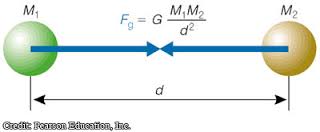
Two factors effecting the magnitude of the force of gravity between 2 objects are...
a)
mass and distance 
b)
mass and matter
c)
distance and weight 
d)
weight and mass
73.
Complete the following statement: The farther away two planets are the _______ the gravitational force between them.
a)
more
b)
same
c)
dosen't matter
d)
less
74.
Name this planet.
a)
Saturn
b)
Earth
c)
Mars
d)
Neptune
75.
Name this planet.
a)
Jupiter
b)
Mercury
c)
Saturn
d)
Uranus
76.
Name this planet.
a)
Earth
b)
Saturn
c)
Jupiter
d)
Mercury
77.
Name this planet.
a)
Saturn
b)
Neptune
c)
Earth
d)
Mars
78.
Name this planet.
a)
Neptune
b)
Mercury
c)
Mars
d)
Earth
79.
Name this planet.
a)
Mars
b)
Venus
c)
Earth
d)
Uranus
80.
Name this planet.
a)
Mercury
b)
Saturn
c)
Uranus
d)
Jupiter
81.
Name this planet.
a)
Mercury
b)
Earth
c)
Neptune
d)
Saturn
82.
The first planet from the sun is 
a)
Jupiter.
b)
Venus.
c)
Mercury.
d)
Earth.
83.
The farthest planet from the sun is
a)
Mars
b)
Mercury
c)
Neptune
d)
Jupiter
84.
Which planet has the shortest orbit around the sun?
a)
Jupiter
b)
Neptune
c)
Earth
d)
Mercury
85.

natural satellites that orbit planets and asteroids

a)

dwarf planets

b)

moons

c)

meteoroids

d)

comets

86.
Planets orbit the Sun in a shape called a(n)
a)
circle
b)
ellipse
c)
focus
d)
perihelion