Worksheets
force speed p and k
Total questions: 84
Worksheet time: 1hrs 18mins
Simple machine that consists of a flat, sloping surface (ramp)
Simple Machine
Inclined Plane
Load
Slope
Amount of matter in something
Unbalanced Force
Position
Mass
Weight
A movement that involves a change in position or location of an object
Position
Motion
Speed
Work
Net Force
a force of attraction between objects that have mass
unit of measure of force
sum of all forces acting on an object
occurs when a force is used to move an object over a distance
Unit of measure of force
Newton
Resting Position
Slope
Net Force
An object’s distance and direction from a reference point
Inertia
Unbalanced Force
Position
Resting Position
A device that makes work easier
Incline Plane
Simple Machine
Slope
Load
A surface of which one side is at a higher level than another
Pulley
Simple Machine
Slope
Work
Distance traveled over time
Speed
Position
Inertia
Gravity
Occurs when the net force on an object does not equal zero; results in the object changing its motion
Work
Unbalanced Force
Balanced Force
Motion
Occurs when the net force on an object does not equal zero; results in the object changing its motion
Work
Unbalanced Force
Balanced Force
Motion
Weight
Gravity
a measure of the force of gravity on an object
amount of matter in something
sum of all forces acting on an object
Weight
Gravity
a measure of the force of gravity on an object
amount of matter in something
sum of all forces acting on an object
Simple machine that consists of a flat, sloping surface (ramp)
Simple Machine
Inclined Plane
Load
Slope
Amount of matter in something
Unbalanced Force
Position
Mass
Weight
A movement that involves a change in position or location of an object
Position
Motion
Speed
Work
Net Force
a force of attraction between objects that have mass
unit of measure of force
sum of all forces acting on an object
occurs when a force is used to move an object over a distance
Unit of measure of force
Newton
Resting Position
Slope
Net Force
An object’s distance and direction from a reference point
Inertia
Unbalanced Force
Position
Resting Position
Resting Position
an object’s distance and direction from a reference point
occurs when the net force on an object does not equal zero; results in the object changing its motion
a movement that involves a change in position or location of an object
a starting point used to locate another place or thing
A device that makes work easier
Incline Plane
Simple Machine
Slope
Load
A surface of which one side is at a higher level than another
Pulley
Simple Machine
Slope
Work
Distance traveled over time
Speed
Position
Inertia
Gravity
Occurs when the net force on an object does not equal zero; results in the object changing its motion
Work
Unbalanced Force
Balanced Force
Motion
Occurs when the net force on an object does not equal zero; results in the object changing its motion
Work
Unbalanced Force
Balanced Force
Motion
Weight
Gravity
a measure of the force of gravity on an object
amount of matter in something
sum of all forces acting on an object
Weight
Gravity
a measure of the force of gravity on an object
amount of matter in something
sum of all forces acting on an object
Work
a movement that involves a change in position or location of an object
a device that makes work easier
sum of all forces acting on an object
occurs when a force is used to move an object over a distance

What best describes the motion of the object?
Moving at a constant speed
Deceleration (negative acceleration)
Acceleration
Stopped (no motion)

What best describes the motion of the object?
Moving at a constant speed
Deceleration (negative acceleration)
Acceleration
Stopped (no motion)

During which part of the graph was the object moving the fastest?
A
B
C

During part C of the graph, what best describes the motion of the object?
Moving at a constant speed
Deceleration (negative acceleration)
Acceleration
Stopped (no motion)
You are pushing a box for your teacher to a new location. You started on concrete, but then move the box on the grass to its new location. How does the change from concrete to grass affect the motion of the box?
You are increasing friction which makes it harder to push on the grass.
You are reducing friction which makes it harder to push on the grass.
You are reducing friction which makes it easier to push on the grass.
You are increasing friction which makes it easier to push on the grass.
Which of the following in an example of DECREASING friction intentionally?
Adding salt to an ice-covered path to prevent slipping
putting tires on your bike that have more tread
adding grease to gears on a bike
using a belt with grips between gears instead of a smooth belt
The friction between two objects depends on which two factors?
mass and force
type of surface and distance
gravity and mass
type of surface and how hard the objects are pushed together
What is net force?
A measure of how fast an object is moving.
The combination of all forces acting on an object.
A push or pull
A measure of how an object's motion is changing.
A force vector is described by its
direction and magnitude
speed and direction
mass and weight
mass and inertia
If you apply more force to an object, what happens to its speed?
Its speed increases.
Its speed decreases.
Its speed stays constant.
Its speed drops to 0 m/s.
When there is a balanced force on an object that is in motion,
It accelerates.
It decelerates (slows down)
It stops its motion.
It continues moving at a constant speed.

What is the net force in the diagram shown?
0 N
50N left
50N right
950N

What is the net force in the diagram shown?
5N left
5N right
155N left
155N right

What is the net force (with direction if unbalanced) in the diagram shown?
(a)

What is the net force (with direction if unbalanced) in the diagram shown?
(a)

What is the net force (with direction if unbalanced) in the diagram shown?
(a)

What is the net force (with direction if unbalanced) in the diagram shown?
(a)

The arrows represent forces acting on four identical boxes. Which box experiences the greatest net force?
A
B
C
D

The dog is pulling on the leash to chase a squirrel while the man pulls on the leash in an opposite direction to stop the dog. Identify the force of the man and the net force that could be possible with the measurements given.
Man 50N;
Net 10N
Man 40N;
Net 10N
Man 60N;
Net 5N
Man 50N;
Net 15N
Three people are pulling with a force of 200N right in a game of tug-of-war. Two people are pulling with a force of 100N left. What is the net force (with direction if unbalanced)?
100N left
300N right
0N
100N right
An object at rest experiences a 30N force to the left and a 20N force to the right. What is the net force, and how will the force affect the object?
10N; The object will accelerate to the right.
50N; The object will accelerate to the right.
10N; The object will accelerate to the left.
5N; The object will accelerate to the left.
Your can ran out of gas. You and your friend need to get it to the gas station. You push on the car with a force of 40N and your friend pushes with a force of 45N. What is the net force on the car?
5N
85N
80N
10N
What is the force that one surface exerts on another when the two rub against each other?
friction
inertia
gravity
acceleration
What is the tendency of an object to resist change in motion called? (hint: an object at rest will remain at rest and an object in motion will remain in motion unless acted upon by an unbalanced force)
friction
inertia
gravity
acceleration

Stored energy or energy due to its position is called
mechanical energy
potential energy
kinetic energy
thermal energy

Which of the following statements about a skier skiing down a steep slope is true?
His kinetic energy decreases and his potential energy increases
His potential energy decreases and his kinetic energy increases
His chemical energy increases
Both his potential and kinetic energy increases

Which of the following situations demonstrates kinetic energy?
A lamp that is turned off
A bike parked at the top of a hill
Captain Kirk throwing a boulder at Gorn!
Fallen leaves laying on the ground below a tree

Which letter shows where is potential energy stored or at its maximum point?
Y
W
X
Z
Potential energy depends on ______ and _______.
height, mass
weight, mass
speed, mass
height, speed

Which letter shows where kinetic energy is at is highest point?
X
Y
W
Z

Which of the following answer choices is NOT an example of potential energy?
Running down a steep hill on vacation
Holding a basketball in practice
A drawn bow in an archer's hand
A baseball at its highest point in the air

Energy in motion is called
kinetic energy
potential energy
nuclear energy
transfer energy

Kinetic energy depends on_________ and _________.
speed and mass
speed and height
height and mass
energy and height

When stored energy begins to move, the object ______ energy from _______ to _________.
energy, force, motion
transfers, kinetic, potential
forces, mechanical, nuclear
transfers, potential,kinetic

When a slingshot is in a held position it has
mechanical energy
potential energy
kinetic energy
radiant energy

Which of the following is NOT an example of potential energy?
A diver on the edge of a diving board
A parachute falling to the ground
A pencil sitting on a desk
A car parked in the parking lot of a mall


15 cm3
50 cm3
150 cm3
180 cm3

303.4 g
370.4 g
373.0 g
373.4 g
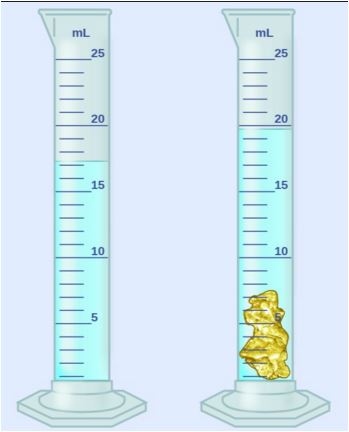
When you put an object in a graduated cylinder of water and measure how much the water level changed what is this process called?
Relative Density
Displacement
Density

10.0 ml
15.0 ml
20.0 ml
25.0 ml

18.0 ml
6.0 ml
38.0 ml