wayground logo

Free Printable Worksheets

Font size

S
M
L
XL
Worksheets

Environmental Science Midterm Study Guide

Total questions: 85

Worksheet time: 21hrs 15mins
Name
Class
Date
1.
A living or once-living organisms in an ecosystem is a
a)
population
b)
biotic factor
c)
abiotic factor
d)
community
2.
The most important abiotic factors when studying biomes are...
a)
Food and Water
b)
Water and Sunlight
c)
Temperature and Oxygen
d)
Water and Temperature 
3.
We live in this biome....which incidentally is the only biome with 4 seasons
a)
tundra
b)
temperate deciduous forest
c)
grasslands
d)
desert
4.
In which biome is Georgia located?
a)
tropical rainforest
b)
temperate rainforest
c)
temperate deciduous forest
d)
alpine forest
5.
Which biome receives between 0 and 25 centimeters of precipitation each year, has a temperature range from -27 to 5 degrees Celsius, has frozen soil, and is home to hares, caribou, and wolves?
a)
desert
b)
mountain
c)
savannah
d)
tundra
6.

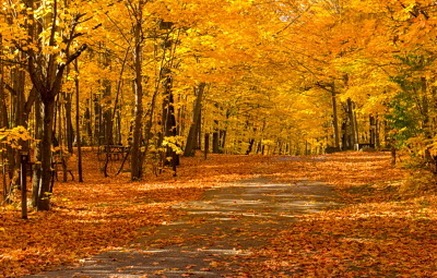
Which type of forest would you expect to see trees turning changing color from green to red, orange, and yellow during the fall

a)

Deciduous Forest

b)

Tropical Rain Forest

c)

Boreal Forest

d)

This happens in all these forests

7.
Which biome has deciduous trees (which lose their leaves)?
a)
Temperate Forest
b)
Rainforest
c)
Grasslands
d)
Taiga
8.

When do animals give birth in the savanna?

a)

During the dry season

b)

During the rainy season

9.

Which of the following is the Driest place on earth?

a)

Savannah

b)

Temperate Grassland

c)

Desert

10.

Plants called __________ such as cactuses have thick, fleshy stems and leaves that conserve water

a)

Succotash

b)

Succulent

11.

In the desert, animals have adaptations to help them

a)

fight fires

b)

conserve water

12.

In the desert, most animals sleep during the day and are active at night. These animals are

a)

nocturnal

b)

diurnal

13.
Which watery biome has the lowest concentration of salt?
a)
freshwater
b)
ocean
c)
coral reef
d)
wetland
14.
Aquatic biomes are determined by ________ and ________ of water
a)
depth and temperature
b)
salinity and depth
c)
climate and salinity 
d)
depth and climate
15.

A severe frost wipes out the citrus crop in Florida

a)

Density-dependent

b)

Density-independent

16.

Since snakes prey on frogs, an increase in the frog population causes an increase in the snake population.

a)

Density-dependent

b)

Density-independent

17.

Due to severe overcrowding in an Asian village, many children to not survive to reach adulthood.

a)

Density-dependent

b)

Density-independent

18.

The eruption of Mt. St. Helens destroys most of the wildlife in the immediate area.

a)

Density-dependent

b)

Density-independent

19.

Off the coast of Peru, many fish die due to flooding.

a)

Density-dependent

b)

Density-independent

20.

Two animals attempt to occupy the same habitat. The more aggressive animal survives and the other does not.

a)

Density-dependent

b)

Density-independent

21.
Occurs when part of the population LEAVES the environment
a)
Immigration
b)
Emmigration
22.

Which of the following leads to a decrease in birthrates among women?

a)

Higher Education

b)

High Infant Mortality Rate

c)

No Prenatal Care

d)

No contraceptives

23.
Which of the following leads to a decrease in birthrates among women?
a)
Higher Education
b)
High Infant Mortality Rate
c)
No Prenatal Care
d)
No contraceptives
24.

The bottom of a pond or lake, inhabited by decomposers

a)

Littoral Zone

b)

Benthic Zone

25.

Bottom dwelling organisms, such as mussels, worms and barnacles

a)

Nekton

b)

Plankton

c)

Benthos

26.

Nutrient-rich layer, near the shore, species diversity

a)

Littoral Zone

b)

Benthic Zone

27.

What happens as you go deeper in an aquatic biome?

a)

It gets colder

b)

it gets colder and darker

c)

it gets colder, darker and pressure increases

d)

you get wet

28.

CHOOSE ALL THAT APPLY! Two critical plant nutrients in eutrophication are

a)

nitrates

b)

phosphates

c)

carbon dioxide

d)

dissolved oxygen

29.

In eutrophication, plant nutrients cause ________ to bloom.

a)

algae

b)

decomposers

c)

plants

d)

monkey fish

30.

CHOOSE ALL THAT APPLY! We can prevent eutrophication by

a)

picking up dog poop and putting it in the trash

b)

landscaping with native plants that need less fertilizer

c)

not using fertilizer on our lawns

d)

avoiding the use of pesticides on our lawns

31.

In eutrophication, dissolved oxygen levels decrease because

a)

decomposers use it in cellular respiration

b)

algae bloom and use it up

c)

plant nutrients react with the dissolved oxygen

d)

fish use it up

32.
Eutrophication is caused by
a)
runoff of excessive fertilizer and nutrients
b)
cleaning up waterways
c)
using nuclear energy
d)
using solar energy
33.
These are the three main jobs of wetlands.
a)
provide habitats, store flood waters, purify water
b)
provide habitats, store plant life, purify water
c)
purify water, store wildlife, provide habitats
d)
purify the land, store flood waters, provide habitats
34.

Wetlands store flood waters. How is this beneficial? Choose the best answer.

a)

Its not really beneficial because this may flood peoples homes.

b)

It releases the water is increments which will really increase the wildlife in that area.

c)

It releases the water in increments ( a little at a time) which slows the water down thus slowing erosion.

d)

Its really not beneficial because this will flood the habitats of the wildlife living there.

35.

How would you describe the SOIL in the wetlands?

a)

always very dry

b)

always very wet

c)

like a sponge

36.

Too many chemicals or fertilizers

a)

are a benefit to the ecosystem and water quality

b)

can harm the ecosystem and water quality

37.

What is an estuary?

a)

Land that is covered wit h a shallow layer of water or all or part of the year

b)

A coastal inlet or bay where fresh water from a river meets the salt water of the ocean

c)

Land that water flows on, over, and under to get to the ocean

38.

A semi-enclosed area where fresh water from a river meets salty water from the sea.

a)

Watershed

b)

Groundwater

c)

Estuary

d)

Ocean

39.
Southeast and south central USA is the home for what type of wetland?
a)
bottomland hardwood swamps
b)
non-tidal marshes
40.
______can support trees, tall shrubs, herbs and mosses. 
a)
Swamps
b)
Bogs
c)
Riparian Swamps
d)
Riparian Bogs
41.
_______ have trees (for example, cypress trees in freshwater and mangrove trees in salty water) and woody shrubs rather than grasses and herbs. 
a)
Marshes
b)
Riparian Marshes
c)
Bogs
d)
Swamps
42.
Which type of wetland is best described as, "The plants growing here are grasses, reeds, sedges, and some shrubs."
a)
bogs
b)
fens
c)
swamps
d)
marsh
43.

What is the industrial revolution ?

a)

A time of period where new inventors came together to ruin the world

b)

A time of period where everyone was in debt and was poor and no ruler or governor

c)

A time of period where there was a transition to new manufacturing inventions in the 1700s to 1800s

d)

A time of period that started the Renaissance

44.

What happened in the Industrial Revolution?

a)

People moved from urban to other urban areas

b)

People moved from rural to urban areas

c)

People moved from urban to rural areas

d)

People began a revolution

45.

What technologies were invented in the Industrial Revolution?

a)

steam engine, the telegraph, the sewing machine and electricity

b)

computers, cellphones and tablets

c)

bikes, cars and computers

d)

television, cars, computers and sewing machines

46.
Which is the proper sequence of steps in the demographic transition model?
a)
pre-industrial, industrial, post industrial, transitional
b)
transitional, pre industrial, industrial, post industrial
c)
pre industrial, transitional, industrial, post industrial
d)
post industrial, transitional, industrial, pre industrial
47.
What event in the mid 1700s significantly human population growth?
a)
human settlement began
b)
bubonic plague
c)
development of agriculture
d)
industrial revolution
48.
Which factor(s) help increase total fertility rates? 
a)
govt. programs supporting older adults
b)
needing extra help on farms
c)
more children surviving childhood
d)
one-child policies
49.

Which of the following is a population?

a)

hawks, barred owls, and eagles on NC coast

b)

mountain stream

c)

all the frogs in a pond

d)

blue-tailed skinks (lizards) around a barn

50.
All organisms of the same species living in the same area.
a)
Population
b)
Community
c)
Ecosystem
d)
Organism
51.
All of the different biotic organisms found in the same area.
a)
Organism
b)
Population
c)
Community
d)
Ecosystem
52.
Identify the examples as: a organism, population, community, or ecosystem.
Water, Fish, Turtles, Oxygen, Rocks and Moss interacting in a river system.
a)
Organism
b)
Population
c)
Community
d)
Ecosystem
53.
The largest level of ecological organization which includes all biotic and abiotic factors.
a)
Ecosystem
b)
Organism
c)
Population
d)
Community
54.
Identify the examples as: a organism, population, community, or ecosystem.
Chicken, Cow, Grass, Buffalo, and Mouse living on farmland.
a)
Organism
b)
Community
c)
Population
d)
Ecosystem
55.
A collection of organisms that belong to different populations but all live in the same area and interact with one another.
a)
Population
b)
Ecosystem
c)
Community
d)
Ecosphere
56.
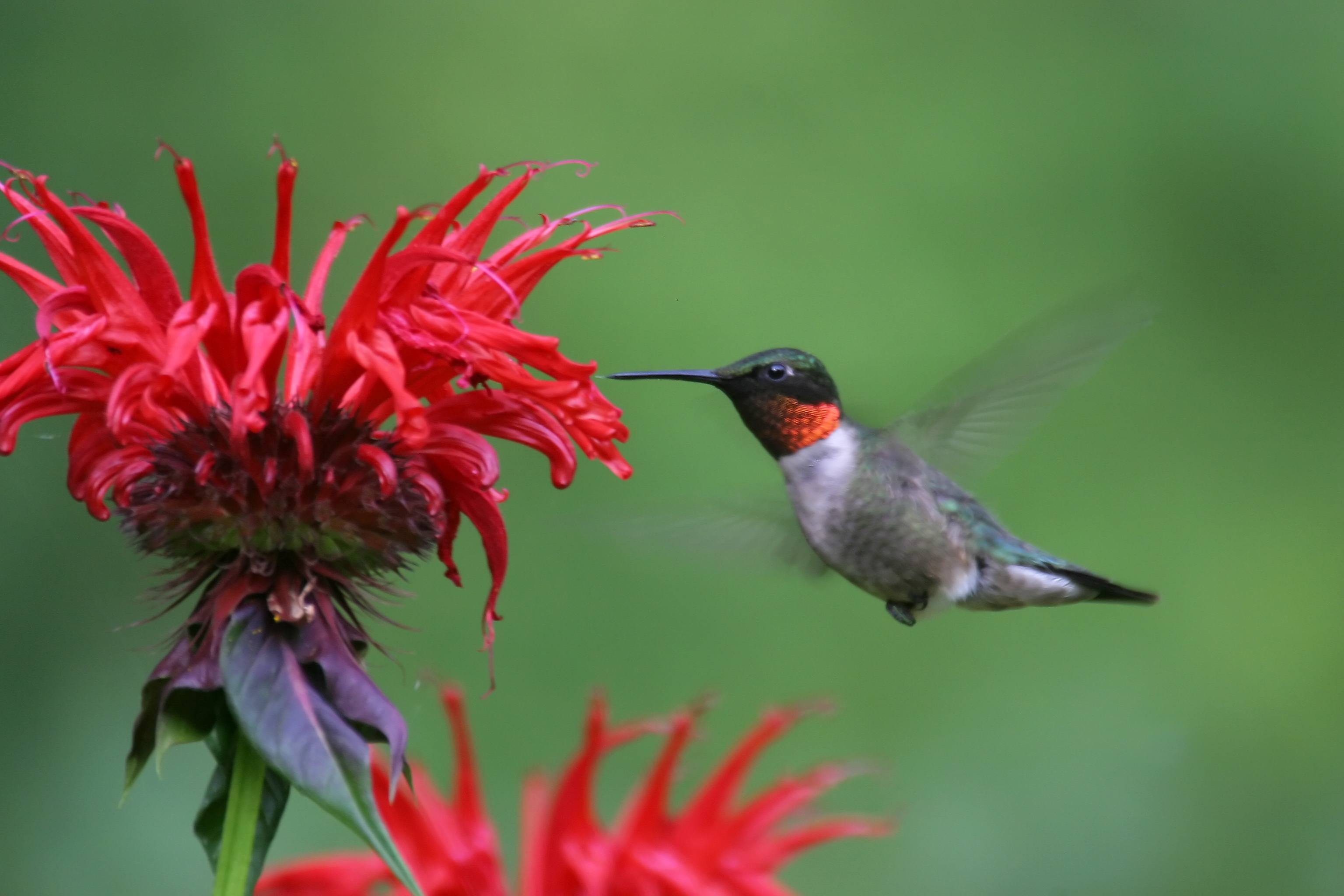
What type of symbiosis?  Hummingbirds feed on nectar from flowers.  The flowers are pollinated by hummingbirds as they move from flower to flower.
a)
commensalism
b)
mutualism
c)
parasitism
d)
predation
57.
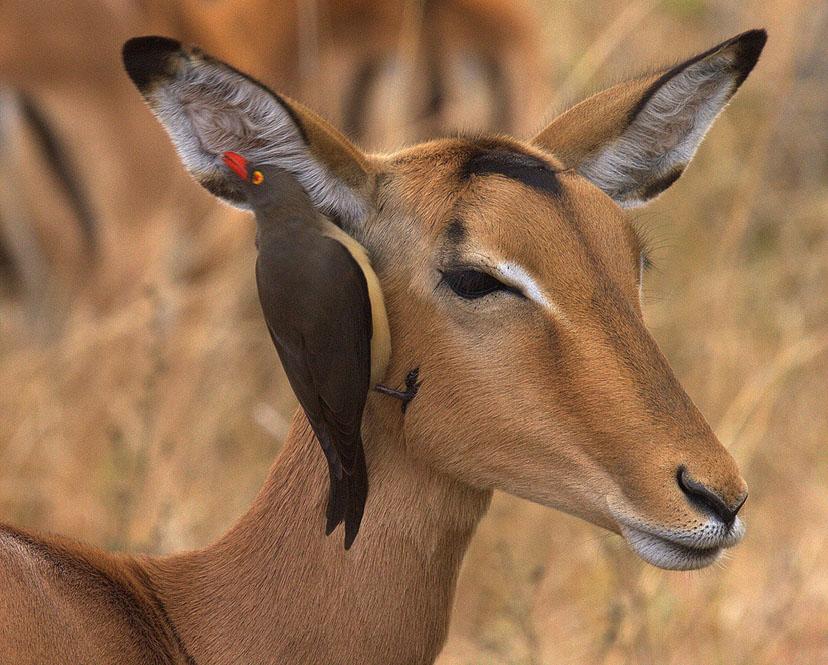
Red-billed oxpeckers are birds that often feed on parasites that infest impala.  This is an example of _______.
a)
commensalism
b)
mutualism
c)
neutralism
d)
competition
58.
A relationship between two organisms in which both organisms benefit. 
a)
Mutualism 
b)
Competition
c)
Parasitsm 
d)
Commensalism 
59.
Is a deer an abiotic or biotic factor? 
a)
abiotic
b)
biotic
60.
Is a fern an abiotic or biotic factor? 
a)
abiotic
b)
biotic
61.
Temperature, light, air, water, and soil are all  _____  parts of the environment
a)
alive
b)
biotic 
c)
abiotic
d)
living
62.
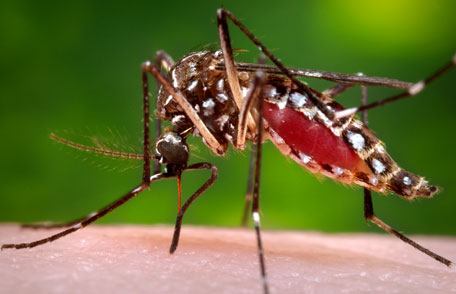
When a mosquito bites you, you are the __________ and the mosquito is the  ____________.
a)
host, hostess
b)
parasite, host
c)
host, parasite
d)
prey, predator
63.
A tick and a dog have this type of relationship.
a)
mutualism
b)
commensalism
c)
neutralism
d)
parasitism
64.
A relationship between two species where one benefits while the other is harmed.
a)
Mutualism
b)
Commensalism
c)
Parasitism
d)
Naturalism
65.
What is Nitrogen used for in a Plant?
a)
Making Proteins
b)
Respiration
c)
Photosynthesis
d)
Who Cares
66.
Why do all organisms need nitrogen?
a)
To live and grow 
b)
To build phosphorus
c)
To make oxygen levels grow
d)
To help blood circulate better
67.

When nitrogen is 'fixed,' this means it is....

a)

unusable.

b)

made into a usable form.

c)

transferred from the water into plants.

d)

a large, complex molecule.

68.
What are the ecological levels of organization from smallest to the largest?
a)
organism, population, community, ecosystem, biome, biosphere
b)
organism, community, population, ecosystem, biome, biosphere
c)
organism, population, community, biome, ecosystem, ecosphere.
d)
organism, community, population, biome, ecosystem, ecosphere
69.
If there is 1000 Kcal available in the producers in trophic level 1, how much energy is available in the herbivores in trophic level 2?
a)
10 Kcal
b)
1 Kcal
c)
100 Kcal
d)
1000 Kcal
70.
True or False. In this Food Web Pyramid the consumers on each level only get about 10 percent of energy that the plants have stored.
a)
True
b)
False
71.
In the energy pyramid here, how much of the energy in the producers gets passed to the herbivores?
a)
10%
b)
20%
c)
80%
d)
90%
72.
Which of this energy roles is always located at the bottom of an energy pyramid?
a)
Producer
b)
Second-Level Carnivores
c)
Herbivores.
d)
First-Level Consumers.
73.
If these organisms were arranged in a food pyramid, which organism would have the least amount of total energy available?
a)
coyote
b)
insect
c)
lizard
d)
shrub
74.
The diagram represents a model of a food pyramid.  Which statement best describes what happens in this food pyramid?
a)
More organisms die at higher levels than at lower levels, resulting in less mass at higher levels.
b)
Energy is lost to the environment at each level, so less mass can be supported at each higher level.
c)
When organisms die at higher levels, their remains sink to lower levels, increasing the mass of lower levels.
d)
Organisms decay at each level, and thus less mass can be supported at higher levels
75.
A decomposer?
a)
Eats dead plants or animals and breaks down to put nutrients in the soil
b)
Eats plants or other animals for food
c)
Makes its own food
d)
Machine that gathers trash
76.
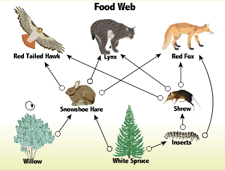
What may happen if the snowshoe hare was removed from the food web pictured?
a)
The insects in the habitat would increase.
b)
The shrew population would decrease due to being only hawk food source.
c)
The willow tree population would decrease.
d)
Foxes would dies due to no food source. 
77.
What is the order of succession shown in this figure?
a)
A, B, C, D
b)
B, A, D, C
c)
C, D, A, B
d)
D, A, B, C
78.
What is the goal of the pioneer species in Primary Succession?
a)
To kill the dead materials after a disaster
b)
To rebuild soil
c)
To feed Johnny
d)
To put fresh oxygen into the air
79.
What is an succession?
a)
Series of gradual changes that occur after a disturbance
b)
Changes that only happen when species die
c)
a series of changes that cause a population to increase or decrease
d)
an INSTANT change caused by a disturbance
80.
What is the difference between a primary vs. secondary succession?
a)
secondary occurs where there was no previous community
b)
they are the same
c)
secondary occurs in an area that was only partially destroyed
d)
primary ocurs in an area that was only partially destroyed
81.
How can animals and fungi best be classified?
a)
Autotroph
b)
Heterotroph
82.
What process occurs when light energy is captured in autotrophs and converted into sugar?
a)
Photosynthesis
b)
Cellular Respiration
83.
What is the ultimate ORIGINAL source of energy for living things
a)
Sugar
b)
Sun
c)
Moon
d)
Carbon Dioxide
84.
Which statement about photosynthesis is correct?
a)
Plants get the energy they need for photosynthesis from water.
b)
Plants get the energy they need for photosynthesis from soil.
c)
Plants get the energy they need for photosynthesis from sunlight.
d)
Plants do not require energy to perform photosynthesis.
85.

If decomposers were removed from the earth, what would the greatest consequence be to the carbon cycle?

a)

Organic compounds would fail to recycle

b)

Excess carbon would build up in the atmosphere

c)

Limestone in the oceans would damage and kill coral ecosystems

d)

Plants would no longer be able to photosynthesize