
 Worksheets
Unit 4: Minerals & Rocks
Total questions: 47
Worksheet time: 46mins
Name
Class
Date
1.
Which of the following is NOT one of the 5 characteristics of minerals?
a)
Naturally Occurring
b)
Organic Processes
c)
Definite Chemical Composition
d)
Solid
2.
What does the Mohs Scale measure?
a)
Streak
b)
Luster
c)
Hardness
d)
Cleavage
3.
________________ describes how light reflects off a mineral.
a)
Luster
b)
Hardness
c)
Fracture
d)
Color
4.
Which of the following is an example of luster?
a)
Soft
b)
White
c)
Metallic
d)
Hard
5.
_____________________ means that the mineral was formed by nature, not by a human or machine
a)
Naturally Occurring
b)
Inorganic Processes
c)
Solid
d)
Crystal Shape
6.
What does inorganic mean?
a)
Something that is living
b)
Something that is dead, but was once living
c)
Something that was never living
7.
Flat sides and sharp edges with patterns that repeat over and over again
a)
Crystal Shape
b)
Inorganic Processes
c)
Definite Chemical Composition
d)
Solid
8.
What does Definite Chemical Composition means?
a)
Random elements in indefinite proportions
b)
Elements spread throughout the entire mineral evenly
c)
Elements spread out the entire mineral unevenly
9.
When a mineral breaks in an uneven, rough, or jagged way
a)
Luster
b)
Cleavage
c)
Hardness
d)
Fracture
10.
When a mineral breaks smoothly and evenly.
a)
Luster
b)
Cleavage
c)
Hardness
d)
Fracture
11.
Rubbing a mineral on a streak plate determines the color of the mineral's _____________
a)
Surface
b)
Interior
c)
Powder
d)
Crystals
12.
How do you determine the density of a mineral?
a)
D=M/V
b)
D=V/M
c)
D=M x V
d)
D= V x M
13.
Which of the following is NOT a way to identify a mineral?
a)
Luster
b)
Hardness
c)
Heaviness
d)
Density
14.
Which of the following is NOT a way to identify a mineral?
a)
Fluorescence
b)
Streak
c)
Cleavage/Fracture
d)
Smell
15.
Which of the following is not a way to identify luster?
a)
Slippery
b)
Waxy
c)
Pearly
d)
Nonmetallic
16.
What is the hardest mineral on the Moh's Hardness Scale?
a)
Talc
b)
Gypsum
c)
Diamond
d)
Calcite
17.
What are the two most useful tests when identifying a mineral
a)
streak and color
b)
color and luster
c)
cleavage and fracture
d)
streak and hardness
18.
What is the LEAST useful way to identify a mineral?
a)
luster
b)
streak
c)
color
d)
density
19.
_________ is how easily something can be scratched.
a)
specific gravity
b)
luster
c)
hardness
20.

A mineral breaks into pieces like are shown in the picture. How would you describe its breakage?
a)
Fracture
b)
Cleavage
c)
Glassy
d)
Waxy
21.

A mineral breaks into pieces like are shown in the picture. How would you describe its breakage?
a)
Fracture
b)
Cleavage
c)
Glassy
d)
Waxy
22.
What mineral is known as "fools gold"?
a)
graphite
b)
quartz
c)
galena
d)
pyrite
23.

By definition, a mineral has which of the following characteristic(s)?
a)
chemical composition
b)
crystalline structure
c)
natural
d)
all of the above
24.

Which mineral property is being shown here?
a)
luster
b)
hardness
c)
cleavage
d)
streak
25.

Metallic to earthy gray, hardness of 1-2, unclear cleavage, writes on paper
a)
graphite
b)
galena
c)
pyrite
d)
hematite
26.

The mineral in the picture has a ____________ luster.
a)
Nonmetallic
b)
Metallic
c)
Pearly
d)
Earthy
27.
A rock which contains a useful mineral is call a/an
a)
gem
b)
quarry
c)
ore
d)
alloy
28.
Why is coal not a mineral?
a)
It's not a solid
b)
It is man-made
c)
It is not inorganic
d)
It is made of carbon
29.
How do you test the hardness of a mineral?
a)
Throw it against a wall
b)
Step on it
c)
Scratch Test
d)
Kick it until it breaks
30.

This rock formed when bits of other rocks became pressed into a solid. What type of rock is it?
a)
Sedimentary Rock
b)
Metamorphic Rock
c)
Igneous Rock
31.

This rock was formed when magma cooled very slowly inside the Earth. What specific type of rock is it?
a)
Intrusive Igneous Rock
b)
Extrusive Igneous Rock
c)
Foliated Metamorphic Rock
d)
Clastic Sedimentary Rock
32.

This rock formed when lava cooled very quickly on Earth's surface. What specific type of rock is it?
a)
Extrusive Igneous Rock
b)
Intrusive Igneous Rock
c)
Non-Foliated Metamorphic Rock
d)
Biochemical Sedimentary Rock
33.
What are the 3 major types of rocks?
a)
Igneous, Metamorphic, Sedimentary
b)
Metamorphic, Igneous, Cementation
c)
Brown, Red, Gray
d)
Streak, Hardness, Breakage
34.
What process is used to form sedimentary rocks?
a)
Lava cools and hardens to form a rock.
b)
Weathering, Erosion, Deposition, Compaction, Cementation
c)
Extreme heat and pressure from inside the Earth turn rocks into new rocks.
d)
Magma trapped under the Earth's surface cools and solidifies.
35.
Which of the words below describe broken up rock?
a)
stalactites
b)
magmas
c)
metamorphs
d)
sediments
36.
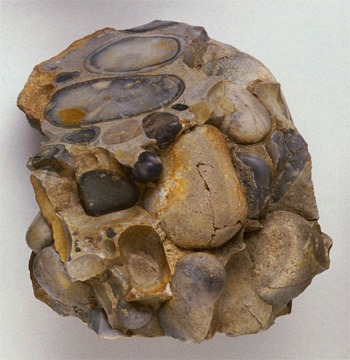
This rock was formed by smaller pieces of rock that settled at the bottom of a lake millions of years ago. What type of rock is this?
a)
Sedimentary
b)
Igneous
c)
Metamorphic
37.
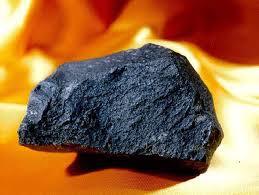
This rock was found near the mouth of a volcano. What type of rock is this?
a)
Sedimentary
b)
Igneous
c)
Metamorphic
38.

When sediments are pressed together tightly, this is called ____________.
a)
Compaction
b)
Cementation
c)
Weathering
d)
Erosion
39.
The process in which sediment are fused or glued together.
a)
compaction
b)
deposition
c)
organic rock
d)
cementation
40.

The process when rocks break into smaller pieces due to exposure to natural elements is called
a)
erosion
b)
weathering
c)
sediments
d)
deposition
41.
The movement of weathered material (sediment) is called?
a)
weathering
b)
erosion
c)
deposition
d)
cementation
42.
Sedimentary rock made from fossils are called...
a)
organic
b)
chemical
c)
stratified
43.
Which type of rock is formed from INTENSE heat and pressure?
a)
igneous
b)
sedimentary
c)
metamorphic
44.
The three groups of rocks are classified by
a)
How they form
b)
Color
c)
Grain size
d)
Chemical Composition
45.
Fossils are only found in
a)
Sedimentary rocks
b)
Foliated Metamorphic rocks
c)
Igneous Rocks
d)
Nonfoliated Metamorphic rocks
46.
A metamorphic rock changes into an igneous rock by what two processes?
a)
Melting and cooling
b)
Extreme heat and pressure
c)
Compaction and cementation
d)
Weathering and erosion
47.

A rock that has banded (ribbon like) layers is what type of rock?
a)
metamorphic
b)
sedimentary
c)
igneous
100 %

