wayground logo

Free Printable Worksheets

NEW

Font size

S
M
L
XL
Worksheets

Physical Science Final Exam Sp21

Total questions: 50

Worksheet time: 1hrs 20mins
Name
Class
Date
1.
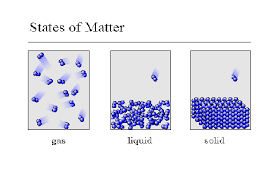
A gas
a)
has a definite shape but no definite volume
b)
has a definite volume but no definite shape
c)
has fast-moving particles
2.
The state of matter that has a definite volume but no definite shape.
a)
Solid
b)
Liquid
c)
Gas
d)
Plasma
3.
The state of matter that has no definite shape and no definite volume.
a)
Solid
b)
Liquid
c)
Gas
d)
Plasma
4.
Anything that has mass and takes up space. 
a)
atom
b)
matter
c)
molecule
d)
element
5.
What happens in ALL chemical changes?
a)
Change in state of matter
b)
A new substance is formed
c)
Bubbles are produced
d)
An explosion
6.
The Law of Conservation of Mass tells us matter can't  ______________.
a)
change color
b)
change state of matter
c)
be created or destroyed
d)
change temperature
7.
The atomic number tells you what?
a)
number of electrons
b)
number of protons
c)
number of neutrons
d)
both electrons and protons in an atom.
8.
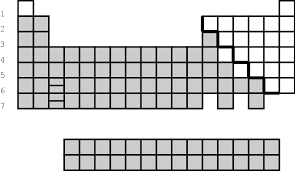
The atoms along the staircase are called 
a)
metals
b)
nonmetals
c)
metalloids
d)
noble gases
9.
Elements which are shiny, conduct electricity and heat are called
a)
metal
b)
nonmetal
c)
metalloid
d)
nonexistent
10.
How many atoms of carbon (C) are in C6H12O6?
a)
3
b)
6
c)
12
d)
24
11.
Which of the following reactions is balanced?
a)
2CH4 + O2 -> CO2 + H2O
b)
CH4 + 2O2 -> CO2 + H2O
c)
CH4 + 2O2 -> CO2 + 2H2O
d)
None of the chemical equations are balanced.
12.
A solution with a pH of 8.6 would be...
a)
Acid
b)
Base
c)
Neutral
d)
Acid and Base
13.
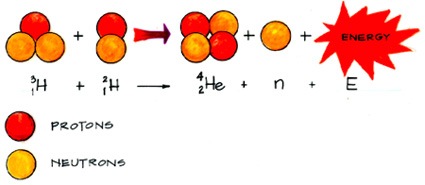
How do nuclear power-plants work?
a)
Fusion
b)
Half-life
c)
Fission
d)
Fusion or fission
14.
The splitting of a nucleus into smaller nuclei is
a)
fusion
b)
fission
c)
decay
d)
gamma radiation
15.
Speed =
a)
distance / time
b)
time / distance
c)
distance * time
16.
You walk 10 meters to math class in 20 seconds. Your average speed is
a)
2 m/s
b)
0.5 m/s
c)
200 m/s
d)
5 m/s
17.
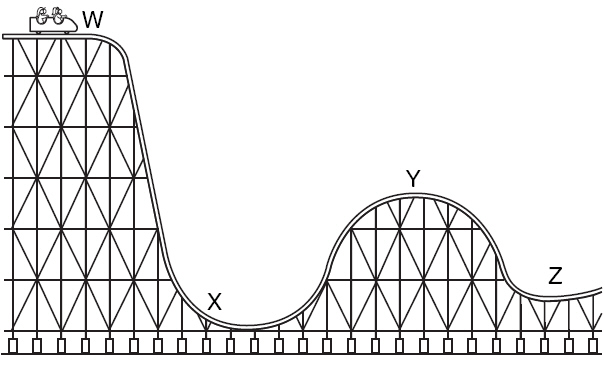
At which point is potential energy greatest?
a)
W
b)
X
c)
Y
d)
Z
18.

Which of Newton's 3 Laws states that, "An object at rest stays at rest and an object in motion, stays in motion."

a)

1st

b)

2nd

c)

3rd

19.

Which of Newton's 3 Laws states that "F = ma."

a)

1st

b)

2nd

c)

3rd

20.
A push or pull is a 
a)
load
b)
fulcrum
c)
force
d)
work
21.
What is the difference between mass and weight?
a)
mass is how much matter is in an object, and weight is the gravitational pull on that object
b)
mass and weight are the same
c)
weight affects how much mass is in an object
d)
weight is determined by how many atoms make up an object
22.
What happens when two north poles of a magnet are placed together?
a)
they repel
b)
they attract
c)
they cancel each other out
d)
the strength of the magnet is doubled
23.
Where is the force of attraction the strongest on a magnet?
a)
at the poles
b)
in the middle
c)
above the magnet
d)
below the magnet
24.

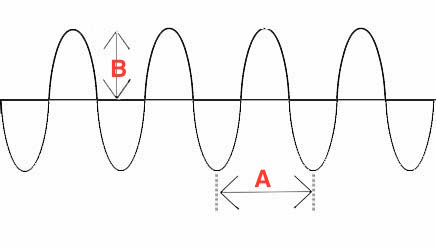
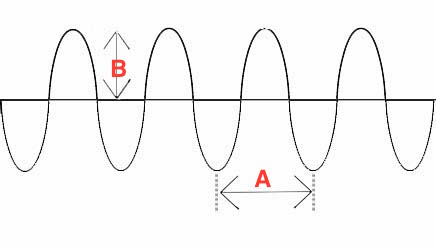
What property of this wave is represented by the letter "A"

a)

amplitude

b)

crest

c)

trough

d)

wavelength

25.
What property of the wave is represented by the letter "B"?
a)
amplitude
b)
crest
c)
trough
d)
wavelength
26.
The highest point on a wave is:
a)
the crest
b)
the trough
c)
the top
d)
the coast 
27.
The lowest point on a wave is the:
a)
Amplitude
b)
Crest
c)
Trough
d)
Wavelength
28.
What does the atomic number tell you about the element?
a)
The number of neutrons in the atom of the nucleus
b)
The density of the atom
c)
The number of protons in the atom of the nucleus
d)
The mass of an atom of a chemical element
29.
The colored part of the periodic table is.....
a)
nonmetals
b)
metals
c)
metalloids
d)
gases
30.
The positive particles of an atom are 
a)
electrons 
b)
positrons 
c)
neutrons 
d)
protons 
31.
Ionic or covalent?
NaBr
a)
Ionic
b)
Covalent
32.
Ionic or covalent?
H2O
a)
Ionic
b)
Covalent
33.
this circuit is .....?
a)
open
b)
parallel
c)
closed
d)
The cutest little circuit evah!
34.
A rocket with less ________ will have a greater acceleration.
a)
Mass
b)
At Rest
c)
Reaction
d)
Resist
35.
For every action, there is an equal and opposite reaction.
a)
Newton's
1st
Law of Motion
b)
Newton's
2nd
Law of Motion
c)
Newton's
3rd
Law of Motion
36.
Which force produces a change in motion?
a)
unbalanced force
b)
balanced force
c)
gravitational force
d)
frictional force
37.

Which of the following represents an element?

a)

H2O

b)

Ag

c)

NaCl

d)

CaCO3

38.
Energy of motion is which type of energy?
a)
Potential
b)
Kinetic
c)
Sound
d)
Gravitational
39.
What unit do we measure force in? 
a)
Newtons
b)
Joules
c)
Force
d)
Don't know
40.

Which of the following is NOT a compound?

a)

HCl

b)

Cl

c)

NaCl

d)

CO2

41.
Which process involves the joining of small nuclei?
a)
Beta decay
b)
Alpha decay
c)
Nuclear fission
d)
Nuclear fusion
42.
The three types of nuclear radiation in increasing order of penetrating power are ____.  
a)
  alpha, beta, gamma 
b)
X ray, beta, gamma
c)
alpha, gamma, beta 
d)
X ray, gamma, beta 
43.
What is the unit of measurement for Power?
a)
Joules
b)
Newtons
c)
Watts
d)
Meters
44.
An atom has an atomic number of 30 and a mass number of 65. How many neutrons are in the atom?
a)
30
b)
65
c)
35
d)
95
45.

There is a bell at the top of a tower that is 45 m high. The bell weighs 10 kg. What is the potential energy of the bell? (g = 10 m/s2)

a)

980 J

b)

441 J

c)

4,500 J

d)

44,100 J

46.

You serve a volleyball with a mass of 2 kg. The ball leaves your hand with a speed of 30 m/s. What is the KE of the ball? (KE = 1/2 mv2)

a)

900 J

b)

1800 J

c)

60 J

d)

30 J

47.

How much work is being done with 200 N of force over 426 meters? (W=Fd)

a)

85,200 J

b)

45,620 J

c)

90,480 J

d)

62,329 J

48.
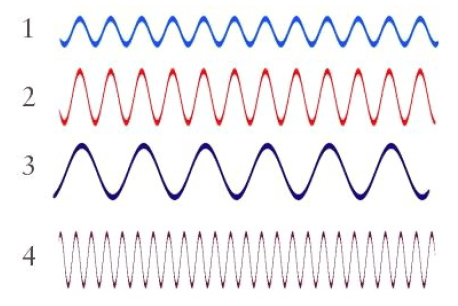
Which wave in the diagram has the greatest frequency?
a)
1
b)
2
c)
3
d)
4
49.
3 m/s north is an example of a(n) ____.
a)
speed
b)
velocity 
c)
position 
d)
acceleration
50.
Energy from the Sun travels to Earth as ____.
a)
chemical energy 
b)
combustion 
c)
radiant energy 
d)
mechanical energy