
 Worksheets
Semester 1 Exam Review - Day 2
Total questions: 70
Worksheet time: 46mins
Name
Class
Date
1.
______ is the average pattern for weather over a long period of time.
a)
climate
b)
weather
c)
forecast
d)
sunlight
2.
The result of the weight of a column of air pushing down on an area is called _.
a)
altitude
b)
pressure
c)
density
d)
air pressure
3.
The process by which water constantly moves between the hydrosphere and the atmosphere
a)
weather
b)
water cycle
c)
air pressure
d)
precipitation
4.
Atmospheric conditions, along with short-term changes, of a particular place at a particular time
a)
weather
b)
climate
c)
air pressure
d)
precipitation
5.
Pressure that a column of air exerts on the air below it
a)
weather
b)
water cycle
c)
air pressure
d)
precipitation
6.
stormy weather
a)
High Pressure System
b)
Low Pressure System
7.
fair weather
a)
High Pressure
b)
Low Pressure
8.
clear skies
a)
High Pressure
b)
Low Pressure
9.
cloudy skies
a)
High Pressure System
b)
Low Pressure System
10.
thunder, lightning, and heavy rain
a)
High Pressure System
b)
Low Pressure System
11.
light rainfall
a)
High Pressure System
b)
Low Pressure System
12.
sunny skies
a)
High Pressure System
b)
Low Pressure System
13.
warm, humid air
a)
High Pressure System
b)
Low Pressure System
14.
cool, dry air
a)
High Pressure System
b)
Low Pressure System
15.

Which city is experiencing thunderstorms?
a)
Denver
b)
New York
c)
Miami
d)
Boise
16.

Which city is currently experiencing a snow storm?
a)
Seattle
b)
Los Angeles
c)
Chicago
d)
New York
17.

Which number illustrates Condensation?
a)
1
b)
2
c)
3
d)
4
18.

What part of the illustration shows Evaporation?
a)
1
b)
2
c)
3
d)
4
19.
The main human activity that releases greenhouse gases is...
a)
using bottled water
b)
burning fossil fuels
c)
texting on cellphones
d)
eating meat
20.
Water vapor is a greenhouse gas
a)
True
b)
False
21.
Some greenhouse gases are naturally present in the Earth's atmosphere
a)
True
b)
False
22.
Melting of glaciers and polar ice caps....
a)
will result in cooler temperatures in the Arctic
b)
will result in sea-levels rising
c)
Will have no effect on ecosystems
d)
None of the above
23.
The warming of the atmosphere by the trapping of heat being radiated to space is called
a)
evaporation
b)
condensation
c)
the greenhouse effect
d)
radiation
24.
What is the greenhouse effect?
a)
The warming of a planet due to trapped radiation.
b)
The cooling of Earth due to air pollution.
c)
The heating of a solid, such as a rock.
25.
Increased carbon dioxide may cause global warming by trapping more ____________ in the atmosphere.
a)
water
b)
gases
c)
heat
d)
water vapor
26.
Human activity is adding additional greenhouse gases to the amount that are in the atmosphere naturally
a)
True
b)
False
27.
Global average warming is the result of
a)
The Ozone Hole
b)
Natural Earth Climate Cycles
c)
A Human-Caused Increase in Greenhouse Gases
d)
Aliens
28.
What is the natural greenhouse effect?
a)
Solar radiation being reflected back in to the earths atmosphere keeping global temperatures balanced
b)
An increase in the solar radiation being reflected back in to the earths atmosphere due to an increase of GHG, increasing global temperatures
29.

Which layer of Earth is located above the outer core?
a)
crust
b)
inner core
c)
mantle
d)
lithosphere
30.
Which of these two layers is a solid?
a)
innercore
b)
Outercore
31.
What is the top layer of the Earth's surface called?
a)
Mantle
b)
Innercore
c)
Outercore
d)
Crust
32.
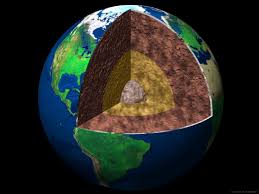
Which layer of Earth is located above the outer core?
a)
crust
b)
inner core
c)
mantle
d)
lithosphere
33.
Which layer of the earth is rock made mostly of iron?
a)
Lithosphere
b)
Core
c)
Asthenosphere
d)
Mantle
34.
What part of the earth is a layer of rock that comprises 67% of Earth’s mass?
a)
mesosphere
b)
mantle
c)
asthenosphere
d)
lithosphere
35.
How many layers of the Earth's CORE are there?
a)
one
b)
two
c)
three
d)
four
36.
Is the outer core a liquid or solid?
a)
liquid
b)
solid
37.
Temperature _____________________ as you go deeper into the earth.
a)
increases
b)
decreases
c)
goes up and down depending on the layer
d)
stays the same
38.
Pressure ______________________ as you go deeper into the Earth
a)
increases
b)
decreases
c)
goes up or down depending on the layer
d)
stays the same
39.
What layer is the hottest?
a)
Core
b)
Crust
c)
Mantle
40.
What layer of Earth do we live on?
a)
Crust
b)
Core
c)
Mantle
41.
What is the correct order (starting from the surface) of Earth's layers?
a)
crust, outer core, inner core, mantle
b)
mantle, outer core, inner core, crust
c)
crust, mantle, outer core, inner core
d)
outer core, inner core, crust, mantle
42.

The rock shown is GABBRO. We can tell that it is an ______________ igneous rock that cooled slowly underground because it has large, visible crystals.
a)
extrusive
b)
intrusive
43.

The rock shown is DIORITE. We can tell that it is an ______________ igneous rock that cooled slowly underground because it has large, visible crystals.
a)
extrusive
b)
intrusive
44.

The rock shown is basalt. We can tell that it is an ______________ igneous rock that quickly on the surface of the ground because it has tiny crystals and a fairly uniform texture
a)
extrusive
b)
intrusive
45.

The rock shown is scoria. We can tell that it is an ______________ igneous rock that quickly on the surface of the ground because we can still see the holes where bubbles of gas were trapped while the rock cooled rapidly
a)
extrusive
b)
intrusive
46.

The rock shown is pumice, the only known rock that FLOATS on water. We can tell that it is an ______________ igneous rock that quickly on the surface of the ground because we can still see the holes where bubbles of gas were trapped while the rock cooled rapidly
a)
extrusive
b)
intrusive
47.

The rock shown is Granite. We can tell that it is an ______________ igneous rock that cooled slowly underground because it has large, visible crystals.
a)
extrusive
b)
intrusive
48.
Sedimentary rocks are formed by
a)
Cooling of lava or magma
b)
Heat and pressure
c)
Compacting and cementing
49.
How is sediment formed?
a)
Weathering and Erosion
b)
Melting
c)
Pressure
50.
Where is magma?
a)
inside
b)
outside
51.
How do Intrusive Igneous rocks cool?
a)
quickly
b)
slowly
c)
really fast
52.
If a rock is formed from lava, what will the grains be?
a)
coarse
b)
fine
53.
Sedimentary rocks are formed by ___.
a)
existing rocks are baked and squeezed by pressure
b)
small pieces of rock are compacted and cemented together
c)
magma or lava cools and hardens
d)
igneous rocks are broken into pieces
54.
Igneous rocks are formed by ___.
a)
existing rocks are baked and squeezed by pressure
b)
small pieces of rock are compacted and cemented together
c)
magma or lava cools and hardens
d)
igneous rocks are broken into pieces
55.
The layer of solid rock located beneath the soil on Earth is called ___.
a)
bedrock
b)
boulder
c)
crust
d)
crystal
56.
A natural, solid substance found in rocks is called a ___.
a)
mineral
b)
pressure
c)
rock cycle
d)
sedimentary rock
57.
Igneous rocks form when__________?
a)
sand and pebbles get pressed together.
b)
Sand mixes with clay
c)
Melted rock cools and hardens
d)
shells and rock form together
58.
The three classification of rocks are the following
a)
Wind, rain, gravel
b)
Volcanic ash, rain, landslides
c)
Igneous, volcanic ash, metamorphic
d)
Igneous, sedimentary, metamorphic
59.
Tiny bits of rock and shell are pressed together to make layers. What kind of rock has these layers?
a)
igneous
b)
magma
c)
metamorphic
d)
sedimentary
60.
The deeper a rock is buried, the greater the pressure is on it
a)
True
b)
False
61.
What are rocks made up of?
a)
soil
b)
water
c)
minerals
d)
humus
62.
When magma cools and crystallizes below Earth's surface, what kind of igneous rock is it called?
a)
Intrusive Rock
b)
Extrusive Rocks
c)
Sedimentary Rock
d)
Metamorphic Rock
63.
When magma cools and crystallizes on Earth's surface, what kind of igneous rock is it called?
a)
Intrusive Rock
b)
Extrusive Rocks
c)
Sedimentary Rock
d)
Metamorphic Rock
64.
In what layer of the atmosphere does aurora borealis (northern lights) appear in?
a)
Thermosphere
b)
Troposphere
c)
Stratosphere
d)
Mesosphere
65.
In what layer of the atmosphere do meteors appear in?
a)
Thermosphere
b)
Troposphere
c)
Stratosphere
d)
Mesosphere
66.
What decreases as you go up in the atmosphere?
a)
Altitude
b)
Atmosphere
c)
Meteors
d)
Air Pressure
67.
The layers of the atmosphere are classified according to changes in _________.
a)
altitude
b)
density
c)
composition
d)
temperature
68.
the process by which heat is trapped inside Earth's atmosphere by gases
a)
chemicals
b)
fossil fuels
c)
greenhouses effect
d)
global warming
69.
___________is the result of the weight of a column of air pushing on an area.
a)
air pressure
b)
density
c)
volume
d)
none of the above
70.
As you climb up a mountain what happens to the air pressure?
a)
decreases
b)
increases
c)
stays the same
100 %

