wayground logo

Free Printable Worksheets

NEW

Font size

S
M
L
XL
Worksheets

Semester 1 Final Review

Total questions: 80

Worksheet time: 1hrs 13mins

Name
Class
Date
1.
How many different elements are in this chemical formula: C2H2ClK3
a)
6
b)
8
c)
2
d)
4
2.
Which of the following is a pure substance?
a)
CO
b)
C02
c)
Co
d)
H2O
3.
Which of the following is a pure substance?
a)
O2
b)
Al2CO5
c)
C6H12O6
d)
SiO2
4.
Which of the following atomic symbols for bromine is written correctly?
a)
bR
b)
BR
c)
Br
d)
br
5.
Which of the following chemical formulas represents a compound? 
a)
C3
b)
O2
c)
CH3CHO
d)
H2
6.
What is krypton?
a)
element
b)
compound
c)
mixture
7.
What is gold?
a)
element
b)
compound
c)
mixture
8.
What is water?
a)
element
b)
compound
c)
mixture
9.
When two or more elements chemically combine
a)
element
b)
compound
c)
mixture
d)
solution
10.
Which one can be found on the periodic table?
a)
Compound 
b)
Element
11.
Which one has more than one type of atom in it?
a)
Element
b)
Compound 
12.
Carbon is considered an element while carbon dioxide is considered a compound. This is because carbon dioxide is –
a)
a gas at room temperature.
b)
made of two different elements.
c)
given off by green plants.
13.
Compounds are different than elements because compounds are -
a)
A combination of two or more elements.
b)

B)not able to be broken down into parts
c)
made from the same type of atoms
d)
a pure substance, elements are not
14.
Cells that have a true nucleus are called....
a)
eukaryotes
b)
prokaryotes
c)
unicellular
d)
multicellular
15.
Cells that do not have a true nucleus are called....
a)
eukaryote
b)
prokaryote
c)
unicellular
d)
multicellular
16.

What Domain do I belong in?

I am unicellular.

I am prokaryotic.

I reproduce asexually.

I am autotrophic.

I live everywhere!

a)

Eukarya

b)

Archaea

c)

Bacteria

17.

What Kingdom do I belong in?

I am unicellular.

I am prokaryotic.

I reproduce asexually.

I am autotrophic.

I live everywhere!

a)

Eubacteria

b)

Archaeabacteria

c)

Animalia

d)

Plantae

e)

Protista

18.

What Kingdom do I belong to?

I am multicellular.

I am eukaryotic.

I reproduce sexually.

I am heterotrophic.

I thrive on a dark, moist ground.

a)

Animalia

b)

Protista

c)

Fungi

d)

Plantae

e)

Archaeabacteria

19.

What Kingdom do I belong to?

I am made of only one cell.

I make my own food.

I reproduce asexually.

I have a nucleus.

You can find me swimming in water.

a)

Protista

b)

Eubacteria

c)

Plantae

d)

Animalia

e)

Archaeabacteria

20.

What Kingdom do I belong to?

I am multicelled.

My cells do have a nucleus.

I reproduce sexually.

I love the sun! It helps me make my food through photosynthesis.

I can be found anywhere in the world.

a)

Archaeabacteria

b)

Protista

c)

Platae

d)

Fungi

e)

Animalia

21.

What Kingdom do I belong to?

I am multicelled.

My cells do have a nucleus.

I reproduce sexually.

I cannot make my own food.

I can be found anywhere in the world. Mobility is key to my survival!

a)

Eubacteria

b)

Protista

c)

Animalia

d)

Archaeabacteria

22.

What Kingdom do I belong to?

I am unicellular.

I am eukaryotic.

I reproduce asexually.

I can make my own food.

My friends and I move through the use of cilia or flagella.

a)

Eubacteria

b)

Protista

c)

Plantae

d)

Animalia

e)

Archaeabacteria

23.
An organism made up of more than one cell would be called:
a)
multicellular
b)
unicellular
c)
heterotroph
d)
autotroph
24.
An example of an unicellular organism would be:
a)
monkey
b)
bacteria
c)
spider
d)
human
25.

What type of organism makes its own food?

a)

Heterotroph

b)

autotroph

c)

sexual

d)

asexual

26.

What type of organism consumes its own food?

a)

heterotroph

b)

autotroph

c)

asexual

d)

sexual

27.
A tool used by a taxonomist to identify an unknown organism is known as a __________.
a)
dichotomous key
b)
binomial nomenclature
c)
scientific name
d)
binomial key
28.
Mushrooms are an example of this Kingdom?
a)
Animalia
b)
Protista 
c)
Archea 
d)
Fungi
29.
The largest level of classification that divides organisms as either eukaryotes, eubacteria or achaebacteria
a)
Domain
b)
Kingdom
c)
Phylogeny
d)
Taxonomy
30.
What property do these tools measure?
a)
volume
b)
mass
c)
length
d)
temperature
31.
Volume is _________.
a)
how much matter is in an object
b)
how much space an object takes up
c)
how much something weighs
d)
how many atoms
32.
An object that floats in water is _____________
a)
Less dense than water
b)
More dense than water
c)
Same density as water
33.
If the mass of a cup of water is 250 grams and the mass of the empty cup is 30 grams.  What is the mass of the water?
a)
220 grams
b)
280 grams
c)
30 grams
d)
250 grams
34.
Which liquid is the least dense?
a)
oil
b)
water
c)
syrup 
d)
plastic bottle
35.
Which liquid has the highest density? 
a)
corn syrup
b)
lamp oil
c)
rubbing alcohol
d)
honey
36.
An empty beaker has a mass of 60 grams.  When oil is added to the graduated cylinder, it has a mass of 200 grams. What is the mass of the oil?
a)
140 grams
b)
200 grams
c)
140 mL
d)
260 g
37.
Put the liquids in order from most dense to least dense?
a)
4, 3, 2, 1
b)
1, 2, 3, 4
c)
3, 4, 2, 1, 
d)
4, 3, 1, 2
38.
What is this?
a)
Measuring tube
b)
Test tube
c)
Graduated Cylinder
d)
Pipette
39.
What is volume of the water? 
a)
10 mL
b)
15 mL
c)
20 mL
d)
25 mL
40.
The density of this material is 2 g/cm3.
There are 24 cm3  Find the total mass.
a)
12 grams
b)
48 grams
c)
12 g/cm3
d)
48 g/cm3
41.
Find the volume of this piece of brass.  
a)
50 g
b)
10 cm
c)
6 cm3
d)
12 cm3
42.
What is the volume of the fish?
a)
18.0 cm3
b)
6.0 cm
c)
38.0 cm3
43.
Find the density of a 2 cm x 2 cm x 2 cm cube with a mass of 64 g.
a)
6 cm3
b)
12 g/cm3
c)
128 g/cm3
d)
8  g/cm3
44.
Jack has a rock. The rock has a mass of 14g and a volume of 2cm3. What is the density of the rock?
a)
7 mL
b)
7 g/cm3
c)
28 g/cm3
d)
1/7 g/cm3
45.
What units are used to measure mass of an object?
a)
cm
b)
cm3
c)
g
d)
g/cm3
46.
What units are used to measure volume of a liquid?
a)
cm
b)
cm3
c)
g/cm3
d)
mL
47.
Frank has a paper clip. It has a mass of 9g and a volume of 3cm3. What is its density?
a)
3 g/cm3
b)
1/3 g/cm3
c)
27 g/cm3
d)
39 g/cm3
48.
I have two objects with the same volume but different masses.  Which object will be more dense?
a)
The object with less weight.
b)
The object with more weight.
c)
The object with more mass.
d)
The object with less mass.
49.
What units are used to measure volume of a solid?
a)
cm 
b)
cm3
c)
g/cm3
d)
mL
50.
Which tool measures liquid volume?
a)
Test tube
b)
Beaker
c)
Graduated cylinder
51.
What do we call the curve that a liquid forms in a container?
a)
a curvy thingy
b)
a what do ya call it?
c)
a meniscus
d)
a hibiscus
52.
What is the formula for density?
a)
density = mass x volume
b)
density = mass / volume
c)
density = mass + volume
d)
density = mass - volume
53.
What units can be used to express density?
a)
g/mL
b)
grams
c)
millimeters
d)
milliliters
54.
This is the amount of "stuff" in an object
a)
weight
b)
gravity
c)
mass
d)
volume
55.
Which of these grouping of elements could have the characteristic of luster (shiny)?
a)
Metal
b)
Nonmetal
c)
metalloids
d)
Both metals and metalloids
56.
Which of these grouping of elements could have the characteristic of brittle?
a)
Metal
b)
Nonmetal
57.
Which of the following is a good conductor of heat?
a)
Metal
b)
Nonmetal
c)
Metalloid
58.
Which of these is a property of metals?
a)
It's malleable
b)
It can't conduct electricity
c)
They are used in food
d)
It's very brittle
59.

One property of nonmetals is that it they are good conductors of electricity.

a)

true

b)

false

60.
All of the following would classify an element as a metal except?
a)
Dull
b)
Luster
c)
Malleable
d)
Hard
61.

Some characteristics of metals are that they are malleable and ductile.

a)

TRUE

b)

FALSE

62.

Nonmetals are good conductors of heat and electricity.

a)

TRUE

b)

FALSE

63.
Which of the following properties refers to the ability of metals to be drawn into wires?
a)
A. malleability 
b)
B. compressibility
c)
C. ductility
d)
D. luster
64.
Which of the following property of metal can reflect light
a)
A. malleability
b)
B. compressibility
c)
C. ductility
d)
D. luster
65.
If a substance breaks easily, it is said to be ________________.
a)
A. Magnetic
b)
B. Brittle
c)
C. Conductive
d)
D. Ductile
66.
Metals appear to the _______ of the dark ziz-zag line on the periodic table. 
a)
A. right
b)
B. middle
c)
C. left
67.
Nonmetals occur to the ________of the dark zig-zag on the periodic table. 
a)
A. right
b)
B. middle
c)
C. left
68.
What does malleable mean?
a)
able to bend
b)
will break easily
c)
can be used for wire
d)
is shiny
69.
What does ductile mean?
a)
electricity flows easily
b)
quacks like a duck
c)
can be drawn into a wire
d)
able to bend
70.
Silicon is a semiconductor and has properties of both metals and nonmetals. What type of element is Silicon? 
a)
Metal
b)
Nonmetal
c)
Metalloid
d)
Pretty
71.
How would this element be classified?
a)
Metal
b)
Nonmetal
c)
Metalloid
d)
Metamorphic
72.
Which of the following tells you that a chemical change may have occurred?
a)
Change Shape
b)
Melting
c)
Vaporizing
d)
Change in color
73.
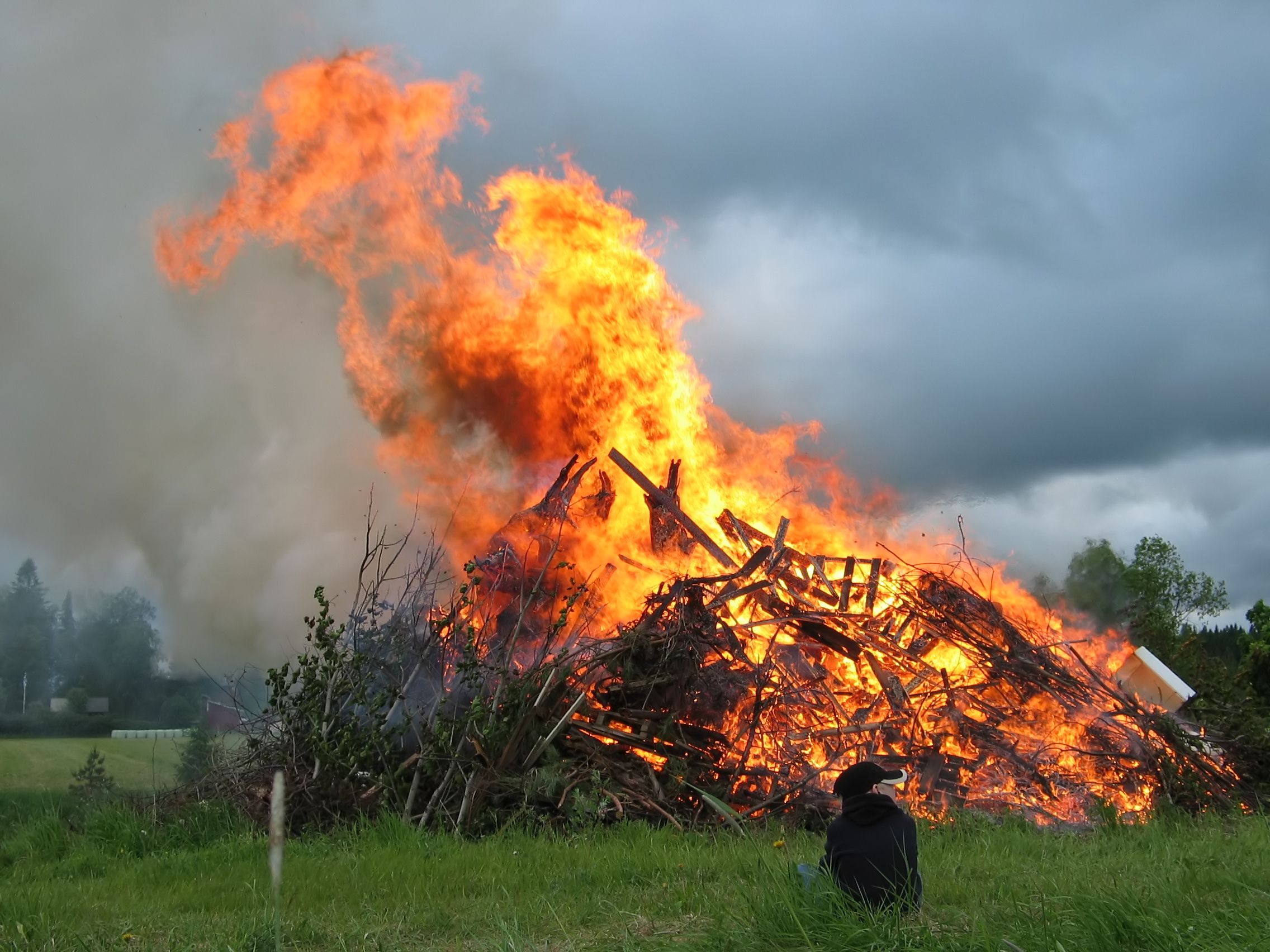
Is wood burning a physical or chemical change?
a)
Physical 
b)
Chemical
74.
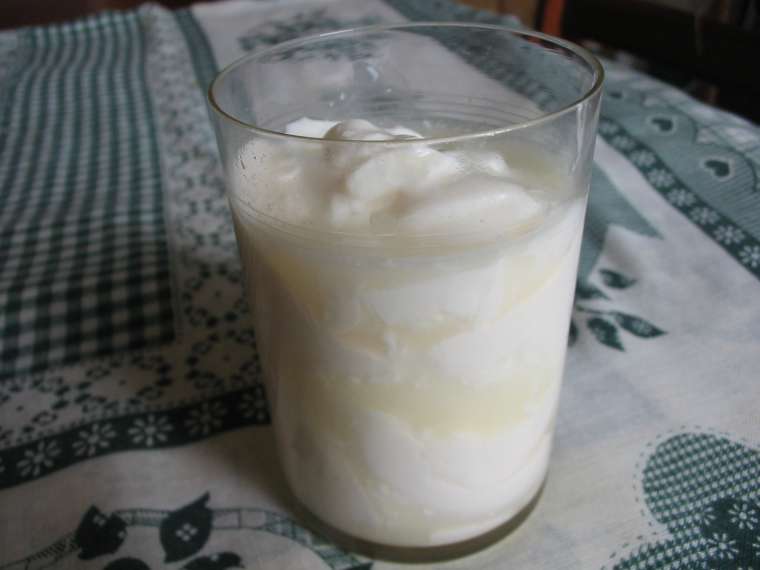
Is milk going sour a physical or chemical change?
a)
Physical 
b)
Chemical
75.
Is Gatorade powder dissolving in water physical or chemical change?
a)
Physical 
b)
Chemical
76.
Is mold growing on cheese a physical or chemical change?
a)
Physical 
b)
Chemical
77.
Is making orange juice a physical or chemical change?
a)
Physical 
b)
Chemical
78.
Is sharpening a pencil a physical or chemical change?
a)
Physical 
b)
Chemical
79.
Is copper tarnishing a physical or chemical change?
a)
Physical 
b)
Chemical
80.
Is the formation of the grand canyon a physical or chemical change?
a)
Physical 
b)
Chemical