
 Worksheets
Algebra 2 1st semester Final exam review
Total questions: 133
Worksheet time: 7hrs 37mins


f(2) = -1 g(1) = -2 f(1) = -2,
then which of the following MUST be true?


What is g-1(1)?
1
-1
3
-3

g(x) = x - 2
Find f(g(5))
g(x) = x - 2
Find f(g(0))
g(x) = x - 2
Find f(g(x))
f(x) = 3x2 + 7x and g(x) = 2x2 - x - 1, find (f + g)(x).
and g(x) = x+3 ,
find (f/g)(x).
f(x)=2x + 4
g(x)=3x2 - 1
Find f(x)*g(x)
6x4 + 12x3 - 4x2 - 8x
-6x3 + 12x2 + 2x - 4
6x3 + 12x2 - 2x - 4
5x2 - 18x + 20
Is f-1(x) a function?
f(x) = 1/4x - 7


the parent function f(x) = √x to the function above

Hint: Use a scratch graph to help you visualize things.


f(x) = √(x-2) + 4
f(x) = √(x-2) + 4

∛45x2y8


Write a polynomial in factored form with zeros at x = 1, x = -1 x = 0
(x - 1)(x + 1)
x(x - 1)(x + 1)
x2(x - 1)(x + 1)
x(x - 1)(x - 1)

Write the polynomial with the given zeros
A
B
C
D
If polynomial P(x) is divided by ( 2x - 5 ), with a remainder of -2, is ( 2x - 5 ) a factor of P(x)?
yes
no


How many possible negatives solutions does the following polynomial have?
f(x) = x4 - 3x3 - 17x2 + 39x -20
3 or 1
3
1
2 or 0
How many positive solutions does the following polynomial have?
f(x) =3x5 - x4 + 3x2 - 6x +11
4, 2, or 0
4
3 or 1
3
How many possible negatives solutions does the following polynomial have?
f(x) = x4 - 3x3 - 17x2 + 39x -20
3 or 1
3
1
2 or 0

Which describes the number and type of roots of the equation x3+121x=0
1 real, 2 imaginary
2 real, 1 imaginary
3 real
3 imaginary
State the possible number of imaginary zeros of
g(x)=x4+3x3+7x2-6x-13
3 or 1
2 or 0
exactly 1
exactly 3
Solve b4+2b2-24=0


Find all zeros
f(x)=x4-2x3+5x2-10x


Solve x3-1=0


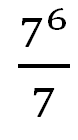
f(x)= 2x2 + 5x - 17, find f(-1).

If f(x) = 2x – 4 find f(q + 1):
2q + 4
2q + 2
2q - 6
2q - 2
3x3 – 6x
P(x) = x3+2x2+9x+18 have?
-4x + 7 - 3x3 + 12x2


(9x2 + 6x) ÷ 3x

The length is x+4. What is the width?
p(x) = x3 - 5x2 + 2x - 10


Degree - Even
Degree - Odd
Degree - Even
Degree - Odd
f(x) = -4x + 5x3 - 2x2

f(x) = 3x4 + 2x - 5
As x→-∞, f(x) →-∞.
As x→-∞, f(x) →∞.
As x→-∞, f(x) →∞.
As x→-∞, f(x) →-∞.


The end behavior of the graph is x →∞, f(x)→∞ and x→-∞, f(x)→⁻∞
The end behavior of the graph is x →∞, f(x)→-∞ and x→⁻∞, f(x)→-∞
The end behavior of the graph is x →∞, f(x)→∞ and x→⁻∞, f(x)→∞
The end behavior of the graph is The end behavior of the graph is x →∞,f(x)→⁻∞ and x→-∞, f(x)→∞


8x7 - 6x5 + 4x3 + 2x + 1 = 0


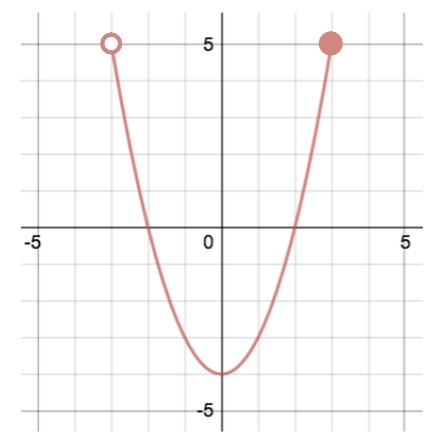
Select all statements that apply to this graphed polynomial...
The domain is (-∞,+∞)
The range is (-∞,+∞)
The range is [-4,+∞)
There are 1 relative minimum, 1 absolute minimum and 1 relative maximum


What is the absolute maximum?
None
(0, 9)
(9,0)
(-1,0) (1,0)

Which of the following points are zeros of this function?
(0,9)
(0,-1) (0,1)
(-3,0) (3,0)
(9,0)
f(x) = (x-2)2 + 4
a=2, h=-3, k=-7
-3(x - 5)2 + 1
x2 - 10x + 25
x2 + 7x + 49/4
f(x) = x2 - 12x +11
(x + 2)2 - 16 = 0
f(x) = (x + 3)2 + 3
f(x) = (x + 7)2 -1
(x2 + 14x + ____) - _____ + 3
x2 + 10x + 3
(x2 + 10x + 25) + 3
(x + 5)2 + 3
x2 - 2x - 5

x2 +12x = 5

For the function above, is the discriminant positive, negative, or zero?


R: {0, 1, 2, -4}
R:{-4, -3, 1}
R:{1, -3, -4}
R: {1, -3, -4, 1}
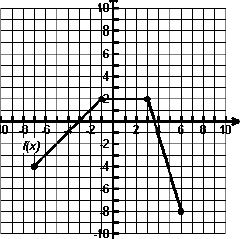


F
G
H
J
y = 4x+1
3x + 2y = 13
2x + 4y = 450
2x + 4y = 315
3x + 4y = 450
3x + 2y = 16
7x + y = 19



