Wayground logo

Free Printable Worksheets

Font size

S
M
L
XL
Worksheets

IPC B Review

Total questions: 89

Worksheet time: 2hrs 37mins

Name
Class
Date
1.
The distance between two crests or two troughs of a wave is called:
a)
frequency
b)
amplitud
c)
wavelength
d)
hertz
2.
The diagram represents a-
a)
Transverse Wave
b)
Longitudinal Wave
3.
The diagram represents a-
a)
Longitudinal Wave
b)
Transverse Wave
4.
The bending of a wave as it passes an edge or opening is-
a)
diffraction
b)
reflection
c)
resonance
d)
refraction
5.
Waves with a high frequency have _____ wavelengths.
a)
changing
b)
long
c)
the same
d)
short
6.
____________________  is the number of waves that move past one spot in a second
a)
energy
b)
amplitude
c)
wavelength
d)
frequency
7.
All waves carry-
a)
energy
b)
light 
c)
matter
d)
particles
8.
__________ is stored energy. 
a)
Potential
b)
Kinetic
c)
None of the above 
d)
All of the above 
9.
The faster an object moves, the ________ kinetic energy it has. 
a)
more
b)
less
c)
none of the above
d)
same
10.
What kind of energy is in a moving skateboard?
a)
Potential
b)
Kinetic
c)
Both potential and kinetic energy
d)
none of the above
11.

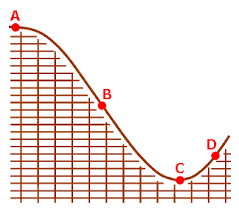
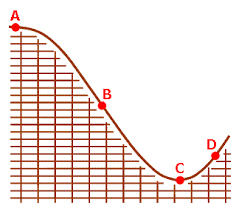
At which point(s) on the roller coaster is the gravitational potential energy at its maximum?

a)

A

b)

B

c)

C

d)

D

12.
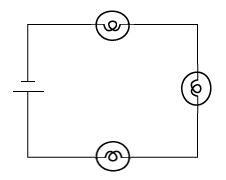
The picture shows an electrical circuit. This circuit is a series circuit because: 
a)
It has 3 light bulbs.
b)
The same current flows through all three light bulbs.
c)
It uses a single battery.
d)
The electrical current has more than one path to flow through
13.
What is a switch's function in a circuit?
a)
to make the current hotter or colder
b)
turn on and off the flow of current
c)
the pathway that current flows
d)
to add more power to the circuit
14.
What kind of circuit is this?
a)
series
b)
parallel
15.
What type of circuit is show in the image?
a)
Series Circuit
b)
Parallel Circuit
16.
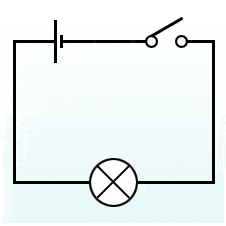
this circuit is .....?
a)
open
b)
parallel
c)
closed
d)
The cutest little circuit evah!
17.
When all parts of the circuit are connected it is a ______ circuit. 
a)
open
b)
closed
18.
Would would best complete this circuit?
a)
A wire
b)
A switch
c)
A battery
d)
A light bulb
19.
Electricity is the flow of _________.
a)
Protons
b)
Neutrons
c)
Electrons
20.
A fifth grade class constructed this circuit.  Which of these objects most likely made the light glow when connected to points X and Y?
a)
plastic straw
b)
cotton string
c)
aluminum foil
d)
rubber eraser
21.
A class prepared some electrical circuits using battery, connecting wires, and three light bulbs.  Which of these circuits can make the three bulbs light?
a)
A
b)
B
c)
C
d)
D
22.
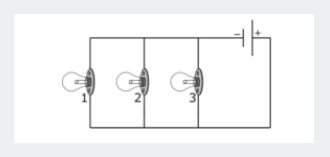
If bulb 1 burns out, what will occur?
a)
bulbs 2 and 3 will go out
b)
bulbs 2 and 3 receive more volts
c)
bulbs 2 and 3 will stay lit
d)
nothing will happen
23.
The picture shows an electrical circuit. This circuit is a series circuit because: 
a)
It has 3 light bulbs.
b)
The same current flows through all three light bulbs.
c)
It uses a single battery.
d)
The electrical current has more than one path to flow through
24.
What BLOCKS THE FLOW of electricity through it?
a)
Conductors
b)
Insulators
c)
Resistors
25.
What type of circuit is this?
a)
series
b)
parallel
26.
What is one problem with using a series circuit? 
a)
It has a lot of series. 
b)
If one light goes down, they all go down! 
c)
It doesn't work properly.
d)
There are no problems. 
27.
Two types of circuits are
a)
parallel and magnetic
b)
electromagnetic and series
c)
series and parallel
d)
big and small
28.

When an electric circuit operates, a buzzer makes a sound. What happens to the electric charges in this circuit?

a)

The electric charges move from the energy source and are used up at the switch.

b)

The electric charges move from the energy source and are used up at the buzzer.

c)

The electric charges move from the buzzer through the energy source and back to the buzzer.

d)

The electric charges move from the energy source through the buzzer and back to the energy source.

29.

The diagram shows a series circuit with three lit bulbs. How many of the bulbs will remain lit if the wire is cut a the point shown by the arrow?

a)

0

b)

1

c)

2

d)

3

30.
What will happen when these magnets are brought close together?
a)
They will attract each other.
b)
They will repel each other.
c)
Both magnets will turn to the left
d)
Both magnets will turn to the right
31.
Magnets have a north and a south ___________
a)
shape
b)
color
c)
pole
d)
region
32.
Where is the strongest attraction force of the magnet?
a)
at the poles
b)
in the middle
c)
above the magnet
d)
below the magnet
33.
What happens when two north poles of a magnet are placed together?
a)
they repel
b)
they attract
c)
they cancel each other out
d)
the strength of the magnet is doubled
34.
This is a picture of a ________________ magnet.
a)
bar 
b)
circle 
c)
horseshoe
d)
paddle
35.
The space around a magnet where the force of a magnet can attract best is called__________
a)
magnetism
b)
bar magnet
c)
horseshoe magnet
d)
magnetic field
36.
Magnetism is a type of ____________
a)
force
b)
book
c)
plant
d)
animal
37.
When two magnets repel, they ________________
a)
change color
b)
pull together
c)
push apart
d)
get colder
38.
The force of magnetism is stronger when magnets are ________________
a)
cold
b)
round
c)
closer together
d)
farther apart
39.
At which point(s) on the roller coaster is the kinetic energy at its maximum?
a)
A
b)
B
c)
C
d)
D
40.
According to the Law of Conservation of energy, the amount of energy before and after a reaction must be the same. Which statement below is true?
a)
The total amount of energy is conserved
b)
The total amount of energy is less after a reaction
c)
The total amount of energy is more after a reaction
41.
What does the Law of Conservation of Energy state?
a)
Energy cannot be created or destroyed
b)
Nothing can exchange energy
c)
Energy will increase over time.
d)
Energy will decrease over time.
42.
How long did it take this object to travel 10 m?
a)
0 s
b)
10 s
c)
15 s
d)
20 s
43.
At 60 seconds, how far had this object traveled? 
a)
0 m
b)
10 m
c)
20 m
d)
40 m
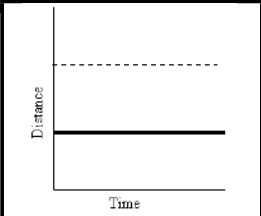
44.
What does this graph represent?
a)
Constant speed
b)
Acceleration
c)
Not moving
45.
What is this graph showing?
a)
Constant Speed
b)
Acceleration (speeding up)
c)
Deceleration (slowing down)
d)
No motion
46.
What is happening in the graph from point O to A?
a)
The object is moving SLOWLY
b)
The object is moving FAST
c)
The object is NOT moving
d)
The object is accelerating
47.
What is happening in this graph from point A to B?
a)
The object is accelerating.
b)
The object is not moving.
c)
The object is decelerating.
d)
The object is moving at a constant speed.
48.
Scott travels north 5 miles and then goes west 3 miles before coming straight back south 2 miles. What is his distance?
a)
10
b)
7
c)
8
d)
6
49.
David walks 3 km north, and then turns east and walks 4 km. What is the distance?
a)
7 km
b)
3 km
c)
4 km
d)
1 km
50.
1.  Amy runs 2 miles south, then turns around and runs 3 miles north. What is displacement?
a)
5 miles
b)
1 miles
c)
2 miles
d)
3 miles
51.
What kind of quantity has both a magnitude and a direction?
a)
scalar
b)
vector
c)
frame of reference
d)
time
52.
What law is best described by inertia?
a)
1st
b)
2nd
c)
3rd
53.

When an unbalanced force acts on an object, the force ______________________.

a)

changes the motion of the object

b)

is cancelled by another force

c)

does not change the motion of an object

d)

is equal to the weight of the object

54.

When two equal forces act in opposite directions on an object, they are called ______________________.

a)

frictional force

b)

balanced force

c)

centripetal force

d)

gravitational force

55.

According to Newton’s second law of motion, force is equal to mass times ______________________.

a)

inertia

b)

weight

c)

acceleration

d)

direction

56.
Which has more Inertia? (so need more force to move) 
a)
Truck
b)
Ant
c)
A cat
d)
A skateboard
57.
What is the formula for force?
a)
F=M/A
b)
F=MA
c)
F=AX
d)
what is force?
58.
What is Newton's Third Law?
a)
Object in motion stays in motion and an object at rest stays at rest unless acted on by a outside force
b)
Force = mass x acceleration
c)
For every action there is an equal and opposite reaction
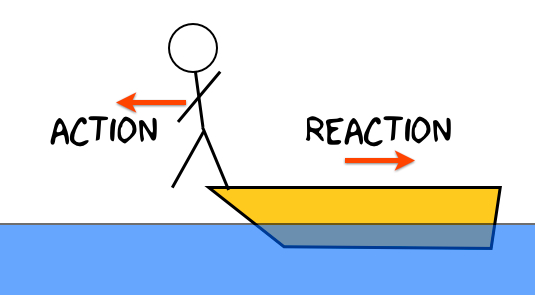
59.
What law of motion does this picture represent?
a)
Newtons 1st law
b)
Newtons 4th law 
c)
Newtons 3rd law 
d)
Newtons 2nd law
60.
Name this guy.
a)
Waggy
b)
Shaggy
c)
Yaggy
d)
Baggy
61.
Who is this?
a)
Daisy Duck
b)
Donald Duck
c)
Daffy Duck
d)
Darren Duck
62.
Do you know my name?
a)
Julio
b)
Sergio
c)
Fonzio
d)
Mario
63.
Gravitational potential energy depends on the ________ and ________ of the object. 
a)
Height and mass
b)
Friction and movement
c)
Mass and Movement
d)
Height and Friction 
64.
What kind of energy is in a moving skateboard?
a)
Potential
b)
Kinetic
65.
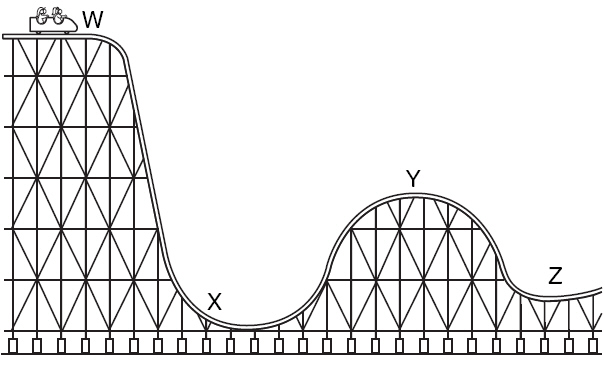
At which point is potential energy greatest?
a)
W
b)
X
c)
Y
d)
Z
66.
At which point is kinetic energy greatest? 
a)
W
b)
X
c)
Y
d)
Z
67.
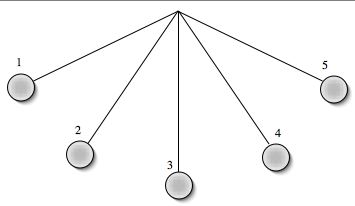
When a pendulum swings, at which point is kinetic energy highest?
a)
1
b)
2
c)
3
d)
4
68.
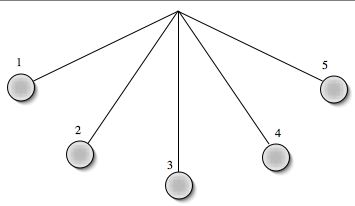
When a pendulum swings, at which point is potential energy at its greatest?
a)
1
b)
2
c)
3
d)
4
69.
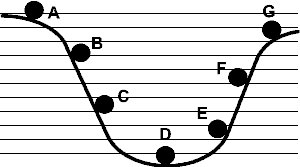
Which point has the most potential energy?
a)
G
b)
f
c)
b
d)
a
70.
Explain what happens to the potential energy of a rock as it falls off the side of a cliff.
a)
The kinetic energy decreases as the potential energy increases.
b)
The kinetic energy decreases as the potential energy decreases.
c)
The potential energy decreases as the kinetic energy increases.
d)
The potential energy decreases as the kinetic energy decreases. 
71.
When riding a roller coaster, you go up and down many hills. As you get to the top of a roller coaster, what energy change is taking place.
a)
Potential energy is changed into kinetic energy.
b)
Kinetic energy is changed into potential energy.
c)
Chemical energy is changed into heat energy.
d)
Heat energy is changed into chemical energy. 
72.
The flow of electricity in a circuit-
a)
current
b)
flow
c)
circuit
73.
Electricity that flows in a closed path is called a
a)
path
b)
current
c)
circuit
74.
____________ allows electricity to flow.
a)
A conductor
b)
An insulator
c)
A magnet
75.
____________ stops the flow of electricity.
a)
A conductor
b)
An insulator
c)
A magnet
76.
To complete a circuit the switch must be
a)
unattached
b)
open
c)
closed
77.
The only charges that can move from one object to another are___________ charges.
a)
electric
b)
neutral
c)
positive
d)
negative
78.
If an object has more positive than negative charges, its electrical charge is...
a)
positive
b)
negative
c)
neutral or no charge
d)
opposite
79.
If an object has more negative charges than positive charges, its electrcial charge is...
a)
positive
b)
negative
c)
neutral or no charge
d)
opposite
80.
If an object has the same number of positive and negative charges, its electrical charge is...
a)
positive
b)
negative
c)
neutral or no charge
d)
opposite
81.
One example of static electricity is...
a)
rain
b)
thunder
c)
lightning
82.
Two objects that have the same charges will...
a)
attract
b)
repel
c)
not move
83.
Two objects that have opposite charges will...
a)
attract
b)
repel
c)
not move
84.
What is the major difference between static electricity and current electricity?
a)
Current electricity involves a continuous flow of neutrons; static electricity is a sudden transfer of protons
b)
Current electricity can be deadly; static electricity is almost always safe
c)
In current electricity, there's a single transfer of electrons; in static electricity, there's a steady flow of electrons
d)
Current electricity involves a flow of electrons; static electricity involves a single transfer of electrons
85.
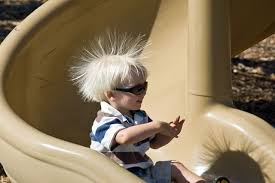
What method of static charging is shown in this picture
a)
Polarization
b)
Friction
c)
Induction
d)
Conduction
86.
Rubbing a balloon on hair is an example of static charge build up created by....
a)
conduction
b)
friction
c)
induction
d)
hairduction
87.

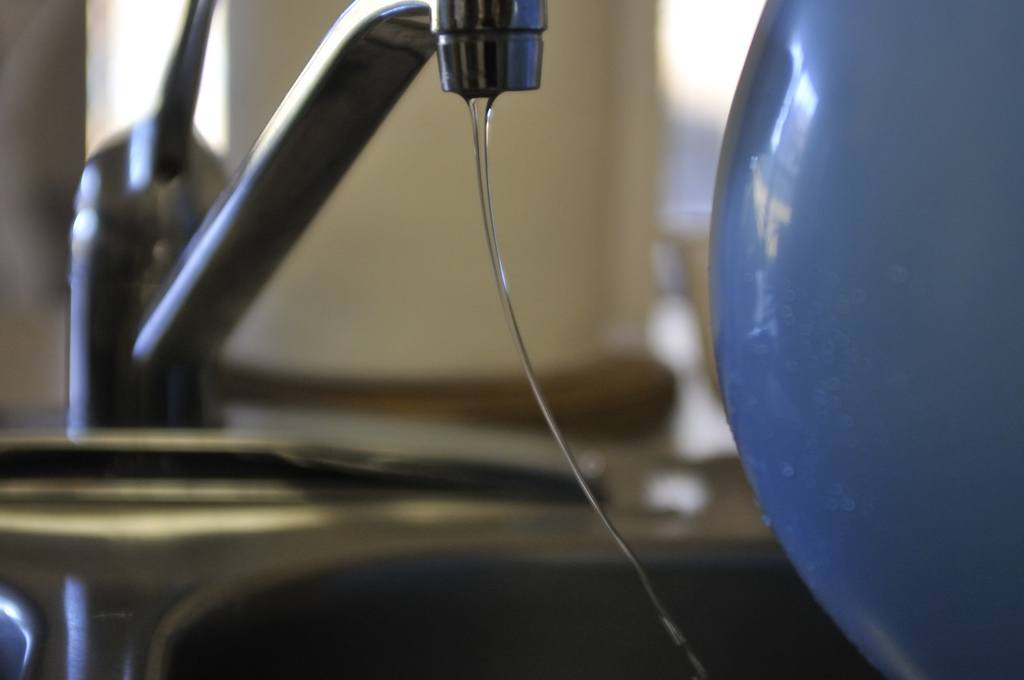
Bending water with a charged balloon is an example of what type of charging (charging an object without touching)

a)

friction

b)

induction

c)

conduction

88.
If two charges repel each other, the two charges must be
a)
Positive and neutra
b)
Positive and negative
c)
positive and neutral
d)
negative and negative
89.
An object becomes charged when the atoms in the object gain or lose
a)
electrons
b)
protons
c)
neutrons
d)
all of the above