wayground logo

Free Printable Worksheets

NEW

Font size

S
M
L
XL
Worksheets

Atomic Basics

Total questions: 51

Worksheet time: 43mins

Name
Class
Date
1.

A proton has what charge?

a)

Positive

b)

Negative

c)

Neutral

2.

A neutron has what charge?

a)

Positive

b)

Negative

c)

Neutral

3.

Where can protons and neutrons be found in the atom?

a)

On orbitals

b)

On the outside ring

c)

Inside the nucleus

d)

Next to the nucleus

4.

Where can electrons be found?

a)

In outer shells

b)

In the nucleus

c)

In the middle

d)

On orbits

5.

How can you determine how many protons an element has?

a)

Loot at the atomic weight

b)

Look at the atomic number

c)

Subtract the atomic weight from the atomic number

d)

Add the atomic weight to the atomic number

6.

How many protons does Potassium (K) have?

a)

19

b)

39

c)

20

d)

58

7.

What two subatomic particle charges cancel each other out?

a)

Protons and neutrons

b)

protons and electrons

c)

electrons and neutrons

d)

None of the above

8.

Which of the following is considered the building block of life?

a)

Atoms

b)

Molecules

c)

Compounds

d)

Elements

9.
all matter is made of what 
a)
energy 
b)
atoms 
c)
electrons 
d)
compounds 
10.
The positive particles of an atom are 
a)
electrons 
b)
positrons 
c)
neutrons 
d)
protons 
11.
the central region of an atom where its neutrons and protons are is its 
a)
nucleus 
b)
electron cloud
c)
core 
d)
center 
12.
an atom with atomic number 6 would have how many protons 
a)
6
b)
12
c)
3
d)
cannot be determined 
13.
Particles in an atom that are neutral and have no charge are 
a)
negatrons 
b)
electrons 
c)
neutrons 
d)
protons 
14.
What is the atomic number for an element with three protons?
a)
2
b)
1
c)
3
d)
6
15.
A particle that moves around the nucleus is a(n)...
a)
Proton
b)
Neutron
c)
Electron
d)
Quark
16.
What particle provided the positive charge for an atom?
a)
proton 
b)
neutron
c)
electron
d)
nucleus
17.
The name of the subatomic particle that determines the identity of an atom.
a)
proton
b)
nucleus
c)
electron
d)
neutron
18.
Which particle contributes the negative charge to the atom?
a)
proton
b)
electron
c)
neutron
d)
nucleus
19.
How many protons are in this element?
a)
79
b)
196
c)
117
d)
Cannot be determined
20.
Which of the following statements about protons and neutrons is true?
a)
Protons weigh much more than neutrons
b)
Neutrons weigh much more than protons
c)
Protons and neutrons weigh about the same
d)
Neither protons or neutrons have any weight
21.
An element can be defined by the number of ___________ in the nucleus of its atoms.
a)
protons
b)
neutrons
c)
electrons
d)
atoms
22.
Where are protons located in an atom?
a)
nucleus
b)
electron cloud
c)
neutron
d)
who knows?
23.
Where are neutrons located within an atom?
a)
nucleus
b)
electron cloud
c)
neutron
d)
who knows?
24.
An atom's protons and neutrons are concentrated in a dense, central region called the...
a)
electron cloud
b)
nucleus
c)
proton
d)
neutron
25.
The smallest particle of an element that retains the properties of that element is a(n)
a)
atom
b)
electron
c)
proton
d)
neutron
26.
What holds the electrons?
a)
nucleus
b)
electron cloud
c)
protons
d)
neutrons
27.
Which of the following is unique for any given element?
a)
the number of neutrons
b)
the charge on the electrons
c)
the number of protons
d)
the mass of a neutron
28.
Hydrogen has 1 proton. It's atomic number is:
a)
0
b)
1
c)
2
d)
cannot be determined
29.

The atomic number is defined as

a)

The number of electrons

b)

The number of protons

c)

The number of neutrons

d)

The number of protons + neutrons

e)

The number of protons + electrons

30.

The atomic mass is defined as

a)

The number of electrons

b)

The number of protons

c)

The number of neutrons

d)

The number of protons + neutrons

e)

The number of protons + electrons

31.

What is in the middle of an atom?

a)

protons

b)

neutrons

c)

electrons

d)

protons & neutrons

e)

protons & electrons

32.
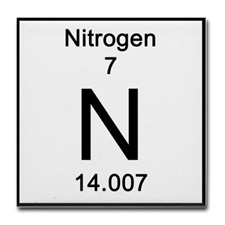
What is the number of protons that the element in this image contain?
a)
14
b)
7
c)
15
d)
18
33.
What is the atomic number?
a)
the number of protons
b)
the number of protons and neutrons
c)
the number of neutrons
d)
the number of protons and electrons
34.
What is the mass number?
a)
the number of protons
b)
the number of protons and neutrons
c)
the number of neutrons
d)
the number of protons and electrons
35.
Atoms are mostly filled with?
a)
electrons
b)
empty space
c)
protons
36.
Sodium has an atomic number of 11, how many protons does this atom have?
a)
22
b)
11
c)
12
d)
2
37.
Where is the proton located?
a)
In the very dense nucleus
b)
Floating around in the negative electron cloud
c)
the loose nucleus
d)
the positive electron cloud
38.
What number on the element key tells you how many protons an element has?
a)
Atomic Mass
b)
Element name
c)
Atomic number
d)
Element Symbol
39.
Which description about the proton is accurate?
a)
Positively charged particle with a mass less than 0 amu
b)
A neutrally charged particle with a mass less than 0 amu
c)
Positively charged particle with a mass of 1 amu
d)
A neutrally charge particle with a mass of 1 amu
40.
Elements can have the same number of protons?
a)
True
b)
False
41.
Protons are equal to:
a)
Atomic Mass
b)
Number of neutrons
c)
Atomic Number
d)
All of the subatomic particles
42.
Which subatomic particle causes the nucleus to have a positive charge?
a)
Neutron
b)
Electrons
c)
Protons
d)
Valence electrons
43.
The electron cloud is the home of the proton?
a)
True
b)
False
44.

The subatomic particle with the least mass is the

a)

proton

b)

neutron

c)

electron

45.

If I have 20 protons, how many electrons will I have?

a)

10

b)

20

c)

1

46.

How many protons do I have if my atomic mass is 6?

a)

6

b)

12

c)

24

47.

True or False. There are the same # of protons and electron in an atom?

a)

True

b)

False

48.

Who lives in the nucleus with the neutron?

a)

proton

b)

neutron

c)

electron

49.

Most of an atom's weight/mass is found in the

a)

electron cloud

b)

nucleus

c)

shells

d)

orbitals

50.

Which is the least massive subatomic particle?

a)

proton

b)

neutron

c)

electron

51.

Which element is this a picture of?

a)

Boron (Atomic number 6)

b)

Oxygen (Atomic number 8)

c)

Helium (atomic number 2)