wayground logo

Free Printable Worksheets

Font size

S
M
L
XL
Worksheets

Midterm review

Total questions: 165

Worksheet time: 3hrs 31mins
Name
Class
Date
1.
Freezing
a)
Solid to gas
b)
Liquid to solid
c)
Gas to solid
d)
Liquid to gas
2.
Boiling
a)
liquid to gas
b)
gas to solid
c)
gas to liquid
d)
solid to liquid
3.
Which state of matter has tightly packed molecules?
a)
solid
b)
liquid
c)
gas
4.
What is happening when my ice cream changes from a solid to a liquid?
a)
freezing
b)
melting
c)
burning
d)
evaporation
5.
Define a liquid.
a)
Indefinite shape, indefinite volume
b)
Definite shape, definite volume
c)
Found in stars
d)
Definite volume, indefinite shape
6.
The state of matter that has no definite size or shape is
a)
Solid
b)
Liquid
c)
Gas
7.
Something that takes up space and has mass.
a)
volume
b)
matter
c)
mass
d)
density
8.
What does it mean if a mixture is heterogeneous?
a)
you can see the different parts
b)
cannot tell one part from another
c)
very well blended
d)
made of elements
9.
What does it mean if a mixture is homogeneous?
a)
you can see the different parts
b)
cannot tell one part from another
c)
chunks of particles
d)
made of elements
10.
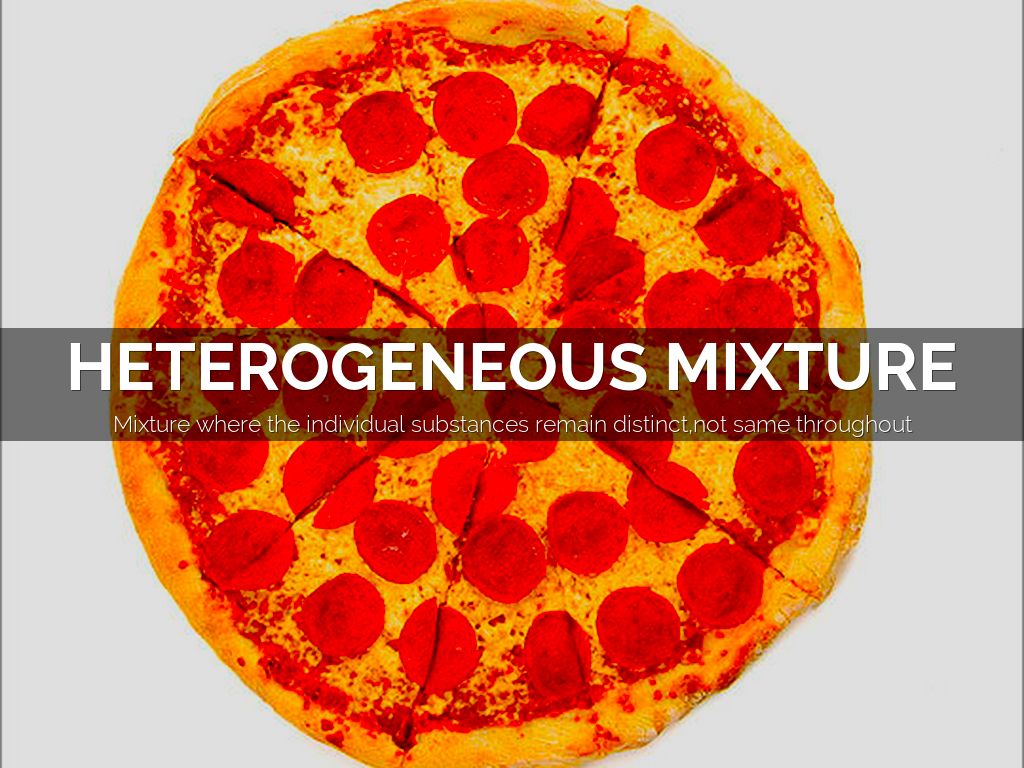
What type of mixture is this?
a)
heterogeneous 
b)
homogeneous
11.
What type of mixture is this?
a)
heterogeneous 
b)
homogeneous
12.
What type of mixture is this?
a)
heterogeneous 
b)
homogeneous
13.
What type of mixture is this?
a)
heterogeneous 
b)
homogeneous
14.

Which of the following is a pure substance?

a)

carbon

b)

pizza

c)

salad

d)

sand

15.
Two or more substances mingled together, but not chemically combined are known as a
a)
residue
b)
solution
c)
distillate
d)
mixture
16.
The amount of space that matter takes up is its _______.
a)
atom
b)
volume
c)
matter
d)
weight
17.
At 32 degrees Fahrenheit, water _________.
a)
evaporates
b)
boils
c)
freezes
d)
remains the same
18.
Solids have a definite _______________.
a)
smell
b)
shape
c)
picture
d)
sound
19.
Liquid matter takes the shape of _______.
a)
a gas
b)
water
c)
a pet
d)
Its container
20.
Liquid matter takes the shape of _______.
a)
a gas
b)
water
c)
a pet
d)
Its container
21.
When a solid is turned into a liquid, the solid _______________.
a)
melts
b)
freezes
c)
turns into a gas
d)
floats
22.
The amount of matter something contains is its ______________.
a)
gas
b)
solid
c)
weight
d)
mass
23.
The measurement system used by scientist around the world.
a)
metric system
b)
customary systerm
c)
calorie system
d)
science system
24.
______________ does not have a definite shape or volume.
a)
liquid
b)
solid
c)
gas
25.
Gasoline is a ________________.
a)
liquid
b)
solid
c)
gas
26.
Sand is a ___________________.
a)
liquid
b)
solid
c)
gas
27.
Helium is a ____________.
a)
liquid
b)
solid
c)
gas
28.
Which of the following terms identifies the change from a liquid to gas?
a)
Vaporization
b)
Condensation
c)
Deposition
d)
Sublimation
29.
Phase change from a solid to a gas.
a)
sublimation
b)
deposition
c)
condensation
d)
evaporation
30.
Phase change from a solid to a liquid.
a)
melting
b)
sublimation
c)
boiling
d)
condensation
31.
Phase change from a liquid to a gas that only happens at the surface.
a)
evaporation
b)
boiling
c)
sublimation
d)
melting
32.
Phase change from a gas to a liquid.
a)
condensation
b)
evaporation
c)
melting
d)
deposition
33.
Which of the following describes covalent bonds?
a)
Bonds form because of opposite charges
b)
Bonds form to fill outer electron shells
c)
Electrons are transferred between atoms
d)
Covalent bonds are magical
34.
Protons have a charge of:
a)
-1
b)
+1
c)
-2
d)
+2
35.
Electrons have a charge of:
a)
-1
b)
-2
c)
+1
d)
+2
36.
In a covalent bond, one or more electrons are? 
a)
shared 
b)
lost 
c)
gained 
d)
transferred 
37.
What two types of atoms make a covalent bond?
a)
2 Nonmetals
b)
1 Nonmetal and 1 Metal
c)
2 Metals
d)
2 Noble Gases
38.
What region of the periodic table contains atoms that form covalent bonds?
a)
the left side
b)
the middle
c)
the right side
d)
top left
39.
Is carbon considered a metal or a non-metal?
a)
metal
b)
nonmetal
c)
other
40.
What is the correct chemical formula for Nitrogen Triiodide?
a)
NI3
b)
N3I3
c)
NOI
d)
NeI3
41.
What is the correct name for C4H6?
a)
Carbon Hexahydride
b)
Pentacarbon Pentahydride
c)
Hexacarbon Tetrahydride
d)
Tetracarbon Hexahydride
42.
What is the correct name for NO?
a)
Mononitrogen Monoxide
b)
Nitrogen Monoxide
c)
Mononitrogen Dioxide
d)
Nitrogen Oxide
43.
What is the formula for Tricarbon Octahydride?
a)
Ca3O
b)
C2H8
c)
C3H8
d)
Ca3H8
44.
What is the name of CO
a)
Carbon oxide
b)
Carbon dioxide
c)
Carbon monoxide
d)
Carbon II oxide
45.
What is the chemical formula for Tetraphosphorous Pentachloride ?
a)
4P5Cl
b)
PCl
c)
P4Cl5
d)
none of the above
46.
BrO3
a)
bromine oxide
b)
monobromine trioxide
c)
bromine trioxide
d)
bromine (III) oxide
47.
SiCl4
a)
silicon tetrachloride
b)
silicon quadchloride
c)
monosilicon tetrachloride
d)
silicon chloride
48.
The chemical formula of sulfur hexabromide is
a)
SBr₆
b)
S₆Br
c)
S(VI)Br
d)
S6Br
49.
The chemical formula of dinitrogen textroxide is
a)
Ni₂O₄
b)
NiO
c)
N₂O₄
d)
NiO₂
50.
According to VSEPR, molecules adjust their shapes to keep which of the following as far away as possible?
a)
Pairs of valence electrons
b)
Inner shell electrons
c)
Mobile Electrons
d)
Electrons closest to the nucleus
51.
Which of the following shapes has unshared pairs of electrons on the central atom? 
a)
Bipyramidal
b)
Bent
c)
Trigonal Planar
d)
Tetrahedral
52.
Which of the following molecular shapes would have a bond angle of 180 Degrees?
a)
Bent
b)
Trigonal Planar
c)
Tetrahedral
d)
Linear
53.
Who could this be?
a)
H2O
b)
NH3
c)
CO2
d)
CH4
54.
Who could this be? 
a)
CO2
b)
NH3
c)
H2S
d)
CH4
55.
Will this molecule be polar or nonpolar? CCl4
a)
polar
b)
nonpolar
56.
How many electrons are shared in a triple bond?
a)
6
b)
3
c)
6 pairs
d)
5
57.
Will this molecule be polar or nonpolar? PH3
a)
polar
b)
nonpolar
58.
Will this molecule be polar or nonpolar? CS2
a)
polar
b)
nonpolar
59.
What is the molecular geometry of OF2?
a)
Linear
b)
Bent
c)
Tetrahedral
d)
Trigonal Planar
60.
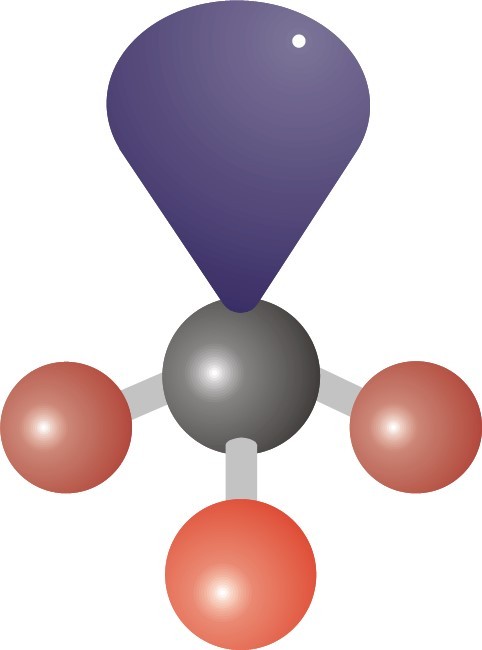
What is the the shape of this molecule according to VSPER theory?
a)
Linear
b)
Tetrahedral
c)
Bent
d)
Trigonal pyramidal
61.
Which of these has a double bond?
a)
Cl2
b)
H2
c)
N2
d)
O2
62.
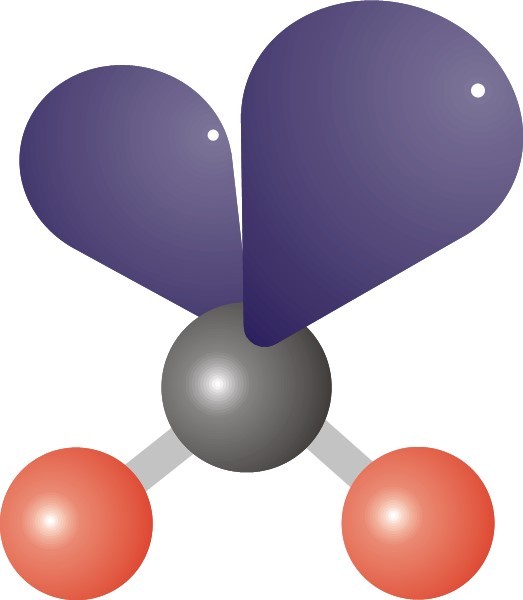
How many lone pairs are in this molecule's structure?
a)
6
b)
2
c)
0
d)
4
63.
Which of the following is octahedral?
a)
SCl6
b)
XeI4
c)
NBr5
d)
CH4
64.
A bond where electrons are NOT shared equally? 
a)
polar covalent
b)
nonpolar covalent
65.
Convert 8 kilometers to meters
a)
800 m
b)
80,000 m
c)
8,000 m
d)
.008 m
66.
Convert 300 meters to centimeters:
a)
3000 cm
b)
0.3 cm
c)
30,000 cm
d)
3 cn
67.
Convert 17 m to cm:
a)
0.17 cm
b)
0.017 cm
c)
1,700 cm
d)
170 cm
68.
Convert 5 cm to mm:
a)
5,000mm
b)
0.5 mm
c)
0.05 mm
d)
50 mm
69.
1000 grams = _____ kilograms
a)
0.0001
b)
1,000,000
c)
10
d)
1
70.
7,000 g = ____ kg
a)
70
b)
700
c)
7
d)
0.07
71.
What number is the metric system based?
a)
10
b)
20
c)
1
d)
100
72.
The amount of matter in an object is the
a)
mass
b)
volume
c)
length
d)
density
73.
The amount of space an object takes up is its'
a)
mass
b)
volume
c)
length
d)
density
74.
The base for mass is the
a)
meter
b)
gram
c)
kilogram
d)
liter
75.
The base unit for length is the
a)
second
b)
gram
c)
meter
d)
liter
76.

Which of the following are the units for volume?

a)

mL

b)

grams

c)

cm3

d)

Both mL and cm3

77.
What would be the best way to measure the volume of a small rock?
a)
L x W x H with a ruler
b)
Put on triple beam balance
c)
Mass ÷ Volume
d)
Displacement method using graduated cylinder
78.
What is the formula for calculating density?
a)
Mass ∗ Volume
b)
Volume ∗ Mass
c)
Mass ÷ Volume
d)
Volume ÷ Mass
79.
How many significant figures does the following number have: 0.002040
a)
6
b)
4
c)
3
d)
2
80.
How many significant figures does the following number have: 0.998005
a)
9
b)
10
c)
6
d)
5
81.
How many significant figures does the following number have: 100.00210
a)
7
b)
5
c)
10
d)
8
82.
Round 0.010229 to four sig figs
a)
1022
b)
1023
c)
0.01023
d)
0.01022
83.
Round 1047.78 to three sig figs
a)
104
b)
105
c)
1050
d)
1050.00
84.
Determine the number of Significant Figures in 10.0-g
a)
5
b)
4
c)
3
d)
2
85.
Determine the number of Significant Figures in 10-L.
a)
4
b)
3
c)
2
d)
1
86.
Determine the number of Significant Figures in 48032-m3.
a)
5
b)
4
c)
3
d)
2
87.
How many significant figures does the following number have: 1740200
a)
2
b)
1
c)
3
d)
5
88.
How many sig figs are there?
4000.
a)
1
b)
3
c)
4
89.

How would you write 0.0005 in scientific notation?

a)

50 x 10-5

b)

5 x 10⁻⁴

c)

5 x 10⁻³

d)

.5 x 10-3

90.
How would you write 4.3756 x 10in standard form?
a)
437,560,000
b)
0.00043756
c)
43,756
d)
4,3756
91.
How would you write -5.6 x 10⁻³ in standard form?
a)
0.0056
b)
-5,600
c)
0.00056
d)
-0.0056
92.
Scientific Notation is made up of two number parts. The first part should be a number between 1 and 100.
a)
True
b)
False
93.
Scientific Notation is made up of two number parts. The second part is a power of base 10.
a)
True
b)
False
94.
How do you write
8.317 x 10⁶
in standard form?
a)
8, 371, 000
b)
83, 170, 000
c)
837, 100
d)
8, 317, 000
95.
How do you write
1001
in scientific notation?
a)
1.0001 x 10⁴
b)
1.01 x 10⁵
c)
1.001 x 10³
d)
10.1 x 10³
96.
Which of the following is correct scientific notation?
a)
20.35 x 10⁴
b)
.2035 x 104
c)
2035 4
d)
2.035 x10⁴
97.
Express the following in scientific notation:
.000457
a)
457 x 106
b)
457 x 10-6
c)
4.57 x10⁴
d)
4.57 x 10⁻⁴
98.
Express the following in standard notation:
8.025 x 10⁻⁸
a)
.00000008025
b)
.000000008025
c)
802,500,000,000
d)
80,250,000,000
99.
Express the following in standard notation:
8.025 x 10⁻⁸
a)
.00000008025
b)
.000000008025
c)
802,500,000,000
d)
80,250,000,000
100.
Find the Mean of:
8, 14, 32, 6, 15
a)
15
b)
175
c)
75
d)
12
101.
Find the Mean of:
54, 41, 33, 16
a)
144
b)
32
c)
25
d)
36
102.
What is the median of:
98, 403, 13
a)
98
b)
403
c)
13
d)
175
103.
What is the median of:
6, 12, 16, 11, 8, 4, 1, 11, 4
a)
11
b)
6
c)
8
d)
7
104.
What is the median of:
113, 33, 37, 11
a)
34.5
b)
37
c)
33
d)
35
105.
What is the mean of:
190, 210, 220, 180
a)
100
b)
400
c)
200
d)
50
106.

How close a measurement is to the true value is called..

a)

Accuracy

b)

Precision

c)

Significant

d)

Estimate

107.
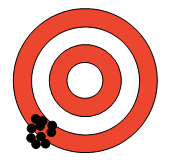
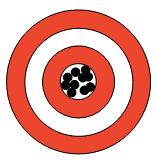
This bullseye demonstrates...
a)
High Accuracy & High Precision
b)
High Accuracy & Low Precision
c)
Low Accuracy & High Precision
d)
Low Accuracy & Low Precision
108.
When a measurement is repeatable and consistent it is said to have...
a)
High precision
b)
Low precision
c)
High accuracy
d)
Low accuracy
109.
A set of data are all close to each other, but they are not close to the actual value.  This set of data can be described as...
a)
accurate
b)
precise
c)
both precise and accurate
110.
A set of data are not close to each other, but the average of the data is very close to the actual value.  This set of data can be described as...
a)
accurate
b)
precise
c)
both precise and accurate
111.
Which is the more precise measurement?
a)
4 mL
b)
4.3 mL
112.
The attendance for the basketball game was estimated to be 15,000 people but 12,500 people attended. What was the percent error?
a)
16.67%
b)
20%
c)
2500%
d)
80%
113.
The students measured length during a science experiement, they got 12 cm. But the actual measurement was 14.25 cm. What was the percent error?
a)
15.79%
b)
18.75%
c)
2.25%
d)
18%
114.
The deer population is estimated to be 17,600 in northern Illinois, but an actual count was 21,300. What is the percent error?
a)
21%
b)
17.37%
c)
17.4%
d)
21.02%
115.
?
a)
High Accuracy & High Precision
b)
High Accuracy & Low Precision
c)
Low Accuracy & High Precision
d)
Low Accuracy & Low Precision
116.
What is the proper name for S2O2?
a)
Sulfur oxide
b)
Sulfur dioxide
c)
sulfur (II) oxide
d)
disulfur dioxide
117.
A molecule with a double covalent bond is....
a)
HCl
b)
SO
c)
I2
d)
N2
118.
How many bonds does carbon have to create in order to satisfy the octet rule
a)
1
b)
2
c)
3
d)
4
119.
How many electrons can the 1st electron shell hold?
a)
2
b)
3
c)
8
d)
18
120.
How many electrons can the 2nd electron shell hold?
a)
2
b)
3
c)
8
d)
18
121.
Valence electrons are the...
a)
Innermost electrons
b)
Middle electrons
c)
Outermost electrons
d)
Any electrons
122.

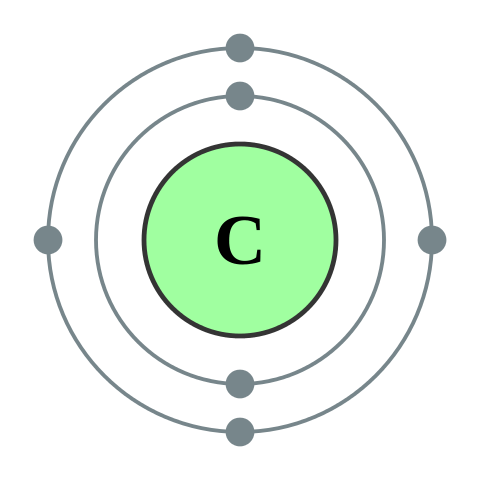
How many valence electrons does carbon have?

a)

4

b)

5

c)

6

d)

7

123.
How many valence electrons does Neon have?
a)
7
b)
8
c)
9
d)
10
124.
How many valence electrons does Helium have?
a)
1
b)
2
c)
3
d)
4
125.
How many valence electrons do atoms in group 16 have?
a)
4
b)
5
c)
6
d)
7
126.

How many valence electrons do elements in Group 1 have?

a)

1

b)

2

c)

3

d)

4

127.

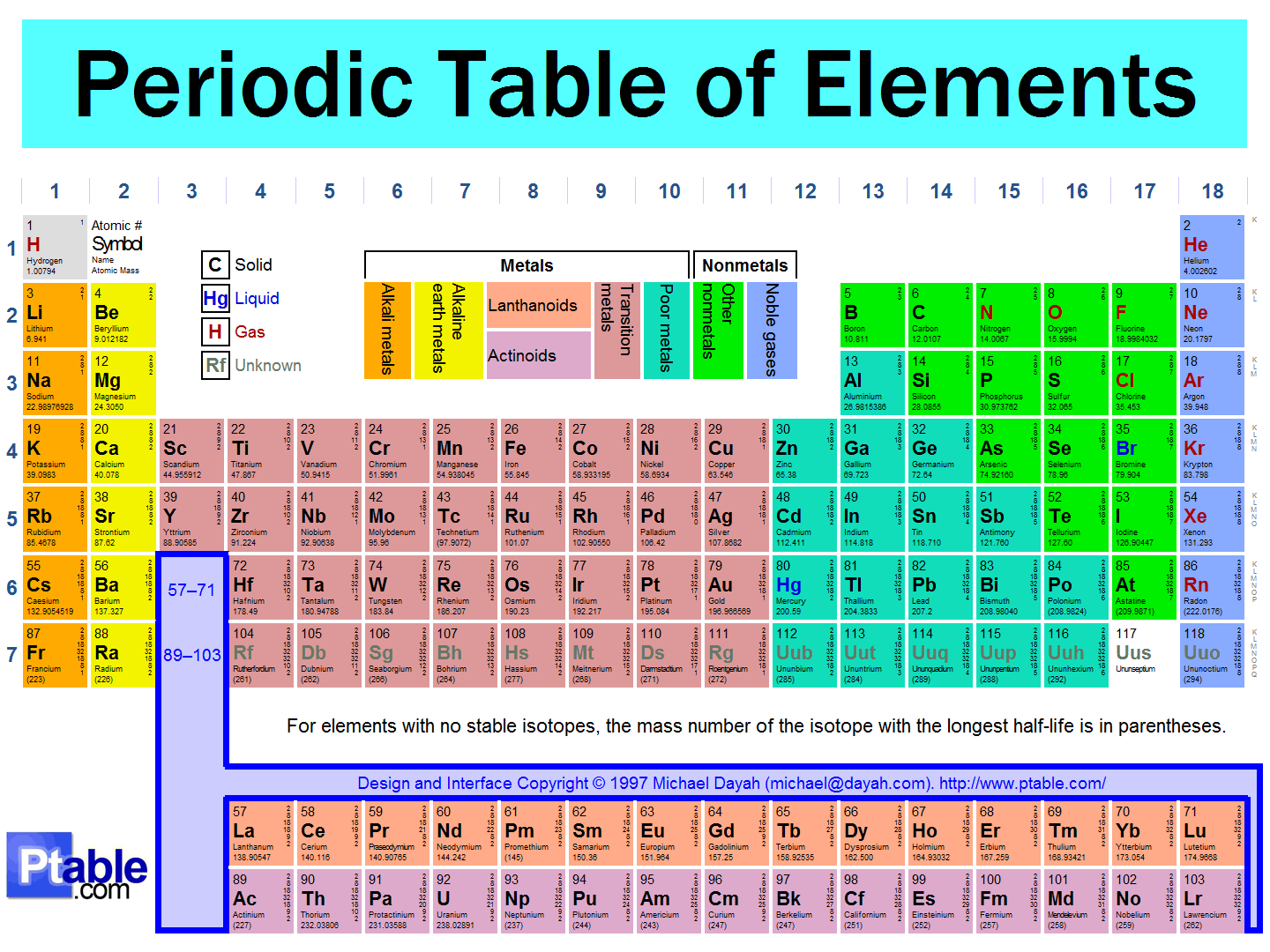
USE THE PERIODIC TABLE

How many valence electrons does sodium have?

a)

1

b)

2

c)

3

d)

4

128.

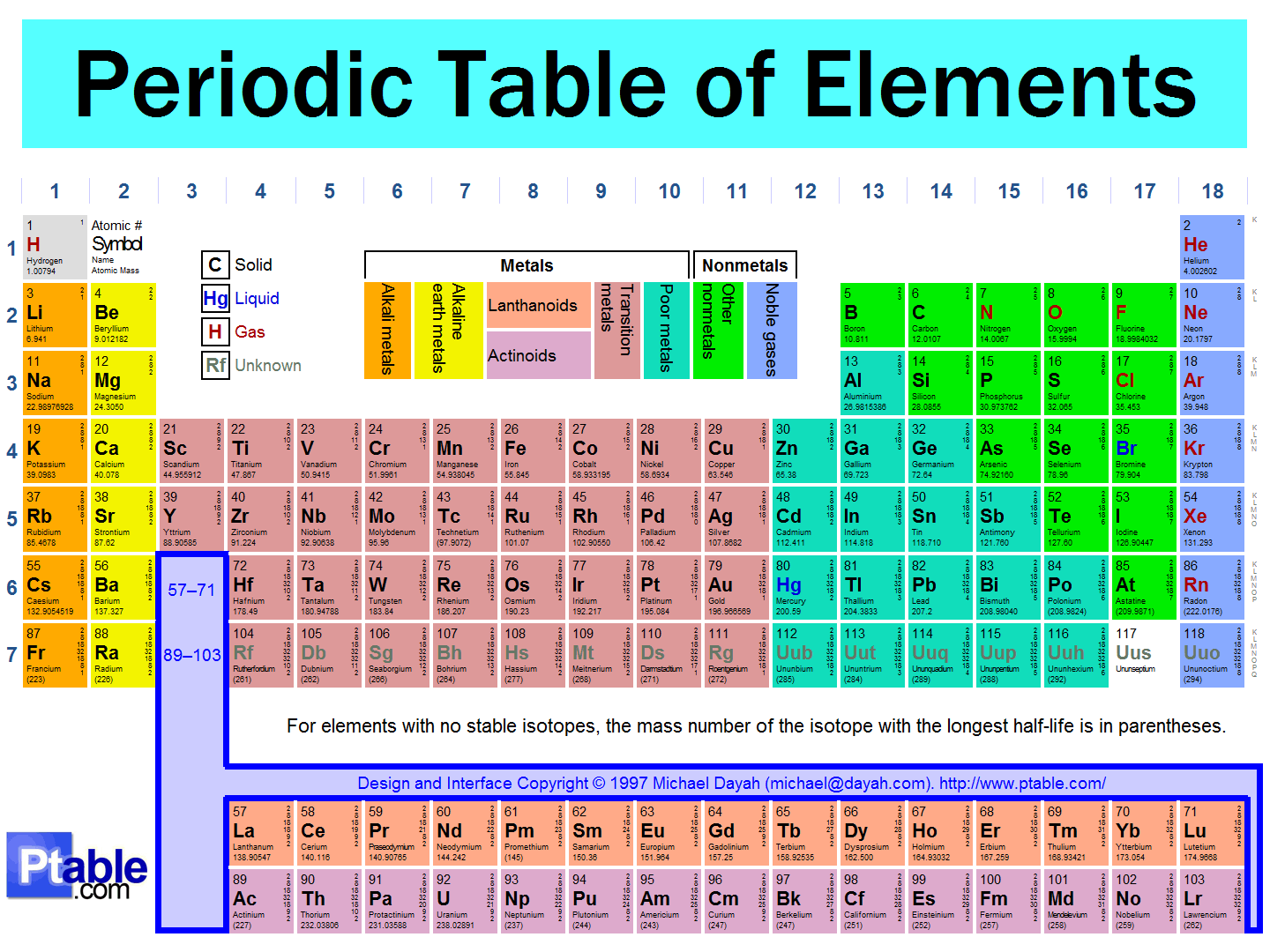
USE THE PERIODIC TABLE

How many valence electrons does magnesium have?

a)

1

b)

2

c)

12

d)

24

129.
What atom matches this electron configuration?
1s22s22p63s23p64s23d10
a)
Zinc
b)
Copper
c)
Nickel
d)
Germanium
130.
What atom matches this electron configuration?
1s22s22p63s2
a)
Neon
b)
Magnesium
c)
Aluminum
d)
Potassium
131.
What electron configuration matches an oxygen atom?
a)
1s22s22p63s2, 3p64s23d104p5
b)
1s22s22p4
c)
1s22s22p6
d)
1s22s22p63s23p64s23d1
132.
How many electrons does Si contain? (click to see image)
a)
14
b)
28
c)
2
d)
4
133.
What do you start electron configuration with?
a)
1s2
b)
1d10
c)
1f14
d)
1p6
134.
What is this element?
1s22s22p63s2
a)
Neon
b)
Magnesium
c)
Aluminum
d)
Potassium
135.
Which electron configuration belongs to Chlorine (Cl)?
a)
1s2s2p3s3p5
b)
1s2s2p3s3p6
c)
1s2s2p3s3p7
136.
There are 4 different types of subshells s,p,d,f
a)
true
b)
false
137.
Identify the Electron Configuration for Aluminum (Al)
a)
1s2s2p3s3p1
b)
1s2s2p3s3p3
c)
1s2s2p3s4p1
138.
What Periodic Table family is represented by the Lewis dot diagram?
a)
Halogens
b)
Alkali Metals
c)
Transition Metals
d)
Noble Gases
139.
Which of the following is the atomic number of an alkali metal?
a)
31
b)
20
c)
18
d)
19
140.

The elements in this family are soft, silvery, and very reactive with water.

a)

Alkaline Earth Metals

b)

Alkali Metals

c)

Transition Metals

d)

Lanthanides

141.
Gold (Au)
a)
Transition Metal
b)
Alkali Metal
c)
Alkaline Earth Metal
d)
Heavy Metal
142.
Which element is not in the Alkali metal family?
a)
Li
b)
H
c)
Fr
d)
Cs 
143.
Argon (Ar)
a)
alkali metal
b)
alkaline earth metal
c)
halogen
d)
noble gas
144.
Which of the following is the most reactive group of non-metals? 
a)
Alkali
b)
Alkali Earth
c)
Halogen
d)
Noble Gas
145.

The is family has properties of both metals and nonmetals.

a)

Alkali

b)

Halogens

c)

Nonmetals

d)

Metalloids

146.

This type of element is dull, brittle solids and gases, insulators, poor conductors of heat and electricity, as well as having low melting points.

a)

metals

b)

metalloids

c)

nonmetals

147.

Sulfur is a...

a)

metal

b)

nonmetal

c)

metalloid

148.
Which is an alkaline earth metal?
a)
Calcium
b)
Rubidium
c)
Carbon
d)
Iodine
149.
The horizontal row on the periodic table is called a
a)
group
b)
family
c)
period
d)
atomic number
150.
A vertical column is called...
a)
group
b)
tower
c)
period
d)
crew
151.
The number at the top of each square on the periodic table is the ...
a)
atomic number
b)
atomic mass
c)
Chemical Symbol
d)
Element Name
152.
What is the chemical symbol for Lithium?
a)
H
b)
He
c)
Li
d)
N
153.
Which element is not a metal?
a)
H
b)
Re
c)
Al
d)
B
154.
The atoms along the staircase are called 
a)
metals
b)
nonmetals
c)
metalloids
d)
noble gases
155.
Which is a halogen?
a)
Helium
b)
Chlorine
c)
Oxygen
d)
Neptune
156.
The atomic number of Hydrogen is
a)
1
b)
2
c)
3
d)
4
157.
The atomic number of Titanium is
a)
22
b)
23
c)
20
d)
24
158.
The atomic mass of Aluminium is
a)
27
b)
23
c)
22
d)
26
159.
The atomic mass of Silicon is
a)
28
b)
27
c)
26
d)
25
160.
The atomic mass of Iron is 
a)
56
b)
55
c)
54
d)
53
161.
The atomic mass of Zinc is
a)
65
b)
64
c)
63
d)
62
162.
The atomic number of Cobalt is
a)
27
b)
26
c)
25
d)
24
163.
The atomic number of Nitrogen
a)
7
b)
6
c)
8
d)
9
164.
The symbol for Potassium is
a)
K
b)
P
c)
Po
165.
The symbol for Silver is
a)
Ag
b)
Au
c)
Si
d)
S