wayground logo

Free Printable Worksheets

NEW

Font size

S
M
L
XL
Worksheets

Fall Semester Final Review

Total questions: 60

Worksheet time: 15hrs 0mins

Name
Class
Date
1.
Solve the problem below, and choose the answer with the correct number of significant figures and the correct units.
10.0g/mL  x 5.0mL  =  ???
a)
50g
b)
50.0g
c)
50.g
d)
50g/mL
2.
Solve the problem below, and choose the answer with the correct number of significant figures and the correct units.
28.00g  +  2.0g  =  ???
a)
30g
b)
30.0g
c)
30.0
d)
30.00g
3.
Solve the problem below, and choose the answer with the correct number of significant figures and the correct units.
28.00g  ÷  2.00mL  =  ???
a)
14.0g
b)
14.0mL
c)
14.0
d)
14.0g/mL
4.

Temperature is...

a)

A measure of the potential energy stored in a substance

b)

The same as heat

c)

A measure of the random motions of the components of a substance

5.
A process that absorbs heat is a(n) _______________ reaction?
a)
polythermic
b)
ergothermic
c)
exothermic
d)
endothermic
6.

The graph best describes...

a)

endothermic reactions

b)

exothermic reactions

7.

The graph best describes...

a)

endothermic reactions

b)

exothermic reactions

8.

This energy curve is best described as an...

a)

endothermic reaction

b)

exothermic reaction

9.

This energy curve is best described as an...

a)

endothermic reaction

b)

exothermic reaction

10.
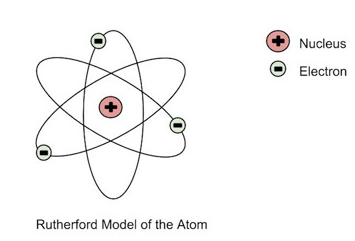
Where are electrons of an atom found?
a)
Nucleus
b)
Electron Cloud
c)
Some are in the nucleus and some in the electron cloud.
d)
They are moving everywhere.
11.
Which of the subatomic particles is the heaviest?
a)
electrons 
b)
protons 
c)
neutrons 
d)
protons and neutrons have equal mass
12.
This contains most of the mass of an atom
a)
Electron Cloud
b)
Nucleus
c)
Electron
13.
Rutherford's gold foil experiment provided evidence that...
a)
negative and positive charges are spread evenly throughout the atom.
b)
alpha particles have a positive charge.
c)
gold is not a dense as previously thought.
d)
there is a dense positively charged nucleus at the center of an atom.
14.
True or False: The majority of an atom is made up of empty space
a)
True
b)
False
15.
The majority of an atom's mass exists where?
a)
In the nucleus
b)
In the electron cloud
c)
In the space between the nucleus and the electrons
d)
In the neutrons
16.

Magnesium (Mg) has 12 protons in each atom. Based on this information, which of the following also describes an atom of magnesium?

a)

It has no neutrons.

b)

It has 5 protons and 7 neutrons.

c)

It has a total of 24 neutrons and electrons.

d)

It has 12 electrons.

17.
Elements in a ..................have similar chemical properties.  
a)
period
b)
group
c)
row
18.
Elements in the same ________ are more chemically similar.
a)
group
b)
period
c)
club
d)
table
19.
Which elements have the most similar chemical properties?
a)
K and Na
b)
K and Ca
c)
K and Cl
d)
K and S
20.
Which of the following is true for alkaline earth metals as their atomic number increases?
a)
The atomic radius decreases.
b)
Ionization energy decreases.
c)
The number of valence electrons increases.
d)
The Coulombic attraction increases.
21.
Electronegativity is...
a)
how good an atom is at attracting electrons
b)
the ability of an atom to lose electrons
c)
the energy required to remove an electron from a specific atom
d)
how easy it is to make friends. 
22.
As atoms of elements in group 16 are considered in order from top to bottom, the electronegativity of each successive element....
a)
decreases
b)
increases
c)
remains the same
d)
none of the above
23.
As you move down the periodic table atoms get bigger.  This is because ____________.
a)
The atoms have more mass.
b)
The atoms have more protons.
c)
The atoms have more energy levels
d)
The atoms have more nuetrons
24.
Ionization energy is...
a)
the energy required to add an electron to a specific atom
b)
how much energy it takes to remove an electron from an atom
c)
the energy required to shield the outer electrons from the nucleus
d)
a measure of the ability of an atom to attract electrons
25.
Which of the following will have a lower ionization energy than Scandium (Sc)?
a)
Helium (He)
b)
Titanium (Ti)
c)
Calcium (Ca)
d)
Magnesium (Mg)
26.
How many non-bonding domains are in SiO2 ?
a)
0
b)
1
c)
2
d)
4
27.
How many bonding domains are in the molecule SO2?
a)
1
b)
2
c)
3
d)
4
28.
Which of the following is substance held together by only ionic bonds?
a)
H3N
b)
CaCl2
c)
NO2
d)
SCl
29.
Which of the following is a substance held together by only covalent bonds?
a)
NaCl
b)
HCl
c)
NH4Cl
d)
ZnCl2
30.
Is the compound Ionic, Covalent, or both?
CO2
a)
Ionic
b)
Covalent
c)
both
31.
Is the compound Ionic, Covalent, or both?
H2O
a)
Ionic
b)
Covalent
c)
both
32.
Is the compound Ionic, Covalent, or both?
CaO
a)
Ionic
b)
Covalent
c)
both
33.
Is the compound Ionic, Covalent, or both?
LiOH
a)
Ionic
b)
Covalent
c)
both
34.
Balance this equation
_Al +_HCl --> _H+_AlCl3
a)
2, 6, 3, 2
b)
it is already balanced
c)
4, 12, 3, 4
d)
2, 1, 4, 5
35.
Balance this equation-
__P+ __O--> __P2O3
a)
it is already balanced
b)
2, 1, 3
c)
1, 2, 3
d)
1, 3, 2
36.
Balance this equation.
_CH4 + _O--> _CO+ _H2O
a)
1,2,1,1
b)
2,1,2,1
c)
1,2,1,2
d)
0,2,0,2
37.
Balance this equation.
_CF+ _Br-- _CBr+ _F2
a)
2,1,2,1
b)
1,2,2,1
c)
1,2,1,2
d)
2,2,2,2
38.
What does the Law of Conservation of Mass state?
a)
Matter cannot be gained or lost in a chemical reaction.
b)
Matter can only be lost in a chemical reaction.
c)
Matter can only be gained in a chemical reaction.
d)
Matter can be gained and lost in a chemical reaction. 
39.
When balancing equations a ____ can be placed to the left of a formula of a substance to make the equations balanced
a)
charge
b)
subscript
c)
random number
d)
coefficient
40.
How do the following two elements bond together?
Cr3+  O2-         
a)
CrO
b)
Cr3O2
c)
Cr2O3
d)
CrO3
41.
How do the following two elements bond together?
K1+  S2- 
a)
KS
b)
K8S
c)
K6S3
d)
K2S
42.
How do the following two elements bond together?
Al3+  O2-         
a)
AlO
b)
Al2O3
c)
Al3O6
d)
Al3O2
43.

If Ca+2 and O-2 combine, what is the resulting formula?

a)

CaO

b)

Ca2O

c)

CaO2

d)

Ca

44.
What type of reaction occurs between an element and a compound?
Zn + 2HCl --> ZnCl2 + H2
a)
Synthesis
b)
Decomposition
c)
Single Replacement
d)
Double Replacement
45.
What kind of reaction is this:
4Fe  +  3O2 →   2Fe2O3 
a)
Synthesis
b)
Decomposition
c)
Single Replacement 
d)
Double Replacement
46.
What kind of reaction is this:
2C3H7OH +9O2 -> 6CO2 + 8H2O
a)
Double Replacement
b)
Combustion
c)
Single Replacement
d)
Decomposition
47.
Classify
HI → H
2 + I2
a)
synthesis
b)
decomposition
c)
single replacement
d)
double replacement
48.
What are the products of this reaction?
Cu+ AgNO3--> 
a)
Cu(NO3)2+Ag
b)
CuNO3 + Ag
c)
CuAg+NO3
d)
Cu+ AgNO3
49.
Write a Balanced Equation for this reaction:
C2H4 + 2 O2 -->
a)
C2O2 + H4
b)
CO2 + HOH
c)
CO + H
d)
2 CO2 + 2H2O
50.
Predict the products for the this reaction:
K + HCl --> 
a)
KCl + H2
b)
KHCl 
c)
KH + Cl2
d)
KCl + H
51.

Predict the products for the this reaction:

Mg + CuCl2 -->

a)

MgCl2 + Cu

b)

MgCl + Cu

c)

MgCu + Cl2

d)

CuMg + Cl2

52.

What type of ion will Potassium (K) form?

a)

1-

b)

2-

c)

1+

d)

2+

53.
An atom of a group 2 element is most likely to form a bond with ___. (Hint: Group 2 has 2 valence)
a)
Sulfur (group 16)
b)
Argon (group 18)
c)
Chlorine (group 17)
d)
Calcium (group 2)
54.
What are group 1 elements most likely to do when combining with other substances
a)
gain one electron
b)
lose one electron
c)
lose two electrons
d)
gain two electrons
55.
What are group 13 elements most likely to do when combining with other substances
a)
gain one electron
b)
lose one electron
c)
lose three electrons
d)
gain three electrons
56.

Name for group 1 elements?

a)

Alkali metals

b)

Halogens

c)

Noble Gas

57.

Name for group 17 elements?

a)

Alkali metals

b)

Halogens

c)

Noble Gas

58.

Name for group 18 elements?

a)

Alkali metals

b)

Halogens

c)

Noble Gas

59.

What family is Rubidium (Rb) in?

a)

Alkali metals

b)

Halogens

c)

Noble Gas

60.
The Periodic Table arranges Elements in order by
a)
decreasing Atomic Mass
b)
increasing Atomic Number
c)
decreasing Atomic Number
d)
increasing Atomic Mass