Wayground logo

Free Printable Worksheets

Font size

S
M
L
XL
Worksheets

Moon Phases, Eclipses, and Tides

Total questions: 40

Worksheet time: 42mins

Name
Class
Date
1.
A lunar eclipse can occur only during the _________________.
a)
Full moon
b)
New moon
c)
Waxing moon
2.
For a solar eclipse to occur, what has to happen?
a)
The sun must be directly between Earth and the moon.
b)
The moon must be directly between Earth and the Sun.
c)
Earth must be directly between the Sun and the moon.
3.
What type of tide occurs during a new and full moon?
a)
Neap tides
b)
Spring tides
c)
Normal tides
4.
If the Sun, Earth, and Moon are in perfect alignment, the Earth would have a _______ tide.
a)
Spring
b)
Neap
c)
Normal
5.
If the Sun, Earth, and Moon create a 90 degree angle, the Earth would have __________.
a)
Spring tides
b)
Neap tides
c)
Normal tides
6.
What type of tide occurs during the first or third quarter moon?
a)
Neap tides
b)
Spring tides
c)
Normal tides
7.
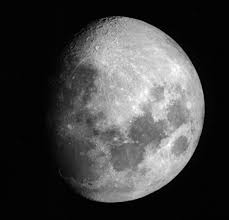
Name the moon phase
a)
Waxing Gibbous
b)
Waxing Crescent
c)
Waning Crescent
d)
Waning Gibbous
8.
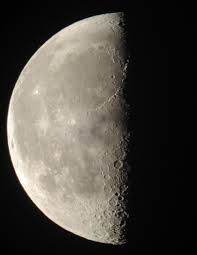
Name the moon phase
a)
Waning Crescent
b)
Waxing Crescent
c)
Waning Gibbous
d)
Waxing Gibbous
9.
Name the moon phase
a)
waning crescent
b)
waxing crescent
c)
waning gibbous
d)
waxing gibbous
10.
Name the moon phase
a)
First Quarter
b)
Last Quarter
c)
New Moon
d)
Full Moon
11.
Name the moon phase
a)
First Quarter
b)
Last Quarter or (third quarter)
c)
New Moon
d)
Full Moon
12.
Name the moon phase that would come AFTER this moon.
a)
waning crescent
b)
waxing crescent
c)
waning gibbous
d)
waxing gibbous
13.
What is the difference between a gibbous moon and a crescent moon?
a)
The gibbous shows more than half of the bright side of the moon.
b)
The crescent shows more than half of the bright side of the moon.
c)
The gibbous shows less than half of the bright side of the moon. 
14.

What is mainly responsible for ocean tides on Earth?

a)

Sun

b)

Earth's rotation

c)

Moon

d)

Earth's orbit

15.

How many high tides and low tides do most places on Earth have in a single day?

a)

Depends on the time of year

b)

None

c)

One

d)

Two of each

16.

What is the difference called between the level of ocean water at high tide and low tide.

a)

Tidal range

b)

Tide pool

c)

Crimson Tide

d)

Tide detergent

17.

How long does it take the Moon to complete one revolution around Earth?

a)

24 hours

b)

28 days

c)

365 days

d)

12 hours

18.

What is the name for the darkest part of the shadow during an eclipse?

a)

total phase

b)

umbrella

c)

penumbra

d)

umbra

19.

During a total solar eclipse, the sun's light is completely blocked by the ________________.

a)

Earth

b)

Moon

c)

Trees

d)

Clouds

20.

What keeps the Moon in orbit around Earth?

a)

The Sun

b)

Tides

c)

Inertia

d)

Gravity

21.
What is the larger outer lighter part of the shadow cone called, where a partial eclipse can be viewed?
a)
Partial
b)
Umbra
c)
Penumbra
22.
This type of eclipse occurs when the moon blocks the sunlight from reaching Earth?
a)
Solar eclipse
b)
Lunar eclipse
c)
Total eclipse
23.
Tides are caused mainly by what?
a)
Moon’s gravitational pull
b)
Sun’s gravitational pull
c)
Earth’s gravitational pull
24.
Most places on Earth experience about how many high and low tides in 24 hours?
a)
2 high and 2 low tides
b)
4 high and 4 low tides
c)
1 high and 1 low tides
25.

Why does the moon shine?

a)

It reflects light from the sun.

b)

It has a large lamp.

c)

It is on fire.

d)

The dirt on the moon glows in the dark.

26.

When the moon is waxing the sunlit fraction is getting ________.

a)

smaller

b)

larger

c)

heavier

27.

About how long does it take to complete one cycle of moon phases?

a)

29.5 days

b)

60 days

c)

90 days

d)

1 year

28.

Look at the image. What moon phase is shown for section "A."

a)

new moon

b)

waning gibbous

c)

waxing crescent

d)

first quarter

29.

About how long does a total solar eclipse last?

a)

24 hours

b)

20 minutes

c)

100 minutes

d)

up to 7.5 minutes

30.

Where on Earth do you have to be to see a lunar eclipse?

a)

only in the north pole

b)

the night side of Earth

c)

anywhere on Earth

d)

only in Antarctica

31.

What are tides?

a)

daily changes in the level of ocean water

b)

temperature of the water

c)

hurricanes

d)

ocean water contamination

32.

What is the secondary cause of tides?

a)

the sun's gravitational pull on Earth

b)

the moon's gravitational pull on Earth

c)

the distance between the Earth and Venus

d)

no one knows why

33.

Which eclipse is shown?

a)

solar eclipse

b)

lunar eclipse

c)

no eclipse is shown

d)

waning gibbous

34.

Which eclipse is shown?

a)

waxing gibbous

b)

lunar eclipse

c)

solar eclipse

d)

no eclipse is shown

35.

The highest high tides of the month occur during which moon phases?

a)

full and new moons

b)

1st & 3rd quarter moons

c)

Waxing gibbous and Waxing Crescent moons

d)

Waning gibbous and waning crescent moons

36.

Twice a month when the Sun, Earth, and Moon form a right angle, high tides are at there lowest, this is called

a)

Low tide

b)

Spring tide

c)

neap tide

d)

High tide

37.

The time it takes the moon to rotate once is _______________ the time it takes to revolve around Earth.

a)

greater than

b)

less than

c)

equal to

38.

What percentage of the moon is always in sunlight?

a)

10%

b)

25%

c)

50%

d)

It depends on its position

39.

The phase of the moon is caused by moon's

a)

rotation

b)

revolution around Earth

c)

eclipses

d)

gravity

40.

One complete cycle of the phases of the moon takes approximately

a)

1 day

b)

1 week

c)

1 month

d)

1 year