wayground logo

Free Printable Worksheets

NEW

Font size

S
M
L
XL
Worksheets

Evolution Review

Total questions: 55

Worksheet time: 57mins

Name
Class
Date
1.
Which of the following is a term for a group of similar organisms that can reproduce fertile offspring?
a)
individual
b)
population
c)
species
d)
fossil
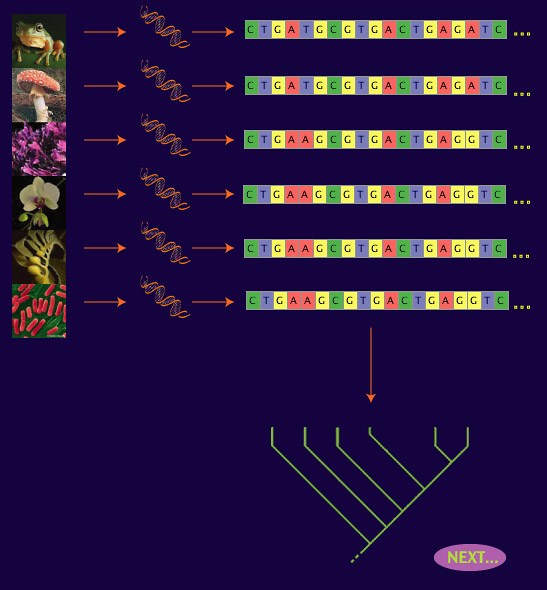
2.
Which of the following is a fossil?
a)
a plant that has recently died
b)
a group of organisms that can reproduce
c)
a structure or organ that no longer functions
d)
a trace of an organisms that existed in the past
3.
Over time, adaptions can lead populations to experience 
a)
environmental changes
b)
genetic changes
c)
geological changes
d)
extinction
4.
which of the folllowing is an exammple of a vestigial structure?
a)
the wings of a red-tailed hawk
b)
the hind limbs of a house cat
c)
the fins of sharks
d)
the wings of an ostrich
5.
Mutations are important because they bring about
a)
death of the organism in which they develop
b)
genetic variation needed for a population to evolve
c)
benefits for the individual, not for the population
d)
Hardey-Weinberg equilibrium within a population
6.
What is the process in which humans breed organisms for certain traits?
a)
natural selection
b)
inheritance
c)
artificial selection
d)
descent withOUT modification
7.

The combined alleles of all individuals in a population is called the population's

a)

phenothype

b)

gene pool

c)

mutation rate

d)

allele frequency

8.
Bat wing, human arm
a)
Homologous
b)
Analogous
c)
Vestigial
9.
Same structure, different function
a)
Homologous
b)
Analogous
c)
Vestigial
10.

Why are hybrid animals, e.g ligers or mules, not considered a new species?

a)

They are sterile

b)

They can interbreed

11.

Structures that have the same function but different structures are...

a)

homologous structures

b)

analogous structures

c)

vestigial structures

d)

embryology

12.

Some organisms that share a common ancestor have features that have different functions, but similar underlying structures. These are known as

a)

vestigial structures

b)

analogous structures

c)

homologous structures

d)

fossil structures

13.
The evidence suggests that the first organism was:
a)
Eukaryotic
b)
Prokaryotic
c)
An animal
d)
A plant
14.
 A lion gets chased off from his pride, then joins another pride. He mates with a lioness and make 6 lion cubs.
a)
Natural Selection
b)
Mutation
c)
Genetic Drift
d)
Gene Flow
15.
 A hurricane wipes out half the population of blue jays in Cape Hatteras, North Carolina.
a)
Natural Selection
b)
Mutation
c)
Genetic Drift
d)
Gene Flow
16.
A hawk captures a black mouse in a desert, and leaves a tan mouse behind
a)
Natural Selection
b)
Mutation
c)
Genetic Drift
d)
Gene Flow
17.

A few deer wander out of their native woods into a completely new park where no deer had ever been before. They go on to create an entirely new population.

a)

Founder Effect

b)

Natural Selection

c)

Non-random mating

d)

Mutation

18.
What does the picture represent?
a)
Founder Effect
b)
Mutations
c)
Bottleneck effect
d)
Gene Flow
19.
What does the image represent?
a)
Founder effect
b)
Bottleneck effect
c)
Mutation
d)
Natural Selection
20.
What does the image represent?
a)
Gene flow
b)
Gene drift
c)
Mutation
d)
Adaptation
21.
The study of the earliest stages of development for an organism:
a)
Geography
b)
Cardiology
c)
Embryology
d)
Immunology
22.

Which mouse is more likely going to survive in the desert?

a)
b)
c)
d)
23.

Which came first?

a)

Oxygen

b)

Photosynthetic bacteria

24.
Study of embryos of various organisms to show a common ancestor because of similarities in development
a)
natural selection
b)
embryology
c)
speciation
d)
evolution
25.
Two organisms that are closely related would have
a)
very similar DNA sequence
b)
exactly the same DNA sequences
c)
no proteins in common
d)
completely different DNA sequence
26.
Individuals that are well adapted to their environment will survive and produce:
a)
Fewer mutations
b)
Stronger genes
c)
More offspring
d)
Better traits
27.

Bipedalism is...

a)

The ability to stand up

b)

The ability to ride a bike and move its pedals

c)

The ability to walk on both feet

d)

The ability to contro

28.

Three physical changes in the process of human evolution are

a)

Opposable thumb, free hands and Bipedalism

b)

Bipedalism, decrease of the brain/skull and increase of jaw/teeth

c)

Bipedalism, increase of the brain/skull and decrease of jaw/teeth

29.

Study the skulls below and answer the questions that follow. Which one of these skulls does not belong to a hominin?

a)

A

b)

D

c)

B

d)

C

30.

A measurement of the volume of the skull, used to estimate brain size.

a)

cranial capacity

b)

foramen magnum index

c)

maxillary angle

d)

sagittal crest

31.
Humans and closely related species (most/all now extinct) that typically walk on two legs are called...
a)
hominids
b)
australopithicans
c)
chimps
d)
bonobos
32.
A/An _________________________ is a type of mammal characterized by opposable thumbs and binocular vision.
a)
Hominid
b)
Primate
c)
Mammal
d)
Reptile
33.
Early migrations of Homo Sapiens began in
a)
North Ameria
b)
East Africa
c)
Southern Europe
d)
Western Asia
34.
Which mechanism is known as random change in population’s gene pool, changes to the DNA?
a)
genetic drift
b)
gene flow
c)
mutation
d)
nonrandom mating
35.
Which mechanism is known as any change in the allelic frequencies in a population that is due to change (isolation)?
a)
genetic drift
b)
gene flow
c)
mutation
d)
nonrandom mating
36.
A well-tested concept that explains a wide range of observations is called a(an):
a)
hypothesis
b)
experiment
c)
cause and effect
d)
scientific theory
37.
Cells without a nucleus are said to be _____________________.
a)
Eukaryotic
b)
Prokaryotic
38.
Miller/Urey and other scientists have shown that:
a)
 Life on early Earth required material from space
b)
Cells survived in the primitive atmosphere
c)
Amino acids could be produced from inorganic molecules 
d)
Simple cells can be produced in a laboratory
39.
Which of the following was probably not present in the atmosphere of the primitive Earth? 
a)
Methane
b)
Oxygen
c)
Water
d)
Carbon dioxide
40.
According to the data, the unknown bacterial species is most closely related to...
a)
Species I
b)
Species II
c)
Species III
d)
Species IV
41.
Based upon the conditions of the early Earth, which forms of live most likely appeared first?
a)
Prokaryotic and aerobic
b)
Prokaryotic and anaerobic 
c)
Eukaryotic and aerobic
d)
Eukaryotic and anaerobic
42.
Which piece of evidence BEST supports the endosymbiotic theory of organelle evolution?
a)
Mitochondria and chloroplast are the same size as present day extant bacteria.
b)
They divide by a process that is similar to meiosis.
c)
Mitochondria and chloroplast both contain DNA and can make their own proteins.
43.
What is a species?
a)
A group of organisms that can mate with each other and produce fertile offspring. 
b)
A group of organisms that genetically are very different from each other. 
c)
A group of organisms that can mate and produce offspring even if those offspring are infertile.
d)
Indivual organisms that live in the same environment. 
44.
What is thought to be the correct sequence of these events, from earliest to most recent, in the evolution of life on Earth?
1. origin of mitochondria
2. origin of multicellular eukaryotes
3. origin of chloroplasts
4. origin of cyanobacteria
5. origin of fungi and animals
a)
4, 3, 2, 1, 5
b)
4, 1, 2, 3, 5
c)
4, 1, 3, 2, 5
45.
There was very little __________ in the early atmosphere
a)
oxygen
b)
carbon dioxide
c)
water vapor
d)
iron
46.
What were the first cells in the early earth?
a)
prokaryotic cells
b)
eukaryotic cells
47.
In the endosymbiotic theory
a)
prokaryotic cells were ingested by larger eukaryotic cells
b)
eukaryotic cells were ingested by larger prokaryotic cells
c)
prokaryotic cells became eukaryotic cells
d)
eukaryotic cells became prokaryotic cells.
48.
What cell organelles are suggested to be originally prokaryotic cells?
a)
mitochondria and chloroplasts
b)
ribosomes and nucleus
c)
nucleus and chloroplasts
d)
mitochondria and vacuoles
49.

Which finch shown below would most likely have an advantage for survival in an environment where seeds are the main source of food?

a)

1

b)

2

c)

3

d)

4

50.
Which layer is the oldest?
a)
1
b)
2
c)
3
d)
4
51.
Two organisms that are closely related would have
a)
very similar DNA sequence
b)
exactly the same DNA sequences
c)
no proteins in common
d)
completely different DNA sequence
52.

The diagram below shows a portion of the fossil record in sedimentary rock. Different rock layers and fossils are clearly visible.

a)

Layer B contains the second-oldest fossils.

b)

Layer A contains the most recently formed fossils.

c)

The fossils in layer B are older than those in layer D.

53.

Which of these statements is MOST LIKELY true of two species that share a recent common ancestor?

a)

The two species have different developmental patterns

b)

The two species share DNA sequences

c)

The two species have similar arms and legs

54.

Over several generations, almost all of the insect population was pesticide resistant. Which explanation would support this phenomenon?

a)

the insecticide changed the genetic make up of the insects.

b)

a mutation made some of the bugs resistant and fitness switched to those bugs who were able to reproduce.

c)

the insecticide caused the insects to become cannibals and they ate their babies.

d)

the insecticide caused the insects to become sterile.

55.

According to the differences in the chart, which of these pairs of animals are more closely related?

a)

Human and Chimp

b)

Human and Lemur

c)

Baboon and Lemur

d)

Lemur and Chimp