Wayground logo

Free Printable Worksheets

Font size

S
M
L
XL
Worksheets

Body systems Test Review

Total questions: 98

Worksheet time: 1hrs 20mins

Name
Class
Date
1.
The main purpose of the ____________ system is to break food particles into pieces that can be used.
a)
circulatory
b)
respiratory
c)
digestive
d)
skeletal
2.
What is responsible for delivering oxygen and removing carbon dioxide from the body?
a)
cell nucleus
b)
excretory system
c)
nervous tissue
d)
respiratory system
3.
The circulatory system uses _________ to deliver oxygen to the rest of the body.
a)
blood cells
b)
lungs and nose
c)
blood vessels
d)
brain and spinal cord
4.
When tissues come together, they form ___________.
a)
cells
b)
atoms
c)
organs
d)
systems
5.
Which of the following body systems work together for support, protection, and movement?
a)
respiratory and cardiovascular
b)
skeletal and muscular
c)
skeletal and integumentary
d)
digestive and respiratory
6.

This system carries food, gases and wastes throughout the body

a)

circulatory system

b)

respiratory system

c)

nervous system

7.
This system includes the heart, blood vessels, veins, arteries
a)
respiratory system
b)
circulatory system
c)
nervous system
8.
This system picks up oxygen from the respiratory system (lungs) and nutrients from the digestive system.
a)
Circulatory System
b)
Digestive System
c)
Muscular System
9.
This system allows the body to take in oxygen and excrete, or get rid of waste gases.
a)
Nervous System
b)
Muscular System
c)
Respiratory System
10.
This system protects the body's organs, provides support for the body.
a)
Nervous System
b)
Skeletal System
c)
Respiratory System
11.
This system works with the muscular system to move the body.
a)
Respiratory System
b)
Skeletal System
c)
Nervous System
12.
This system includes over 200 bones and it is where the red blood cells are stored and made.
a)
Skeletal System
b)
Respiratory System
c)
Nervous System
13.
What organ is D pointing to?
a)
Ureters
b)
Bladder
c)
Urethra
d)
Kidney
14.
What organ is C pointing to?
a)
Ureters
b)
Bladder
c)
Kidney
d)
Urethra
15.
Which excretory organ filters the blood to remove excess water, urea, and cell wastes?
a)
Kidney
b)
Bladder
c)
Urethra
d)
Ureters
16.
A short tube where urine is released from the body is the _______.
a)
Ureter
b)
Kidney
c)
Bladder
d)
Urethra
17.
The ____ is a sac-like muscular organ that stores urine until it is ready to be released from the body
a)
Stomach
b)
Bladder
c)
Urethra
d)
Gallbladder
18.
What organ is B pointing to?
a)
Kidney
b)
Urethra
c)
Ureter
d)
Bladder
19.
What organ is 1 pointing to?
a)
Kidney
b)
Urethra
c)
Bladder
d)
Ureter
20.
The excretory system rids the body of ______ waste.
a)
solid
b)
liquid
21.
What is the function of the urethra?
a)
It filters urea out of the bloodstream
b)
It delivers urine from the bladder to the outside world
c)
It transfers urine from the kidneys to the bladder
d)
It prevents urine from leaking out of the bladder
22.
Which organ system removes cellular wastes as the result of cellular respiration?
a)
nervous
b)
digestive
c)
excretory
d)
circulatory
23.
What is the function of the excretory system?
a)
It's responsible for the elimination of waste by homeostasis. 
b)
Makes protein
c)
Transport of nutients, oxygen, and hormones to cells throughout the body and removal of metabolic wastes 
d)
Movement
24.
What is the function of the ureter? 
a)
Store and concentrate bile
b)
Carry urine
c)
Store urine
d)
Break down toxins and transforms them
25.
Which of the following is the fluid released by the kidneys once the wastes are removed from the water and blood in the body?
a)
bile
b)

urea

c)
sweat
d)
urine
26.
When a person breathes out, or exhales, which of the following is release from the body?
a)
carbon dioxide and sweat
b)
urea and bile
c)
bile and water
d)
water and carbon dioxide
27.
The chewing and grinding of food into smaller pieces is an example of...
a)
Mechanical Digestion
b)
Chemical Digestion
28.

Bile is produced by which organ?

a)

Gallbladder

b)

Stomach

c)

Rectum

d)

Liver

29.

Which organ makes digestive juices (enzymes) to help the small intestine digest food?

a)

Liver

b)

Gallbladder

c)

Pancreas

d)

Esophagus

30.
Number 5 is pointing to the...
a)
Liver
b)
Gallbladder
c)
Pancreas
d)
Stomach
31.
Number 2 is pointing to the...
a)
Esophagus
b)
Stomach
c)
Small intestine
d)
Anus
32.
Which organ pushes food down to the stomach?
a)
Mouth
b)
Esophagus
c)
Rectum
d)
Large intestine
33.
Which body system gets ride of solid waste?
a)
Excretory (Urinary)
b)
Digestive
c)
Circulatory
d)
Respiratory
34.
As waste moves through the digestive system, the ______ absorbs water before storing waste in the rectum.
a)
Small intestine
b)
Stomach
c)
Esophagus
d)
Large intestine
35.
Number 7 is pointing to...
a)
Mouth
b)
Esophagus
c)
Small intestine
d)
rectum
36.

Digestion starts in the stomach.

a)

True

b)

False

37.
The tube connecting each kidney to the urinary bladder is the ________.
a)
ureter
b)
urethra
c)
calyx
d)
ductus (vas) deferens
38.
Urine is transported from the urinary bladder to the outside of the body by the ________.
a)
urethra
b)
ureter
c)
trigone
d)
collecting duct
39.

The digestive system makes food into _____.

a)

water

b)

energy

c)

intestines

40.

The _____ makes food into a liquid.

a)

esophagus

b)

water

c)

stomach

41.

The _____ is the first part of the digestive system.

a)

large intestine

b)

stomach

c)

mouth

42.

The _____ brings food from the mouth to the stomach.

a)

esophagus

b)

mouth

c)

stomach

43.

Liquid from the stomach goes into the _____.

a)

food

b)

esophagus

c)

intestines

44.

_____ is the part of food the body does not need.

a)

grow

b)

waste

c)

nutrients

45.

process of breaking down food so it can be used

a)

digestion

b)

ingestion

c)

stomach

d)

small intestine

46.

chemical substance in food that is used to carry out life processes

a)

blood

b)

nutrients

c)

plasma

d)

digestion

47.

liquid in the mouth that helps in digestion

a)

bile

b)

saliva

c)

water

d)

plasma

48.

tube that connects the mouth to the stomach

a)

trachea

b)

bile duct

c)

appendix

d)

esophagus

49.

Digestive system function

a)

The principal function of the kidney is to filter blood in order to remove cellular waste products from the body

b)

filter blood in order to remove cellular waste products from the body.

c)

A group of organs working together to turn food into nutrients, which the body uses for energy, growth, and cell repair.

d)

maintain homeostasis by filtering the blood.

50.
Number 4 is pointing to the....
a)
Anus
b)
Rectum
c)
Large Intestine
d)
Small intestine
51.
Number 2 is pointing to the...
a)
Esophagus
b)
Stomach
c)
Small intestine
d)
Anus
52.

Which of the following is not a function of the large intestine?

a)

Transportation of waste products

b)

Synthesis of vitamins by bacteria

c)

Absorption of water and remaining nutrients

d)

Production of intestinal juice containing enzymes.
53.

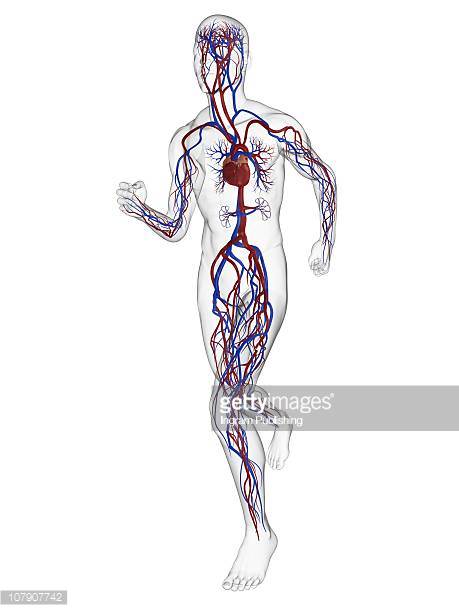
What is the main organ of the circulatory system?

a)

small intestine

b)

bone

c)

lungs

d)

heart

54.
How many types of blood vessels are in our body?
a)
1
b)
2
c)
3
d)
4
55.

Arteries carry oxygen rich blood away from the heart.

a)

True

b)

False

56.

Veins carry oxygen poor blood back to the heart.

a)

False

b)

True

57.

The job of the heart is to . . .

a)

pump blood around the body.

b)

send food to the small intestines.

c)

break down food.

d)

give energy to the body.

58.

The heart is about the size and shape of your . . .

a)

head

b)

fist

c)

hand

d)

foot

59.

How does the heart work?

a)

It pumps blood first to the lungs, back to the heart and then around the rest of the body.

b)

It pumps blood first to the rest of the body, back to the lungs and then to the heart.

c)

It pumps blood around the rest of the body, back to the heart and then to the lungs,
60.
______________ are the smallest blood vessels.
a)
Arteries
b)
Veins
c)
Capillaries
61.
______________ are the second largest blood vessel. 
a)
Arteries
b)
Veins
c)
Capillaries
62.
The circulatory system works with the ___________ system to provide our body with oxygen.
a)
respiratory
b)
digestive
c)
muscular
d)
skeletal
63.
The circulatory system works with the __________ system to obtain energy from nutrients that we eat. 
a)
respiratory 
b)
digestive
c)
skeletal
d)
nervous
64.
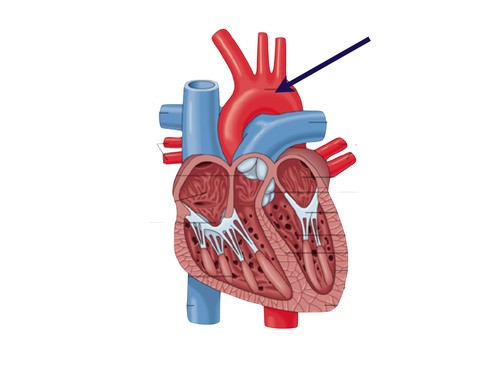
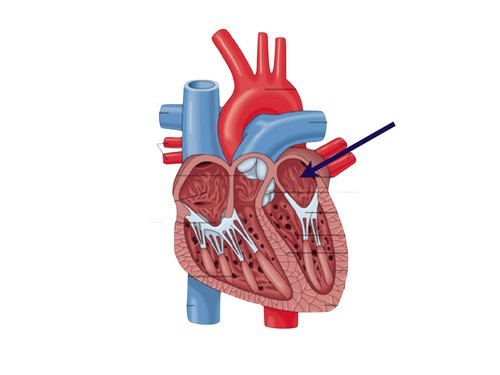
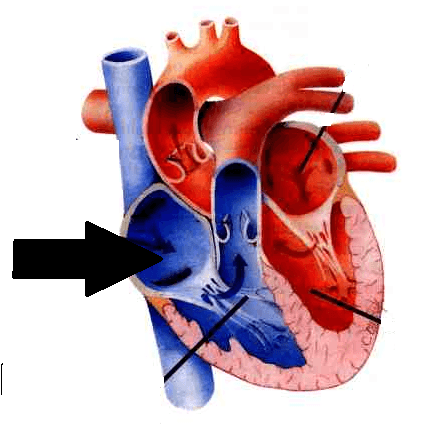
Identify
a)
Left atrium
b)
Right atrium
c)
Left ventricle
d)
Right ventricle
65.
Identify
a)
Pulmonary veins
b)
Pulmonary artery
c)
Aorta
d)
Vena cava
66.
Identify
a)
Left atrium
b)
Right atrium
c)
Left ventricle
d)
Right ventricle
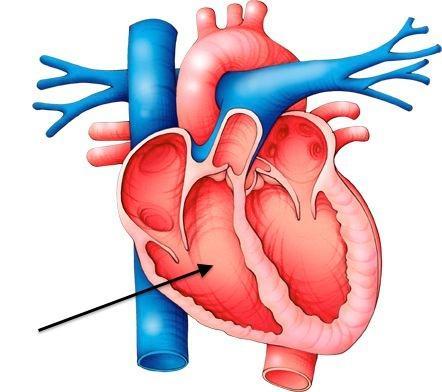
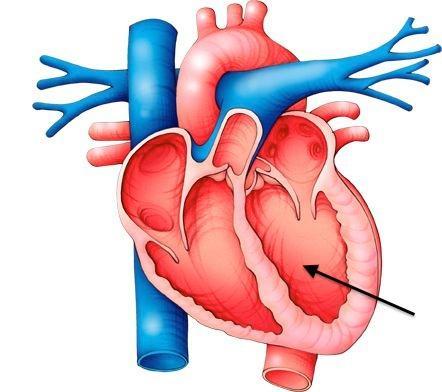
67.
Identify
a)
Left atrium
b)
Right atrium
c)
Left ventricle
d)
Right ventricle
68.
Identify
a)
Left atrium
b)
Right atrium
c)
Left ventricle
d)
Right ventricle
69.
The heart has ___ chambers.
a)
1
b)
2
c)
3
d)
4
70.
This chamber of the heart RECEIVES blood returning from the body
a)
Right Atrium
b)
Right Ventricle
c)
Left Atrium
d)
Left Ventricle
71.
Which chambers of the heart are the thickest and strongest?
a)
Atria
b)
Ventricles
c)
Valves
d)
Aorta
72.
True or False: There are four chambers in the heart.
a)
True
b)
False
73.
The aorta is the largest artery in the body. The blood leaving the aorta is full of?
a)
Oxygen 
b)
Carbon Dioxide 
c)
White blood Cells 
d)
Potassium 
74.
Thin-walled vessels that allow for the exchange of O2 , CO2, nutrients and wastes between blood cells or air sacs in the lungs
a)
Arteries
b)
Veins
c)
Capillaries
75.
What does Deoxygenated mean?
a)
Oxygen-rich
b)
Blood flow
c)
Oxygen-poor
d)
Water Flow
76.
A flap of tissue that prevents blood from flowing backward
a)
Aorta
b)
Atrium
c)
Septum
d)
Valve
77.
Carry blood away from heart; mostly oxygen-rich
a)
Arteries
b)
Veins
c)
Capillaries
78.
Which is the correct definition of the Circulatory system?
a)
The system fights disease so the body stays healthy.
b)
The system that circulates blood and oxygen through the body, consisting of the heart,blood vessels,and blood.
c)
Breaks down food into smaller pieces and absorbs those nutrients into the body.
d)
Provides shape and structure for the body.
79.
What function does the heart do?
a)
Protects organs and produces red blood cells.
b)
Generates heat.
c)
Breaks down food into nutrients.
d)
The heart is a pump, which moves the blood. The arteries and veins are the pipes where the blood flows.
80.
What is the main function of the artery?
a)
It controls your brain and your thought process.
b)
They carry oxygen- poor blood BACK to the heart.
c)
Arteries carry oxygen- rich blood AWAY from the heart.
d)
It receives information (senses) and sends messages to the body about how to react to things.
81.
Which is NOT a function of the circulatory system?
a)
deliver O2 and nutrients to cells
b)
remove CO2 and wastes from cells
c)
break down carbohydrates into glucose
d)
transport other materials through body
82.
arteries, veins, and capillaries are three types of __________
a)
heart valves
b)
blood vessels
c)
cells
d)
veins
83.
What does the Circulatory System do?
a)
Circulates the Blood throughout the body
b)
Circulates Water throughout the body
c)
Excretes Waste
d)
Controls all parts of the body
84.
What is an upper, thin-walled chamber through which blood is pumped to the ventricles?
a)
Valves 
b)
Veins 
c)
Ventricles
d)
Atrium
85.
What is a lower, thick-walled chamber that receives blood from the Atrium?
a)
Ventricle
b)
Valve
c)
Aorta
d)
Pericardium
86.
What is the Circulatory System also known as?
a)
The heart
b)
Cardiovascular System
c)
Nervous System
d)
Aorta
87.
What do Red-Blood cells do?
a)
Carry oxygen from the lungs to the body cells and  transport carbon dioxide from the cells back to the lungs
b)
keeps blood flowing in one direction to the heart and prevent blood from flowing backwards
c)
Collects  blood from the capillaries and drain it into the veins
d)
Bring nutriients to the cells and carries away waste materials.
88.

What carries oxygen around the body?

a)

Plasma

b)

Red Blood Cells

c)

Platelets

d)

White Blood Cells

89.

What makes up around 55% of the blood?

a)

Plasma

b)

Red Blood Cells

c)

White Blood Cells

d)

Platelets

90.

How many different types of blood vessels are in our bodies?

a)

1

b)

5

c)

3

d)

2

91.

Which of the following is NOT a type of blood vessel?

a)

Artery

b)

Capillary

c)

Vein

d)

Ventricle

92.

What is the function (job) of the platelets?

a)

To form clots (i.e. scabs) when you have cuts and grazes.

b)

To transport oxygen to the muscles

c)

To carry dissolved sugars.

d)

To produce antibodies

93.

Which blood vessels take blood TO the heart?

a)

Veins

b)

Arteries

c)

Capillaries

94.

Which blood vessels take blood AWAY from the heart?

a)

Veins

b)

Arteries

c)

Capillaries

95.
The bones in your back are made up of what?
a)
fingers
b)
phalanges
c)
vertebrate
d)
toes
96.
This is a picture of what? (choose the answer that is most complete)
a)
robot
b)
skeleton
c)
ulna
d)
vertebrate
97.
What is the place where two bones meet?
a)
hinge
b)
bone
c)
spot
d)
joint
98.
What is the name for the connector that attaches muscle to bone?
a)
ligament
b)
tendon
c)
patella
d)
string