wayground logo

Free Printable Worksheets

Font size

S
M
L
XL
Worksheets

Anatomy and Physiology Cytology

Total questions: 62

Worksheet time: 54mins

Name
Class
Date
1.
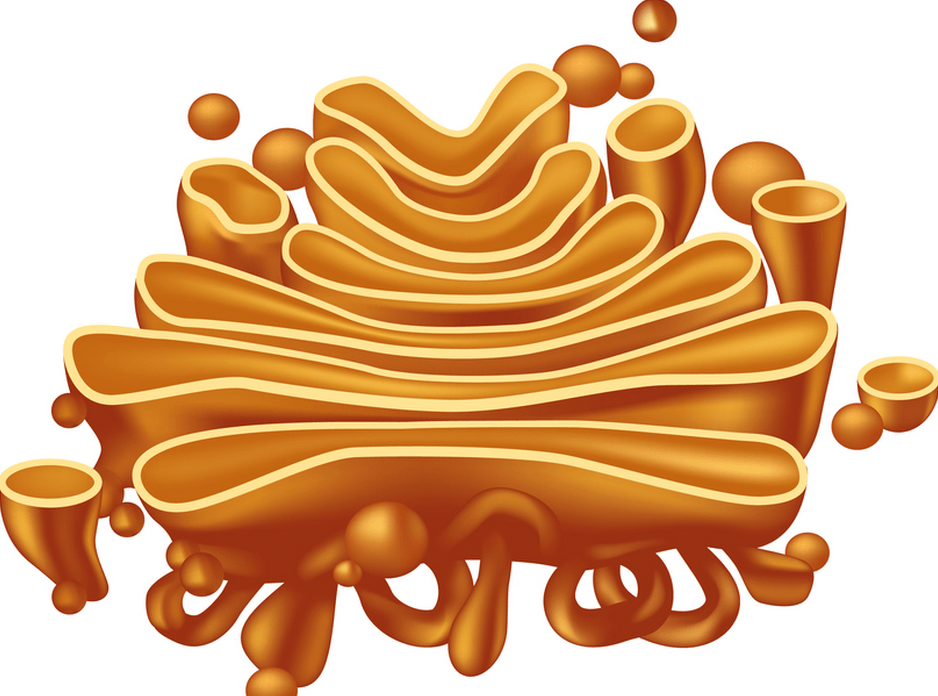
Controls what enters and leaves the cell
a)
golgi apparatus
b)
mitochondria
c)
vacuole
d)
cell membrane
2.
Do bacteria cells have a nucleus?
a)
Yes
b)
No
3.
Energy for active transport comes from a cell's 
a)
golgi apparatus
b)
lysosomes
c)
vacuoles
d)
mitochondria
4.
control the cell's activities; contains the cell's DNA
a)
mitochondria
b)
cell membrane
c)
nucleus
d)
golgi body
5.
Number 1 is  a (the) - 
a)
Golgi Bodies
b)
Mitochondrion
c)
ribosome
d)
Nucleus
6.

Name the organelle labeled F.

a)

Smooth ER

b)

Golgi Body

c)

Rough ER

d)

Mitochondria

7.
What type of cell is seen in the image?
a)
Animal Cell
b)
Plant Cell
c)
Bacteria Cell
d)
Prokaryotic Cell
8.
Which type of cell?
a)
Prokaryote
b)
Eukaryote
c)
plant cell
d)
animal cell
9.
I am a protein packaging and shipping machine! Who am I?
a)
vacuole
b)
ribosome
c)
mitochondrion
d)
golgi apparatus
10.
What organelle helps with cell digestion?
a)
Lysosomes
b)
Ribosomes
c)
Golgi Complex
d)
ER
11.

Diffusion is the movement of

a)

water from low to high concentration

b)

particles from low to high concentration

c)

water from high to low concentration

d)

particles from high to low concentration

12.
Osmosis is a form of ______________. 
a)
Passive Transport
b)
Active Transport
13.

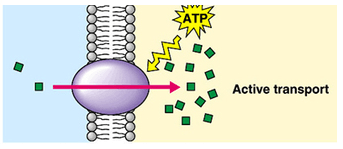
What category of transport does this image represent?

a)

Passive Transport

b)

Active Transport

14.

ATP is a form of energy used in...

a)

Passive Transport

b)

Active Transport

15.

A cell membrane is primarily composed of a...

a)

phospholipid bilayer

b)

lipid layer

c)

lipid bylater

d)

saran wrap and aluminum foil

16.
Lipid tails are...
a)
Hydrophobic
b)
Hydrophilic
17.
Lipid heads are...
a)
Polar
b)
Nonpolar
18.
What are the carbohydrates in the cell membrane for?
a)
to form channels and pumps
b)
to help cells identify one another
c)
to make the membrane strong
19.
What forms the channels and pumps in the phospholipid bilayer?
a)
carbohydrates
b)
proteins
c)
hydrophilic heads 
d)
lipids
20.
Which sequence of DNA bases would pair with this partial strand
ATG TGA CAG
a)
ATG TGA CAG
b)
TAC ACT GTC
c)
GTA AGT GAC
d)
CAT TCA CTG
21.
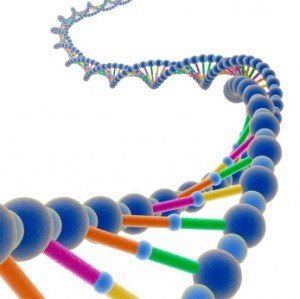
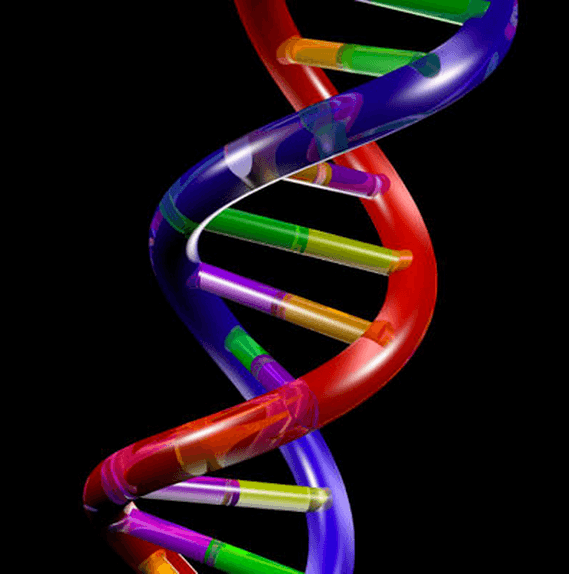
Which of the following best describes a DNA molecule?
a)
double helix
b)
contains ribose
c)
made of amino acids
d)
contains Uracil
22.
Which of the following units are repeatedly joined together to form a strand of DNA?
a)
amino acids
b)
nucleotides
c)
fatty acids
d)
polysaccharides
23.
Guanine bonds with ______________.
a)
Adenine
b)
Guanine
c)
Cytosine
d)
Thymine
24.
What determines the code, or information, of a DNA molecule?
a)
the shape (structure) of the nitrogen bases
b)
the order (sequence) of the nitrogen bases
c)
the color of the nitrogen bases
d)
the frequency (number) of nitrogen bases
25.
A process in which DNA has the unique ability to make an exact copy of itself.
a)
Replication
b)
Translation
c)
Transcription
26.
What are the three components of a nucleotide?
a)
sugar, hydrogen, nitrogen base
b)
sugar, oxygen, nitrogen base
c)
sugar, phosphate, nitrogen base
d)
sugar, phosphate, protein
27.
In meiosis, crossing over occurs in prophase 1. What is the significance of this event?
a)
This process ensures that chromosomes are evenly divided into daughter cells.
b)
This process can lead to genetic variation in daughter cells.
c)
This process can create gaps in the chromosome DNA for RNA to bind.
d)
This process allows for spindles to connect to the chromosomes in order to pull chromosomes apart.
28.
In mitosis, the two resulting cells are
a)
different from the starting cell and identical to each other.
b)
different from the starting cell and different from each other.
c)
identical to the starting cell and different from each other.
d)
identical to the starting cell and identical to each other.
29.
Interphase is when a cell is growing, replicating its DNA, and carrying out cell processes. Which of these is correct regarding its occurence?
a)
It occurs once before mitosis and once before meiosis.
b)
It occurs once before mitosis and twice before meiosis.
c)
It occurs once before mitosis and does not occur before meiosis.
d)
It does not occur before mitosis and occurs once before meiosis.
30.
Fruit fly body cells have 8 chromosomes. After mitosis, you would expect a resulting fruit fly daughter cell to have -
a)
16 chromosomes.
b)
46 chromosomes.
c)
8 chromosomes.
d)
4 chromosomes.
31.
Meiosis makes sperm and egg cells. In humans, sperm and egg cells each have _____ chromosomes. Therefore a fertilized human egg cell (sperm and egg cell combined) would create a cell with _____ chromosomes.
a)
23, 46
b)
46, 23
c)
2, 4
d)
50, 100
32.
Have you ever heard of a skin graft? Skin cells can be harvested from one area and be grown in order to help burn victims or other skin injuries. Which process would result in the development of more skin cells in this treatment? 
a)
Mitosis
b)
Meiosis
c)
Crossing Over
d)
Interphase
33.
In meiosis, the four resulting cells are 
a)
identical to the starting cell and different from each other.
b)
different from the starting cell and different from each other. 
c)
identical to the starting cell and identical to each other.
d)
different from the starting cell and identical to each other.
34.
Identify the phase.
a)
Metaphase I
b)
Metaphase II
c)
Prophase I
d)
Anaphase II
35.

Stomach cells produce a large amount of enzymes to digest food. What organelle do stomach cells have to perform their job?

a)

ER

b)

nucleus

c)

golgi apparatus

d)

ribosome

36.

Pancreatic cells produce the hormone insulin. After the protein-based hormone is made, it is transported throughout the cell and eventually expelled into the environment through vesicles. What organelles do pancreatic cells have to perform their job?

a)

vesicles

b)

golgi

c)

rough ER

d)

smooth ER

37.
a)

phagocytosis

b)

pinocytosis

c)

exocytosis

d)

endocytosis

e)

active transport

38.
A human cell with .9%NaCl is placed in a hypotonic that has 0%NaCl, 100% H2O, the cell will:
a)
shrink
b)
swell
c)
stay same
d)
regain salt
39.
Smooth Endoplasmic Reticulum lacks _____________ attached.
a)
Mitochondria
b)
Particles
c)
Ribosomes
d)
Lysosomes
40.
water moves from
a)
higher conc. H20 => lower conc H20
b)
lower conc. H20 => higher conc. H20
41.
Controls the movement of materials in and out of the nucleus.
a)
Nuclear Membrane
b)
Cellular Membrane
c)
Cytoplasm
d)
Endoplasmic Reticulum
42.
An animal cell placed in a hypertonic (salty) solution will
a)
Shrink
b)
Swell
c)
Stay the same
43.
Ideally, your cells should be in a(n) _______ solution
a)
Hypertonic
b)
Hypotonic
c)
Isotonic
d)
Cola
44.
Passive transport requires no
a)
concentration gradients
b)
osmosis
c)
motion
d)
energy
45.
_______ regulates what enters and leaves a cell.  
a)
Cell Membrane
b)
Nucleus
c)
Mitochondria
d)
Cytoplasm
46.
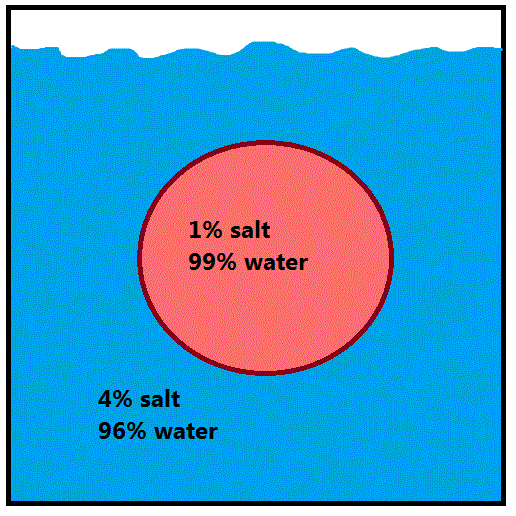
The cell below is in a _____________ solution.
a)
Hypertonic
b)
Hypotonic
c)
Isotonic
47.
Where will the water go?
a)
Into the cell
b)
Out of the cell
c)
Equally in & out - it's isotonic
d)
There is no water
48.
Which cell is placed into a hypotonic environment? 
a)
A
b)
B
c)
C
d)
D
49.
Which of these lists presents the stages of the cell cycle in the correct order?
a)
interphase, mitosis, cytokinesis
b)
cytokinesis, mitosis, interphase
c)
mitosis, interphase, cytokinesis
d)
interphase, cytokinesis, mitosis
50.
During interphase, the DNA is in the form of
a)
chromatin
b)
chromosomes
c)
chromatids
d)
centromeres
51.
Identify the stage of mitosis.
a)
interphase
b)
prophase
c)
anaphase
d)
cytokinesis
52.
What is the next phase of mitosis?
a)
Prophase
b)
Metaphase
c)
Anaphase
d)
Telophase
53.
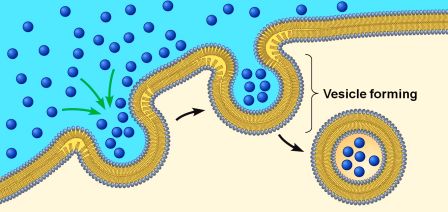
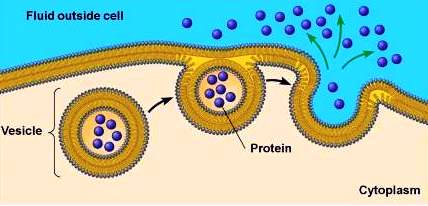
Which form of active transport is being shown?
a)
Facilitated Diffusion
b)
Exocytosis
c)
Endocytosis
d)
Protein Pumps
54.
Which form of active transport is being shown?
a)
Pinocytosis
b)
Endocytosis
c)
Exocytosis
d)
Osmosis
55.
Which statement is a part of the cell theory?
a)
all cells come from preexisting cells
b)
bacteria are prokaryotic cells
c)
eukaryotic cells are complex
d)
humans are multicellular
56.
Who looked at cork and named the cell?
a)
Robert Hooke
b)
Van Leeuwenhoek
c)
Robert Brown
d)
Francesco Redi
57.

Which type of cell DOES NOT have a nucleus?

a)

Prokaryotic

b)

Eukaryotic

58.

Which of the following is one of the 3 domains?

a)

Animals

b)

Bacteria

c)

Prokaryote

d)

Fungi

59.

Which domain has organisms that live in harsh environments?

a)

Bacteria

b)

Archaea

c)

Both

60.

Are bacteria multicellular or unicellular?

a)

Multicellular

b)

Unicellular

61.
Name this bacteria shape
a)
coccus
b)
spirillum
c)
bacillus
62.
Name this bacteria shape
a)
bacillus
b)
coccus
c)
spirillum