
 Worksheets
Pentathlon Science
Total questions: 62
Worksheet time: 36mins
The lowest allowable energy state of an atom is known as what?
Ground state
Ionization energy
Absolute zero
Critical state
Base level
How can lasers remove tattoos from skin?
by burning away skin cells containing tattoo ink
by chemically changing tattoo ink so that it is invisible
by breaking down the molecules that make up the ink
by changing the color of tattoo ink to match the surrounding skin
Laser tattoo removal is not currently possible.
The idea that emitted light can serve as a “fingerprint” to identify the atoms within a sample is the basis for
what technique?
Atomic spectroscopy
Radiometric dating
the photoelectric effect
Inertial confinement
Mass spectrometry
In what year did Max Planck propose his quantum hypothesis?
1704
1808
1887
1900
1921
The National Ignition Facility is a research center focused on what process?
Nuclear fusion
Laser cooling
LASIK
Atomic spectroscopy
Optical tweezing
The first laser operated at what wavelength?
532 nm
694 nm
755 nm
800 nm
1,064 nm
During his investigation of the photoelectric effect, Philipp Lenard observed that if light of a certain
frequency did not eject electrons from a metal, then increasing the intensity of the light
had no effect
caused electrons to be ejected
produced sparks
caused the light to change color
oxidized the illuminated metal
How was helium first detected in 1868?
as a product of a nuclear reaction
as a product of a chemical reaction
through chemical analysis of an atmospheric sample
as part of a drilling operation
through atomic spectroscopy of the Sun
If the frequency of a wave is 2 Hz, what is its period?
2 s
1 s
0.5 s
0.2 s
There is not enough information to tell.
LASIK surgery involves using lasers to reshape what part of the eye?
pupil
iris
lens
cornea
retina
Which of the following represents the single largest application for excimer lasers?
Laser pointers
Holography
Stereolithography
Semiconductor fabrication
Barcode readers
Which type of laser is BEST suited for use in CD/DVD players?
gas laser
laser diode
solid-state laser
excimer laser
maser
In what year was the first laser barcode scanner used?
1962
1968
1974
1985
1992
As a wave travels between two points in a medium, it transfers
energy only
matter only
both energy and matter
neither energy nor matter
The answer depends on whether the wave is mechanical or electromagnetic.
Which of the following types of electromagnetic radiation has the shortest wavelength?
Infrared light
Radio waves
Visible light
X-rays
Gamma rays
Which of the following statements about photons is TRUE?
A photon has a small but measurable mass.
The speed of a photon is proportional to its frequency.
The energy of a photon is proportional to its frequency.
Photons have zero momentum.
Photons cannot be described as waves.
Which of the following is NOT an example of an electromagnetic wave?
Microwaves
Sound waves
X-rays
Visible light
Radio waves
Which of the following statements about light is TRUE?
Light has properties of neither particles nor waves.
Light can be described exclusively as a particle.
Light can be described exclusively as a wave.
Light exhibits properties of both particles and waves.
There is always a 50/50 chance of light being measured as a wave or a particle.
Which of the following lasers are commonly used for surgical procedures due to their 10.6-m
wavelength?
Excimer lasers
Carbon dioxide lasers
Ruby lasers
Diode lasers
Nd:YAG lasers
An atom emits a photon when one of its orbital electrons
moves from a higher to a lower energy level
moves from a lower to a higher energy level
is completely removed from the atom
becomes thermally excited
is ejected from a metal surface
In a photoelectric effect experiment, suppose that ultraviolet light was observed to eject electrons from a
metal surface. Which of the following types of radiation would definitely eject electrons from the same
surface?
Microwave
Infrared
X-ray
Visible light
Radio
Which of the following is a common use for laser pointers?
to highlight certain items in a presentation
as part of surveying equipment
as part of surveying equipment
as part of a light show at entertainment venues
all of the above
If an atom of boron has 5 protons and 6 neutrons, how many electrons must it have?
5
6
10
11
cannot be determined from this information
According to the Bohr model, electrons can move to higher energy levels. Which of the following would be
the best analogy for this process?
walking up a ramp
stretching a rubber band
diving underwater
changing lanes on a road
stepping up a staircase
What is the term for the number of oscillations per unit time of any wave or repeating event?
Frequency
Spacing
Wavelength
Period
Separation
Optical tweezers rely on the fact that photons have
Mass
Charge
Momentum
Heat
Color
What is light composed of?
air molecules
charged particles
oscillating electric fields
oscillating magnetic fields
electric and magnetic fields oscillating together
Not all neon lights actually contain neon gas. True neon lights are what color?
reddish-orange
red
blue
green
yellow
Charles Townes’ original method for producing stimulated emission used what type of electromagnetic
waves?
Radio waves
Microwaves
Visible light
Ultraviolet
X-rays
Which of the following laser techniques have been used to measure the elasticity of DNA?
confocal laser scanning microscopy
laser cooling
laser-induced fusion
optical tweezers
photolithography
Which of the following statements about the photoelectric effect is TRUE?
X-rays are necessary to produce the effect.
It takes several minutes for electrons to be emitted from a metal surface.
Higher frequency light causes electrons to be emitted with greater energy.
Increasing the intensity of the light always causes more electrons to be emitted.
It can only be explained with a wave model of light.
Which of the following is TRUE regarding electromagnetic waves?
All electromagnetic waves travel at the speed of light.
All electromagnetic waves travel at the speed of sound.
The speed of an electromagnetic wave depends on its frequency.
The speed of an electromagnetic wave depends on the temperature.
Each electromagnetic wave has a unique speed.
Which of the following statements about Planck’s constant is TRUE?
It remains unknown to this day.
It relates the energy of a photon to its frequency.
It is not truly constant because it varies from one region of the universe to another.
It is commonly expressed in units of seconds.
It is equal to the energy of a single photon.
A standard incandescent light bulb typically converts about how much of the energy it consumes into
visible light?
95% or more
75%
50%
25%
5% or less
Which scientist believed that human eye contained light rays that were emitted from the eye?
Aristotle
Democritus
Empedocles
Alhazen
Which scientist believed that the human eye contained water. He thought that the eye reflected light traveling through air.
Aristotle
Democritus
Empedocles
Alhazen
"Father of Modern Optics" - he wrote a book explaining that light did not originate from the eye, but was affected by it.
Aristotle
Democritus
Empedocles
Alhazen
Through the study of anatomy, be promoted the idea that water, not air, brought light to the eye.
Aristotle
Democritus
Empedocles
Alhazen
Light can be thought of as streams of tiny particles emitted by a light source.
the particle theory of light
the stream theory of light
the source theory of light
the electromagnetic theory of light
Which scientist developed the particle theory of light?
Thomas Young
Christiaan Huygens
Isaac Newton
Albert Einstein
Which scientist developed the wave-particle duality theory?
Thomas Young
Christiaan Huygens
Isaac Newton
Albert Einstein
Which scientist developed did the "double-slit experiment", and showed that light consisted of particles, but also acted like waves?
Thomas Young
Christiaan Huygens
Isaac Newton
Albert Einstein
Which scientist proposed that light moved through space similar to ocean waves?
Thomas Young
Christiaan Huygens
Isaac Newton
Albert Einstein
This theory states that a photon is both a particle and travels in waves, and opened up a new branch of science with quantum physics.
particle theory of light
the electromagnetic theory
the wave-particle duality theory
wave theory of light
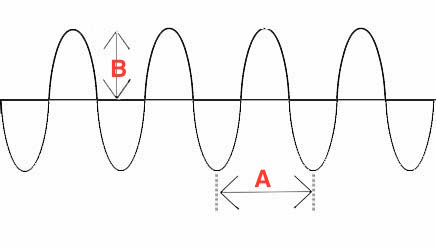
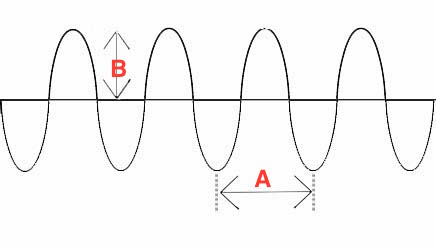
What property of this wave is represented by the letter "A"
amplitude
crest
trough
wavelength
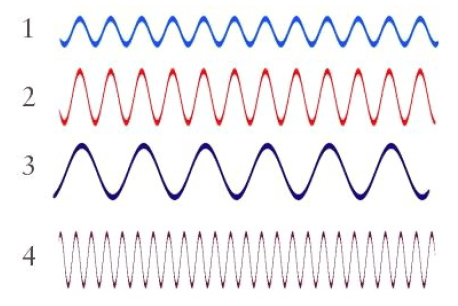
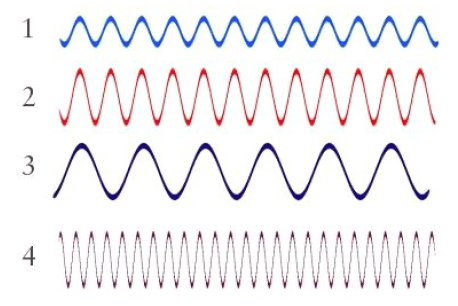


When light shines through a prism it creates ________________
visible light
infrared radiation
ultraviolet rays
electromagnetic wave
Compressions are...
associated with transverse waves
associated with longitudinal waves
light waves
visible light


