wayground logo

Free Printable Worksheets

Font size

S
M
L
XL
Worksheets

Minerals, Rocks & Rock Cycle Practice

Total questions: 93

Worksheet time: 4hrs 36mins

Name
Class
Date
1.
The color of a mineral in powder form is called the mineral's 
a)
hardness
b)
specific gravity
c)
luster
d)
streak
2.
How light reflects off of a mineral is called the mineral's 
a)
luster
b)
streak
c)
cleavage
d)
fracture
3.
Why is coal not a mineral?
a)
It's not a solid
b)
It is man-made
c)
It is not inorganic
d)
It is made of carbon
4.
The following image shows what mineral property?
a)
Hardness
b)
Streak
c)
Cleavage
d)
Density
5.
Dull, silky, waxy, pearly, and earthy are terms that best describe which property of minerals?
a)
luster
b)
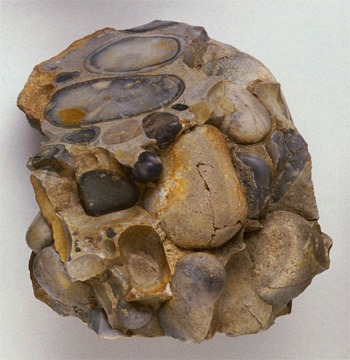
color
c)
streak
d)
cleavage
6.
By definition, a mineral has which of the following characteristic(s)?
a)
definite chemical composition
b)
crystal structure
c)
naturally occuring
d)
all of the above
7.
How do you test the hardness of a mineral? 
a)
Throw it against a wall
b)
Step on it
c)
Scratch Test
d)
Kick it until it breaks
8.
A naturally occurring, inorganic solid with a crystal structure and a definite chemical composition is referring to
a)
density
b)
streak
c)
mineral
d)
non silicate mineral
9.
A mineral's resistance to being scratched is called?
a)
streak
b)
luster
c)
hardness
d)
heft
10.
Which of the following is NOT one of the 5 characteristics of minerals?
a)
Naturally Occurring
b)
Organic Processes 
c)
Definite Chemical Composition
d)
Solid
11.
_____________________ means that the mineral was formed by nature, not by a human or machine
a)
Naturally Occurring
b)
Inorganic Processes
c)
Solid
d)
Crystal Shape
12.
What does inorganic mean?
a)
Something that is living
b)
Something that is dead, but was once living
c)
Something that was never living
13.
What does Definite Chemical Composition means?
a)
Random elements in indefinite proportions
b)
Elements spread throughout the entire mineral evenly
c)
Elements spread out the entire mineral unevenly
15.
When a mineral breaks in an uneven, rough, or jagged way
a)
Luster
b)
Cleavage
c)
Hardness
d)
Fracture
15.
When a mineral breaks in an uneven, rough, or jagged way
a)
Luster
b)
Cleavage
c)
Hardness
d)
Fracture
16.
When a mineral breaks smoothly and evenly.
a)
Luster
b)
Cleavage
c)
Hardness
d)
Fracture
17.
Rubbing a mineral on a streak plate determines the color of the mineral's _____________
a)
Surface
b)
Interior
c)
Powder
d)
Crystals
18.
How do you determine the density of a mineral?
a)
D=M/V
b)
D=V/M
c)
D=M x V
d)
D= V x M
19.
How do you determine the density of a mineral?
a)
D=M/V
b)
D=V/M
c)
D=M x V
d)
D= V x M
20.
What tools do you need to find density
a)
Scale and ruler
b)
Ruler and graduated cylinder
c)
Triple beam balance and water
d)
Graduated cylinder and triple beam balance
21.
The ________ measures how hard a mineral is.
a)
Miller Scale
b)
Dishong Scale
c)
Curly Scale
d)
Mohs Scale
22.
A mineral breaks into pieces like are shown in the picture. How would you describe its breakage?
a)
Fracture
b)
Cleavage
c)
Glassy
d)
Waxy
23.
A mineral breaks into pieces like are shown in the picture. How would you describe its breakage?
a)
Fracture
b)
Cleavage
c)
Glassy
d)
Waxy
24.
Which mineral property is being shown here?
a)
luster
b)
hardness
c)
cleavage
d)
streak
25.
The three major rock groups are:
a)
Inorganic, Metamorphic, and  Sedimentary
b)
Inorganic, Metamorphosis, and Sediment
c)
Igneous, Metamorphic, and Sediment
d)
Igneous, Metamorphic, and Sedimentary
26.
This rock  is formed from molten rock (magma/lava) that has cooled.
a)
Igneous
b)
Inorganic
c)
Metamorphic
d)
Sedimentary
27.
This rock is formed from lava on  the earth's  surface
a)
Inorganic
b)
Igneous
c)
Metamorphic
d)
Sedimentary
28.
This rock is formed by erosion (continuously broken down into small fragments) and  then is compressed and  cemented together.
a)
Inorganic
b)
Igneous
c)
Metamorphic
d)
Sedimentary
29.
This rock is formed by extreme heat and/or pressure that alters the chemical composition into a new form of rock.
a)
Inorganic
b)
Igneous
c)
Metamorphic
d)
Sedimentary
31.

Which of these are the two most abundant elements in Earth's crust?

a)

Nitrogen

b)

Oxygen

c)

Silicon

d)

Sulfur

31.

Which of these are the two most abundant elements in Earth's crust?

a)

Nitrogen

b)

Oxygen

c)

Silicon

d)

Sulfur

32.
What is an igneous rock?
a)
Rock that forms when melted, or molten rock from deep below Earth's surface cools and hardens.
b)
A solid material made up of one or more minerals.
c)
Rock that forms when existing rocks are changed by heat, pressure, or chemicals beneath the Earth's surface.
33.
What is metamorphic rock?
a)
Rock that forms when melted, or molten rock from deep below Earth's surface cools and hardens.
b)
A solid material made up of one or more minerals.
c)
Rock that forms when existing rocks are changed by heat, pressure, or chemicals beneath the Earth's surface.
34.
What is a rock?
a)
Rock that forms when melted, or molten rock from deep below Earth's surface cools and hardens.
b)
A solid material made up of one or more minerals.
c)
Rock that forms when existing rocks are changed by heat, pressure, or chemicals beneath the Earth's surface.
35.
This rock was found near the mouth of a volcano. What type of rock is this?
a)
Sedimentary
b)
Igneous
c)
Metamorphic
36.
This rock was molten lava that cooled quickly as it came out of a volcano. What type of rock is this?
a)
Sedimentary
b)
Igneous
c)
Metamorphic
37.
In order for a metamorphic rock to form, _______ is needed.
a)
Pressure
b)
Heat 
c)
Heat and Pressure
d)
Weathering
38.
Is magma below or above ground
a)
above
b)
below
39.
What are Igneous Rocks that form as magma cools underground called
a)
extrusive rocks
b)
intrusive rocks 
40.
A slow cooling igneous rock will have _____ crystals
a)
large
b)
small
c)
average
d)
black
41.
Metamorphism is caused by intense _____ & _____.
a)
foliation & nonfoliation
b)
texture & composition
c)
cementation & compaction
d)
temperature & pressure 
43.
Hot molten rock that forms beneath Earth' surface
a)
felsic
b)
magma
c)
rock cycle
d)
stratification
43.
Hot molten rock that forms beneath Earth' surface
a)
felsic
b)
magma
c)
rock cycle
d)
stratification
44.

What is a characteristic of minerals that form from slowly cooling magma?

a)

minerals that form from slow cooling magma have microscopic crystals

b)

minerals that form from slow cooling magma are named lava

c)

minerals that form from slow cooling magma and have larger crystals

45.

Minerals can form from

a)

molten material

b)

hot solutions

c)

cold solutions

d)

all of the above

46.
VR 1.  The _____ of a mineral can be tested by scratching it.
a)
Color
b)
Hardness
c)
Luster
d)
Streak
47.
VR 2.  The color that a mineral leaves on a tile is its _____.
a)
Color
b)
Luster
c)
Streak
d)
Hardness
48.
VR 3.  Rocks change from one type to another as they go through _____.
a)
Rock Cycle
b)
Metamorphic Rock
c)
Streak
d)
Hardness
49.
VR 6.  _____ forms from rocks that have been changed by heat, pressure, and chemical reactions.
a)
Metamorphic Rock
b)
Luster
c)
Sedimentary Rock
d)
Igneous Rock
50.
VR 7.  A(n) _____ is a natural solid made of one or more minerals.
a)
Igneous Rock
b)
Mineral
c)
Rock
d)
Metamorphic Rock
51.
VR 8.  Layers of sediments that are pressed together and cemented can form _____.
a)
Metamorphic Rock
b)
Igneous Rock
c)
Rock Cycle
d)
Sedimentary Rock
52.
CR 2.  Mineral A is harder than Mineral B if A _____?
a)
Weighs more than B
b)
Scratches B
c)
Streaks B
53.
CR 5.  You test a mineral sample for streak by _____.
a)
Rubbing it on a white tile
b)
Breaking it
c)
Weighing it
54.
CR 5.  You test a mineral sample for streak by _____.
a)
Rubbing it on a white tile
b)
Breaking it
c)
Weighing it
55.
Which of these minerals is softer than glass?
a)
Topaz 
b)
Corundum 
c)
Calcite 
d)
Orthoclase 
56.
Can a glass plate scratch apatite?
a)
Yes 
b)
No 
58.
Can a penny scratch fluorite?
a)
Yes 
b)
No 
58.
Can a penny scratch fluorite?
a)
Yes 
b)
No 
59.
This rock formed when bits of other rocks became pressed into a solid. What type of rock is it?
a)
Sedimentary Rock
b)
Metamorphic Rock
c)
Igneous Rock
60.
This rock was formed when magma cooled very slowly inside the Earth. What specific type of rock is it?
a)
Intrusive Igneous Rock
b)
Extrusive Igneous Rock
c)
Foliated Metamorphic Rock
d)
Clastic Sedimentary Rock
61.
This rock formed when lava cooled very quickly on Earth's surface. What specific type of rock is it?
a)
Extrusive Igneous Rock
b)
Intrusive Igneous Rock
c)
Non-Foliated Metamorphic Rock
d)
Biochemical Sedimentary Rock
62.
Which of the words below describe broken up rock?
a)
stalactites
b)
magmas
c)
metamorphs
d)
sediments
63.
This rock was formed by smaller pieces of rock that settled at the bottom of a lake millions of years ago. What type of rock is this?
a)
Sedimentary
b)
Igneous
c)
Metamorphic
64.
When sediments are pressed together tightly, this is called ____________.
a)
Compaction
b)
Cementation
c)
Weathering
d)
Erosion
66.
The process in which sediment are fused or glued together.
a)
compaction
b)
deposition
c)
organic rock
d)
cementation
66.
The process in which sediment are fused or glued together.
a)
compaction
b)
deposition
c)
organic rock
d)
cementation
67.
What is deposition?
a)
Dropping off sediment
b)
Movement of sediment
c)
Breaking down of sediment 
68.
The process when rocks break into smaller pieces due to exposure to natural elements is called
a)
erosion
b)
weathering
c)
sediments
d)
deposition
69.
The movement of weathered material (sediment) is called?
a)
weathering
b)
erosion
c)
deposition
d)
cementation
70.

Rain washing away soil from a hillside is an example of what?

a)

Weathering

b)

Erosion

c)

Deposition

d)

Compaction

71.

Waves dropping sand on the beach is an example of what?

a)

Weathering

b)

Erosion

c)

Deposition

d)

Compaction

72.
Each rock type can follow only one pathway of the rock cycle.
a)
True
b)
False
73.

What are rocks made of?

a)

dead plants

b)

dead animals

c)

wood

d)

minerals

74.

Fill in the blank for number 12.

a)

Metamorphic rock

b)

Sedimentary rock

c)

Igneous rock

75.

Fill in the blank for number 13

a)

Metamorphic rock

b)

Sedimentary rock

c)

Igneous rock

76.

Fill in the blank for number 14

a)

heat and pressure

b)

melting & cooling

c)

weathering and erosion

77.

Fill in the blank for number 15

a)

cooling

b)

melting

c)

weathering

78.

Fill in the blank for number 16

a)

melting and cooling

b)

heat and pressure

c)

weathering and erosion

79.
This rock started as lava that cooled and then was heated and put under pressure over time. What type of rock is this?
a)
Sedimentar
b)
Igneous
c)
Metamorphic
80.
This rock was formed by lots of fossils that settled on top of each other over time. What type of rock is this?
a)
Sedimentary
b)
Igneous
c)
Metamorphic
82.
This rock started as molten magma. What type of rock is this?
a)
Sedimentary
b)
Igneous
c)
Metamorphic
82.
This rock started as molten magma. What type of rock is this?
a)
Sedimentary
b)
Igneous
c)
Metamorphic
83.
what is the rock cycle.
a)
molten rock that is stored underground.
b)
rock material that forms where rocks are broken down into smaller pieces.
c)
a process that changes one type of rock into another type of rock.
84.

The processes:

Plates collide

Heating

Increase in pressure


Are all associated with the formation of what type of rock?

a)

igenous

b)

sedimentary

c)

metamorphic

85.
As lava cools and crystallizes, what type of rock will form?
a)
Sedimentary
b)
Metamorphic
c)
Extrusive Igneous
d)
Intrusive Igneous
86.
The three groups of rocks are classified by
a)
How they form
b)
Color
c)
Grain size
d)
Chemical Composition
87.

Using the image, what is the process shown by #4?

a)

Weathering and Erosion

b)

Heat and Pressure

c)

Cooling

d)

Compacting and Cementing

89.

Using the image, what is the process shown by #5?

a)

Heat and Pressure

b)

Melting

c)

Weathering and Erosion

d)

Compacting and Cementing

89.

Using the image, what is the process shown by #5?

a)

Heat and Pressure

b)

Melting

c)

Weathering and Erosion

d)

Compacting and Cementing

90.

Using the image, what rock type would be found at #2?

a)

Metamorphic

b)

Igneous

c)

Sedimentary

91.

In the picture, what is the process shown by #6?

a)

Melting

b)

Heat and Pressure

c)

Cooling

d)

Weathering and Erosion

92.
What mineral is the softest mineral on Moh's Hardness Scale and the main ingredient in baby powder?
a)
feldspar
b)
talc
c)
gypsum
d)
kaolinite
93.
Large crystals are going to form
a)
when lava erupts from a volcano
b)
when a shallow sea evaporates
c)
when magma underground cools off
d)
all of the above